Agnolo Bronzino: The Silent Elegance of Florentine Mannerism
Agnolo di Cosimo, known to history as Bronzino, emerged from the vibrant artistic landscape of Renaissance Florence in 1503, a period already brimming with genius. Born the son of a butcher, his path diverged sharply from familial trade, guided instead by an innate talent that would see him become one of the most sought-after portraitists of his era and a defining figure of Mannerism. His early training began with Raffaellino del Garbo, but it was under the tutelage of Jacopo da Pontormo that Bronzino’s artistic sensibilities truly took shape. While absorbing Pontormo's innovative style—characterized by expressive distortions and unsettling perspectives—he ultimately forged his own distinct voice—one characterized by a cool composure and refined detail markedly different from his teacher’s often emotionally charged works. This early period was also influenced by studies with Andrea del Sarto, exposing him to the legacies of Michelangelo and Leonardo da Vinci, foundational influences that would subtly permeate his mature style. The young Bronzino quickly demonstrated an aptitude for capturing not just physical likeness but a certain psychological depth, even in his earliest commissions.Early Influences and Artistic Formation
Bronzino’s formative years were marked by exposure to the artistic currents of Florence under Pontormo's guidance. Pontormo’s distinctive style—a deliberate departure from classical ideals—challenged conventional notions of beauty and realism. Bronzino skillfully adapted Pontormo’s expressive distortions, incorporating them into his own compositions with remarkable subtlety. Simultaneously, he absorbed lessons from Andrea del Sarto, mastering the techniques of sfumato and chiaroscuro—methods pioneered by Leonardo da Vinci—which would become hallmarks of his later work. These influences instilled in Bronzino a profound appreciation for intellectual rigor alongside artistic virtuosity. His early portraits reveal an uncanny ability to convey inner states through carefully crafted poses and expressions, demonstrating a sensitivity that transcended mere visual representation. Vasari famously described Bronzino as “a boy who had been apprenticed to Pontormo,” highlighting the pivotal role played by his teacher in shaping his artistic vision.The Medici Patronage and Florentine Court Style
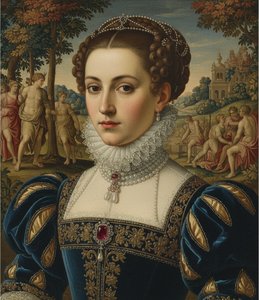
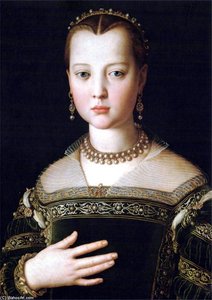
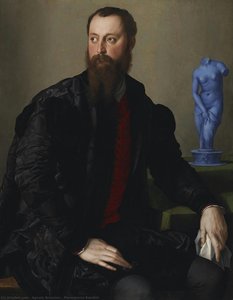
Bronzino’s career ascended dramatically with the patronage of Cosimo I de’ Medici, Duke of Tuscany. Recognizing Bronzino's exceptional talent, Cosimo appointed him as the official court painter—a position he held until his death in 1572—solidifying his influence on Florentine art and culture. This relationship fostered a flourishing artistic environment where Bronzino could hone his skills and explore innovative stylistic approaches. The portraits emanating from this period are not merely likenesses; they are meticulously constructed statements of power, status, and dynastic ambition. Cosimo and Eleonora di Toledo—his wife—became frequent subjects, immortalized in paintings that exude an aristocratic aloofness and polished elegance. These works weren’t simply about capturing physical resemblance but crafting enduring symbols of Medici authority—a deliberate effort to project an image of regal grandeur and intellectual refinement. The commissioning of monumental frescoes for the Villa Imperiale further cemented Bronzino's reputation as a master craftsman, demonstrating his ability to execute ambitious projects with unwavering precision.The Mannerist Aesthetic: Cool Composure and Stylized Form
Bronzino’s artistic style is quintessentially Mannerist—a movement that emerged in Florence during the mid-16th century as a reaction against the High Renaissance's emphasis on naturalism and harmonious balance. Unlike his predecessors, Bronzino rejected the idealized beauty of classical art, favoring instead a deliberately stylized aesthetic characterized by elongated figures, attenuated drapery, and subtle distortions of perspective. This approach—often described as “frozen emotion”—contrasted sharply with the expressive dynamism of Renaissance painting. Bronzino’s figures are rarely caught in moments of spontaneous action; rather, they appear posed with an almost sculptural stillness—a deliberate departure from the naturalistic conventions of earlier artists. His masterful use of sfumato—the blurring of contours to create a hazy effect—and chiaroscuro—the dramatic interplay of light and shadow—further enhanced this sense of detachment and refinement. As exemplified in *Venus, Cupid, Folly and Time*, Bronzino’s paintings are imbued with complex symbolism—a deliberate effort to convey intellectual ideas alongside visual beauty. He skillfully manipulated color palettes—often favoring muted tones—to achieve a harmonious balance between elegance and restraint.Legacy and Enduring Influence
Bronzino's contribution to Florentine art history is undeniable, shaping the visual language of aristocratic representation for decades to come. His meticulous technique and stylistic innovation established him as one of the foremost Mannerist painters—a master of cool composure and refined detail whose portraits continue to captivate audiences today. Despite criticisms leveled against Mannerism during the Romantic era—characterized by a preference for emotional expression—Bronzino’s work has experienced a resurgence in appreciation in recent decades, scholars recognizing the intellectual depth and stylistic sophistication inherent in his art. His legacy extends beyond individual masterpieces; he profoundly influenced subsequent generations of artists, establishing standards of excellence that continue to inspire creativity. Bronzino's enduring influence is evident not only in the stylistic conventions of portraiture but also in his pioneering role as a court painter—a position that demanded both artistic virtuosity and diplomatic sensitivity. He remains a testament to the power of art to convey complex ideas and emotions with unparalleled elegance and precision.Въпроси и отговори
В коя историческа епоха е творил Бронзино?
Бронзино е творил в периода на Ренесанс. Този период определя историческия контекст на творчеството на художника.
Има ли преглед на всички теми, които Бронзино е изобразявал?
Работите на Бронзино могат да бъдат разгледани по теми на страницата за тематичен атлас на артиста Атлас по теми.
Къде мога да видя цветовата палитра на творчеството на Бронзино?
Цветовият профил на творчеството на Бронзино е представен на страницата Геном на палитрата на художника.