Меню
БЕЗПЛАТНА КОНСУЛТАЦИЯ ЗА ИЗКУСТВО

Антоний Якоб Ван Винджерт

1808 - 1887

Бързи факти

  • Nationality: Нидерландия
  • Works on APS: 46
  • Movements: contemporary realism
  • Typical colors: земни тонове
  • Copyright status: Public domain
  • Art period: XIX век
  • Creative periods: mature period
  • Lifespan: 79 years
  • Разгърни скритите подробности
  • Topics explored:
    • animals
    • landscape
    • summer
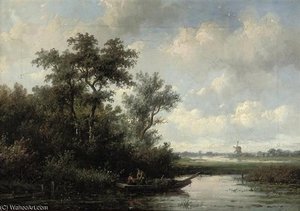
    • dutch countryside
    • rural landscape
  • Born: 1808, Роттердам, Нидерландия
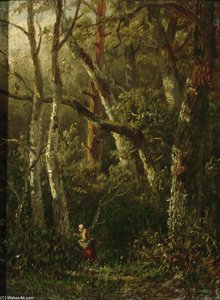
  • Top-ranked work: A Woman Picking Berries In The Woods
  • Also known as: Антоний Якобус Ван Винджерт
  • Top 3 works:
    • A Woman Picking Berries In The Woods
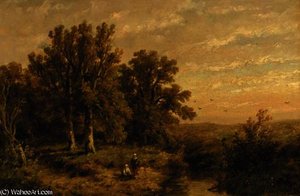
    • A wooded summer landscape with a peasant couple by a stream
    • Cows Grazing
  • Died: 1887
  • Color intensity:
    • ярък
    • балансиран

Тест за изкуство

Има само един верен отговор за всеки въпрос.

Въпрос 1:
Q1
Въпрос 2:
Q2
Въпрос 3:
Q3

Anthonie Jacobus van Wijngaerdt: A Painter of Dutch Pastoral Idyllic

Anthonie Jacobus van Wijngaert (1808 – 1887), born in Rotterdam, Netherlands, stands as a quietly influential figure within the landscape painting tradition of 19th-century Holland. While not commanding the same level of fame as Rembrandt or Vermeer, his unwavering dedication to capturing the serene beauty of rural Dutch life—particularly pastoral scenes featuring cattle and peasant families—established him as a respected artist whose work continues to resonate with collectors and scholars alike. His artistic journey commenced in Rotterdam where he diligently honed his skills under the tutelage of Johann Ernst Meyer, a prominent landscape painter who championed the Romantic movement’s core belief: emotion and observation of nature. This formative influence profoundly shaped Van Wijngaert's canvases—characterized by meticulous detail and an unwavering commitment to portraying the rhythms of daily life amidst the Dutch countryside. Unlike many of his contemporaries who pursued grandiose vistas or dramatic narratives, he deliberately focused on capturing subtle nuances of light and color, conveying a palpable sense of tranquility and fostering a deep connection between humanity and the land. Meyer’s forest scenes served as an undeniable model for Van Wijngaert's own Romantic landscapes—a stylistic hallmark marked by an exceptional realism. He painstakingly rendered textures – from dew-kissed grasses to weathered barns – demonstrating an impressive mastery of technique, mirroring Meyer’s meticulous approach. To gain inspiration and refine his artistic vision, Van Wijngaerdt undertook several significant study trips during his lifetime: in 1833 and 1838 he ventured into the German Rhine basin, and in 1840 he explored Belgium. These expeditions broadened his horizons and enriched his understanding of diverse landscapes, informing his subsequent artistic endeavors. From 1836 until 1861, Van Wijngaerdt resided in Gouda, where he served as an instructor at the Stadstekenschool—a role that nurtured both his pedagogical skills and his artistic sensibilities. Following this period, he relocated to Haarlem, continuing his prolific output of paintings throughout his life. His oeuvre comprises approximately 150 artworks predominantly depicting landscapes populated by livestock—cattle being a recurring motif—and scenes portraying peasant families engaged in agricultural activities. These works are notable for their exceptional realism; he painstakingly rendered textures – from dew-kissed grasses to weathered barns – demonstrating an impressive mastery of technique. His palette favored muted hues, reflecting the subdued tones of the Dutch landscape and imbuing his paintings with a palpable atmosphere of peace and contentment. He skillfully employed atmospheric perspective—a technique perfected by Meyer—subtly blurring distant elements to create depth and conveying the feeling of vastness without resorting to theatrical grandeur. This masterful use of light and color underscores Van Wijngaert’s commitment to capturing not merely what he saw but also how it felt—a hallmark of Romantic art that distinguishes his work from more formal or stylized approaches. The artist's stylistic development can be traced through his early works, which exhibited influences from Meyer’s Romantic style, gradually evolving into a more refined aesthetic that prioritized accuracy and emotional resonance. However, it was his unwavering devotion to portraying the everyday realities of rural Holland—the simple joys of farming, the bonds between man and animal—that cemented his legacy. His paintings offer a poignant glimpse into a bygone era, preserving an idealized vision of Dutch pastoral life for posterity. As evidenced by resources like ULAN Full Record Display (Getty Research), Van Wijngaerdt's paintings are recognized as valuable additions to the canon of Dutch landscape art, securing his place as a master of rural tranquility and an artist who successfully translated Romantic sensibilities into visual form. © Simonis & Buunk