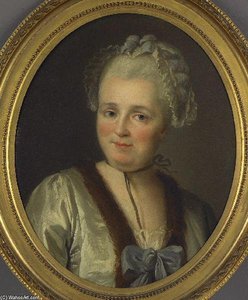
Anicet Charles Gabriel Lemonnier – A Bridge Between Baroque Grandeur and Neoclassical Clarity
Anicet Charles Gabriel Lemonnier (1743-1824) stands as a pivotal figure in French art history, embodying the transition from the opulent Baroque era to the disciplined ideals of Neoclassicism. Born in Rouen, France, his artistic journey unfolded against the backdrop of an epoch defined by seismic shifts – the impending revolution reshaping societal norms and artistic sensibilities alike.
- Early Training & Influence: Lemonnier’s formative years were spent under the tutelage of Jean-Baptiste Descamps at Rouen School of Fine Arts, absorbing the stylistic conventions of his time. However, it was Joseph-Marie Vien who truly molded his artistic vision, fostering connections with luminaries like Jacques-Louis David and François-André Vincent – a circle deeply invested in intellectual discourse and artistic experimentation.
- The Prix de Rome Triumph: In 1772, Lemonnier achieved unparalleled recognition securing the prestigious Prix de Rome for “The Children of Niobe Killed by Apollo and Diana.” This residency in Rome proved transformative, immersing him in the legacy of antiquity and cementing his allegiance to classical design principles.
- Roman Reverie & Neoclassical Embrace: During his decade in Rome Lemonnier’s artistic focus shifted decisively toward Neoclassicism. He internalized the virtues of reason, harmony, and civic duty—values reflected in his evolving style characterized by refined lines, balanced compositions, and restrained narrative expression.
- Salon Life & Historical Narratives: Lemonnier flourished during the Salon era, capturing Parisian society with remarkable detail and emotional depth. His monumental “Evening with Madame Geoffrin” remains a quintessential depiction of Enlightenment intellectual life—a testament to his ability to convey both likenesses and spirit.
- Revolutionary Witness & Legacy of Preservation: Lemonnier’s involvement in the French Revolution underscored his commitment to safeguarding France's artistic heritage. He served on the Committee on Monuments, ensuring the survival of artworks threatened by religious upheaval—a legacy rooted in profound respect for art as a cultural cornerstone.
Lemonnier’s enduring fame rests upon masterpieces like “The Plague of Milan,” commissioned for Rouen Seminary and demonstrating his mastery of dramatic representation. Furthermore, his portraits of prominent figures – including Louis XVI – solidified his reputation as a skilled portraitist. His son, André-Hippolyte Lemonnier meticulously documented his father's life and work providing invaluable insight into the artist’s artistic trajectory.
Lemonnier’s contribution to French art extends beyond individual artworks; he championed the preservation of cultural treasures during turbulent times—a testament to his unwavering dedication to artistic excellence and its accessibility. His legacy continues to inspire artists and scholars alike cementing his place as a cornerstone of French artistic history.