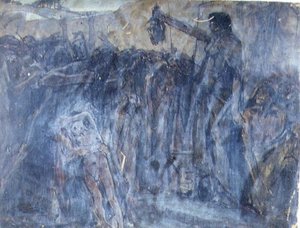
Портрет на Уилиам Лапара

28-те най-известни картини на Уилиам Лапара, всяка от които е уникална

Обновено Ноември 2026 · класирано според нашия индекс на популярност (търсения, посещения и поръчки за всяко произведение) · 28 творби на Уилиам Лапара в нашия каталог

Накратко

HOMMAGE DE LA JEUNESSE DE LA FRANCE A LA STATUE DE JULES FERRY JEUNE HOMME AU TAMBOUR DE PROFIL е картината на Уилиам Лапара, която привлича най-много погледи. След това погледът се насочва към Portrait of M. Laparra, composer (1905) и Girl's Head with Green Turban. Сред 28 произведения на Уилиам Лапара в нашия каталог, тези 28 са най-известните – всяко от тях е уникален оригинал, представен с годината на създаване, музея и причината за неговата вечност.

1873 – 1920, Бордо Impressionism Най-много творби: Център Помпиду

Топ 10 картини на Уилиам Лапара, през погледа на галерията

1
HOMMAGE DE LA JEUNESSE DE LA FRANCE A LA STATUE DE JULES FERRY JEUNE HOMME AU TAMBOUR DE PROFIL на Уилиам Лапара

HOMMAGE DE LA JEUNESSE DE LA FRANCE A LA STATUE DE JULES FERRY JEUNE HOMME AU TAMBOUR DE PROFIL

Oil On Canvas

The painting titled HOMMAGE DE LA JEUNESSE DE LA FRANCE A LA STATUE DE JULES FERRY JEUNE HOMME AU TAMBOUR DE PROFIL was executed by the artist William Laparra. This work is a product of the painter's specific technical approach to genre scenes and portraiture. The artist's hand is evident in the composition of the figures and the treatment of the landscape elements present in the scene.

3
Girl's Head with Green Turban на Уилиам Лапара

Girl's Head with Green Turban

Oil On Canvas · Музей д’Орсе, Париж

In this intimate portrait, titled Girl's Head with Green Turban, the French painter William Laparra turns his attention to a single, expressive subject. The work focuses on a woman whose presence is defined by a striking green turban resting upon her head. There is a quiet confidence in her gaze as she looks directly at the viewer, establishing an immediate connection that feels both personal and unhurried.

Знаменитите картини на Уилиам Лапара, номера от 11 до 28

Темите, които привличат погледа на Уилиам Лапара

Четирите найчесто срещани теми в тези оригинални творби, всяка с най-добрия си пример.

Музеите, в които се съхраняват оригиналите на Уилиам Лапара

3 музея, които притежават най-голям брой от картините на тази страница.

Музеи Град Творения на Уилиам Лапара Картини от този списък
Център Помпиду, ПарижЦентър Помпиду Париж 1 Portrait of M. Laparra, composer
Музей д’Орсе, ПарижМузей д’Орсе Париж 1 Girl's Head with Green Turban
Drents Museum, AssenDrents Museum Assen 1 Yette à la Harpe La nonchalante (autre titre)

Уилиам Лапара през годините: уникатните оригинали на всеки

Всички показаните тук оригинални творби на Уилиам Лапара от дадена дата принадлежат на една и съща година – 1905: те са подредени според тяхната популярност.

Работи по години

Изберете година, за да разгледате оригиналите.

Картини на Уилиам Лапара: въпроси към галерията

Кое е най-известното произведение на Уилиам Лапара?Разкрийте отговора

HOMMAGE DE LA JEUNESSE DE LA FRANCE A LA STATUE DE JULES FERRY JEUNE HOMME AU TAMBOUR DE PROFIL. Следващите са Portrait of M. Laparra, composer (1905) и Girl's Head with Green Turban.

Кои са десетте най-известни картини на Уилиам Лапара?Разкрийте отговора

HOMMAGE DE LA JEUNESSE DE LA FRANCE A LA STATUE DE JULES FERRY JEUNE HOMME AU TAMBOUR DE PROFIL, Portrait of M. Laparra, composer, Girl's Head with Green Turban, Portrait de Paul Lafond, Yette à la Harpe La nonchalante (autre titre), HOMMAGE DE LA JEUNESSE DE LA FRANCE A LA STATUE DE JULES FERRY DEUX ENFANTS EN HABIT TUNISIEN, HOMMAGE DE LA JEUNESSE DE LA FRANCE A LA STATUE DE JULES FERRY JEUNE GARÇON A L'ETENDARD, HOMMAGE DE LA JEUNESSE DE LA FRANCE A LA STATUE DE JULES FERRY DEUX PERSONNAGES DEBOUT, UN FRANÇAIS, UN TUNISIEN, La duègne и Taormina. Класацията по-горе показва годината и музея за всяко от тях.

Колко са известните творби на Уилиам Лапара?Разкрийте отговора

В нашия каталог са представени 28 произведения на Уилиам Лапара.

Къде могат да се видят най-известните оригинали на Уилиам Лапара?Разкрийте отговора

Предимно в Център Помпиду (Париж), Музей д’Орсе (Париж) и Drents Museum (Assen). В горната таблица с музеи са изброени всички тях.

Какви теми предпочиташе Уилиам Лапара?Разкрийте отговора

France (5), Landscape (3) и Portrait (2), разпределени в 28 произведения на тази страница.

С какви материали най-често е живописувал Уилиам Лапара?Разкрийте отговора

Oil On Canvas, за 3 от 28 произведения на тази страница.

Към кое художествено направление принадлежи творчеството на Уилиам Лапара?Разкрийте отговора

Impressionism, судейки по оригиналите на тази страница.

Уилиам Лапара: портрет на художника

William Laparra: A Painter of Shadows and Light

Born in Bordeaux in 1873, William Julien Emile Edouard Laparra’s artistic journey was shaped by a unique confluence of influences – the vibrant culture of his Spanish heritage, the rigorous training of Parisian academies, and a profound empathy for the lives of ordinary people. His life, tragically cut short at the age of forty-six in Valle de Hecho, Spain, left behind a legacy of evocative paintings that capture both the harsh realities and subtle beauties of 19th-century Europe, particularly his depictions of rural life and poignant portraits.

Laparra’s early artistic education began at the École de Dessin de Bordeaux, where he honed his foundational skills. Recognizing his potential, he moved to Paris in 1892 to study at the Académie Julian, a prestigious institution known for its instruction in classical techniques and exposure to leading artists like William Bouguereau, Tony Robert-Fleury, and Jules Joseph Lefebvre. It was here that Laparra’s artistic sensibilities truly began to coalesce, absorbing the academic precision while simultaneously developing his own distinctive style – one characterized by a somber palette, dramatic lighting, and an intimate portrayal of human subjects.

The Influence of Spain and Parisian Art

Laparra's background as the son of a Spanish merchant profoundly impacted his artistic vision. He carried with him a deep appreciation for the traditions and landscapes of his homeland, which subtly informed his work, particularly in his depictions of rural life. However, his time in Paris exposed him to the burgeoning trends of Impressionism and Symbolism, leading to a fascinating synthesis of influences. The influence of Spanish realism, combined with the Parisian training, created a unique style that blended both cultures.

His encounter with Ignacio Zuloaga, a prominent Spanish painter residing in Paris at the time, proved particularly formative. Zuloaga’s emphasis on direct observation and emotional intensity undoubtedly shaped Laparra's approach to painting. Furthermore, he was deeply influenced by the works of Bouguereau, known for his idealized portraits and meticulous attention to detail, which provided a solid foundation for his own artistic development.

A Palette of Shadows: Themes and Techniques

Laparra’s paintings are often characterized by their dramatic use of light and shadow. He frequently depicted scenes of rural poverty and hardship, portraying the lives of peasants with a quiet dignity and unflinching honesty. His works aren't celebratory; they offer a stark view of daily life, reflecting the social realities of his time. His genre scenes—depictions of everyday activities like farming, market trading, and family gatherings—are imbued with a sense of melancholy and introspection.

He was particularly adept at capturing the psychological nuances of his subjects, conveying their emotions through subtle gestures and expressions. His portraits, while not overtly flattering, possess a remarkable depth and authenticity. His use of muted colors – browns, grays, and ochres – creates an atmosphere of quiet contemplation, drawing the viewer into the scene.

Notable Works and Legacy

Among Laparra’s most celebrated works are “La Piscine de Bethsaida” (1902), awarded the Prix de Rome, a poignant depiction of a biblical scene bathed in ethereal light; "L'Étang de la Fosse" (1897), and “Jacques Bonhomme” (1903). These paintings demonstrate his mastery of composition, color, and technique. His work was exhibited throughout France, gaining recognition for its emotional depth and artistic merit.

Beyond his individual achievements, Laparra’s legacy lies in his ability to capture the essence of human experience with remarkable sensitivity and honesty. His paintings offer a valuable glimpse into the lives of ordinary people during a period of profound social and economic change. His work continues to be exhibited in major museums across Europe, ensuring that this talented artist's vision endures.

Further Exploration

For further research, consult the Wikipedia article on William Laparra (https://en.wikipedia.org/wiki/William_Laparra), as well as resources such as askART (https://www.askart.com/artist/William_Laparra/11047267/William_Laparra.aspx) and the Database of Modern Exhibitions (https://exhibitions.univie.ac.at/person/ulan/500083340).