Портрет на Андо Хирошиге

Картини на Андо Хирошиге: 100-те най-известни, през погледа на галерията

Обновено Ноември 2026 · класирано според нашия индекс на популярност (търсения, посещения и поръчки за всяко произведение) · 353 творби на Андо Хирошиге в нашия каталог

Накратко

Според избора на галерията най-известната картина на Андо Хирошиге е Early Department from a Daimyo, чийто оригинал се намира в Nakagawa-machi Bato Hiroshige Museum of Art, Нагасаки. The maple leaves of Mama, Tekona shrine and Tsugi bridge (1857) и Hakone (1834) допълват трио, което всяко око разпознава. От 353 произведения на Андо Хирошиге в нашия каталог, галерията представя 100 най-известните по-долу – всяко от тях е оригинал с посочен година, музей и това, което го прави уникално.

1797 – 1858, Токио Japanese landscape painting Най-много творби: Nakagawa-machi Bato Hiroshige Museum of Art

Топ 10 карти на Андо Хирошиге в галерията

1
Early Department from a Daimyo на Андо Хирошиге

Early Department from a Daimyo

Woodblock Print · Nakagawa-machi Bato Hiroshige Museum of Art, Нагасаки

In the delicate dance of lines and muted pigments, Utagawa Hiroshige’s Early Department from a Daimyo invites us to step through a portal into the heart of Edo-period Japan. This exquisite woodblock print captures a moment of vibrant communal life along a bustling riverside, where the rigid structures of social hierarchy melt into the shared leisure of a sunny afternoon. As we gaze upon the scene, we are not merely…

2
The maple leaves of Mama, Tekona shrine and Tsugi bridge (1857) на Андо Хирошиге

The maple leaves of Mama, Tekona shrine and Tsugi bridge

1857 · Woodblock Print · Музеят Ван Гог, Амстердам

Utagawa Hiroshige (1797-1858), arguably the last titan of *ukiyo-e*, didn't merely depict landscapes; he crafted them into meditations on beauty and impermanence. “The Maple Leaves of Mama, Tekona Shrine and Tsugi Bridge,” created in 1857 during a period of significant societal transformation—the waning influence of feudal Japan as Western ideas crept in—stands as a testament to his enduring artistic legacy. More than just a visual record, it’s an embodiment of…

3
Hakone (1834) на Андо Хирошиге

Hakone

1834 · Woodblock Print · Indianapolis Museum of Art, Индианаполис

Utagawa Hiroshige’s “Hakone,” created in 1834, is more than just a landscape; it's a poetic meditation on the beauty and transience of nature within Edo-period Japan. This woodblock print, part of his renowned series "The Fifty-three Stations of the Tōkaidō," captures a specific moment along the vital trade route connecting Tokyo (then Edo) with Kyoto. However, Hiroshige elevates this seemingly simple depiction of a mountain pass into something profoundly evocative,…

4
Station 36, Goyu; Kyoka Tokaido Series (1855) на Андо Хирошиге

Station 36, Goyu; Kyoka Tokaido Series

1855 · Woodblock Print · Indianapolis Museum of Art, Индианаполис

In the delicate interplay of ink and paper, Utagawa Hiroshige’s "Station 36, Goyu; Kyoka Tokaido Series" offers much more than a mere topographical record of a journey. Completed in 1855, this exquisite woodblock print serves as a profound distillation of Edo-period sensibilities, capturing a yearning for tranquility amidst the burgeoning dynamism of a Japan in transition. As the nation stood at a pivotal crossroads between ancient feudal traditions and the…

5
Фушими, Стация № 51 (1842) на Андо Хирошиге

Фушими, Стация № 51

1842 · Дърворезана гравюра · Indianapolis Museum of Art, Индианаполис

Fushimi, Station # 51 – A Symphony of Tranquility and Observation Utagawa Hiroshige’s “Fushimi Station #51” transcends mere depiction; it embodies the spirit of Edo Japan—a meticulously crafted panorama that captures not just a physical location but also an intangible mood. Published in 1842 during the twilight years of the Tokugawa shogunate, this woodblock print exemplifies Hiroshige’s signature approach to landscape art: prioritizing atmospheric perspective and subtle tonal gradations over…

6
Ichikoku Bridge in the Eastern Capital (Tōto: Ichikoku bashi) (1858) на Андо Хирошиге

Ichikoku Bridge in the Eastern Capital (Tōto: Ichikoku bashi)

1858 · Woodblock Print · Indianapolis Museum of Art, Индианаполис

The Ichikoku Bridge spans a quiet stretch of water in the Eastern Capital. Beneath its wooden arch, two boats drift through the current. People move across the structure, some carrying backpacks and others clutching small handbags. A mountain rises in the distance, watching over the scene. Trees frame the edges of the view, their leaves casting shadows near the water's edge.

7
Shinagawa Sunrise from the series Fifty-three Stations on the Tokaido Road (1834) на Андо Хирошиге

Shinagawa Sunrise from the series Fifty-three Stations on the Tokaido Road

1834 · Woodblock Print · Hill-Stead Museum, Фармингтън

In the soft, burgeoning light of a nineteenth-century morning, Utagawa Hiroshige invites us to witness a moment of profound stillness along the Tōkaidō road. Shinagawa Sunrise is not merely a depiction of a coastal village; it is a masterclass in the art of atmosphere. As the sun begins its ascent, the boundary between the heavens and the earth dissolves into a luminous haze. The water of the bay reflects a…

8
The Rokugo River Ferry, Kawasaki, from the series the Fifty-three Stations of the Tokaido (Hoeido edition ) на Андо Хирошиге

The Rokugo River Ferry, Kawasaki, from the series the Fifty-three Stations of the Tokaido (Hoeido edition )

Woodblock Print · Nakagawa-machi Bato Hiroshige Museum of Art, Нагасаки

In the delicate dance of woodblock printing, few masters captured the ephemeral beauty of Japanese life as profoundly as Utagawa Hiroshige. His masterpiece, The Rokugo River Ferry, Kawasaki, serves as a breathtaking window into the Edo period, inviting the viewer to step onto the bustling banks of one of the most vital crossings on the Tokaido road. This evocative scene from his legendary series, The Fifty-three Stations of the Tokaido,…

9
Itsukushima in Aki Province (1858) на Андо Хирошиге

Itsukushima in Aki Province

1858 · Woodblock Print · Brooklyn Museum, Бруклин

In the delicate interplay of mist and water, Itsukushima in Aki Province offers more than a mere glimpse of a Japanese landmark; it provides a profound meditation on the ephemeral nature of existence. Created by the legendary ukiyo-e master Ando Hiroshige in 1858, this woodcut print captures the spiritual essence of the Itsukushima shrine area with a poetic sensitivity that remains unparalleled. As one gazes upon the composition, the eye…

10
Tenryu River Ferry Crossing, Mitsuke, from the series The Fifty-three Stations of the Tokaido (Gyosho Edition) на Андо Хирошиге

Tenryu River Ferry Crossing, Mitsuke, from the series The Fifty-three Stations of the Tokaido (Gyosho Edition)

Woodblock Print · Nakagawa-machi Bato Hiroshige Museum of Art, Нагасаки

The woodblock print depicts a section of the Tenryu River near the station of Mitsuke. In the center of the composition, a large sandbank divides the water into two distinct currents. Several small wooden boats occupy the river, with figures positioned within them to manage the crossing. Some vessels are moored directly against the central sandbank, while others navigate the moving water. The far shore is visible in the distance,…

Картини на Андо Хирошиге, класирани от 11 до 100

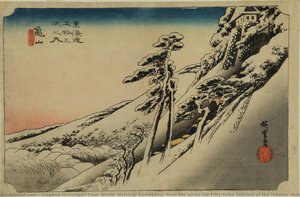
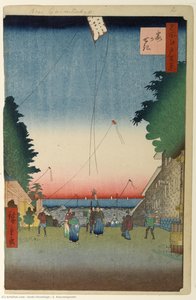
11Пароход и лози (1800) на Андо ХирошигеПароход и лози1800 · Indianapolis Museum of Art 12The Pine Woods of Miho in Suruga Province (Suruga Miho no matsubara) (1858) на Андо ХирошигеThe Pine Woods of Miho in Suruga Province (Suruga Miho no matsubara)1858 · Indianapolis Museum of Art 1362 (55) Komakata Hall and Azuma Bridge (1857) на Андо Хирошиге62 (55) Komakata Hall and Azuma Bridge1857 · Brooklyn Museum 14Evening Snow at Kanbara (1834) на Андо ХирошигеEvening Snow at Kanbara1834 · Los Angeles County Museum of Art 15Dawn in the licensed quarters (1857) на Андо ХирошигеDawn in the licensed quarters1857 · Art Gallery of New South Wales 16Night View of Saruwakacho на Андо ХирошигеNight View of Saruwakacho 17Station 28, Fukuroi (1855) на Андо ХирошигеStation 28, Fukuroi1855 · Indianapolis Museum of Art 18Evening Snow at Asakusa or Woman with Umbrella from the series Eight Views of the Environs of Edo (1800) на Андо ХирошигеEvening Snow at Asakusa or Woman with Umbrella from the series Eight Views of the Environs of Edo1800 · Hill-Stead Museum 19Keishi (Kyoto), Capital (1834) на Андо ХирошигеKeishi (Kyoto), Capital1834 · Indianapolis Museum of Art 20Hara: View of Ashitakayama and Fuji (1855) на Андо ХирошигеHara: View of Ashitakayama and Fuji1855 · Indianapolis Museum of Art 21Yokkaichi (Station #44) (1834) на Андо ХирошигеYokkaichi (Station #44)1834 · Indianapolis Museum of Art 22Desolate Wintry Scene, Hamamatsu, from the series the Fifty-three Stations of the Tokaido (Hoeido edition) на Андо ХирошигеDesolate Wintry Scene, Hamamatsu, from the series the Fifty-three Stations of the Tokaido (Hoeido edition)Nakagawa-machi Bato Hiroshige Museum of Art 23Noge and Yokohama in Musashi Province (Musashi, Noge, Yokohama) (1858) на Андо ХирошигеNoge and Yokohama in Musashi Province (Musashi, Noge, Yokohama)1858 · Indianapolis Museum of Art 24Wild sea breaking on the rocks (1856) на Андо ХирошигеWild sea breaking on the rocks1856 25Ширасуга Шиоми-зака зу (Вид на хълмовете Шиоми) (1833) на Андо ХирошигеШирасуга Шиоми-зака зу (Вид на хълмовете Шиоми)1833 · Indianapolis Museum of Art 26Mt.Fuji on the Left, Yoshiwara, from the series the Fifty-three Stations of the Tokaido (Hoeido edition) на Андо ХирошигеMt.Fuji on the Left, Yoshiwara, from the series the Fifty-three Stations of the Tokaido (Hoeido edition)Nakagawa-machi Bato Hiroshige Museum of Art 27Tsukuda Offing in the Eastern Capital (Tōto: Tsukuda oki) (1858) на Андо ХирошигеTsukuda Offing in the Eastern Capital (Tōto: Tsukuda oki)1858 · Indianapolis Museum of Art 28Kawachi (1853) на Андо ХирошигеKawachi1853 · Indianapolis Museum of Art 29The Dye Craft Shops of Arimatsu, Narumi, from the series The Fifty-three Stations of the Tokaido (Gyosho edition) на Андо ХирошигеThe Dye Craft Shops of Arimatsu, Narumi, from the series The Fifty-three Stations of the Tokaido (Gyosho edition)Nakagawa-machi Bato Hiroshige Museum of Art 30View of Shiomi Slope, Shirasuka, from the series The Fifty-three Stations of the Tokaido (Gyosho edition) на Андо ХирошигеView of Shiomi Slope, Shirasuka, from the series The Fifty-three Stations of the Tokaido (Gyosho edition)Nakagawa-machi Bato Hiroshige Museum of Art 31Entrance to Enoshima in Sagami Province (Sagami Enoshima iriguchi) (1858) на Андо ХирошигеEntrance to Enoshima in Sagami Province (Sagami Enoshima iriguchi)1858 · Indianapolis Museum of Art 32Morning Mist, Mishima, from the series the Fifty-three Stations of the Tokaido (Hoeido edition ) на Андо ХирошигеMorning Mist, Mishima, from the series the Fifty-three Stations of the Tokaido (Hoeido edition )Nakagawa-machi Bato Hiroshige Museum of Art 33The Imagire Sea Ferry, Maisaka, from the series The Fifty-three Stations of the Tokaido (Gyosho edition) на Андо ХирошигеThe Imagire Sea Ferry, Maisaka, from the series The Fifty-three Stations of the Tokaido (Gyosho edition)Nakagawa-machi Bato Hiroshige Museum of Art 34Sukiya Riverbank in the Eastern Capital (Tōto sukiya kaigan) (1858) на Андо ХирошигеSukiya Riverbank in the Eastern Capital (Tōto sukiya kaigan)1858 · Indianapolis Museum of Art 35Satta Pass, Yui, from the series the Fifty-three Stations of the Tokaido (Hoeido edition) на Андо ХирошигеSatta Pass, Yui, from the series the Fifty-three Stations of the Tokaido (Hoeido edition)Nakagawa-machi Bato Hiroshige Museum of Art 36True View of Imagire, Maisaka, from the series the Fifty-three Stations of the Tokaido (Hoeido edition) на Андо ХирошигеTrue View of Imagire, Maisaka, from the series the Fifty-three Stations of the Tokaido (Hoeido edition)Nakagawa-machi Bato Hiroshige Museum of Art 37Clear Winter Morning, Kameyama, from the series the Fifty-three Stations of the Tokaido (Hoeido edition) на Андо ХирошигеClear Winter Morning, Kameyama, from the series the Fifty-three Stations of the Tokaido (Hoeido edition)Nakagawa-machi Bato Hiroshige Museum of Art 38The Tenryu River, Mitsuke, from the series the Fifty-three Stations of the Tokaido (Hoeido edition) на Андо ХирошигеThe Tenryu River, Mitsuke, from the series the Fifty-three Stations of the Tokaido (Hoeido edition)Nakagawa-machi Bato Hiroshige Museum of Art 39The Seven-ri Ferry Crossing, Kuwana, from the series the Fifty-three Stations of the Tokaido (Hoeido edition) на Андо ХирошигеThe Seven-ri Ferry Crossing, Kuwana, from the series the Fifty-three Stations of the Tokaido (Hoeido edition)Nakagawa-machi Bato Hiroshige Museum of Art 40Aronia and Bullfinch на Андо ХирошигеAronia and Bullfinch 41Летици от Катада (1834) на Андо ХирошигеЛетици от Катада1834 · Indianapolis Museum of Art 42Yugyoji Temple, Fujisawa, from the series the Fifty-three Stations of the Tokaido (Hoeido edition) на Андо ХирошигеYugyoji Temple, Fujisawa, from the series the Fifty-three Stations of the Tokaido (Hoeido edition)Nakagawa-machi Bato Hiroshige Museum of Art 43Travellers and Soliciting Women, Goyu, from the series the Fifty-three Stations of the Tokaido (Hoeido edition) на Андо ХирошигеTravellers and Soliciting Women, Goyu, from the series the Fifty-three Stations of the Tokaido (Hoeido edition)Nakagawa-machi Bato Hiroshige Museum of Art 44The Totoumi Bank of the Oi River, Kanaya, from the series the Fifty-three Stations of the Tokaido (Hoeido edition) на Андо ХирошигеThe Totoumi Bank of the Oi River, Kanaya, from the series the Fifty-three Stations of the Tokaido (Hoeido edition)Nakagawa-machi Bato Hiroshige Museum of Art 45The Suruga Bank of the Oi River, Shimada, from the series the Fifty-three Stations of the Tokaido (Hoeido edition) на Андо ХирошигеThe Suruga Bank of the Oi River, Shimada, from the series the Fifty-three Stations of the Tokaido (Hoeido edition)Nakagawa-machi Bato Hiroshige Museum of Art 46Kyoka Tokaido Series, Kanagawa (Yokohama) на Андо ХирошигеKyoka Tokaido Series, Kanagawa (Yokohama)Indianapolis Museum of Art 47Distant View of Miho, Ejiri, from the series the Fifty-three Stations of the Tokaido (Hoeido edition) на Андо ХирошигеDistant View of Miho, Ejiri, from the series the Fifty-three Stations of the Tokaido (Hoeido edition)Nakagawa-machi Bato Hiroshige Museum of Art 48Mt. Fuji in the Morning, Hara, from the series the Fifty-three Stations of the Tokaido (Hoeido edition) на Андо ХирошигеMt. Fuji in the Morning, Hara, from the series the Fifty-three Stations of the Tokaido (Hoeido edition)Nakagawa-machi Bato Hiroshige Museum of Art 49A Horse Fair, Chiriu, from the series the Fifty-three Stations of the Tokaido (Hoeido edition) на Андо ХирошигеA Horse Fair, Chiriu, from the series the Fifty-three Stations of the Tokaido (Hoeido edition)Nakagawa-machi Bato Hiroshige Museum of Art 50Wakasa (1853) на Андо ХирошигеWakasa1853 · Indianapolis Museum of Art 51Distant View of Mt.Akiba, Kakegawa, from the series the Fifty-three Stations of the Tokaido (Hoeido edition) на Андо ХирошигеDistant View of Mt.Akiba, Kakegawa, from the series the Fifty-three Stations of the Tokaido (Hoeido edition)Nakagawa-machi Bato Hiroshige Museum of Art 52The Ichiri-Han Sea Ferry, Arai, from the series The Fifty-three Stations of the Tokaido (Gyosho edition) на Андо ХирошигеThe Ichiri-Han Sea Ferry, Arai, from the series The Fifty-three Stations of the Tokaido (Gyosho edition)Nakagawa-machi Bato Hiroshige Museum of Art 53Gateway Entrance to the Atsuta Shrine on the Beach, Miya, from the series The Fifty-three Stations of the Tokaido (Gyosho edition) на Андо ХирошигеGateway Entrance to the Atsuta Shrine on the Beach, Miya, from the series The Fifty-three Stations of the Tokaido (Gyosho edition)Nakagawa-machi Bato Hiroshige Museum of Art 54Akasaka, from the series The Fifty-three Stations of the Tokaido (Gyosho edition) на Андо ХирошигеAkasaka, from the series The Fifty-three Stations of the Tokaido (Gyosho edition)Nakagawa-machi Bato Hiroshige Museum of Art 55The Sakawa River, Odawara, from the series the Fifty-three Stations of the Tokaido (Hoeido edition) на Андо ХирошигеThe Sakawa River, Odawara, from the series the Fifty-three Stations of the Tokaido (Hoeido edition)Nakagawa-machi Bato Hiroshige Museum of Art 56A Footpath between Ricefield, Hiratsuka, from the series the Fifty-three Stations of the Tokaido (Hoeido edition) на Андо ХирошигеA Footpath between Ricefield, Hiratsuka, from the series the Fifty-three Stations of the Tokaido (Hoeido edition)Nakagawa-machi Bato Hiroshige Museum of Art 57Awa Province: Whirlpool at Naruto (1853) на Андо ХирошигеAwa Province: Whirlpool at Naruto1853 5873 The City Flourishing, the Tanabata Festival (1857) на Андо Хирошиге73 The City Flourishing, the Tanabata Festival1857 59Sarugababa Plain, Futagawa, from the series the Fifty-three Stations of the Tokaido (Hoeido edition) на Андо ХирошигеSarugababa Plain, Futagawa, from the series the Fifty-three Stations of the Tokaido (Hoeido edition)Nakagawa-machi Bato Hiroshige Museum of Art 60Local Specialty Teahouse, Mariko, from the series the Fifty-three Stations of the Tokaido (Hoeido edition) на Андо ХирошигеLocal Specialty Teahouse, Mariko, from the series the Fifty-three Stations of the Tokaido (Hoeido edition)Nakagawa-machi Bato Hiroshige Museum of Art 61Sakanoshita на Андо ХирошигеSakanoshitaIndianapolis Museum of Art 62Станция 23, Фуджида на Андо ХирошигеСтанция 23, ФуджидаIndianapolis Museum of Art 63Marsh Grasses and Mandarin Ducks на Андо ХирошигеMarsh Grasses and Mandarin Ducks 6450th station, Minakuchi на Андо Хирошиге50th station, Minakuchi 65Sakanoshita: the Throwing Away the Brush Peak (1834) на Андо ХирошигеSakanoshita: the Throwing Away the Brush Peak1834 · Brooklyn Museum 66Shibaura Bay of Musashi Province (801) на Андо ХирошигеShibaura Bay of Musashi Province801 · Метрополитън Музей на изкуствата 67Koyurugi Beach of Sagami Province (801) на Андо ХирошигеKoyurugi Beach of Sagami Province801 · Метрополитън Музей на изкуствата 68Honmoku Bay of Musashi Province (801) на Андо ХирошигеHonmoku Bay of Musashi Province801 · Метрополитън Музей на изкуствата 69Untitled (Two Rabbits, Pampas Grass, and Full Moon) (1851) на Андо ХирошигеUntitled (Two Rabbits, Pampas Grass, and Full Moon)1851 7011. Kiyomizu Hall and Shinobazu Pond at Ueno (1857) на Андо Хирошиге11. Kiyomizu Hall and Shinobazu Pond at Ueno1857 7185. Kinokuni Hill and Distant View of Akasaka and the Tameike Pond (1857) на Андо Хирошиге85. Kinokuni Hill and Distant View of Akasaka and the Tameike Pond1857 7276 Bamboo Quay by Kyōbashi Bridge (1857) на Андо Хирошиге76 Bamboo Quay by Kyōbashi Bridge1857 7358 (52) Sudden Shower over Shin-Ōhashi bridge and Atake (1857) на Андо Хирошиге58 (52) Sudden Shower over Shin-Ōhashi bridge and Atake1857 · Tokyo Fuji Art Museum 74103. Senju Great Bridge (1857) на Андо Хирошиге103. Senju Great Bridge1857 7518. The Ōji Inari Shrine (1857) на Андо Хирошиге18. The Ōji Inari Shrine1857 76113. Aoi Slope Outside Toranomon Gate (1857) на Андо Хирошиге113. Aoi Slope Outside Toranomon Gate1857 77114. Bikuni Bridge in Snow (1857) на Андо Хирошиге114. Bikuni Bridge in Snow1857 7870 (60) The Mouth of the Nakagawa River (1857) на Андо Хирошиге70 (60) The Mouth of the Nakagawa River1857 792. Kasumigaseki (1857) на Андо Хирошиге2. Kasumigaseki1857 8015. Suwa Bluff in Nippori (1857) на Андо Хирошиге15. Suwa Bluff in Nippori1857 8163 (69) The Ayase River and Kanegafuchi (1857) на Андо Хирошиге63 (69) The Ayase River and Kanegafuchi1857 82115. The Takata Riding Grounds (1857) на Андо Хирошиге115. The Takata Riding Grounds1857 8386. Naitō Shinjuku in Yotsuya (1857) на Андо Хирошиге86. Naitō Shinjuku in Yotsuya1857 8416. Flower Park and Dangozaka Slope in Sendagi (1857) на Андо Хирошиге16. Flower Park and Dangozaka Slope in Sendagi1857 8568 (59) Open Garden at the Hachiman Shrine in Fukagawa (1857) на Андо Хирошиге68 (59) Open Garden at the Hachiman Shrine in Fukagawa1857 8610. Sunrise at Kanda Myōjin Shrine (1857) на Андо Хирошиге10. Sunrise at Kanda Myōjin Shrine1857 87Peach and Long-tailed Bird на Андо ХирошигеPeach and Long-tailed Bird 88Golden Pheasant in Bracken на Андо ХирошигеGolden Pheasant in Bracken 89The Imado Bridge at the Foot of Mount Matsuchi (801) на Андо ХирошигеThe Imado Bridge at the Foot of Mount Matsuchi801 · Метрополитън Музей на изкуствата 90Dog (1858) на Андо ХирошигеDog1858 · Indianapolis Museum of Art 91118. Kitsunebi on New Year's Night Under the Enoki Tree near Ōji (1857) на Андо Хирошиге118. Kitsunebi on New Year's Night Under the Enoki Tree near Ōji1857 92109. Minami Shinagawa and Samezu Coast (1857) на Андо Хирошиге109. Minami Shinagawa and Samezu Coast1857 93Night View of Matsuchiyama and the San (1857) на Андо ХирошигеNight View of Matsuchiyama and the San1857 · Los Angeles County Museum of Art 94Акасака №37 на Андо ХирошигеАкасака №37Indianapolis Museum of Art 95Shiojiri Pass in Shinano Province (Shinano Shiojiritōge) (1858) на Андо ХирошигеShiojiri Pass in Shinano Province (Shinano Shiojiritōge)1858 · Indianapolis Museum of Art 96Yoshiwara на Андо ХирошигеYoshiwaraIndianapolis Museum of Art 97Fuchu, No. 20 на Андо ХирошигеFuchu, No. 20Indianapolis Museum of Art 98Woman Walking in the Snow (1850) на Андо ХирошигеWoman Walking in the Snow1850 · Метрополитън Музей на изкуствата 9982. Moon Viewing (1857) на Андо Хирошиге82. Moon Viewing1857 100Station 27, Kakegawa (1855) на Андо ХирошигеStation 27, Kakegawa1855 · Indianapolis Museum of Art

Знаменитите картини на Андо Хирошиге, период по период

Темите, които привличат погледа на Андо Хирошиге

Четирите найчесто срещани теми в тези оригинални творби, всяка с най-добрия си пример.

Музеите, в които се съхраняват оригиналите на Андо Хирошиге

8 музея, които притежават най-голям брой от картините на тази страница.

Музеи Град Творения на Андо Хирошиге Картини от този списък
Nakagawa-machi Bato Hiroshige Museum of Art, НагасакиNakagawa-machi Bato Hiroshige Museum of Art Нагасаки 30 Early Department from a Daimyo, The Rokugo River Ferry, Kawasaki, from the series the Fifty-three Stations of the Tokaido (Hoeido edition ), Tenryu River Ferry Crossing, Mitsuke, from the series The Fifty-three Stations of the Tokaido (Gyosho Edition)
Indianapolis Museum of Art, ИндианаполисIndianapolis Museum of Art Индианаполис 35 Hakone, Station 36, Goyu; Kyoka Tokaido Series, Фушими, Стация № 51
Метрополитън Музей на изкуствата, Ню ЙоркМетрополитън Музей на изкуствата Ню Йорк 8 Shibaura Bay of Musashi Province, Koyurugi Beach of Sagami Province, Honmoku Bay of Musashi Province
Brooklyn Museum, БруклинBrooklyn Museum Бруклин 4 Itsukushima in Aki Province, 62 (55) Komakata Hall and Azuma Bridge, Sakanoshita: the Throwing Away the Brush Peak
Hill-Stead Museum, ФармингтънHill-Stead Museum Фармингтън 3 Shinagawa Sunrise from the series Fifty-three Stations on the Tokaido Road, Evening Snow at Asakusa or Woman with Umbrella from the series Eight Views of the Environs of Edo
Los Angeles County Museum of Art, Лос АнджелисLos Angeles County Museum of Art Лос Анджелис 2 Evening Snow at Kanbara, Night View of Matsuchiyama and the San
Музеят Ван Гог, АмстердамМузеят Ван Гог Амстердам 1 The maple leaves of Mama, Tekona shrine and Tsugi bridge
Art Gallery of New South Wales, СидниArt Gallery of New South Wales Сидни 1 Dawn in the licensed quarters

Андо Хирошиге, по една емблематична картина на десетилетие

Произведения по десетилетия

Изберете десетилетие, за да видите оригиналната творба, която го определя.

Картините на Андо Хирошиге: отговорите на галерията

Коя картина на Андо Хирошиге е най-известната от всички?Разкрийте отговора

Early Department from a Daimyo, Nakagawa-machi Bato Hiroshige Museum of Art, Нагасаки. Следват The maple leaves of Mama, Tekona shrine and Tsugi bridge (1857) и Hakone (1834).

Кои са 10-те най-добри картини на Андо Хирошиге?Разкрийте отговора

Early Department from a Daimyo, The maple leaves of Mama, Tekona shrine and Tsugi bridge, Hakone, Station 36, Goyu; Kyoka Tokaido Series, Фушими, Стация № 51, Ichikoku Bridge in the Eastern Capital (Tōto: Ichikoku bashi), Shinagawa Sunrise from the series Fifty-three Stations on the Tokaido Road, The Rokugo River Ferry, Kawasaki, from the series the Fifty-three Stations of the Tokaido (Hoeido edition ), Itsukushima in Aki Province и Tenryu River Ferry Crossing, Mitsuke, from the series The Fifty-three Stations of the Tokaido (Gyosho Edition). Класацията по-горе показва годината и музея за всяко от тях.

Колко произведения е създал Андо Хирошиге?Разкрийте отговора

В нашия каталог са представени 353 произведения на Андо Хирошиге, датирани от 1833 до 1858.

Къде са изложени най-известните оригинали на Андо Хирошиге?Разкрийте отговора

Предимно в Nakagawa-machi Bato Hiroshige Museum of Art (Нагасаки), Indianapolis Museum of Art (Индианаполис) и Метрополитън Музей на изкуствата (Ню Йорк). В горната таблица с музеи са изброени всички тях.

Кога Андо Хирошиге създава най-известните си картини?Разкрийте отговора

В 1850s: 44 от 100 произведенията на тази страница са създадени тогава, като The maple leaves of Mama, Tekona shrine and Tsugi bridge са сред тях.

Кои са най-ранните и най-късните известни творби на Андо Хирошиге?Разкрийте отговора

На тази страница най-старата е Ширасуга Шиоми-зака зу (Вид на хълмовете Шиоми) (1833), а най-новата е Ichikoku Bridge in the Eastern Capital (Tōto: Ichikoku bashi) (1858).

Към кои сюжети Андо Хирошиге се връща най-често?Разкрийте отговора

Edo period (30), Ukiyo-e (22) и Woodblock print (21), разпределени в 100 произведения на тази страница.

С коя техника е работил най-често Андо Хирошиге?Разкрийте отговора

Woodblock Print, за 89 от 100 произведения на тази страница.

С кое художествено направление е свързан(а) Андо Хирошиге?Разкрийте отговора

Japanese landscape painting, судейки по оригиналите на тази страница.

Кои оригинални творби на Андо Хирошиге притежава Nakagawa-machi Bato Hiroshige Museum of Art?Разкрийте отговора

Early Department from a Daimyo, The Rokugo River Ferry, Kawasaki, from the series the Fifty-three Stations of the Tokaido (Hoeido edition ) и Tenryu River Ferry Crossing, Mitsuke, from the series The Fifty-three Stations of the Tokaido (Gyosho Edition): Nakagawa-machi Bato Hiroshige Museum of Art, Нагасаки притежава 29 от произведенията на тази страница.

Андо Хирошиге: художникът

A Poetic Vision of Edo Japan: The Life and Art of Utagawa Hiroshige

Utagawa Hiroshige, роден като Andō Tokutarō през 1797 г. в оживения град Едо (съвременен Токио), е ключова фигура в света на *укиё-е*, или “снимки на плаващата светлина”. Въпреки че е дълбоко заровен в традициите на японското дърворезбарство, Hiroshige преминава отвъд простото възпроизвеждане, овладявайки пейзажите си с поетично чувство, което резонираше дълбоко както в Япония, така и по-късно в целия западен свят. Животът му се развиваше по време на относително мирна и процъфтяваща епоха на Токугава, но също така и една белязана от нарастващ социален сдвис и предстояща западнализация – сили, които в крайна сметка допринесоха за упадъка на *укиё-е*, въпреки че усилваха трайното наследство на Hiroshige. Първоначално предназначен за по-традиционен път в самурайско семейство – баща му служи като пожарогасител, – артистичните склонности на Hiroshige го доведоха до стажуване при Utagawa Toyohiro, майстор на школата Утагава. Това се оказа решаващ момент, отклонявайки го от популярните изображения на хорти и актьори, предпочитани от много *укиё-е* художници, към фокус върху пейзаж – жанр, който той в крайна сметка преосмисли.

От Сцени от Жанра до Емоционални Пейзажи

Ранните творби на Hiroshige следваха конвенциите на неговата школа, включвайки портрети и сцени от ежедневието. Въпреки това, неговото приемане на пейзажа наистина го отличи. Вдъхновен от по-ранни майстори като Hokusai – чиито *Тринадесет и шест гледки към Фуджи* вече бяха очаровали публиката – Hiroshige разработи уникален стил, характеризиращ се с атмосферно перспективно изобразяване, фини цветови палитри и дълбока чувствителност към променящите се сезони. Той не просто представяше места; той ги описваше с настроение, улавяйки същността на конкретен момент във времето. Серията *Петдесет и три станции на Тōkaidō* (1833–1834), може би най-известното му постижение, документира пътуването по Tōkaidō път – основния маршрут между Едо и Киото, не като прост туристически дневник, а като серия от емоционални накъсвания – внезапна дъжд в Shono, отдалечен изглед към Фуджи от Kanaya, оживената дейност в Odawara. Всяка печат е изпълнена с усещане за преходност и тиха красота, канейки зрителите да изпитат пътуването заедно с пътниците. Той майсторски използва *бокаши*, техника, включваща множество отпечатъци, за да създаде фини градации на цвят, добавяйки дълбочина и атмосфера към композициите си.

Майстор на Атмосферата и Техниката

Техническото умение на Hiroshige беше толкова забележително, колкото и неговата артистична визия. Той не просто се интересуваше от точно представяне; той търсеше да улови *усещането* за място. Неговите цветове, макар често сдържани в сравнение с някои от съвременниците му, бяха ключови за постигането на този ефект. Той често използваше множество блокове за един цвят, позволявайки си да създава нюансирани тонове и атмосферни ефекти, които бяха изключително трудни за възпроизвеждане. Деликатните сини нюанси в изображенията му на дъжд или мъгла, топлите цветове на есенната листвена кора – те не бяха случайни; те бяха внимателно обмислени елементи, предназначени да предизвикат специфични емоции и усещания. Отвъд *бокаши*, Hiroshige беше умел в използването на празно пространство – *ма*, концепция, централна за японската естетика, позволяваща на областите от печатa да “дишат” и подобрявайки цялостното усещане за спокойствие. Неговата серия *Сто знаменити гледки на Едо* (1856–1858) допълнително демонстрираше неговото майсторство, предлагайки интимни погледи към живота и пейзажите на любимия му град.

Влияние и Последователност

Въпреки че традицията *укиё-е* започна да отслабва след смъртта на Hiroshige през 1858 г. – упадък, ускорен от Реставрацията на Мейджи и последващия приток на западна култура – неговото влияние върху художествения свят се оказа изненадващо трайно. В края на 19-ти век японските печатчета наводняват Европа, предизвиквайки феномен, известен като *Japonisme*. Художници като Едуард Мане, Клод Моне и Огюст Ренуар бяха очаровани от смелите композиции, нивелираните перспективи и необичайните цветове на *укиё-е*, интегрирайки тези елементи в собственото си творчество. Винсент ван Гог беше особено запленен от печатчетата на Hiroshige, създавайки копия на няколко от тях, включително "Цъфтяща плодна градина след Hiroshige", демонстрирайки дълбокото си възхищение към японския майстор за използването на цвят и композиция. Влиянието на Hiroshige се простира отвъд живописта; то може да бъде видяно в архитектурата, дизайна и дори литературата. Днес Utagawa Hiroshige е запомнен не само като брилянтен художник, но и като културен посредник, който помогна за свързването между Изтока и Запада, оставяйки незабратимо влияние върху историята на изкуството.

Забележителни произведения

  • Петдесет и три станции на Tōkaidō: Най-известната серия на Hiroshige, представяща пътуването по основния път между Едо и Киото.
  • Сто знаменити гледки на Едо: Завладяващ портрет на живота и пейзажите в любимия му град.
  • Влияние върху серията "Japonaiserie" на Винсент ван Гог: Включително “Цъфтяща плодна градина след Hiroshige”, демонстрираща дълбокото възхищение на Ван Гог към японския майстор.