Сигмар Полке: портрет на художника
A Life Forged in Displacement: The Early Years and Artistic Formation of Sigmar Polke
Sigmar Polke’s artistic journey was profoundly shaped by the tumultuous currents of 20th-century history, beginning with his birth in Oels (now Olesnica), a small town in German Silesia, in 1941. His early life was marked by displacement; as a child, he fled with his family first to Thuringia and then, seeking refuge from Communist rule, to West Germany in 1953. This experience of being uprooted, of existing between worlds – caught between the remnants of a shattered past and an uncertain future – instilled within him a lifelong skepticism towards fixed ideologies and a fascination with the instability of perception – themes that would become central to his art. Before dedicating himself fully to painting, Polke underwent an apprenticeship as a stained-glass worker in Düsseldorf (1959-1960), a formative experience that honed his technical skill and introduced him to the possibilities of manipulating light and color, skills he would later subtly incorporate into his own paintings. He then formally studied at the Kunstakademie Düsseldorf (1961-1967) under a constellation of influential figures: Karl Otto Götz, Gerhard Hoehme, and most significantly, Joseph Beuys. It was within this environment – a crucible of artistic experimentation and intellectual debate – that Polke began to forge his unique artistic voice, one characterized by an audacious willingness to challenge conventions, a playful engagement with popular culture, and a relentless questioning of established norms.
Capitalist Realism and the Subversion of Ideology
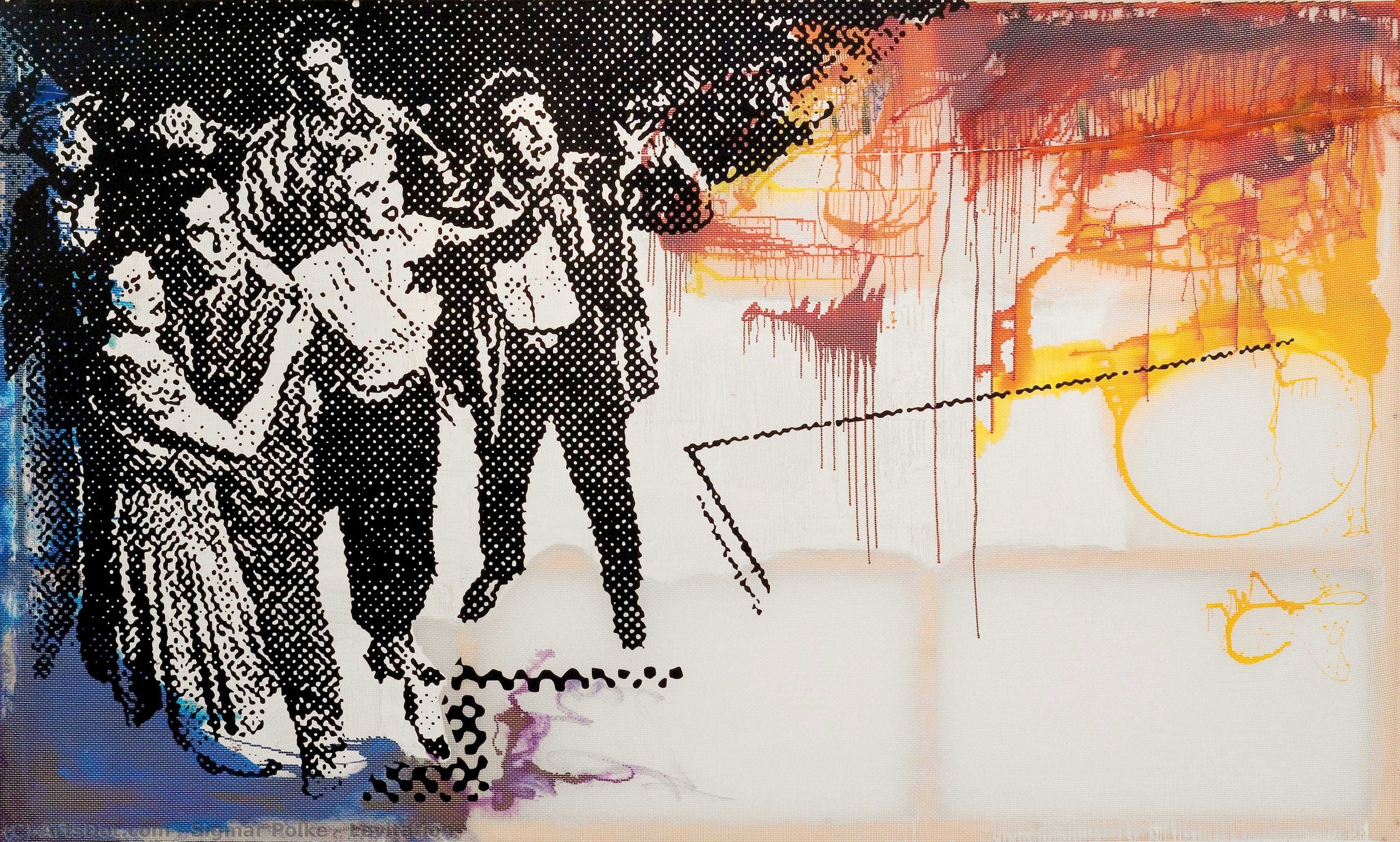
Emerging in the early 1960s, Polke’s work quickly aligned with a burgeoning counter-cultural movement. In 1963, alongside Gerhard Richter, Konrad Lueg, and Manfred Kuttner, he co-founded *Kapitalistischer Realismus* (Capitalist Realism). This was not an artistic style in the traditional sense but rather a provocative gesture – a deliberate critique of both Western consumer culture and the rigid dogma of Soviet Socialist Realism. The movement’s name itself was deliberately ambiguous, suggesting that both systems were equally capable of producing artificial realities, of presenting a distorted reflection of truth. Polke's early paintings from this period often appropriated imagery from advertising, comics, and popular media – billboards, magazine spreads, even the iconography of American television – presenting them with a detached irony that exposed their underlying ideological structures. He wasn’t simply rejecting capitalism; he was demonstrating its pervasive influence on perception itself, revealing how images could be used to manipulate desires and shape beliefs. These works weren't intended as straightforward condemnations but rather as unsettling examinations of the mechanisms of control. The use of halftone dots, mimicking newspaper reproduction, became a signature technique, lending an air of manufactured reality to his subjects.
Wanderlust, Photography, and the Alchemy of Materials
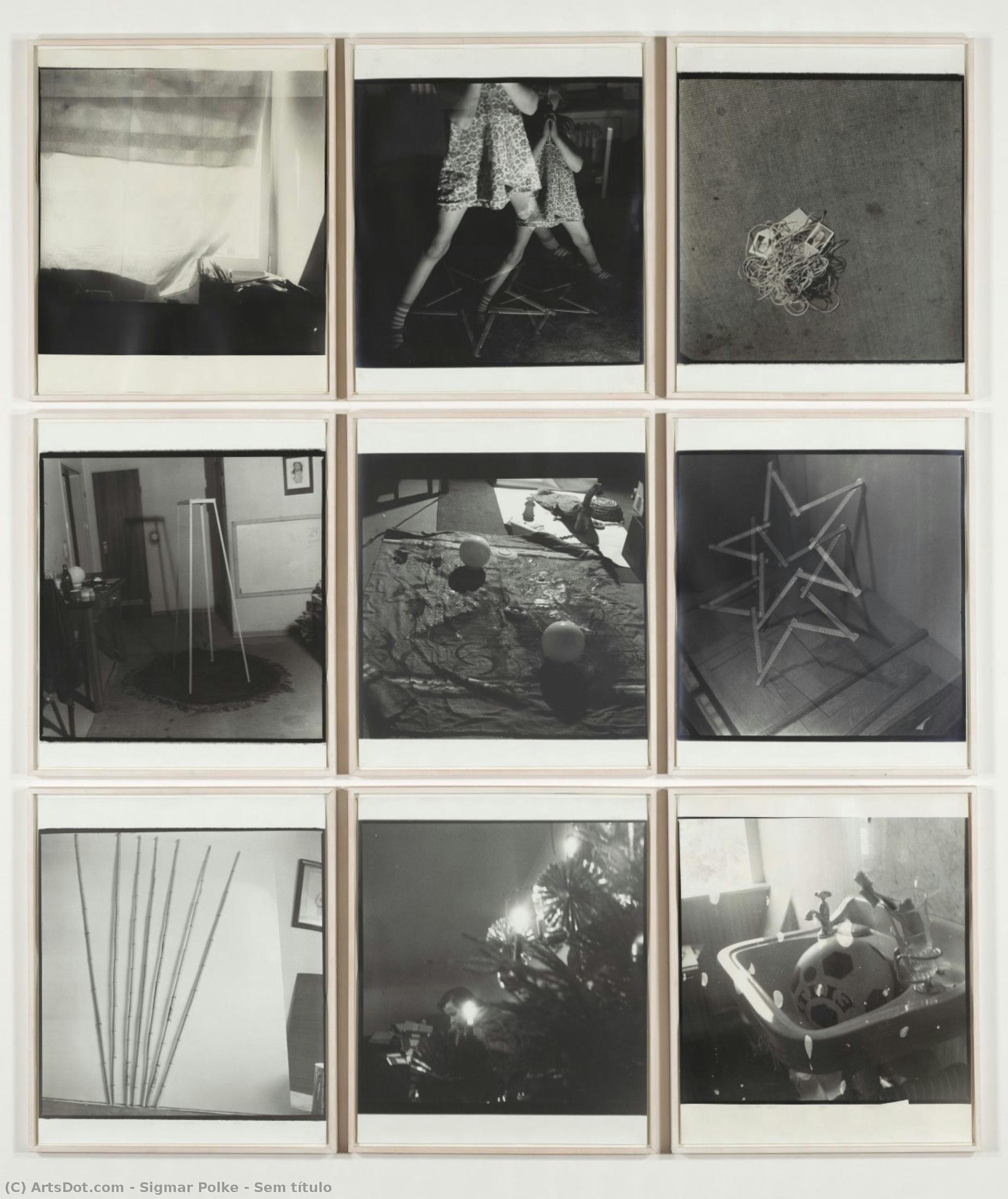
The 1970s witnessed a significant shift in Polke’s artistic focus towards photography. Driven by an insatiable curiosity about the world – and perhaps a desire to escape the confines of Düsseldorf – he embarked on extensive travels to Afghanistan, Brazil, France, Pakistan, and the United States, documenting everyday life with a keen eye for the absurd and the unexpected. These weren't straightforward documentary photographs; Polke subjected his images to radical chemical manipulation, altering their colors, textures, and meanings through processes like bleaching, toning, and layering. He embraced chance operations – deliberately splashing paint onto negatives, exposing them to sunlight, or using photographic chemicals in unconventional ways – challenging the notion of photography as an objective record of reality. This period reflects a deep exploration of perception – how our understanding of the world is shaped by subjective experience and mediated through technology. It was during this time that he began experimenting with incorporating industrial materials into his paintings: arsenic, meteor dust, turquoise, beeswax – elements that added layers of complexity and unpredictability to his work. He viewed these materials not merely as pigments but as catalysts for transformation, seeking to unlock hidden properties within them and create works that were constantly evolving, defying easy categorization.
Neo-Expressionism, Historical Commentary, and Lasting Legacy
In the 1980s, Polke dramatically returned to painting, but not in any conventional sense. He began experimenting with unconventional materials – arsenic, meteor dust, turquoise, beeswax – incorporating them into his canvases alongside traditional pigments. This alchemical approach was driven by a desire to unlock hidden properties within matter and to create works that were constantly evolving, defying easy categorization. His later work often engaged with historical events and perceptions thereof, frequently adopting a sardonic or critical perspective. While his style was sometimes associated with Neo-Expressionism due to its expressive brushwork and emotionally charged imagery, he remained fundamentally resistant to categorization. He continued to challenge the boundaries of painting, layering images, incorporating commercial fabrics, and embracing chance as an integral part of his creative process. His work is not easily deciphered; it resists simple interpretations and demands active engagement from the viewer. Polke’s influence can be seen in the work of countless artists who followed, those who dare to challenge conventions and embrace ambiguity as a source of creative power. He died in Cologne in June 2010 after a long battle with cancer, leaving behind a body of work that continues to inspire and provoke – a testament to his unique vision and enduring legacy.
Influences and Artistic Kinships
Throughout his career, Polke engaged with a diverse range of artistic influences. Joseph Beuys, his teacher at the Düsseldorf Kunstakademie, was particularly significant, shaping Polke’s exploration of unconventional materials and social commentary. The bold imagery and consumer culture critique of American *Pop Art* also resonated with him, though he filtered these influences through a distinctly German lens of skepticism and irony. Furthermore, his work engaged with the broader context of *German Art Informel*, an abstract expressionist movement that emphasized spontaneous gesture and material exploration. Polke’s artistic kinship with figures like Karl Otto Götz and Konrad Lüg—both fellow travelers in the early days of Capitalist Realism—further illuminates the collaborative spirit and intellectual ferment that characterized his formative years. Ultimately, Polke transcended any single label or movement, forging a unique path that continues to inspire artists today.