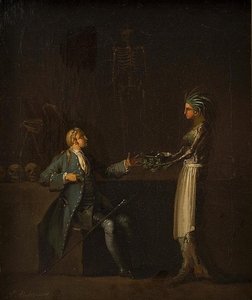
Портрет на Николай Абилдгор

100-те най-известни картини на Николай Абилдгор, селекция от галерията

Обновено Ноември 2026 · класирано според нашия индекс на популярност (търсения, посещения и поръчки за всяко произведение) · 106 творби на Николай Абилдгор в нашия каталог

Накратко

От всички оригинали, оставени от Николай Абилдгор, най-известният е The Greek Poet Sappho and the Girl from Mytilene (1809), който се намира в колекцията на Statens Museum for Kunst, Копенхаген. След тях непосредствено следват Cupid Playing the Lyre. (1782) и Christian V Presents Danish Law 1683 (1784). Нашият каталог съдържа 106 произведения на Николай Абилдгор; галерията е съхранила 100-те най-обожавани от света, всяко от тях представен с неговата дата, неговия музей и неговата история.

1743 – 1809, Копенхаген Neoclassicism Най-много творби: Statens Museum for Kunst

Топ 10-те картини на Николай Абилдгор: изборът на галерията

1
The Greek Poet Sappho and the Girl from Mytilene (1809) на Николай Абилдгор

The Greek Poet Sappho and the Girl from Mytilene

1809 · Acrylic On Canvas · Statens Museum for Kunst, Копенхаген

Nicolai Abildgaard’s Sappho and Mytilene: A Vision of Romantic Idealism The painting “The Greek Poet Sappho and the Girl from Mytilene,” created by Nicolai Abraham Abildgaard in 1809, stands as a cornerstone of Danish neoclassical art and embodies the fervent spirit of Romantic idealism. More than just a depiction of two figures, it’s an exploration of beauty, longing, and the sublime—themes central to the artistic sensibilities of the era. Housed…

2
Cupid Playing the Lyre. (1782) на Николай Абилдгор

Cupid Playing the Lyre.

1782 · Oil On Canvas · Музей Торвалдсен, Копенхаген

In the quiet stillness of a mythological moment, Cupid Playing the Lyre. emerges from the shadows. This oil on canvas work, created by Nicolai Abildgaard around 1782, captures a solitary figure caught in a private, celestial act. The scene centers on a youthful, winged Cupid, whose presence brings a sense of soft grace to the composition. He leans toward a lyre that rests upon a stone pedestal, his delicate form…

3
Christian V Presents Danish Law 1683 (1784) на Николай Абилдгор

Christian V Presents Danish Law 1683

1784 · Oil On Canvas · Statens Museum for Kunst, Копенхаген

Christian V Presents Danish Law 1683 is an oil painting by Nicolai Abildgaard. Created in 1784, this work functions as a history scene depicting a specific real event. The subject matter focuses on a Danish king presenting a body of law, capturing a moment of official legal or political significance. The scene is rendered in a documentary style that emphasizes the gravity of the proceedings.

5
The Potuans are Surprised to see Niels Klim Genuflect in front of the Wise Prince. (1785) на Николай Абилдгор

The Potuans are Surprised to see Niels Klim Genuflect in front of the Wise Prince.

1785 · Oil · Statens Museum for Kunst, Копенхаген

The canvas bears the title The Potuans are Surprised to see Niels Klim Genuflect in front of the Wise Prince. It is a work by Nicolai Abildgaard, a painter who emerged from the scholarly atmosphere of Copenhagen, Denmark. The oil on canvas captures a singular moment of protocol and tension, frozen in the year 1785.

6
Frederik II Builds Kronborg Castle at Elsinore (1782) на Николай Абилдгор

Frederik II Builds Kronborg Castle at Elsinore

1782 · Oil On Canvas · Statens Museum for Kunst, Копенхаген

In this significant work of Danish history, Frederik II Builds Kronborg Castle at Elsinore, the artist Nicolai Abildgaard captures a moment of profound national construction. The painting centers on Frederick II of Denmark, depicted during the foundational stages of the Kronborg Castle at Elsinore. It is a scene that looks back at the 18th century through a lens of historical narrative, focusing on the architectural ambitions of the Danish monarchy.

7
Kulturens herredømme (1796) на Николай Абилдгор

Kulturens herredømme

1796 · Oil · Statens Museum for Kunst, Копенхаген

The oil painting titled Kulturens herredømme, known in English as The supremacy of culture, was executed by the artist Nicolai Abildgaard. This work is identified by the accession number KMS1836. The composition features a monochromatic, black-and-white palette that emphasizes the play of light and shadow across the figures.

8
Christian VII Uniting the Ducal with the Royal Part of Holstein in 1767 (1790) на Николай Абилдгор

Christian VII Uniting the Ducal with the Royal Part of Holstein in 1767

1790 · Oil On Canvas · Statens Museum for Kunst, Копенхаген

The composition centers on a seated male figure, identified as King Christian VII, positioned on the right side of the canvas. He is dressed in white and gold regalia, wearing a crown and holding a scepter. To his left, two female figures are positioned; one faces the viewer directly, while the other is seen in profile, gesturing toward the king. Above the central group, a dark eagle flies through a…

9
Magnus Stenbock Surrenders the Fortress of Tønningen to Frederik IV in 1714 (1785) на Николай Абилдгор

Magnus Stenbock Surrenders the Fortress of Tønningen to Frederik IV in 1714

1785 · Oil On Canvas · Statens Museum for Kunst, Копенхаген

In the grand tapestry of European history, few moments capture the gravity of shifting power quite like the scene depicted in Nicolai Abraham Abildgaard’s 1785 masterpiece, Magnus Stenbock Surrenders the Fortress of Tønningen to Frederik IV in 1714. This evocative oil painting serves as a window into a pivotal era of military diplomacy and sovereign command. The composition is masterfully orchestrated, drawing the viewer into a crowded, dynamic tableau where…

10
The robber's housekeeper comforts the young girl by telling the myth of Amor and Psyche. Motif from Apulejus, The Golden Donkey (1808) на Николай Абилдгор

The robber's housekeeper comforts the young girl by telling the myth of Amor and Psyche. Motif from Apulejus, The Golden Donkey

1808 · Oil On Canvas · Statens Museum for Kunst, Копенхаген

The robber's housekeeper comforts the young girl by telling the myth of Amor and Psyche. Motif from Apulejus, The Golden Donkey is an oil on canvas work created about 1808. This piece captures a quiet, narrative moment between two figures, framed by the presence of a donkey in the shadows. The scene draws its inspiration from the literary motifs found in Apuleius's writings.

Изборът на Николай Абилдгор продължава, от 11 до 100

11Apollo charging the Parcae to visit Ceres, who has fled from the Earth (1809) на Николай АбилдгорApollo charging the Parcae to visit Ceres, who has fled from the Earth1809 · Statens Museum for Kunst 12Christian III Succouring Denmark (1780) на Николай АбилдгорChristian III Succouring Denmark1780 · Statens Museum for Kunst 13Christian III Succouring Denmark (1780) на Николай АбилдгорChristian III Succouring Denmark1780 · Statens Museum for Kunst 14The Construction of Copenhagen´s Dock in the Reign of Christian VI (1786) на Николай АбилдгорThe Construction of Copenhagen´s Dock in the Reign of Christian VI1786 · Statens Museum for Kunst 15The Prayers of the Potuans at the Feast of the Unfathomable God (1785) на Николай АбилдгорThe Prayers of the Potuans at the Feast of the Unfathomable God1785 · Statens Museum for Kunst 16A farewell scene (1783) на Николай АбилдгорA farewell scene1783 · Nivaagaards Malerisamling 17Rome as Ruler of the World (1784) на Николай АбилдгорRome as Ruler of the World1784 · Statens Museum for Kunst 18The Triumph of a Potuan, whose Reform Proposal has been Approved (1785) на Николай АбилдгорThe Triumph of a Potuan, whose Reform Proposal has been Approved1785 · Statens Museum for Kunst 19Absolute Monarchy Assigned to Frederik III in 1660 (1783) на Николай АбилдгорAbsolute Monarchy Assigned to Frederik III in 16601783 · Statens Museum for Kunst 20The Establishment of Schools (1781) на Николай АбилдгорThe Establishment of Schools1781 · Statens Museum for Kunst 21Asiatic Trade (1782) на Николай АбилдгорAsiatic Trade1782 · Statens Museum for Kunst 22Niels Klim thinks he hears the Deacon when he is awakened by a Bull (1785) на Николай АбилдгорNiels Klim thinks he hears the Deacon when he is awakened by a Bull1785 · Statens Museum for Kunst 23Standardization of Weights and Measures in 1683 (1784) на Николай АбилдгорStandardization of Weights and Measures in 16831784 · Statens Museum for Kunst 24The Foundation of the Royal Library (1783) на Николай АбилдгорThe Foundation of the Royal Library1783 · Statens Museum for Kunst 25Richard III wakes up from his nightmare in his tent in Bosworth (1785) на Николай АбилдгорRichard III wakes up from his nightmare in his tent in Bosworth1785 · Statens Museum for Kunst 26Alexander's messenger at the Persian philosopher (1785) на Николай АбилдгорAlexander's messenger at the Persian philosopher1785 27Alexander the Great and an officer visit Diogenes. (1785) на Николай АбилдгорAlexander the Great and an officer visit Diogenes.1785 28The Prince Royal Frederik awakens the sleeping Fama with the help of Clio. Study. (1783) на Николай АбилдгорThe Prince Royal Frederik awakens the sleeping Fama with the help of Clio. Study.1783 · The Museum of National History at Frederiksborg Castle 29Richard III Before the Battle of Bosworth (1780) на Николай АбилдгорRichard III Before the Battle of Bosworth1780 · Randers Kunstmuseum 30The Archangel Michael and Satan Disputing about the Body of Moses (1785) на Николай АбилдгорThe Archangel Michael and Satan Disputing about the Body of Moses1785 · ARoS Aarhus Kunstmuseum 31Niels Klim Receives the Homage of the Quamites. (1787) на Николай АбилдгорNiels Klim Receives the Homage of the Quamites.1787 · Statens Museum for Kunst 32King Priam Pleading with Achilles for the Corpse of Hector (1794) на Николай АбилдгорKing Priam Pleading with Achilles for the Corpse of Hector1794 · Statens Museum for Kunst 33The Foundation of the Copenhagen Fire Insurance (1786) на Николай АбилдгорThe Foundation of the Copenhagen Fire Insurance1786 · Statens Museum for Kunst 34Mercury by the Seashore (1794) на Николай АбилдгорMercury by the Seashore1794 · Statens Museum for Kunst 35Richard III (1787) на Николай АбилдгорRichard III1787 36Achilles and the Centaur Cheiron (1796) на Николай АбилдгорAchilles and the Centaur Cheiron1796 · Statens Museum for Kunst 37Thetis Immersing her Infant Son Achilles in the River Styx to Make him Invulnerable (1796) на Николай АбилдгорThetis Immersing her Infant Son Achilles in the River Styx to Make him Invulnerable1796 · Statens Museum for Kunst 38The Death of Achilles (1796) на Николай АбилдгорThe Death of Achilles1796 · Statens Museum for Kunst 39Philosophy. Allegorical figure. (1800) на Николай АбилдгорPhilosophy. Allegorical figure.1800 · Statens Museum for Kunst 40The Slave Davus and the Maid Mysis. From Terence´s Andria. (1804) на Николай АбилдгорThe Slave Davus and the Maid Mysis. From Terence´s Andria.1804 · Statens Museum for Kunst 41Christian I Raising the Province of Holstein to the State of a Duchy in 1460 (1778) на Николай АбилдгорChristian I Raising the Province of Holstein to the State of a Duchy in 14601778 · Statens Museum for Kunst 42Jurisprudence. Allegorical Figure (1800) на Николай АбилдгорJurisprudence. Allegorical Figure1800 · Statens Museum for Kunst 43Achilles and the Daughters of Lycomedes (1796) на Николай АбилдгорAchilles and the Daughters of Lycomedes1796 · Statens Museum for Kunst 44Theology. Allegorical figure (1800) на Николай АбилдгорTheology. Allegorical figure1800 · Statens Museum for Kunst 45Simo and his former slave Sosia. From Terence´s Andria. (1803) на Николай АбилдгорSimo and his former slave Sosia. From Terence´s Andria.1803 · Statens Museum for Kunst 46Julia and Fulvia (1800) на Николай АбилдгорJulia and Fulvia1800 · Национален музей за изкуство, архитектура и дизайн 47Portrait of the artist's son Marcus Aurelius Abildgaard. (1797) на Николай АбилдгорPortrait of the artist's son Marcus Aurelius Abildgaard.1797 48Fingal gives his weapons to Oscar. (1796) на Николай АбилдгорFingal gives his weapons to Oscar.1796 · Kunsten Museum of Modern Art Aalborg 49Allegory of Philosophy (1800) на Николай АбилдгорAllegory of Philosophy1800 50Allegory of Protestantism (1809) на Николай АбилдгорAllegory of Protestantism1809 · Ribe Kunstmuseum 51The Catholic Worldview, Allegory (1809) на Николай АбилдгорThe Catholic Worldview, Allegory1809 · Ribe Kunstmuseum 52The Oath of Fealty in 1660 (1806) на Николай АбилдгорThe Oath of Fealty in 16601806 · Statens Museum for Kunst 53Odysseus Takes Counsel with Teiresias. From Homer´s Odyssey (1809) на Николай АбилдгорOdysseus Takes Counsel with Teiresias. From Homer´s Odyssey1809 · Statens Museum for Kunst 54Fotis sees her Lover Lucius Transformed into an Ass. Motif from Apeleius' The Golden Ass (1809) на Николай АбилдгорFotis sees her Lover Lucius Transformed into an Ass. Motif from Apeleius' The Golden Ass1809 · Statens Museum for Kunst 55Tarquin and the Sibyl (1809) на Николай АбилдгорTarquin and the Sibyl1809 · Statens Museum for Kunst 56Hierarchy at its Peak at the time of the Crusades (1784) на Николай АбилдгорHierarchy at its Peak at the time of the Crusades1784 · Statens Museum for Kunst 57The Revival of Learning, the Invention of Printing and Gunpowder and the Discovery of America (1784) на Николай АбилдгорThe Revival of Learning, the Invention of Printing and Gunpowder and the Discovery of America1784 · Statens Museum for Kunst 58Papirius and his Mother (1809) на Николай АбилдгорPapirius and his Mother1809 · Statens Museum for Kunst 59Alexander the Great and Diogenes. (1809) на Николай АбилдгорAlexander the Great and Diogenes.1809 · Kunsten Museum of Modern Art Aalborg 60Fotis sees her Lover Lucius Transformed into an Ass. Motif from Apeleius' The Golden Ass (1809) на Николай АбилдгорFotis sees her Lover Lucius Transformed into an Ass. Motif from Apeleius' The Golden Ass1809 · Statens Museum for Kunst 61Tibullus Lamenting outside the Door of his Beloved (1808) на Николай АбилдгорTibullus Lamenting outside the Door of his Beloved1808 · Statens Museum for Kunst 62Christian IV Aboard his Flagship "The Trinity" (1782) на Николай АбилдгорChristian IV Aboard his Flagship "The Trinity"1782 · Statens Museum for Kunst 63Two Young Men Confessing to Alexander the Great their Conspiracy against Him (1800) на Николай АбилдгорTwo Young Men Confessing to Alexander the Great their Conspiracy against Him1800 · Statens Museum for Kunst 64Niels Klim Attends the Sentencing of the Deceased Potuan Prince. (1785) на Николай АбилдгорNiels Klim Attends the Sentencing of the Deceased Potuan Prince.1785 · Statens Museum for Kunst 65The Abolition of Adscription in 1788 (1790) на Николай АбилдгорThe Abolition of Adscription in 17881790 · Statens Museum for Kunst 66Frederik V as Patron of Science and Arts (1787) на Николай АбилдгорFrederik V as Patron of Science and Arts1787 · Statens Museum for Kunst 67The Midwife Taking Leave of the Girl from Andros (from Terence's Andria ) (1801) на Николай АбилдгорThe Midwife Taking Leave of the Girl from Andros (from Terence's Andria )1801 · Statens Museum for Kunst 68Nature Untamed (1784) на Николай АбилдгорNature Untamed1784 · Statens Museum for Kunst 69Hamlet Delivering a Letter Written by Himself to the Queen of Scotland (1776) на Николай АбилдгорHamlet Delivering a Letter Written by Himself to the Queen of Scotland1776 · Statens Museum for Kunst 70From Ludvig Holbergs´s The Journey of Niels Klim to The World Underground (1785) на Николай АбилдгорFrom Ludvig Holbergs´s The Journey of Niels Klim to The World Underground1785 · Statens Museum for Kunst 71Frederik II Builds Kronberg Castle at Elsinore (1781) на Николай АбилдгорFrederik II Builds Kronberg Castle at Elsinore1781 · Statens Museum for Kunst 72The Dying Messalina and Her Mother (1797) на Николай АбилдгорThe Dying Messalina and Her Mother1797 · Statens Museum for Kunst 73The Greek Poet Anacreon and Bathyll (1808) на Николай АбилдгорThe Greek Poet Anacreon and Bathyll1808 · Statens Museum for Kunst 74Christian I Elevates Holstein to a Duchy in 1474 (1778) на Николай АбилдгорChristian I Elevates Holstein to a Duchy in 14741778 · Statens Museum for Kunst 75Socrates in Prison (1784) на Николай АбилдгорSocrates in Prison1784 · Ny Carlsberg Glyptotek 76Niels Klim in Potu (1785) на Николай АбилдгорNiels Klim in Potu1785 · Statens Museum for Kunst 77Allegory on the Right of Citizenship (1790) на Николай АбилдгорAllegory on the Right of Citizenship1790 · Statens Museum for Kunst 78Fingal Sees the Ghosts of his Forefathers by Moonlight (1782) на Николай АбилдгорFingal Sees the Ghosts of his Forefathers by Moonlight1782 · Statens Museum for Kunst 79Male Figure after Michelangelo's 'Last Judgement' in the Sistine Chapel (1774) на Николай АбилдгорMale Figure after Michelangelo's 'Last Judgement' in the Sistine Chapel1774 · Statens Museum for Kunst 80Ismene and Antogone Plead with Theseus (1799) на Николай АбилдгорIsmene and Antogone Plead with Theseus1799 · Statens Museum for Kunst 81Hamlet and His Mother (1778) на Николай АбилдгорHamlet and His Mother1778 · Statens Museum for Kunst 82Richard III terrified by nightmarish visions. Shakespeare, Act 5, Scene 9 на Николай АбилдгорRichard III terrified by nightmarish visions. Shakespeare, Act 5, Scene 9Nivaagaards Malerisamling 83Amor and Psyche embracing each other на Николай АбилдгорAmor and Psyche embracing each otherNivaagaards Malerisamling 84Two Roman warriors watching a seated man embracing a child на Николай АбилдгорTwo Roman warriors watching a seated man embracing a child 85Scenes from 'Niels Klim's Subterranean Journey' на Николай АбилдгорScenes from 'Niels Klim's Subterranean Journey'Hamburger Kunsthalle 86Audhumla на Николай АбилдгорAudhumlaStatens Museum for Kunst 87The Doctor's Wife Reveals Her Husband's Intention of Anatomising Niels Klim (1787) на Николай АбилдгорThe Doctor's Wife Reveals Her Husband's Intention of Anatomising Niels Klim1787 · Statens Museum for Kunst 88The Finding of the Infant Moses на Николай АбилдгорThe Finding of the Infant MosesStatens Museum for Kunst 89Adam and Eve (1780) на Николай АбилдгорAdam and Eve1780 · Национален музей 90Catullus, and Lesbia Seeking Comfort in his Arms for the Death of her Sparrow (1809) на Николай АбилдгорCatullus, and Lesbia Seeking Comfort in his Arms for the Death of her Sparrow1809 · Nivaagaards Malerisamling 91A view of Schie Church in Sweden на Николай АбилдгорA view of Schie Church in SwedenSorø Art Museum 92Adrastos Slays Himself on Atys' Tomb на Николай АбилдгорAdrastos Slays Himself on Atys' TombARoS Aarhus Kunstmuseum 93Lover Pamfilus in conversation with his forslagne serve Davus на Николай АбилдгорLover Pamfilus in conversation with his forslagne serve DavusStatens Museum for Kunst 94Portrait of Nicolai Abraham Abildgaard на Николай АбилдгорPortrait of Nicolai Abraham Abildgaard 95Ossian's swansong на Николай АбилдгорOssian's swansongStatens Museum for Kunst 96Hamlet Shows His Mother the Ghost of His Father на Николай АбилдгорHamlet Shows His Mother the Ghost of His Father 97Fingal Sees the Ghosts of His Ancestors in the Moonlight на Николай АбилдгорFingal Sees the Ghosts of His Ancestors in the Moonlight 98Jupiter Weighing the Fate of Man на Николай АбилдгорJupiter Weighing the Fate of ManRibe Kunstmuseum 99Sitting male nude with the face partly covered by his raised arms на Николай АбилдгорSitting male nude with the face partly covered by his raised arms 100The Wounded Philoctetes (1775) на Николай АбилдгорThe Wounded Philoctetes1775 · Национална художествена галерия на Дания

Знаменитите картини на Николай Абилдгор, период по период

Темите, които привличат погледа на Николай Абилдгор

Четирите найчесто срещани теми в тези оригинални творби, всяка с най-добрия си пример.

Музеите, в които се съхраняват оригиналите на Николай Абилдгор

8 музея, които притежават най-голям брой от картините на тази страница.

Музеи Град Творения на Николай Абилдгор Картини от този списък
Statens Museum for Kunst, КопенхагенStatens Museum for Kunst Копенхаген 70 The Greek Poet Sappho and the Girl from Mytilene, Christian V Presents Danish Law 1683, Julia and Fulvia
Nivaagaards Malerisamling, NibeNivaagaards Malerisamling Nibe 4 A farewell scene, Richard III terrified by nightmarish visions. Shakespeare, Act 5, Scene 9, Amor and Psyche embracing each other
Ribe Kunstmuseum, EsbjergRibe Kunstmuseum Esbjerg 3 Allegory of Protestantism, The Catholic Worldview, Allegory, Jupiter Weighing the Fate of Man
ARoS Aarhus Kunstmuseum, AarhusARoS Aarhus Kunstmuseum Aarhus 2 The Archangel Michael and Satan Disputing about the Body of Moses, Adrastos Slays Himself on Atys' Tomb
Kunsten Museum of Modern Art Aalborg, AalborgKunsten Museum of Modern Art Aalborg Aalborg 2 Fingal gives his weapons to Oscar., Alexander the Great and Diogenes.
The Museum of National History at Frederiksborg Castle, HillerødThe Museum of National History at Frederiksborg Castle Hillerød 2 The Prince Royal Frederik awakens the sleeping Fama with the help of Clio. Study.
Национален музей, СтокхолмНационален музей Стокхолм 2 Adam and Eve
Sorø Art Museum, SorøSorø Art Museum Sorø 2 A view of Schie Church in Sweden

Николай Абилдгор десетилетие по десетилетие: оригиналът, който дефинира всяко от тях

Произведения по десетилетия

Изберете десетилетие, за да видите оригиналната творба, която го определя.

Въпроси на колекционерите относно картините на Николай Абилдгор

С кое произведение е най-известен Николай Абилдгор?Разкрийте отговора

The Greek Poet Sappho and the Girl from Mytilene (1809), Statens Museum for Kunst, Копенхаген. Следват Cupid Playing the Lyre. (1782) и Christian V Presents Danish Law 1683 (1784).

На каква възраст е бил Николай Абилдгор, когато е създадена The Greek Poet Sappho and the Girl from Mytilene?Разкрийте отговора

66 години: The Greek Poet Sappho and the Girl from Mytilene е от 1809 г., а Николай Абилдгор е роден/а в 1743.

Кои са десетте най-известни картини на Николай Абилдгор?Разкрийте отговора

The Greek Poet Sappho and the Girl from Mytilene, Cupid Playing the Lyre., Christian V Presents Danish Law 1683, Julia and Fulvia, The Potuans are Surprised to see Niels Klim Genuflect in front of the Wise Prince., Frederik II Builds Kronborg Castle at Elsinore, Kulturens herredømme, Christian VII Uniting the Ducal with the Royal Part of Holstein in 1767, Magnus Stenbock Surrenders the Fortress of Tønningen to Frederik IV in 1714 и The robber's housekeeper comforts the young girl by telling the myth of Amor and Psyche. Motif from Apulejus, The Golden Donkey. Класацията по-горе показва годината и музея за всяко от тях.

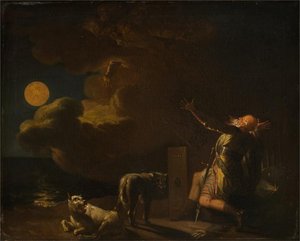
Колко картини е оставил Николай Абилдгор?Разкрийте отговора

В нашия каталог са представени 106 произведения на Николай Абилдгор, датирани от 1774 до 1809.

В кои музеи са изложени шедьоврите на Николай Абилдгор?Разкрийте отговора

Предимно в Statens Museum for Kunst (Копенхаген), Nivaagaards Malerisamling (Nibe) и Ribe Kunstmuseum (Esbjerg). В горната таблица с музеи са изброени всички тях.

В кои години Николай Абилдгор е създал най-известните си произведения?Разкрийте отговора

В 1780s: 40 от 100 произведенията на тази страница са създадени тогава, като Cupid Playing the Lyre. са сред тях.

Кои са първата и последната известни оригинални творби на Николай Абилдгор?Разкрийте отговора

На тази страница най-старата е Male Figure after Michelangelo's 'Last Judgement' in the Sistine Chapel (1774), а най-новата е The Greek Poet Sappho and the Girl from Mytilene (1809).

Кои теми избира най-често Николай Абилдгор?Разкрийте отговора

Man (35), Woman (33) и Drapery (20), разпределени в 100 произведения на тази страница.

Коя техника използва най-често Николай Абилдгор?Разкрийте отговора

Oil On Canvas, за 53 от 100 произведения на тази страница.

Към коهoто художествено направление принадлежи Николай Абилдгор?Разкрийте отговора

Neoclassicism, судейки по оригиналите на тази страница.

Кои произведения на Николай Абилдгор се съхраняват в Statens Museum for Kunst?Разкрийте отговора

The Greek Poet Sappho and the Girl from Mytilene, Christian V Presents Danish Law 1683 и Julia and Fulvia: Statens Museum for Kunst, Копенхаген притежава 70 от произведенията на тази страница.

Николай Абилдгор: живот и творчество

Ранен живот и художествените основи

Николай Абраам Абилгхард, роден в Копенхаген на 11 септември 1743 г., произлиза от семейство, дълбоко потапено в света на изкуството и науката. Баща му, Сьорен Абилгхард, е уважаван антикварен рисувач, който вдъхва в младия Николай ранно цените на класическите форми и прецизната наблюдателност. Това семейно влияние се оказва основополагащо, когато Абилгхард започва своя художествен път, получавайки първоначално обучение от местен майстор на живописта, преди официално да се запише в Новата кралска датска академия по изкуства през 1764 г. Талантът му бързо става видим; от 1764 до 1767 г. той последователно печели отличия и медали, признаващи неговото разцъфващо умение. Тези ранни успехи кулминират в стипендия за пътуване, отличена през 1767 г. – ключова възможност, която ще оформи хода на неговото художествено развитие, макар че са минали пет години, преди той най-накрая да може да я използва. През тези формиращи години в Академията Абилгхард се радва на наставничеството на Йохан Едвард Манделберг и Йоханес Видевелт, попивайки техните техники и перспективи, докато еволюира и изгражда своя собствен уникален път.

Римското пробуждане: Промяна в перспективата

През 1772 г. Николай Абилгхард най-накрая реализира дългождания си сън за пътуване до Рим. Това петгодишно пребиваване се оказва трансформиращо, бележирайки решаваща повратна точка в неговата художествена еволюция. Потаен в сърцето на класическата античност, той се посвещава не само на изучаването на скулптурата, но и на архитектурата, декорацията и великолепните фрески, украсяващи Palazzo Farnese. Посещението в Неапол през 1776 г. заедно с колегата художник Йенс Юел допълнително разширява хоризонтите му. Рим не е бил просто място за техническо обучение; той е бил интелектуално пробуждане. Абилгхард се задълбочава в историческата живопис, стремейки се да овладее нейните комплексност и повествователна сила. Той черпи вдъщновение от майсторите – Аннибале Караччи, Рафаел, Тициан и Микеланджело – абсорбирайки техните композиционни стратегии, драматичната употреба на светлина и дълбокото разбиране за човешката анатомия. Въпреки това неговото излагане не се ограничава само до строг класицизъм. Влиянието на художници като Йохан Тобиас Сергел и Йохан Хенрих Фюс започва фино да променя естетическите му сетива, въвеждайки в творчеството му зародила се романтична чувствителност. Едновременно с това Абилгхард култивира дълбоко цените към литературата, намирайки вдъхновение в произведенията на Шекспир, Хомер и Осиан – повествования, които по-късно ще проникнат в неговите платна с пластове от значение и емоционален резонанс.

Кралски поръчки и национални повествования

Завръщайки се в Копенхаген през декември 1777 г., Абилгхард ведна vez е разпознат като възходяща звезда. Той бързо си осигурява професорска длъжност в Академията през 1778 г. и скоро след това, около му 1780 г., заема престижната позиция на кралски исторически живописец. Това назначение носи със себе си монументална поръчка от датското правителство: да създаде серия от картини, изобразяващи историята на Дания за Рицарската зала (Riddersal) в дворец Кристиансборг. Този проект се превръща в определящото начинание в неговата кариера. Това не бяха просто исторически илюстрации; те бяха внимателно изградени повествования, предназначени да прославят монархията и да вдъхнат чувство на национална гордост. Абилгхард майсторски комбинира точни исторически изображения с алегорични елементи и митологични препратки, създавайки визуално зашеметяващи и интелектуално стимулиращи композиции. Той също така си сътрудничи с Йохан Едвард Манделберг по декоративни схеми за дворец Фредесборг, допълнително затвърждавайки позицията си като водеща художествена фигура в Дания.

Синтез на стилове: Неокласицизъм и Романтизъм

Художественият стил на Николай Абилгхард представлява завладяващ синтез от неокласически стриктност и възникващи романтични сетива. Въпреки че е основан върху принципите на класическата композиция, яснотата и анатомичната точност, неговите творби са изпълнени с драматично осветление, богати колоритни палитри и прецизно внимание към детайла, които подсказват за по-дълбок емоционален подтекст. Забележителни картини като „Христиан I въздига Холщайн в управление на херцогство през 1474 г.“ exemplify this blend – величествена историческа сцена, предадена с класическа прецизност, но и изпълнена с чувство за грандиозност и театралност. Други творби, като призрачната „Кошмар“, демонстрират неговата готовност да изследва по-тъмни психологически теми, предвещавайки пълноценния романтизъм, който скоро ще доминира в европейското изкуство. Неговото проучване се простира отвъд историческата живопис; „Призракът на Кулмин се явява на майка си“ показва неговото умение да изобразява свръхестествени събития с драматичен интензитет, докато произведения като „Раненият Филоктет“ разкриват чувствителност към човешкото страдание и уязвимост. Той не просто репликира исторически или митологични сцени; той ги интерпретира през призмата на собствената си художествена визия, прелива ги с пластове от символично значение, достъпни за изтънчена публика. Неговата живописна алегория се превръща в негова отличителна черта, използвайки символи като визуален съкратен език за сложни идеи и емоции.

Наследство и трайно влияние

Абилгхард служи като директор на Академията през 1789–1791 г. и отново от 1801 г. до смъртта си в Копенхаген на 14 ноември 1809 г. През цялата си кариера той подкрепя поколение талантливи художници, включително Асмус Якоб Карстенс, Бертел Торвалдсен, Й. Л. Лунд и, може би най-значимо, Кристофер Вилхелм Екерсберг. Екерсберг, често наричан „бащата на датската живопис“, полага основата за Златния век на датската живопис, градейки върху принципите, които Абилгхард му е вдъхнал. Влиянието на Абилгхард се простира отвъд неговите директни ученици; той фундаментално оформя художествения пейзаж на Дания, преодолявайки пропастта между Неокласицизма и Романтизма. Неговата работа не само отразява културните ценности на неговото време, но и предвижда бъдещи художествени тенденции, допринасяйки значително за развитието на Северния романтизъм и оставяйки незаличим отпечатък върху историята на датското изкуство. Той остава ключова фигура за разбирането на прехода от идеалите на Просвещението към емоционалната интензивност на 19-ти век.