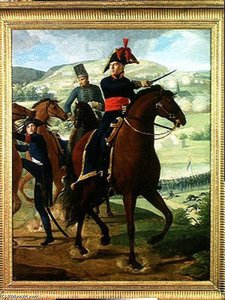
Портрет на Луи Орсент

37-те най-известни картини на Луи Орсент, селекция от галерията

Обновено Ноември 2026 · класирано според нашия индекс на популярност (търсения, посещения и поръчки за всяко произведение) · 37 творби на Луи Орсент в нашия каталог

Накратко

От всички оригинали, оставени от Луи Орсент, най-известният е Sophie Crouzet (1801), който се намира в колекцията на Cleveland Museum of Art, Кливланд. След тях непосредствено следват Henri-Charles-Ferdinand of Artois Duke of Bordeaux and his Sister Louise-Marie-Therese of (1820) и Portrait of Madame Le Doyen (1825). Нашият каталог съдържа 37 произведения на Луи Орсент; галерията е съхранила 37-те най-обожавани от света, всяко от тях представен с неговата дата, неговия музей и неговата история.

1777 – 1860, Париж Neoclassicism Най-много творби: Музей Карнавале

Топ 10-те картини на Луи Орсент: изборът на галерията

Изборът на Луи Орсент продължава, от 11 до 37

Темите, които привличат погледа на Луи Орсент

Четирите найчесто срещани теми в тези оригинални творби, всяка с най-добрия си пример.

Музеите, в които се съхраняват оригиналите на Луи Орсент

8 музея, които притежават най-голям брой от картините на тази страница.

Музеи Град Творения на Луи Орсент Картини от този списък
Музей Карнавале, ПарижМузей Карнавале Париж 3 Portrait of Madame Arachequesne, Portrait of Romain de Bourge, General Louis Marie Turreau De Garambouville At The Gravieres Affair
Opera House, VersaillesOpera House Versailles 3 Louise-Adélaïde Desnos, Queen Maria Amalia Of The French, Delphine De Girardin
Cleveland Museum of Art, КливландCleveland Museum of Art Кливланд 1 Sophie Crouzet
Musée de la Vie Romantique, ParisMusée de la Vie Romantique Paris 1 Portrait of Madame Le Doyen
Версалешкият дворец, ВерсайВерсалешкият дворец Версай 1 Portrait of Sophie Gay
Museum of the French Revolution, VizilleMuseum of the French Revolution Vizille 1 The Battle Of Landschut, 21st April
Музей Конде, ШантилиМузей Конде Шантили 1 Marie-amelie De Bourbon -
Национален музей, СтокхолмНационален музей Стокхолм 1 Fénélon Returns A Stolen Cow To A Peasant

Луи Орсент десетилетие по десетилетие: оригиналът, който дефинира всяко от тях

Произведения по десетилетия

Изберете десетилетие, за да видите оригиналната творба, която го определя.

Въпроси на колекционерите относно картините на Луи Орсент

С кое произведение е най-известен Луи Орсент?Разкрийте отговора

Sophie Crouzet (1801), Cleveland Museum of Art, Кливланд. Следват Henri-Charles-Ferdinand of Artois Duke of Bordeaux and his Sister Louise-Marie-Therese of (1820) и Portrait of Madame Le Doyen (1825).

На каква възраст е бил Луи Орсент, когато е създадена Sophie Crouzet?Разкрийте отговора

24 години: Sophie Crouzet е от 1801 г., а Луи Орсент е роден/а в 1777.

Кои са десетте най-известни картини на Луи Орсент?Разкрийте отговора

Sophie Crouzet, Henri-Charles-Ferdinand of Artois Duke of Bordeaux and his Sister Louise-Marie-Therese of, Portrait of Madame Le Doyen, Portrait of Madame Arachequesne, Portrait of Sophie Gay, Portrait of Madame Demetz in a red sofa, Religieux de l'hospice du mont Saint Gothard, Portrait of Sophie Legrand, comtesse Walsh de Serrant, and her children, Self-portrait и Louise-Adélaïde Desnos. Класацията по-горе показва годината и музея за всяко от тях.

Колко картини е оставил Луи Орсент?Разкрийте отговора

В нашия каталог са представени 37 произведения на Луи Орсент, датирани от 1801 до 1854.

В кои музеи са изложени шедьоврите на Луи Орсент?Разкрийте отговора

Предимно в Музей Карнавале (Париж), Opera House (Versailles) и Cleveland Museum of Art (Кливланд). В горната таблица с музеи са изброени всички тях.

В кои години Луи Орсент е създал най-известните си произведения?Разкрийте отговора

В 1820s: 5 от 37 произведенията на тази страница са създадени тогава, като Henri-Charles-Ferdinand of Artois Duke of Bordeaux and his Sister Louise-Marie-Therese of са сред тях.

Кои са първата и последната известни оригинални творби на Луи Орсент?Разкрийте отговора

На тази страница най-старата е Sophie Crouzet (1801), а най-новата е Self-portrait (1854).

Кои теми избира най-често Луи Орсент?Разкрийте отговора

Portraiture (4), Royalty (3) и Neoclassical style (2), разпределени в 37 произведения на тази страница.

Към коهoто художествено направление принадлежи Луи Орсент?Разкрийте отговора

Neoclassicism, судейки по оригиналите на тази страница.

Кои произведения на Луи Орсент се съхраняват в Музей Карнавале?Разкрийте отговора

Portrait of Madame Arachequesne, Portrait of Romain de Bourge и General Louis Marie Turreau De Garambouville At The Gravieres Affair: Музей Карнавале, Париж притежава 3 от произведенията на тази страница.

Луи Орсент: живот и творчество

A Legacy in Portraiture: The Life and Art of Louis Hersent

Louis Hersent, a name resonating with the elegance of the French Restoration era, was more than just a painter; he was a chronicler of his time. Born in Paris in 1777, Hersent’s artistic journey unfolded against a backdrop of revolutionary upheaval and imperial grandeur, ultimately solidifying his place as a master of Neoclassical portraiture and historical painting. His canvases offer not merely likenesses but insightful glimpses into the personalities and societal currents of early 19th-century France. From an early age, Hersent demonstrated a keen aptitude for art, leading him to the studio of Jacques-Louis David – a pivotal moment that would indelibly shape his aesthetic sensibilities. David, the preeminent Neoclassical painter and official artist of Napoleon Bonaparte, instilled in Hersent a rigorous approach to draftsmanship, composition, and form. This foundational training emphasized clarity, balance, and a restrained palette—hallmarks that would define Hersent’s mature style. Winning the prestigious Prix de Rome in 1797 further cemented his commitment to classical ideals, providing him with invaluable exposure to the artistic heritage of Italy.

The Embrace of Neoclassicism and Artistic Development

Hersent's work embodies the core tenets of Neoclassicism: a reverence for antiquity, an emphasis on order and reason, and a commitment to technical precision. However, while deeply rooted in this tradition, Hersent wasn’t merely imitative. He infused his paintings with a subtle psychological depth, capturing not just the outward appearance but also the inner character of his subjects. His portraits are characterized by dignified poses, meticulous attention to detail—particularly in fabrics and textures—and a restrained emotionality that speaks volumes. He excelled at portraying members of the French aristocracy and military leaders, figures who sought to project an image of stability and authority in the wake of revolutionary turmoil. Paintings like The Duc D'Orléans, Duke Of Chartres And Nemours, exemplify this approach, presenting a commanding figure radiating both power and refinement. Hersent’s ability to translate historical events into compelling visual narratives earned him considerable acclaim and further solidified his position within the artistic establishment. He consistently exhibited at the Paris Salon, earning first-class medals in 1817 and 1819—testaments to his growing reputation and artistic prowess.

Influences and Artistic Training

David’s influence on Hersent was profound, shaping not only his technique but also his worldview. The sculptor's unwavering dedication to idealized form and monumental scale instilled in Hersent a belief in the transformative power of art – its capacity to elevate the human spirit and commemorate significant moments in history. This conviction fueled Hersent’s ambition to achieve artistic excellence and to contribute meaningfully to the cultural landscape of his era. Beyond David, Hersent drew inspiration from the artistic traditions of Italy, particularly the works of Michelangelo and Raphael—artists who championed harmony, proportion, and anatomical accuracy. These influences informed Hersent's meticulous draftsmanship and contributed to the stylistic coherence of his oeuvre. The Prix de Rome provided him with unparalleled access to the treasures of Roman art and architecture, fostering a lifelong fascination with classical ideals and enriching his artistic vision.

Notable Works: Capturing Dignity and Power

Hersent’s artistic output spanned both portraiture and historical painting—genres that allowed him to explore diverse themes and techniques. His portraits are renowned for their understated elegance and psychological insight, capturing the essence of his subjects with remarkable sensitivity. Figures like Henri-Charles Ferdinand embody Hersent's mastery of tonal modulation and drapery rendering—skills honed through years of disciplined practice. Similarly, André Masséna’s portrayal demonstrates Hersent’s ability to convey both physical presence and intellectual gravitas. These canvases stand as enduring symbols of aristocratic refinement and artistic accomplishment. Furthermore, Hersent tackled monumental historical scenes with unwavering conviction—depicting pivotal moments in French history with dramatic flair and meticulous detail. Marshal André Masséna, Duke Of Rivoli exemplifies this ambition—a commanding depiction of a celebrated military leader that captures both his physical stature and his strategic brilliance. The grandeur of the composition and the expressive use of color underscore Hersent’s commitment to conveying historical narratives with visceral impact.

Legacy and Recognition

Louis Hersent died in 1860, leaving behind a substantial body of work that continues to captivate and inspire art historians today. His paintings are housed in prominent museums across Europe—including the Louvre—testaments to his enduring artistic legacy. More than simply reproducing likenesses or recounting historical events, Hersent’s canvases offer profound reflections on human nature and the complexities of social life during the Restoration period. He remains a significant figure within the history of Neoclassicism—a testament to the transformative power of artistic training and the unwavering pursuit of excellence. His meticulous technique, refined aesthetic sensibility, and ability to capture both physical likeness and psychological depth ensure that his work will continue to be admired for generations to come – a beacon of classical artistry in an evolving artistic landscape.