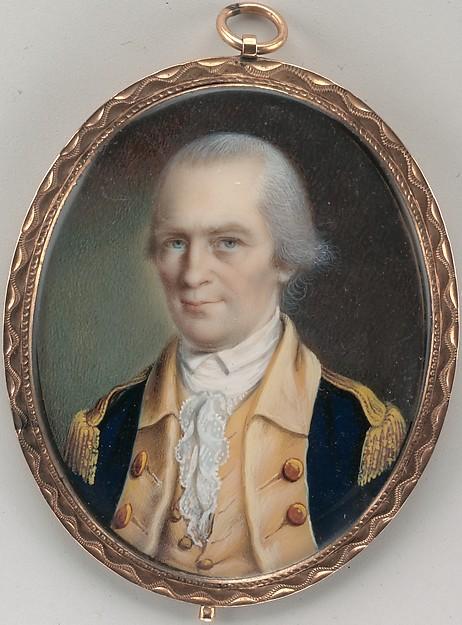
Портрет на Джон Рамъдж

Картини на Джон Рамъдж: 23-те най-известни, през погледа на галерията

Обновено Октомври 2026 · класирано според нашия индекс на популярност (търсения, посещения и поръчки за всяко произведение) · 23 творби на Джон Рамъдж в нашия каталог

Накратко

Според избора на галерията най-известната картина на Джон Рамъдж е Portrait of a Gentleman (1780), чийто оригинал се намира в Метрополитън Музей на изкуствата, Ню Йорк. Major Greene, B.A (1777) и Gilbert Van Cortlandt (1785) допълват трио, което всяко око разпознава. От 23 произведения на Джон Рамъдж в нашия каталог, галерията представя 23 най-известните по-долу – всяко от тях е оригинал с посочен година, музей и това, което го прави уникално.

1748 – 1802, Дъблин Neoclassicism Най-много творби: Метрополитън Музей на изкуствата

Топ 10 карти на Джон Рамъдж в галерията

Картини на Джон Рамъдж, класирани от 11 до 23

Темите, които привличат погледа на Джон Рамъдж

Четирите найчесто срещани теми в тези оригинални творби, всяка с най-добрия си пример.

Музеите, в които се съхраняват оригиналите на Джон Рамъдж

5 музея, които притежават най-голям брой от картините на тази страница.

Музеи Град Творения на Джон Рамъдж Картини от този списък
Метрополитън Музей на изкуствата, Ню ЙоркМетрополитън Музей на изкуствата Ню Йорк 17 Portrait of a Gentleman, Major Greene, B.A, Gilbert Van Cortlandt
Национален музей, СтокхолмНационален музей Стокхолм 1 Mrs. James Bleecker (Sarah Bache)
Държавен музей „Ермитаж“, Санкт ПетербургДържавен музей „Ермитаж“ Санкт Петербург 1 George Washington
Smithsonian American Art Museum, Вашингтон, окръг КолумбияSmithsonian American Art Museum Вашингтон, окръг Колумбия 1 Col. Josiah Parker
Art Institute of Chicago, ЧикагоArt Institute of Chicago Чикаго 1 Portrait of Augustine Taylor

Джон Рамъдж, по една емблематична картина на десетилетие

Произведения по десетилетия

Изберете десетилетие, за да видите оригиналната творба, която го определя.

Картините на Джон Рамъдж: отговорите на галерията

Коя картина на Джон Рамъдж е най-известната от всички?Разкрийте отговора

Portrait of a Gentleman (1780), Метрополитън Музей на изкуствата, Ню Йорк. Следват Major Greene, B.A (1777) и Gilbert Van Cortlandt (1785).

На каква възраст беше Джон Рамъдж, когато завърши Portrait of a Gentleman?Разкрийте отговора

32 години: Portrait of a Gentleman е от 1780 г., а Джон Рамъдж е роден/а в 1748.

Кои са 10-те най-добри картини на Джон Рамъдж?Разкрийте отговора

Portrait of a Gentleman, Major Greene, B.A, Gilbert Van Cortlandt, Governor George Clinton, Mrs. James Bleecker (Sarah Bache), Portrait of a Gentleman, Mrs. William Few (Catherine Nicholson), Mrs. Gulian Ludlow (Maria Ludlow), Thomas Witter и Theophylact Bache. Класацията по-горе показва годината и музея за всяко от тях.

Колко произведения е създал Джон Рамъдж?Разкрийте отговора

В нашия каталог са представени 23 произведения на Джон Рамъдж, датирани от 1777 до 1795.

Къде са изложени най-известните оригинали на Джон Рамъдж?Разкрийте отговора

Предимно в Метрополитън Музей на изкуствата (Ню Йорк), Национален музей (Стокхолм) и Държавен музей „Ермитаж“ (Санкт Петербург). В горната таблица с музеи са изброени всички тях.

Кога Джон Рамъдж създава най-известните си картини?Разкрийте отговора

В 1780s: 13 от 23 произведенията на тази страница са създадени тогава, като Portrait of a Gentleman са сред тях.

Кои са най-ранните и най-късните известни творби на Джон Рамъдж?Разкрийте отговора

На тази страница най-старата е Major Greene, B.A (1777), а най-новата е Mrs. James Bleecker (Sarah Bache) (1795).

Към кои сюжети Джон Рамъдж се връща най-често?Разкрийте отговора

18th century (4), Historical figure (4) и Portraiture (3), разпределени в 23 произведения на тази страница.

С кое художествено направление е свързан(а) Джон Рамъдж?Разкрийте отговора

Neoclassicism, судейки по оригиналите на тази страница.

Кои оригинални творби на Джон Рамъдж притежава Метрополитън Музей на изкуствата?Разкрийте отговора

Portrait of a Gentleman, Major Greene, B.A и Gilbert Van Cortlandt: Метрополитън Музей на изкуствата, Ню Йорк притежава 17 от произведенията на тази страница.

Мога ли да поръчам ръчно репродуцирана картина на Джон Рамъдж?Разкрийте отговора

Да, като репродукция: оригиналът остава в музея си, но всяка картина на тази страница може да бъде нарисувана ръчно специално за Вас, по един екземпляр, директно от страницата на съответната картина.

Джон Рамъдж: художникът

A Life Bridging Worlds: The Story of John Ramage

Born in Dublin, Ireland, in 1748, John Ramage’s life was one of remarkable transition and artistic dedication, a journey that carried him from the refined world of Irish goldsmithing to the burgeoning art scene of colonial America. Details surrounding his early family life remain elusive, yet it is known he received formal training at the Dublin Society of Artists in 1763, laying a foundation in drawing and painting techniques that would serve as the bedrock for his future endeavors. Ramage’s initial career path was notably versatile; he skillfully combined the precision of a goldsmith with the delicate artistry of a miniaturist—a testament to his inherent talent for detail and decorative arts. This early period instilled within him not only technical proficiency but also an appreciation for craftsmanship that would distinguish his work throughout his life. In 1772, driven by ambition or perhaps circumstance, Ramage embarked on a new chapter, emigrating to Halifax, Nova Scotia, marking the beginning of his artistic journey in North America and setting the stage for a life intertwined with both art and political upheaval.

Loyalty, Love, and Revolution: Navigating Turbulent Times

Ramage’s arrival in North America coincided with a period of immense political tension—the American Revolution. A staunch Loyalist, his allegiance lay firmly with the British Crown, leading him to join “the Loyal Irish Volunteers” in Boston, a military unit dedicated to defending the city. This commitment to the crown deeply impacted his personal life as well. In 1776, he married Victoria Ball, but this union was soon complicated by another marriage to a woman known only as “Mrs. Taylor” while stationed in Halifax. The ensuing legal battles and eventual divorce granted to Ball underscore the complexities of Ramage’s life during wartime—a period marked not only by political strife but also by personal turmoil. Forced to evacuate Boston with British forces in 1776, he relocated back to Halifax before eventually settling in New York City in 1777, seeking refuge and continuing his artistic practice amidst the ongoing conflict. His dedication extended beyond the canvas; Ramage served as a second lieutenant in the City Militia of New York, demonstrating a willingness to actively participate in the defense of the city he had come to call home.

The Miniature Master: A Portraitist of an Emerging Nation

Despite the turbulent backdrop of revolution and political division, Ramage flourished as an artist, quickly gaining renown for his exquisite portrait miniatures on ivory. This was a particularly popular art form at the time, prized for its intimacy and portability. His skill lay in the masterful application of delicately shaded cross-hatching and fine linear strokes to model faces with remarkable realism and sensitivity. He didn’t merely replicate likenesses; he captured character, social standing, and a sense of individual presence within each miniature. Ramage's clientele quickly grew to include prominent figures from New York society—the Pintards, Gerrys, Ludlows, Van Rensselaers, and Van Cortlands all sought his services. Beyond his painting prowess, Ramage’s goldsmithing skills were also highly valued; he crafted elegant cases for his miniatures, showcasing a holistic artistic vision that combined artistry with meticulous craftsmanship. He was recognized as “the best artist in his branch in America” by William R. Dunlap, highlighting the significance of his contribution to the art world.

Notable Works

  • Portrait of George Washington (1789): Ramage achieved unparalleled fame when he painted George Washington while serving as President of the United States—making him the first artist to officially portray the president in office. Two distinct miniatures of Washington exist today, each a testament to Ramage’s skill and a valuable historical record.
  • John Maunsell (1785): This miniature showcases a stern figure in a red coat, demonstrating Ramage’s ability to capture character with exceptional precision.
  • Miniature Portraits of Prominent New York Families: Commissions from families like the Pintards, Gerrys, Ludlows, Van Rensselaers, and Van Cortlands offer glimpses into colonial society and exemplify Ramage's versatility as an artist.
##A Final Chapter Marked by Hardship and Legacy The latter years of John Ramage’s life were unfortunately marred by financial difficulties and personal hardship. Facing mounting debts in 1794, he fled to Montreal in an attempt to escape his creditors, only to encounter further misfortune upon arrival—imprisonment and a struggle to revive his artistic career. Despite these challenges, he continued to paint, claiming to have produced “extraordinary pictures,” though success proved elusive. On October 24, 1802, John Ramage died in Montreal, receiving a burial that was, sadly, reflective of his isolation and diminished circumstances. Yet, despite the hardships he faced, Ramage’s legacy endures—primarily through his distinction as the first artist to paint George Washington as President, an achievement that holds significant historical and artistic weight. His miniatures offer invaluable insights into the fashion, social circles, and personalities of late 18th-century America.

Всички 23 произведения на Джон Рамъдж →