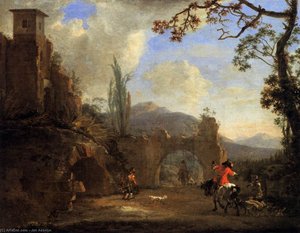
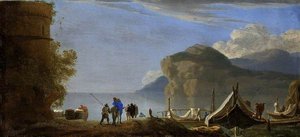
Портрет на Йан Аселйн

Картини на Йан Аселйн: 76-те най-известни, през погледа на галерията

Обновено Ноември 2026 · класирано според нашия индекс на популярност (търсения, посещения и поръчки за всяко произведение) · 84 творби на Йан Аселйн в нашия каталог

Накратко

Според избора на галерията най-известната картина на Йан Аселйн е Застрашеният лебед (1652), чийто оригинал се намира в Rijksmuseum, Амстердам. King Gustav Adolf II of Sweden in the Battle of Lutzen, 1632 (1634) и Landscape with a Bridge in the Italian Countryside (1652) допълват трио, което всяко око разпознава. От 84 произведения на Йан Аселйн в нашия каталог, галерията представя 76 най-известните по-долу – всяко от тях е оригинал с посочен година, музей и това, което го прави уникално.

1610 – 1652, Диеп Златният век на нидерландия Най-много творби: Rijksmuseum

Топ 10 карти на Йан Аселйн в галерията

1
Застрашеният лебед (1652) на Йан Аселйн

Застрашеният лебед

1652 · Масло върху платно · Rijksmuseum, Амстердам

е маслена картина върху платно от художника Ян Аселйн. Завършена около 1650 г., тази творба улавя белия лебед в момент на яростна защита. Птицата разтваря крилете си и издава хищно шиене, пазачейки гнездото си срещу наближаващото куче. Тази борба между ослепително бялото оперение и настъпващата заплаха определя централното напрежение на изображението.

2
King Gustav Adolf II of Sweden in the Battle of Lutzen, 1632 (1634) на Йан Аселйн

King Gustav Adolf II of Sweden in the Battle of Lutzen, 1632

1634 · Oil On Canvas · Statens Museum for Kunst, Копенхаген

Jan Asselijn's “King Gustav Adolf II of Sweden in the Battle of Lutzen, 1632” isn’t merely a painting; it’s a visceral plunge into the heart of a pivotal moment in European history. Completed in 1634, this monumental work captures the chaotic fury and strategic brilliance of the Battle of Lutzen, fought on August 17th of that year, a clash that cemented Gustav Adolf II's reputation as a military genius and…

3
Landscape with a Bridge in the Italian Countryside (1652) на Йан Аселйн

Landscape with a Bridge in the Italian Countryside

1652 · Oil On Canvas · Cannon Hall Museum, Barnsley

A stone bridge with arched spans anchors this serene landscape, crossing a calm body of water that reflects the soft, overcast sky. To the left, a solitary figure sits upon a barrel, watching the quiet movement of the scene. On the right, the composition gathers around a horse and carriage; a person guides the animal toward the water's edge while another observer stands nearby. A dog occupies the foreground, grounding…

4
King Gustav Adolf II in the Battle of Lutzen on November 6,1632 (1632) на Йан Аселйн

King Gustav Adolf II in the Battle of Lutzen on November 6,1632

The air is thick with the scent of wet earth and sulfur. In the center of the chaos, King Gustav Adolf II of Sweden rides a horse through the fray, his sword a flash of cold light against the darkening sky. The Battle of Lutzen is not a quiet affair; it is a collision of muscle and metal. Soldiers on foot and mounted on horseback press against one another in…

5
Four Figures (1615) на Йан Аселйн

Four Figures

1615 · Oil · Groeningemuseum, Брюг

In Four Figures, Jan Asselijn organizes a group of men in period attire within a dimly lit, atmospheric setting. The composition centers on this cluster of figures, who are arranged in a loose, triangular formation. This structural choice draws the viewer's eye toward the middle of the group, where the subjects interact in a moment of quietude. One man is captured drinking from a vessel, while another stands holding a…

6
King Gustav Adolf II of Sweden, Battle near Lutzen 1632 (1635) на Йан Аселйн

King Gustav Adolf II of Sweden, Battle near Lutzen 1632

1635 · Oil On Panel · Gemäldegalerie, Берлин

The artwork titled King Gustav Adolf II of Sweden, Battle near Lutzen 1632 is a work by the artist Jan Asselijn. Dated about 1635, this oil on panel painting belongs to the genre of military history. The subject matter focuses on the Battle of Lützen, a significant conflict from the Thirty Years' War. The scene captures the king amidst the movement of a large-scale military engagement.

7
The Tiber River with the Ponte Molle at Sunset (1650) на Йан Аселйн

The Tiber River with the Ponte Molle at Sunset

The sun hangs low over the horizon, casting a sharp, golden light through the four massive stone arches of the Ponte Molle. This light slices through the atmosphere, painting the sky in a gradient that shifts from a warm, glowing amber on the right to a pale, tranquil aquamarine as the eye moves toward the left. The river below remains placid, reflecting the changing colors of the sky, while the…

8
Ruined Building with Shepherd and Sheep (1646) на Йан Аселйн

Ruined Building with Shepherd and Sheep

1646 · Oil On Panel

Ruined Building with Shepherd and Sheep is an artwork by Jan Asselijn. This piece belongs to the Dutch Golden Age and the Italianate landscape style of the Early Modern period. The subject matter focuses on a pastoral landscape that incorporates ruins and sheep. The composition integrates elements of nature, shepherds, and weathered stone structures within a single scene.

9
Italian Landscape (1638) на Йан Аселйн

Italian Landscape

1638 · Oil On Canvas · Statens Museum for Kunst, Копенхаген

The artwork titled Italian Landscape is a painting by the Dutch Golden Age painter Jan Asselijn. Created in 1638, this work represents a specific period in the artist's career. Asselijn was born in Dieppe, France, around 1610, before his family relocated to Amsterdam. His development as a painter was shaped by the artistic environment of the Dutch Golden Age, a time when landscape painting was evolving toward more atmospheric depictions.

10
Fight against Robbers (1638) на Йан Аселйн

Fight against Robbers

1638 · Oil On Panel · Statens Museum for Kunst, Копенхаген

A violent skirmish unfolds across a rugged, rocky landscape, captured in a dramatic monochrome palette. The composition relies on a sharp diagonal arrangement, pulling the eye from the foreground into a chaotic center-right where figures engage in combat. Mounted riders and infantrymen clash amidst dense foliage and spindly, skeletal trees. The atmosphere is heavy with mist and swirling smoke, creating a sense of tension and movement. Light filters through an…

Картини на Йан Аселйн, класирани от 11 до 76

11Lion Hunting (1640) на Йан АселйнLion Hunting1640 · Musée Fabre 12Italianate landscape with travellers by a stream with cattle (1652) на Йан АселйнItalianate landscape with travellers by a stream with cattle1652 13Italian Landscape with a view from a Grotto (1639) на Йан АселйнItalian Landscape with a view from a Grotto1639 · Национален музей 14Landscape with Ruins and Hunting Party (1645) на Йан АселйнLandscape with Ruins and Hunting Party1645 · Академия по изкуствата във Виена 15PAYSAGE AVEC UN TROUPEAU TRAVERSANT UNE RIVIERE на Йан АселйнPAYSAGE AVEC UN TROUPEAU TRAVERSANT UNE RIVIEREЛувър 16River Bank with Herdsmen (1650) на Йан АселйнRiver Bank with Herdsmen1650 · Академия по изкуствата във Виена 17Coastal Scene with Resting Riders (detail) (1652) на Йан АселйнCoastal Scene with Resting Riders (detail)1652 · Академия по изкуствата във Виена 18Imaginary Italian Landscape (1652) на Йан АселйнImaginary Italian Landscape1652 · Mauritshuis Royal Picture Gallery 19Landscape with a Cowherd (1594) на Йан АселйнLandscape with a Cowherd1594 20Italianate Landscape (1631) на Йан АселйнItalianate Landscape1631 · Баварски държавни списъци с произведения на изкуството 21Cavalry Engagement (1635) на Йан АселйнCavalry Engagement1635 22Peasants by a River Bank (1639) на Йан АселйнPeasants by a River Bank1639 · Художествена галерия на Йейлския университет 23Mountain - landscape (1639) на Йан АселйнMountain - landscape1639 24Riders Gallopping towards the Gates of the Fortress (1645) на Йан АселйнRiders Gallopping towards the Gates of the Fortress1645 · Държавен музей „Ермитаж“ 25Winter Landscape (1645) на Йан АселйнWinter Landscape1645 · Държавен музей „Ермитаж“ 26Nocturnal Crayfishing (1638) на Йан АселйнNocturnal Crayfishing1638 · Statens Museum for Kunst 27Vesuvius Erupting at Nightfall (1638) на Йан АселйнVesuvius Erupting at Nightfall1638 · Statens Museum for Kunst 28Head of an Ox (1647) на Йан АселйнHead of an Ox1647 · Musée des Beaux-Arts 29Catching Crayfish (1645) на Йан АселйнCatching Crayfish1645 · Muzeum Palacu Króla Jana Iii w Wilanowie 30Ford between High Cliffs (1644) на Йан АселйнFord between High Cliffs1644 · Национална галерия в Прага 31Peasants and Cattle beside a Tower (1646) на Йан АселйнPeasants and Cattle beside a Tower1646 32Winter landscape with huntsmen on a bridge (1647) на Йан АселйнWinter landscape with huntsmen on a bridge1647 · Fondation Custodia 33A rocky mountain valley with shepherds and cattle (1645) на Йан АселйнA rocky mountain valley with shepherds and cattle1645 · Staatliche Kunsthalle Karlsruhe 34Italian Landscape (1640) на Йан АселйнItalian Landscape1640 · Пушкински държавен музей на изкуството 35Frozen Moat outside City Walls (1647) на Йан АселйнFrozen Moat outside City Walls1647 · Worcester Art Museum 36Italianate Landscape with Drovers, Cattle and Sheep beside Ruins (1647) на Йан АселйнItalianate Landscape with Drovers, Cattle and Sheep beside Ruins1647 · Fogg Museum of Art 37Italianate Landscape with a River and an Arched Bridge (1648) на Йан АселйнItalianate Landscape with a River and an Arched Bridge1648 · Staatsgalerie Schleissheim 38Southern Landscape with Cattle near Ruins (1650) на Йан АселйнSouthern Landscape with Cattle near Ruins1650 · National Museum in Wrocław 39View of the Solario Bridge on the Teverone (1650) на Йан АселйнView of the Solario Bridge on the Teverone1650 40Head of a lowing Ox (1650) на Йан АселйнHead of a lowing Ox1650 · Staatliches Museum Schwerin 41Italianate landscape with bridge near Tivoli (1649) на Йан АселйнItalianate landscape with bridge near Tivoli1649 42River Landscape with the Fort Saint-Jean and the Chateau Pierre-Scize in Lyon (1650) на Йан АселйнRiver Landscape with the Fort Saint-Jean and the Chateau Pierre-Scize in Lyon1650 · Художествена галерия на Йейлския университет 43The restoration of the Diemerdijk or Muiderdijk near Amsterdam in 1651 (1651) на Йан АселйнThe restoration of the Diemerdijk or Muiderdijk near Amsterdam in 16511651 · Gemäldegalerie 44Breach of a Dyke by Storm Surge on March 5 1651 (1651) на Йан АселйнBreach of a Dyke by Storm Surge on March 5 16511651 · Gemäldegalerie 45The Breach of the Sint Anthonisdijk in 1651 (1652) на Йан АселйнThe Breach of the Sint Anthonisdijk in 16511652 · Амстердамски музей 46The Breach of the Saint Anthony’s Dike near Amsterdam, Jan Asselijn, 1651 (1651) на Йан АселйнThe Breach of the Saint Anthony’s Dike near Amsterdam, Jan Asselijn, 16511651 47Drovers with Cattle under an Arch of the Colosseum in Rome, Jan Asselijn, 1640 - 1652 (1652) на Йан АселйнDrovers with Cattle under an Arch of the Colosseum in Rome, Jan Asselijn, 1640 - 16521652 · Rijksmuseum 48A Mediterranean Coastal View with Shipping and Mariners by a Fort (1650) на Йан АселйнA Mediterranean Coastal View with Shipping and Mariners by a Fort1650 49A Mediterranean Coastal View with Shipping and Mariners by a Fort (1650) на Йан АселйнA Mediterranean Coastal View with Shipping and Mariners by a Fort1650 50River Landscape with the Church of Santi Giovanni e Paolo (1650) на Йан АселйнRiver Landscape with the Church of Santi Giovanni e Paolo1650 51Landscape with a Drover (1649) на Йан АселйнLandscape with a Drover1649 · Holburne Museum 52Landscape with a Bridge in the Italian Countryside (1652) на Йан АселйнLandscape with a Bridge in the Italian Countryside1652 · Cannon Hall Museum 53Coastal Scene with Resting Riders (1652) на Йан АселйнCoastal Scene with Resting Riders1652 · Академия по изкуствата във Виена 54PAYSAGE AVEC UNE TOUR на Йан АселйнPAYSAGE AVEC UNE TOURЛувър 55RUINE ET CABANE DE BERGERS на Йан АселйнRUINE ET CABANE DE BERGERSЛувър 56LANDSCAPE WITH A DEPARTURE FOR A HUNT на Йан АселйнLANDSCAPE WITH A DEPARTURE FOR A HUNT 57Muleteers beside an Italian Ruin (1650) на Йан АселйнMuleteers beside an Italian Ruin1650 · Rijksmuseum 58Hangout in Italy (1620) на Йан АселйнHangout in Italy1620 · Rijksmuseum 59Herders with Their Animals under an Arch of the Colosseum in Rome (1652) на Йан АселйнHerders with Their Animals under an Arch of the Colosseum in Rome1652 · Rijksmuseum 60Hunting Company out of Rome (1652) на Йан АселйнHunting Company out of Rome1652 · Rijksmuseum 61Боготворители пред римски лименковъ (1638) на Йан АселйнБоготворители пред римски лименковъ1638 · Академия по изкуствата във Виена 62Asselijn - (50Riverbank) на Йан АселйнAsselijn - (50Riverbank) 63Asselijn ruin на Йан АселйнAsselijn ruinRijksmuseum 64Italian Coast Scene на Йан АселйнItalian Coast Scene 65Italian Landscape with Two Horsemen and Figures on a Road на Йан АселйнItalian Landscape with Two Horsemen and Figures on a Road 66Italian Landscape with the Church of Sts. Giovanni e Paolo in Rome на Йан АселйнItalian Landscape with the Church of Sts. Giovanni e Paolo in RomeМузей на изкуствата (Будапеща) 67Mountainous Landscape на Йан АселйнMountainous Landscape 68A rocky river landscape with travellers in the foreground and ships beyond на Йан АселйнA rocky river landscape with travellers in the foreground and ships beyond 69A Landscape with Peasants (also known as Landscape with Herdsmen Fording a River) на Йан АселйнA Landscape with Peasants (also known as Landscape with Herdsmen Fording a River)Ascott House 70A Cavalier on Horseback Before a Landscape на Йан АселйнA Cavalier on Horseback Before a Landscape 71Landscape with shepherds and their flock crossing the Ponte Acquoria near Tivoli на Йан АселйнLandscape with shepherds and their flock crossing the Ponte Acquoria near Tivoli 72an italianate river landscape with herders on a path with their flock and donkeys, classical ruins on a hilltop beyond на Йан Аселйнan italianate river landscape with herders on a path with their flock and donkeys, classical ruins on a hilltop beyondMinneapolis Institute of Art 73Italian Coast Scene на Йан АселйнItalian Coast SceneФицвилям Колеж 74Italian Landscape на Йан АселйнItalian LandscapeФицвилям Колеж 75Italian Landscape with the Ruins of a Roman Bridge and Aqueduct на Йан АселйнItalian Landscape with the Ruins of a Roman Bridge and AqueductRijksmuseum 76Cavalry Attack at Sunset, Jan Asselijn, 1646 (1646) на Йан АселйнCavalry Attack at Sunset, Jan Asselijn, 16461646 · Rijksmuseum

Знаменитите картини на Йан Аселйн, период по период

Темите, които привличат погледа на Йан Аселйн

Четирите найчесто срещани теми в тези оригинални творби, всяка с най-добрия си пример.

Музеите, в които се съхраняват оригиналите на Йан Аселйн

8 музея, които притежават най-голям брой от картините на тази страница.

Музеи Град Творения на Йан Аселйн Картини от този списък
Rijksmuseum, АмстердамRijksmuseum Амстердам 9 Застрашеният лебед, Drovers with Cattle under an Arch of the Colosseum in Rome, Jan Asselijn, 1640 - 1652, Muleteers beside an Italian Ruin
Statens Museum for Kunst, КопенхагенStatens Museum for Kunst Копенхаген 5 King Gustav Adolf II of Sweden in the Battle of Lutzen, 1632, Italian Landscape, Fight against Robbers
Академия по изкуствата във Виена, ВиенаАкадемия по изкуствата във Виена Виена 5 Landscape with Ruins and Hunting Party, River Bank with Herdsmen, Coastal Scene with Resting Riders (detail)
Gemäldegalerie, БерлинGemäldegalerie Берлин 3 King Gustav Adolf II of Sweden, Battle near Lutzen 1632, The restoration of the Diemerdijk or Muiderdijk near Amsterdam in 1651, Breach of a Dyke by Storm Surge on March 5 1651
Лувър, ПариЛувър Пари 3 PAYSAGE AVEC UN TROUPEAU TRAVERSANT UNE RIVIERE, PAYSAGE AVEC UNE TOUR, RUINE ET CABANE DE BERGERS
Cannon Hall Museum, BarnsleyCannon Hall Museum Barnsley 2 Landscape with a Bridge in the Italian Countryside, Landscape with a Bridge in the Italian Countryside
Художествена галерия на Йейлския университет, Ню ХейвънХудожествена галерия на Йейлския университет Ню Хейвън 2 Peasants by a River Bank, River Landscape with the Fort Saint-Jean and the Chateau Pierre-Scize in Lyon
Държавен музей „Ермитаж“, Санкт ПетербургДържавен музей „Ермитаж“ Санкт Петербург 2 Riders Gallopping towards the Gates of the Fortress, Winter Landscape

Йан Аселйн, по една емблематична картина на десетилетие

Произведения по десетилетия

Изберете десетилетие, за да видите оригиналната творба, която го определя.

Картините на Йан Аселйн: отговорите на галерията

Коя картина на Йан Аселйн е най-известната от всички?Разкрийте отговора

Застрашеният лебед (1652), Rijksmuseum, Амстердам. Следват King Gustav Adolf II of Sweden in the Battle of Lutzen, 1632 (1634) и Landscape with a Bridge in the Italian Countryside (1652).

На каква възраст беше Йан Аселйн, когато завърши Застрашеният лебед?Разкрийте отговора

42 години: Застрашеният лебед е от 1652 г., а Йан Аселйн е роден/а в 1610.

Кои са 10-те най-добри картини на Йан Аселйн?Разкрийте отговора

Застрашеният лебед, King Gustav Adolf II of Sweden in the Battle of Lutzen, 1632, Landscape with a Bridge in the Italian Countryside, King Gustav Adolf II in the Battle of Lutzen on November 6,1632, Four Figures, King Gustav Adolf II of Sweden, Battle near Lutzen 1632, The Tiber River with the Ponte Molle at Sunset, Ruined Building with Shepherd and Sheep, Italian Landscape и Fight against Robbers. Класацията по-горе показва годината и музея за всяко от тях.

Колко произведения е създал Йан Аселйн?Разкрийте отговора

В нашия каталог са представени 84 произведения на Йан Аселйн, датирани от 1620 до 1652.

Къде са изложени най-известните оригинали на Йан Аселйн?Разкрийте отговора

Предимно в Rijksmuseum (Амстердам), Statens Museum for Kunst (Копенхаген) и Академия по изкуствата във Виена (Виена). В горната таблица с музеи са изброени всички тях.

Кога Йан Аселйн създава най-известните си картини?Разкрийте отговора

В 1650s: 24 от 76 произведенията на тази страница са създадени тогава, като Застрашеният лебед са сред тях.

Кои са най-ранните и най-късните известни творби на Йан Аселйн?Разкрийте отговора

На тази страница най-старата е Hangout in Italy (1620), а най-новата е Застрашеният лебед (1652).

Към кои сюжети Йан Аселйн се връща най-често?Разкрийте отговора

Landscape (36), Sky (27) и River (16), разпределени в 76 произведения на тази страница.

С коя техника е работил най-често Йан Аселйн?Разкрийте отговора

Oil On Canvas, за 32 от 76 произведения на тази страница.

С кое художествено направление е свързан(а) Йан Аселйн?Разкрийте отговора

Златният век на нидерландия и Baroque, судейки по оригиналите на тази страница.

Кои оригинални творби на Йан Аселйн притежава Rijksmuseum?Разкрийте отговора

Застрашеният лебед, Drovers with Cattle under an Arch of the Colosseum in Rome, Jan Asselijn, 1640 - 1652 и Muleteers beside an Italian Ruin: Rijksmuseum, Амстердам притежава 9 от произведенията на тази страница.

Йан Аселйн: художникът

A Life Forged in Landscape: The World of Jan Asselijn

Jan Asselin, born around 1610 in Dieppe, France, embarked on an artistic journey marked by profound shifts in religious belief and a fervent embrace of the burgeoning landscape tradition during the Dutch Golden Age. His family, Huguenots fleeing persecution, relocated to Amsterdam in 1621 – a city pulsating with commercial energy and brimming with artistic innovation. This move proved instrumental, immersing young Jean into an environment where capturing the grandeur and subtlety of nature was rapidly transforming from mere representation to emotionally resonant storytelling. Initially apprenticed under Jan Martszen the Younger, he honed his skills in battle scenes before discovering his true passion: portraying the breathtaking beauty and dramatic tension inherent in both natural vistas and animal life. The distinctive Dutch light – expansive skies bathed in golden hues – would become an indelible imprint on Asselijn’s artistic vision, shaping his technique and informing his aesthetic sensibilities.

The Italianate Embrace & The Bentvueghels

Like many ambitious Northern European painters of his time, Asselijn felt compelled to refine his craft in Italy, arriving sometime after 1635. This pilgrimage solidified his stylistic convictions within the *Italianate* movement – a genre characterized by sun-drenched landscapes reminiscent of classical ruins and idealized pastoral scenes imbued with romantic fervor. He joined the ranks of the *Bentvueghels*, a peculiar society of Dutch and Flemish artists residing in Rome, distinguished by their unconventional behavior, satirical nicknames, and unwavering commitment to painting directly from observation – rejecting the constraints imposed by studio practice. Within this spirited community, Asselijn earned the moniker “Krabbetje” (little crab) due to a congenital deformity affecting his hand, yet he persevered creatively, absorbing influences from luminaries like Pieter van Laer (Bamboccio), whose depictions of Roman peasant life and landscapes captivated him deeply. This formative period profoundly impacted his ability to convey atmosphere, light, and narrative depth within his canvases – elements that would become hallmarks of his oeuvre.

Mastering Light & Symbolism: Key Works

Upon returning to Amsterdam, Asselijn possessed a refined technique and a distinctive artistic voice. His paintings are distinguished by remarkable clarity of execution and masterful manipulation of light—qualities that swiftly garnered admiration from fellow artists like Rembrandt, who even produced etchings documenting Asselijn’s creative process – albeit subtly concealing his hand, perhaps acknowledging the physical challenge he faced. While he explored historical narratives and battle scenes, it was his landscapes and animal paintings that truly cemented his reputation as a singular talent. The Threatened Swan, completed around 1640, stands as Asselijn’s most celebrated masterpiece. More than simply depicting avian defense, this painting transcended mere visual representation, becoming a potent symbol of Dutch national resilience against external pressures—a reflection of the anxieties prevalent during his era and interpreted as an allegory for Johan de Witt, a prominent statesman. Intriguingly, subsequent owners added symbolic inscriptions to the canvas – “Holland” on one of the eggs and “Enemy of the state” beside the menacing dog – further amplifying its political significance. Other noteworthy compositions include Cavalry Attack at Sunset, showcasing his early training in battle art with dramatic flair, and depictions of rural life such as Drovers with Cattle under an Arch of the Colosseum in Rome—works that seamlessly blend Italianate landscapes with meticulous animal studies. The Breach of the Saint Anthony’s Dike near Amsterdam exemplifies Asselijn's capacity to capture a pivotal moment of national crisis, mirroring the ever-present threat posed by water and demanding ingenuity for Dutch land reclamation efforts.

Influence & Legacy: A Lasting Impression

Jan Asselijn’s influence extended beyond his own prolific output. He was revered by contemporaries like Rembrandt, who even created etchings portraying him at work—a gesture perhaps sensitive to Asselijn's physical disability. Furthermore, he served as a mentor to Frederik de Moucheron, another accomplished Dutch landscape painter who championed the Italianate style and disseminated its principles throughout Europe. Asselijn’s innovative approach to light and atmosphere profoundly impacted subsequent generations of artists, fostering greater naturalism and emotional resonance in landscape painting—a legacy that continues to inspire admiration today. His artworks reside in prestigious institutions such as the Rijksmuseum in Amsterdam, ensuring his enduring significance within the annals of Dutch art history. He passed away peacefully in 1652, leaving behind a body of work that captivates viewers with its beauty, drama, and subtle layers of meaning—a testament to his artistic genius and a cornerstone of the Golden Age’s artistic heritage.