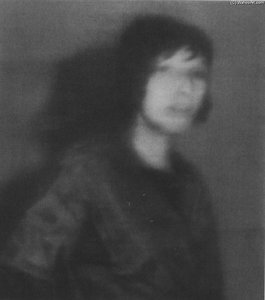
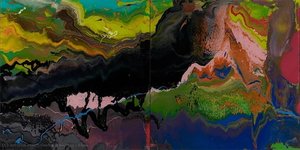
Портрет на Герхард Рихтер

100-те най-известни картини на Герхард Рихтер, селекция от галерията

Обновено Ноември 2026 · класирано според нашия индекс на популярност (търсения, посещения и поръчки за всяко произведение) · 134 творби на Герхард Рихтер в нашия каталог

Накратко

От всички оригинални произведения, оставени от Герхард Рихтер, най-известната е Абстрактна картина 780-1 (1992). След тях непосредствено следват Абстрактна картина 805-4 и Бети (1988). Нашият каталог съдържа 134 произведения на Герхард Рихтер; галерията е съхранила 100-те най-обожавани от света, всяко от тях представен с неговата дата, неговия музей и неговата история.

роден 1932, Дрезден Съвременен реализъм Най-много творби: Art Institute of Chicago

Топ 10-те картини на Герхард Рихтер: изборът на галерията

1
Абстрактна картина 780-1 (1992) на Герхард Рихтер

Абстрактна картина 780-1

1992 · Масло върху платно

Gerhard Richter's "Abstract Painting 780-1," created in 1992, is more than just a canvas splashed with color; it’s a profound meditation on the nature of perception, memory, and the very act of seeing. This dynamic work, housed within wahooart’s meticulously crafted hand-painted reproductions, invites viewers into a world where form dissolves into feeling, and light itself seems to pulse with an inner energy. Richter, a titan of contemporary art, masterfully…

2
Абстрактна картина 805-4 на Герхард Рихтер

Абстрактна картина 805-4

Масло върху платно

„Abstract Painting 805-4“ е повече от просто картина – това е пътешествие в дълбините на човешката емоция, пречупено през призмата на абстрактното изкуство. Създадена от гения на съвременната живопис, Герхард Рихтер, тази работа е свидетелство за неговата безгранична способност да трансформира обикновените материали в нещо завладяващо и дълбоко личностно. Картината приканва зрителя да се потопи в буйството от цветове, да усети текстурата под пръстите си и да позволи на въображението…

3
Бети (1988) на Герхард Рихтер

Бети

1988 · Масло върху платно

„Бети“, създадена от Герхард Рихтер през 1988 г., не е просто портрет; тя е изискано многослойна медитация върху паметта, възприятието и ефимната природа на репрезентацията. Тази завладяваща творба, която в момента се намира в престижната колекция на Art Museum в Сейнт Луис, незабавно потапя зрителя в своята тиха интензивност. Рихтер, титан на съвременното изкуство, майсторски използва една измачливо проста композиция – гърба на главата на дъщеря си – за да…

4
Моторна лодка (1965) на Герхард Рихтер

Моторна лодка

1965 · Акрил върху платно

Gerhard Richter’s “Motorboat,” created in 1965, stands as a pivotal emblem of the burgeoning postmodern art movement. Born amidst the fracturing realities of post-war Germany – specifically Düsseldorf's embrace of Western artistic sensibilities following the Berlin Wall’s construction – Richter’s oeuvre reflects this transformative period with remarkable precision.

5
1024 Цвета (1973) на Герхард Рихтер

1024 Цвета

1973 · Масло върху платно

Gerhard Richter, a titan of contemporary art, continues to captivate audiences with his singular vision—a masterful blend of abstraction and conceptual inquiry. Among his most iconic creations is '1024 Colours', painted in 1973, which stands as a cornerstone of Conceptual Art and exemplifies Richter’s unwavering commitment to challenging conventional artistic paradigms.

6
Свещи на Герхард Рихтер

Свещи

Масло върху платно

Герхард Рихтер, може би най-влиятелната фигура в съвременното изкуство, създава серия от картини, озаглавени „Свещи“, които надхвърлят обикновеното визуално представяне, за да въплъщат дълбоки философски концепции – надежда и смъртност. Създадена през 1983 г., „Kertz“ — както е известна на немски — заема своето почетно място в колекцията на Института по изкуствата в Чикаго, привличайки значително внимание от ценители на изкуството като Франсис Оутред по време на галерията на аукционния…

7
Reading (1994) на Герхард Рихтер

Reading

1994 · Oil On Canvas

Gerhard Richter's 'Reading,' painted in 1994, isn’t merely a portrait; it’s an exploration of the very act of looking, of absorption, and of the subtle dance between reality and representation. The work immediately draws you into a quiet intimacy, centered around Sabine Moritz, a woman whose presence is both strikingly present and profoundly elusive. Richter masterfully employs a technique that leans heavily on photo-realism, yet deliberately softens the edges, creating…

8
Облаци (Wolken) (1982) на Герхард Рихтер

Облаци (Wolken)

1982 · Масло върху платно

Симфония на абстракцията: Изследване на „Облаци“ от Герхард Рихтер Шедьовърът на Герхард Рихтер от 1982 г., „Облаци“, е ключово произведение в съвременното изкуство, въплъщаващо неговото цяложитейско изследване на границите между представимостта и абстракцията. Тази мащабна картина не е просто изображение *на* облаци; тя е изследване на възприятието, самия акт на виждане и самата същност на живописното изкуство. Тя ни кани да поставим под въпрос очакванията си към един пейзаж и…

9
Abstract Picture на Герхард Рихтер

Abstract Picture

Oil On Canvas

To stand before an Abstract Picture by Gerhard Richter is to enter a realm where the boundaries between reality and illusion dissolve into a vibrant, textured haze. This masterpiece does not merely present a scene; it orchestrates a sensory experience that challenges the very nature of sight. At first glance, the eye is drawn to a kaleidoscopic explosion of color—deep, resonant reds, sun-drenched yellows, and cool, tranquil blues that dance…

10
Валеус Борнс на Герхард Рихтер

Валеус Борнс

Акрил върху платно

Gerhard Richter’s “Wallace Bournes” isn't merely a painting; it’s an invitation into the heart of abstract expressionism, a realm where emotion takes precedence over representation. This monumental work, rendered in vibrant hues and layered with intricate textures, embodies Richter’s signature approach – a deliberate embrace of chance within a meticulously controlled process. The canvas pulsates with a quiet intensity, drawing the viewer into a contemplation that transcends simple visual perception.…

Изборът на Герхард Рихтер продължава, от 11 до 100

11Езеро Люцерн на Герхард РихтерЕзеро Люцерн 12Абстрактна картина (1994) на Герхард РихтерАбстрактна картина1994 13Лилии (2000) на Герхард РихтерЛилии2000 · Национална галерия на Канада 14Юли (1983) на Герхард РихтерЮли1983 15Abstract Picture на Герхард РихтерAbstract Picture 16Phantom Interceptors (1964) на Герхард РихтерPhantom Interceptors1964 17Brigid Polk (1971) на Герхард РихтерBrigid Polk1971 18Ludorff на Герхард РихтерLudorff 19Fuji на Герхард РихтерFuji 20Group of People (1965) на Герхард РихтерGroup of People1965 21Ella (2007) на Герхард РихтерElla2007 22Ловна компания (Jagdgesellschaft) (1966) на Герхард РихтерЛовна компания (Jagdgesellschaft)1966 · Art Institute of Chicago 23Seascape (Cloudy) (1969) на Герхард РихтерSeascape (Cloudy)1969 24Townscape Madrid (1968) на Герхард РихтерTownscape Madrid1968 25Red Blue Yellow (1972) на Герхард РихтерRed Blue Yellow1972 26Ema (1992) на Герхард РихтерEma1992 27Abstract Painting (1978) на Герхард РихтерAbstract Painting1978 28Curtain II (soft) (1966) на Герхард РихтерCurtain II (soft)1966 · Баварски държавни списъци с произведения на изкуството 29Abstract Painting (849-3) (1997) на Герхард РихтерAbstract Painting (849-3)1997 · Музеят на Израел 30Forest (7) (2005) на Герхард РихтерForest (7)2005 31Untitled (1968) на Герхард РихтерUntitled1968 32Abstract Painting 610-1 на Герхард РихтерAbstract Painting 610-1 33Uncle Rudi (1965) на Герхард РихтерUncle Rudi1965 34ELLA на Герхард РихтерELLA 35Ice 2 на Герхард РихтерIce 2 36Jungle Image на Герхард РихтерJungle Image 37Джордж (1975) на Герхард РихтерДжордж1975 38Градски пейзаж F (1968) на Герхард РихтерГрадски пейзаж F1968 · Staatliche Kunsthalle Karlsruhe 39180 Colors на Герхард Рихтер180 Colors 4050% undivided interest in "Abstraktes Bild (825-7)" (1995) на Герхард Рихтер50% undivided interest in "Abstraktes Bild (825-7)"1995 · Музей на изкуствата във Бостън 41Townscape (P1) [Stabtbild (P1)] (1968) на Герхард РихтерTownscape (P1) [Stabtbild (P1)]1968 · Art Institute of Chicago 42Eight Student Nurses (1966) на Герхард РихтерEight Student Nurses1966 43I.G. (1993) на Герхард РихтерI.G.1993 44S. with Child (1995) на Герхард РихтерS. with Child1995 45Abstraktes Bild (753 7) на Герхард РихтерAbstraktes Bild (753 7) 46Черно, червено, злато (1998) на Герхард РихтерЧерно, червено, злато1998 · Statens Museum for Kunst 47Abstraktes Bild (Rot Blau Gelb) (1973) на Герхард РихтерAbstraktes Bild (Rot Blau Gelb)1973 48Davos (1981) на Герхард РихтерDavos1981 · Art Institute of Chicago 49Pyramide (1966) на Герхард РихтерPyramide1966 50Stadtbild SA (219/1) на Герхард РихтерStadtbild SA (219/1)МАКСИ – Национален музей на изкуствата през 21-ви век 51Courbet на Герхард РихтерCourbet 52Confrontation 1 (1988) на Герхард РихтерConfrontation 11988 53Wolken (Clouds) на Герхард РихтерWolken (Clouds) 54Венеция (Стълбище) [Venedig (Treppe)] (1985) на Герхард РихтерВенеция (Стълбище) [Venedig (Treppe)]1985 · Art Institute of Chicago 55Без заглавие (167) на Герхард РихтерБез заглавие (167) 56Star Picture (1969) на Герхард РихтерStar Picture1969 57The Schmidt Family (1964) на Герхард РихтерThe Schmidt Family1964 · Hamburger Kunsthalle 58I.G. (1993) на Герхард РихтерI.G.1993 59Seascape (1975) на Герхард РихтерSeascape1975 60Untitled (D2WVMP) (2005) на Герхард РихтерUntitled (D2WVMP)2005 61Self-portrait (1996) на Герхард РихтерSelf-portrait1996 62Flow (2013) на Герхард РихтерFlow2013 63Star Picture (1969) на Герхард РихтерStar Picture1969 64Abstract Painting (1976) на Герхард РихтерAbstract Painting1976 65Star Picture (1969) на Герхард РихтерStar Picture1969 66Alps (1968) на Герхард РихтерAlps1968 67Grey (Bark) (1973) на Герхард РихтерGrey (Bark)1973 · Museum Het Valkhof 68Moritz (2000) на Герхард РихтерMoritz2000 69Флоренция (2000) на Герхард РихтерФлоренция2000 70Moritz (2000) на Герхард РихтерMoritz2000 71Administrative Building (1964) на Герхард РихтерAdministrative Building1964 72I.G. (1993) на Герхард РихтерI.G.1993 735 Nov. 1995 на Герхард Рихтер5 Nov. 1995 74Untitled (484) на Герхард РихтерUntitled (484) 75Juist (2005) на Герхард РихтерJuist2005 76Dark (1968) на Герхард РихтерDark1968 77Vermalung (Braun) на Герхард РихтерVermalung (Braun) 78Abstract Painting (2009) на Герхард РихтерAbstract Painting2009 79Mediation на Герхард РихтерMediation 80Skull (1983) на Герхард РихтерSkull1983 81Stadtbild M 6 на Герхард РихтерStadtbild M 6 82Untitled (D2X7FK) (2007) на Герхард РихтерUntitled (D2X7FK)2007 83Betty (1977) на Герхард РихтерBetty1977 84Kitchen Chair (1965) на Герхард РихтерKitchen Chair1965 85Station на Герхард РихтерStation 86Basel 2 на Герхард РихтерBasel 2 87Rot Blau Gelb (338 42) на Герхард РихтерRot Blau Gelb (338 42) 88D.Z на Герхард РихтерD.Z 8919.3.92 (1992) на Герхард Рихтер19.3.921992 90Untitled (500) на Герхард РихтерUntitled (500) 9117.3.92 на Герхард Рихтер17.3.92 92Untitled (828) на Герхард РихтерUntitled (828) 93Валери на Герхард РихтерВалери 94Abstraktes Bild, 21. Nov. 43 (715 5) на Герхард РихтерAbstraktes Bild, 21. Nov. 43 (715 5) 95S. with Child (1995) на Герхард РихтерS. with Child1995 96Untitled на Герхард РихтерUntitled 97Zwei-Mann-Bob (Two-man bobsled) - Gerhard Richter (2026) на Герхард РихтерZwei-Mann-Bob (Two-man bobsled) - Gerhard Richter2026 98S. with Child (1995) на Герхард РихтерS. with Child1995 99Abstract Bilding (1992) на Герхард РихтерAbstract Bilding1992 100Korn (1982) на Герхард РихтерKorn1982

Знаменитите картини на Герхард Рихтер, период по период

Late Period

1983 – 2007 · 9 произведения в този списък

Темите, които привличат погледа на Герхард Рихтер

Четирите найчесто срещани теми в тези оригинални творби, всяка с най-добрия си пример.

Музеите, в които се съхраняват оригиналите на Герхард Рихтер

8 музея, които притежават най-голям брой от картините на тази страница.

Музеи Град Творения на Герхард Рихтер Картини от този списък
Art Institute of Chicago, ЧикагоArt Institute of Chicago Чикаго 4 Ловна компания (Jagdgesellschaft), Townscape (P1) [Stabtbild (P1)], Davos
Музей на изкуствата във Бостън, БостънМузей на изкуствата във Бостън Бостън 2 50% undivided interest in "Abstraktes Bild (825-7)"
Национална галерия на Канада, ОтаваНационална галерия на Канада Отава 1 Лилии
Баварски държавни списъци с произведения на изкуството, МюнхенБаварски държавни списъци с произведения на изкуството Мюнхен 1 Curtain II (soft)
Музеят на Израел, ЙерусалимМузеят на Израел Йерусалим 1 Abstract Painting (849-3)
Staatliche Kunsthalle Karlsruhe, КарлсруеStaatliche Kunsthalle Karlsruhe Карлсруе 1 Градски пейзаж F
Statens Museum for Kunst, КопенхагенStatens Museum for Kunst Копенхаген 1 Черно, червено, злато
МАКСИ – Национален музей на изкуствата през 21-ви век, РимМАКСИ – Национален музей на изкуствата през 21-ви век Рим 1 Stadtbild SA (219/1)

Герхард Рихтер десетилетие по десетилетие: оригиналът, който дефинира всяко от тях

Произведения по десетилетия

Изберете десетилетие, за да видите оригиналната творба, която го определя.

Въпроси на колекционерите относно картините на Герхард Рихтер

С кое произведение е най-известен Герхард Рихтер?Разкрийте отговора

Абстрактна картина 780-1 (1992). Следващите са Абстрактна картина 805-4 и Бети (1988).

На каква възраст е бил Герхард Рихтер, когато е създадена Абстрактна картина 780-1?Разкрийте отговора

60 години: Абстрактна картина 780-1 е от 1992 г., а Герхард Рихтер е роден/а в 1932.

Кои са десетте най-известни картини на Герхард Рихтер?Разкрийте отговора

Абстрактна картина 780-1, Абстрактна картина 805-4, Бети, Моторна лодка, 1024 Цвета, Свещи, Reading, Облаци (Wolken), Abstract Picture и Валеус Борнс. Класацията по-горе показва годината и музея за всяко от тях.

Колко картини е оставил Герхард Рихтер?Разкрийте отговора

В нашия каталог са представени 134 произведения на Герхард Рихтер, датирани от 1964 до 2026.

В кои музеи са изложени шедьоврите на Герхард Рихтер?Разкрийте отговора

Предимно в Art Institute of Chicago (Чикаго), Музей на изкуствата във Бостън (Бостън) и Национална галерия на Канада (Отава). В горната таблица с музеи са изброени всички тях.

В кои години Герхард Рихтер е създал най-известните си произведения?Разкрийте отговора

В 1960s: 21 от 100 произведенията на тази страница са създадени тогава, като Моторна лодка са сред тях.

Кои са първата и последната известни оригинални творби на Герхард Рихтер?Разкрийте отговора

На тази страница най-старата е Phantom Interceptors (1964), а най-новата е Zwei-Mann-Bob (Two-man bobsled) - Gerhard Richter (2026).

Кои теми избира най-често Герхард Рихтер?Разкрийте отговора

Richter (20), Landscape (16) и Photography (11), разпределени в 100 произведения на тази страница.

Коя техника използва най-често Герхард Рихтер?Разкрийте отговора

Oil On Canvas, за 44 от 100 произведения на тази страница.

Към коهoто художествено направление принадлежи Герхард Рихтер?Разкрийте отговора

Съвременен реализъм и Абстрактен експресионизъм, судейки по оригиналите на тази страница.

Кои произведения на Герхард Рихтер се съхраняват в Art Institute of Chicago?Разкрийте отговора

Ловна компания (Jagdgesellschaft), Townscape (P1) [Stabtbild (P1)] и Davos: Art Institute of Chicago, Чикаго притежава 4 от произведенията на тази страница.

Герхард Рихтер: живот и творчество

The Early Life of Gerhard Richter

Dresden, Germany, 1932. The setting is the Hospital Dresden-Neustadt. Gerhard Richter enters a world defined by the tightening grip of National Socialism. His father, Horst Richter, navigates the academic rigor of the Technische Hochschule in Dresden as a student of mathematics and physics. His mother, Hildegard Schönfelder, works as a bookseller. The household is shaped by these disparate intellectual and commercial pursuits. In 1936, the family expands with the birth of his sister, Gisela.

War and political upheaval fracture the family's stability. The shadow of the regime extends into the most private spheres of existence. Richter’s aunt, Marianne, becomes a victim of the Nazi euthanasia program, a casualty of the state's systematic violence against those deemed undesirable. This period of displacement and loss leaves a mark on the family's history, as the realities of the Third Reich permeate the domestic landscape of his childhood.

Artistic Training and Early Career

The path to formal training is rarely linear. After dropping out of school at age fifteen, Richter enters the industrial landscape of post-war Germany. He finds work as a sign painter in a factory, a pragmatic step in a period of survival. By 1948, having graduated from trade school, he secures his first paid work as a painter. The years that follow are defined by manual labor and technical apprenticeship; he works as an advertising and stage-set painter, learning the mechanics of representation through the lens of commercial and theatrical utility.

Ambition meets resistance in 1950. Richter applies to the Dresden Art Academy, but the institution rejects him. He does not stay away for long. In 1951, he begins formal studies at the Dresden Academy of Fine Arts. This period is marked by the heavy influence of socialist realism, the state-mandated style of East Germany. He navigates the tension between these ideological requirements and his own developing technical mastery. From 1957 to 1961, he remains within the academy's structure, working as a master trainee.

Escape to West Germany and Düsseldorf

The year 1961 marks a sharp fracture in Richter’s life. Two months before the construction of the Berlin Wall, he makes the decision to leave East Germany behind. He moves to West Germany alongside his wife, Marianne Eufinger. This is more than a change of geography; it is a flight from the ideological constraints of the East toward the experimental freedom of the West.

In Düsseldorf, the atmosphere is thick with the energy of a burgeoning art scene. Richter enrolls at the Staatliche Kunstakademie, entering a space where the rigid traditions of socialist realism no longer hold sway. He studies under a group of instructors, including Karl von Appen, Heinz Lohmar, Will Grohmann, and Karl Otto Götz. The academic setting provides the technical foundation for what is to come, but the real shifts happen in the company of his peers. Alongside Sigmar Polke and Konrad Lueg, Richter becomes part of a circle of students navigating a landscape of rapid cultural change.

The Emergence of Capitalist Realism

Düsseldorf becomes a crucible of tension. The post-war landscape is shifting, moving away from austerity toward the bright, pervasive influence of consumer culture and mass media. Richter finds himself at the center of this friction, navigating the intersection of the Fluxus and Pop Art movements. He is not merely observing this change; he is actively dismantling established artistic norms alongside a circle of peers.

The year 1963 marks a sharp departure from traditional practice. Richter, Sigmar Polke, and Konrad Fischer stage a provocative happening titled Living with Pop. The scene unfolds within a Düsseldorf department store. They present themselves as living sculptures amidst furniture displays, a gesture that blurs the boundaries between art, commerce, and everyday existence. This act helps define the term 'Capitalist Realism,' a deliberately ambiguous label used by Richter and Polke to reflect their shared skepticism toward the aesthetics and ideologies of a consumer-driven society.

Techniques of Photorealism and Abstraction

The canvas becomes a site of tension between the sharp clarity of a photograph and the chaotic movement of paint. In his photorealistic works, Richter often employs a signature blurring effect, a technique that distorts the subject and creates a sense of detachment. He builds these images through a layering process, applying thin glazes of paint to create depth and a sense of filtered memory. This method allows him to recreate the appearance of a photographic print while simultaneously questioning the reliability of the image itself.

The approach shifts radically when he moves toward abstraction. Here, the controlled application of paint gives way to a more visceral, unpredictable process. He uses squeegees to drag thick layers of paint across the surface, manipulating the medium in ways that invite chance and spontaneity. This technique breaks the surface into textured, gestural marks that defy the precision of his figurative work. Beyond the traditional canvas, his experimentation extends into other forms, including the creation of monotypes and glass sculpture.

  • Betty (1988)
  • Fuji (2013)
  • Wand (Wall) (1994)

Exploration of Color and Form

The investigation into color moves away from the emotional toward the systematic. Between 1966 and 2008, Richter produced his Color Charts (*Farbtafeln*), a series defined by the rigorous arrangement of colored squares. These works strip away the spontaneity of the brushstroke, replacing it with a controlled, grid-like logic. The focus shifts to the inherent properties of the pigment itself, organized into a repetitive, almost clinical structure that challenges the traditional expectation of what a painting should communicate.

This pursuit of neutrality extends into the monochromatic. From 1966 to 2014, the Gray Paintings (*Graue Bilder*) explored the subtle tonal nuances found within a single hue. Here, the complexity lies in the minute shifts of light and shadow across a gray surface. It is a study of perception, where the absence of varied color forces a confrontation with the texture and depth of the medium. This disciplined approach to the spectrum finds an unexpected application in the sacred. In 2007, Richter applied his understanding of color and geometry to a stained-glass window for the Cologne Cathedral, translating his modern sensibilities into a traditional architectural medium.

Significant Works and Major Paintings

The market and the canvas often collide in Richter's career. In 2015, his 1986 work Abstraktes Bild sold for over $44.5 million. This piece belongs to a body of work that moves between the precision of a photograph and the chaotic layering of paint. While some works focus on the mechanics of color, others turn toward the personal. In 1988, he produced Betty, an oil painting of his daughter looking toward one of his abstract works. It remains one of his most frequently cited pieces, appearing in the top three of his most requested reproductions.
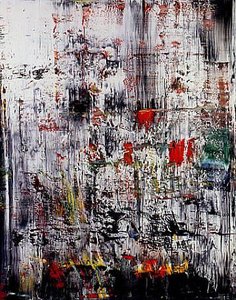
History and memory provide the weight for his more somber investigations. The 1988 series October 18, 1977 addresses the Baader-Meinhof group, a controversial German terrorist organization. This period of work sits alongside his more recent large-scale endeavors. In 2014, he created the Birkenau cycle, consisting of four large-scale abstract paintings. These works confront the trauma of the Holocaust through abstraction rather than literal depiction. Even his landscapes carry a sense of distance; Fuji, painted in 2013, uses a muted palette of red, orange, and blue to suggest a faded memory of the Japanese mountain.

Legacy and Global Influence

The scale of Richter’s presence in the contemporary landscape is measured by sheer frequency. He has presented his work at Documenta more times than any other artist, a record that tracks his persistent engagement with the evolution of modern painting. In 1972, he represented West Germany at the Venice Biennale, a moment that solidified his standing on the international stage. His canvases have moved from the experimental spaces of Düsseldorf to the permanent collections of the Museum of Modern Art in New York.

His influence reaches into the very definition of the medium. He has been called the 'Picasso of the 21st century,' a title reflecting a career that refuses to settle into a single mode. He moves between the precision of the photographic and the chaos of the abstract, never allowing one to fully replace the other. This refusal to be categorized has made him a central figure in the discourse of contemporary art, influencing how subsequent generations approach the tension between reality and representation.

Where to See His Works Today

The physical presence of Richter’s practice spans major institutional collections across Europe. In Essen, Germany, the Museum Folkwang maintains works from his extensive output. The reach of his imagery extends to Rome, where the MAXXI National Museum of XXI Century Arts holds pieces within its permanent collection. These locations offer a direct encounter with the tension between his photographic and abstract methods.

In London, the Tate features his paintings, placing his visual language within the context of British institutional history. The Kunstmuseum Winterthur also maintains works in its collection, ensuring his influence remains visible in Switzerland. These museums act as repositories for the various stages of his career, from early experiments to large-scale canvases.