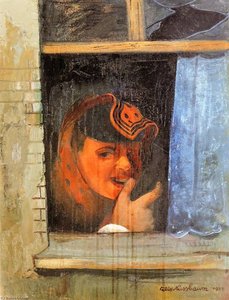
Портрет на Феликс Нюсбаум

Картини на Феликс Нюсбаум: 49-те най-известни, през погледа на галерията

Обновено Ноември 2026 · класирано според нашия индекс на популярност (търсения, посещения и поръчки за всяко произведение) · 49 творби на Феликс Нюсбаум в нашия каталог

Накратко

Според избора на галерията най-известната картина на Феликс Нюсбаум е Fish Market (1936), чийто оригинал се намира в Kulturgeschichtliche Museum Osnabrück, Osnabrück. Fishing Boats with Island (1933) и Loneliness (1942) допълват трио, което всяко око разпознава. От 49 произведения на Феликс Нюсбаум в нашия каталог, галерията представя 49 най-известните по-долу – всяко от тях е оригинал с посочен година, музей и това, което го прави уникално.

1904 – 1944, Оснабрюк Surrealist expression Най-много творби: Kulturgeschichtliche Museum Osnabrück

Топ 10 карти на Феликс Нюсбаум в галерията

2
Fishing Boats with Island (1933) на Феликс Нюсбаум

Fishing Boats with Island

1933 · Gouache

The water holds the light in a pale, steady grip. In this 1933 gouache on paper, the sea is a surface of calm, interrupted only by the presence of two boats. One vessel rests near the left edge, while another sits further back, drifting toward the right. Between them, two figures stand close together on the shore. They are small against the expanse, mere silhouettes of companionship amidst the blue…

5
Memory of Norderney (1929) на Феликс Нюсбаум

Memory of Norderney

1929 · Oil On Canvas · Kulturgeschichtliche Museum Osnabrück, Osnabrück

In the hauntingly beautiful oil on canvas, Memory of Norderney, Felix Nussbaum invites us into a world that feels simultaneously vibrant and ghostly. Painted in 1929, this large-scale masterpiece captures a moment of serene leisure, yet it is imbued with a profound sense of nostalgia that transcends its literal subject matter. The scene unfolds before a stately building, perhaps a grand hotel or a coastal mansion, characterized by its classical…

6
Entombment (also known as Organ Grinders at the Roman Forum) (1933) на Феликс Нюсбаум

Entombment (also known as Organ Grinders at the Roman Forum)

1933 · Oil On Canvas · Kulturgeschichtliche Museum Osnabrück, Osnabrück

This oil on canvas painting depicts the entombment of Jesus Christ. The central figure of Jesus lies at the heart of the scene, surrounded by a group of individuals. Some figures stand in close proximity to the body, while others are positioned at a distance. In the background, two men are engaged in playing musical instruments. To the left of the main group, a horse is visible, its form contributing…

7
Lovers (1928) на Феликс Нюсбаум

Lovers

1928 · Oil

In this 1928 work titled Lovers, Felix Nussbaum turns his attention toward the quietude of human connection. The scene captures a couple in a moment of deep intimacy, caught in an embrace while seated within a small boat. They are positioned upon a body of water, a setting that isolates them from the surrounding world and focuses the viewer entirely on their physical closeness. This sense of seclusion is heightened…

8
The mad square (1931) на Феликс Нюсбаум

The mad square

1931 · Oil On Canvas · Berlinische Galerie, Берлин

Created in 1931, The mad square is a work by the German-Jewish surrealist painter Felix Nussbaum. The canvas captures a fragmented urban landscape, a crowded Berlin where the architecture seems to fracture under the weight of a pale, desaturated blue sky. Amidst the rigid lines of the city, a surreal procession of figures moves through the streets, some carrying large, framed artworks that disrupt the geometric stability of the scene.…

9
Self-Portrait With Painters Cloth (1935) на Феликс Нюсбаум

Self-Portrait With Painters Cloth

1935 · Oil · Еврейски музей Берлин, Берлин

To look at this portrait is to encounter the artist's internal landscape during a period of immense transition. Painted in 1935, the work reflects a style characterized by a blend of realism and surrealism, often associated with the New Objectivity movement. The composition avoids the grandiosity of traditional portraiture, opting instead for a directness that feels almost intrusive. It is a study of a man caught in a moment of…

Картини на Феликс Нюсбаум, класирани от 11 до 49

11Self-Portrait in a Shroud (Group picture) (1942) на Феликс НюсбаумSelf-Portrait in a Shroud (Group picture)1942 · Berlinische Galerie 12Self-Portrait with Jewish Identity Card (1943) на Феликс НюсбаумSelf-Portrait with Jewish Identity Card1943 13Man with Flower (1939) на Феликс НюсбаумMan with Flower1939 14Evening (unfinished) (also known as Self Portrait with Felka Platek) (1942) на Феликс НюсбаумEvening (unfinished) (also known as Self Portrait with Felka Platek)1942 · Kulturgeschichtliche Museum Osnabrück 15Jaqui in the Street (1944) на Феликс НюсбаумJaqui in the Street1944 · Kulturgeschichtliche Museum Osnabrück 16Drawbridge across a Moorland Ditch (1927) на Феликс НюсбаумDrawbridge across a Moorland Ditch1927 · Kulturgeschichtliche Museum Osnabrück 17Gypsy Woman (1927) на Феликс НюсбаумGypsy Woman1927 · Kulturgeschichtliche Museum Osnabrück 18The Hakenhof in Kommenderiestrasse in Onasbrück (1927) на Феликс НюсбаумThe Hakenhof in Kommenderiestrasse in Onasbrück1927 19Men Mending Nets in a Street in Ostend (1928) на Феликс НюсбаумMen Mending Nets in a Street in Ostend1928 20Fairground (1925) на Феликс НюсбаумFairground1925 21Group Portrait (1930) на Феликс НюсбаумGroup Portrait1930 22Gallows (also known as Funeral) (1930) на Феликс НюсбаумGallows (also known as Funeral)1930 · Berlinische Galerie 23Fisherman's House (1933) на Феликс НюсбаумFisherman's House1933 · Kulturgeschichtliche Museum Osnabrück 24The Hurdy Gurdy Man (1931) на Феликс НюсбаумThe Hurdy Gurdy Man1931 · Berlinische Galerie 25Narcussus (1932) на Феликс НюсбаумNarcussus1932 · Kulturgeschichtliche Museum Osnabrück 26Harbor Scene (1935) на Феликс НюсбаумHarbor Scene1935 · Kulturgeschichtliche Museum Osnabrück 27Interior with Still Life (1935) на Феликс НюсбаумInterior with Still Life1935 28Landscape (also known as Tree Behind a Wall) (1935) на Феликс НюсбаумLandscape (also known as Tree Behind a Wall)1935 29Locomotive (1936) на Феликс НюсбаумLocomotive1936 · Kulturgeschichtliche Museum Osnabrück 30Man behind the Window (also known as Self Portrait after Adriaen van Ostade) (1937) на Феликс НюсбаумMan behind the Window (also known as Self Portrait after Adriaen van Ostade)1937 · Kulturgeschichtliche Museum Osnabrück 31Don Quixote and the Windmills (1938) на Феликс НюсбаумDon Quixote and the Windmills1938 · Kulturgeschichtliche Museum Osnabrück 32Dover Ferry (1935) на Феликс НюсбаумDover Ferry1935 · Kulturgeschichtliche Museum Osnabrück 33Nightly view from the workshop with dishcloth. (1940) на Феликс НюсбаумNightly view from the workshop with dishcloth.1940 34The Refugee (1939) на Феликс НюсбаумThe Refugee1939 35The Kitchen in Hiding (1943) на Феликс НюсбаумThe Kitchen in Hiding1943 · Kulturgeschichtliche Museum Osnabrück 36Man with Withered Leaf (1941) на Феликс НюсбаумMan with Withered Leaf1941 37Stillleben mit Schachteln (Still life with boxes) (1941) на Феликс НюсбаумStillleben mit Schachteln (Still life with boxes)1941 38Hurdy Gurdy Man in a Surreal Landscape (1939) на Феликс НюсбаумHurdy Gurdy Man in a Surreal Landscape1939 · Kulturgeschichtliche Museum Osnabrück 39Jew by the Window (1943) на Феликс НюсбаумJew by the Window1943 · Niedersächsisches Landesmuseum Für Kunst Und Kulturgeschichte Oldenburg 40Manikins (1943) на Феликс НюсбаумManikins1943 · Kulturgeschichtliche Museum Osnabrück 41Group of Three (1944) на Феликс НюсбаумGroup of Three1944 42Felka Platek Painting (1935) на Феликс НюсбаумFelka Platek Painting1935 · Jüdisches Museum Rendsburg 43In the camp (1940) на Феликс НюсбаумIn the camp1940 · Deutsches Historisches Museum 44Gypsy (1928) на Феликс НюсбаумGypsy1928 · Kulturgeschichtliche Museum Osnabrück 45Моя майка (1926) на Феликс НюсбаумМоя майка1926 · Kulturgeschichtliche Museum Osnabrück 46Untitled (AQQJ26) на Феликс НюсбаумUntitled (AQQJ26) 47Masquerade (1927) на Феликс НюсбаумMasquerade1927 48Death Triumphant (1944) на Феликс НюсбаумDeath Triumphant1944 49Self-Portrait in the Camp (1940) на Феликс НюсбаумSelf-Portrait in the Camp1940 · Neue Galerie New York

Знаменитите картини на Феликс Нюсбаум, период по период

Темите, които привличат погледа на Феликс Нюсбаум

Четирите найчесто срещани теми в тези оригинални творби, всяка с най-добрия си пример.

Музеите, в които се съхраняват оригиналите на Феликс Нюсбаум

7 музея, които притежават най-голям брой от картините на тази страница.

Музеи Град Творения на Феликс Нюсбаум Картини от този списък
Kulturgeschichtliche Museum Osnabrück, OsnabrückKulturgeschichtliche Museum Osnabrück Osnabrück 21 Fish Market, Fear (also known as Self Portrait with His Niece Marianna), Memory of Norderney
Berlinische Galerie, БерлинBerlinische Galerie Берлин 4 The mad square, Self-Portrait in a Shroud (Group picture), Gallows (also known as Funeral)
Еврейски музей Берлин, БерлинЕврейски музей Берлин Берлин 2 Loneliness, Self-Portrait With Painters Cloth
Niedersächsisches Landesmuseum Für Kunst Und Kulturgeschichte Oldenburg, OldenburgNiedersächsisches Landesmuseum Für Kunst Und Kulturgeschichte Oldenburg Oldenburg 1 Jew by the Window
Jüdisches Museum Rendsburg, RendsburgJüdisches Museum Rendsburg Rendsburg 1 Felka Platek Painting
Deutsches Historisches Museum, БерлинDeutsches Historisches Museum Берлин 1 In the camp
Neue Galerie New York, Ню ЙоркNeue Galerie New York Ню Йорк 1 Self-Portrait in the Camp

Феликс Нюсбаум, по една емблематична картина на десетилетие

Произведения по десетилетия

Изберете десетилетие, за да видите оригиналната творба, която го определя.

Картините на Феликс Нюсбаум: отговорите на галерията

Коя картина на Феликс Нюсбаум е най-известната от всички?Разкрийте отговора

Fish Market (1936), Kulturgeschichtliche Museum Osnabrück, Osnabrück. Следват Fishing Boats with Island (1933) и Loneliness (1942).

На каква възраст беше Феликс Нюсбаум, когато завърши Fish Market?Разкрийте отговора

32 години: Fish Market е от 1936 г., а Феликс Нюсбаум е роден/а в 1904.

Кои са 10-те най-добри картини на Феликс Нюсбаум?Разкрийте отговора

Fish Market, Fishing Boats with Island, Loneliness, Fear (also known as Self Portrait with His Niece Marianna), Memory of Norderney, Entombment (also known as Organ Grinders at the Roman Forum), Lovers, The mad square, Self-Portrait With Painters Cloth и Masks and Cat. Класацията по-горе показва годината и музея за всяко от тях.

Колко произведения е създал Феликс Нюсбаум?Разкрийте отговора

В нашия каталог са представени 49 произведения на Феликс Нюсбаум, датирани от 1925 до 1944.

Къде са изложени най-известните оригинали на Феликс Нюсбаум?Разкрийте отговора

Предимно в Kulturgeschichtliche Museum Osnabrück (Osnabrück), Berlinische Galerie (Берлин) и Еврейски музей Берлин (Берлин). В горната таблица с музеи са изброени всички тях.

Кога Феликс Нюсбаум създава най-известните си картини?Разкрийте отговора

В 1930s: 22 от 49 произведенията на тази страница са създадени тогава, като Fish Market са сред тях.

Кои са най-ранните и най-късните известни творби на Феликс Нюсбаум?Разкрийте отговора

На тази страница най-старата е Fairground (1925), а най-новата е Jaqui in the Street (1944).

Към кои сюжети Феликс Нюсбаум се връща най-често?Разкрийте отговора

People (7), Man (6) и Men (5), разпределени в 49 произведения на тази страница.

С коя техника е работил най-често Феликс Нюсбаум?Разкрийте отговора

Oil On Canvas, за 9 от 49 произведения на тази страница.

С кое художествено направление е свързан(а) Феликс Нюсбаум?Разкрийте отговора

Surrealist expression и New objectivity, судейки по оригиналите на тази страница.

Кои оригинални творби на Феликс Нюсбаум притежава Kulturgeschichtliche Museum Osnabrück?Разкрийте отговора

Fish Market, Fear (also known as Self Portrait with His Niece Marianna) и Memory of Norderney: Kulturgeschichtliche Museum Osnabrück, Osnabrück притежава 21 от произведенията на тази страница.

Феликс Нюсбаум: художникът

Felix Nussbaum (1904-1944): A Painter of the Holocaust for Our Times

Felix Nussbaum’s story is a stark and profoundly moving testament to the power of art born from unimaginable suffering. Born in Osnabrück, Germany, in 1904, his life unfolded against the backdrop of rising nationalism and escalating persecution, culminating in the horrors of the Holocaust. He wasn't simply a victim *of* history; he was an artist who meticulously documented its impact on his soul, creating a body of work that stands as both a personal lament and a universal warning. Nussbaum’s paintings offer a rare, unflinching glimpse into the psychological landscape of displacement, fear, and ultimately, annihilation – a perspective often absent from broader historical narratives. His father, Philipp Nussbaum, a World War I veteran with an early passion for painting himself, recognized and nurtured his son's talent, providing encouragement that would prove vital in the darkening years to come. This initial support fostered a lifelong dedication to art, even as political realities increasingly constricted his path.

Early Life and Artistic Influences

Nussbaum’s artistic journey began with formal studies in Hamburg and Berlin in 1920, continuing for as long as circumstances allowed. His early work reveals a clear debt to the Post-Impressionist masters, particularly Vincent van Gogh and Henri Rousseau. The vibrant colors and expressive brushwork of these artists provided a foundation upon which Nussbaum would later build his unique style. However, he wasn’t content with mere imitation. He actively sought out new influences, drawn to the unsettling dreamscapes of Giorgio de Chirico and Carlo Carrà, pioneers of the *pittura metafisica* movement. The careful attention to color demonstrated by Carl Hofer's expressionist paintings also left a lasting impression on Nussbaum’s approach. These diverse inspirations coalesced into what would become known as his “New Objectivity” style – a blend of realism and surrealism, characterized by precise detail, unsettling compositions, and a pervasive sense of alienation. This period was marked by experimentation and growth, but the looming shadow of Nazi ideology soon threatened to extinguish his artistic promise.

Formative Years: The Seeds of Surrealism

Felix Nussbaum’s formative years were shaped by an unwavering love for art and a profound engagement with intellectual currents of the time. From a young age he demonstrated exceptional talent, fueled by his father's encouragement—a veteran of World War I who himself possessed considerable artistic inclinations. This familial support proved crucial in nurturing Nussbaum’s passion for painting and propelling him toward academic pursuits. His studies at Hamburg and Berlin instilled in him a disciplined approach to technique and exposed him to the groundbreaking ideas of avant-garde artists, establishing the groundwork for his distinctive style. The influence of Van Gogh's emotive brushstrokes and Rousseau's idyllic landscapes served as initial catalysts, guiding Nussbaum’s artistic explorations. Simultaneously, he absorbed the unsettling visions of De Chirico and Carrà—artists who challenged conventional perceptions of reality—introducing him to the realm of *pittura metafisica*. Hofer’s expressive paintings further solidified Nussbaum’s commitment to conveying emotion through color and form.

The Rise of Nazism and Exile

The political landscape dramatically shifted in 1933 when Adolf Hitler seized control of Germany, irrevocably altering Nussbaum's trajectory. Studying on a scholarship at Rome’s Villa Massimo—one of two prestigious awards bestowed by the German government to art students—he witnessed firsthand the chilling pronouncements of Hitler’s propaganda minister regarding artistic values. “The Aryan race and heroism are the main themes that the Nazi artist is to develop.” Recognizing the perilous situation facing Jewish artists under this regime, Nussbaum abandoned his studies and fled Rome shortly thereafter. He embarked on a journey fraught with uncertainty and fear—a flight from Berlin driven by the imminent threat of persecution. Meeting Felka Platek during these years solidified his personal life while simultaneously intensifying his artistic anxieties. The couple sought refuge in Paris and Belgium, attempting to evade the Nazi grip but ultimately succumbing to deportation when Germany invaded Belgium in 1940. This displacement profoundly impacted Nussbaum’s creative output—his paintings reflecting the psychological torment of exile and the pervasive sense of loss that accompanied it.

A Legacy of Suffering: The Art of Displacement

Felix Nussbaum's artistic legacy resides not merely in his stylistic innovations but also in his courageous confrontation with trauma. His oeuvre—characterized by meticulous detail, unsettling compositions, and a masterful manipulation of color—stands as an unparalleled testament to the human capacity for resilience amidst unimaginable adversity. Works like *Self Portrait with Jewish Identity Card* (1943) and *Triumph of Death* (1944)—executed during his confinement in Belgium—capture the essence of displacement—the disintegration of identity and the crushing weight of existential dread. Nussbaum’s artistic vision transcends mere representation; it seeks to convey an inner truth—a profound awareness of suffering that resonates across time and culture. His unwavering dedication to art served as a beacon of defiance against oppression, ensuring that his voice—and his unsettling yet profoundly humane perspective—continues to inspire contemplation and provoke dialogue today. Nussbaum’s final paintings embody the spirit of New Objectivity—a stylistic fusion that reflects both meticulous realism and dreamlike symbolism—solidifying his place among the most significant artists of the 20th century.