Портрет на Ernst Barlach

12-те най-известни картини на Ernst Barlach, всяка от които е уникална

Обновено Ноември 2026 · класирано според нашия индекс на популярност (търсения, посещения и поръчки за всяко произведение) · 12 творби на Ernst Barlach в нашия каталог

Накратко

Frenzy (Der Berserker) (1910) е картината на Ernst Barlach, която привлича най-много погледи; оригиналът се намира в Nelson-Atkins Museum of Art, Канзас Сити. След това погледът се насочва към Man in Ecstasy (1912) и The Flutist (1936). Сред 12 произведения на Ernst Barlach в нашия каталог, тези 12 са най-известните – всяко от тях е уникален оригинал, представен с годината на създаване, музея и причината за неговата вечност.

1870 – 1938 Expressionism Най-много творби: Nelson-Atkins Museum of Art

Топ 10 картини на Ernst Barlach, през погледа на галерията

1
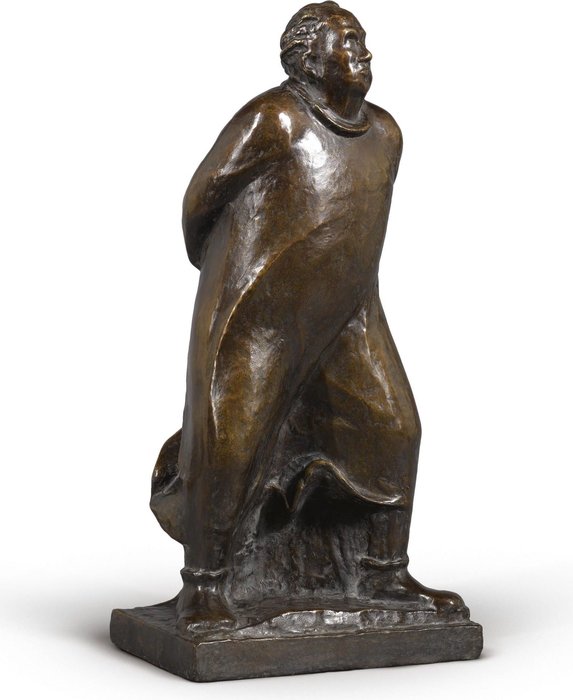
Frenzy (Der Berserker) (1910) на Ernst Barlach

Frenzy (Der Berserker)

1910 · Bronze · Nelson-Atkins Museum of Art, Канзас Сити

In the heavy, bronze contours of Ernst Barlach’s Frenzy (Der Berserker), one does not merely observe a sculpture; one encounters a visceral eruption of human emotion. Created in 1910, this masterpiece stands as a profound testament to the power of German Expressionism, capturing a moment where physical form and psychological turmoil become indistinguishable. The figure, cast in enduring bronze, presents a powerful, solid silhouette that seems to vibrate with an…

3
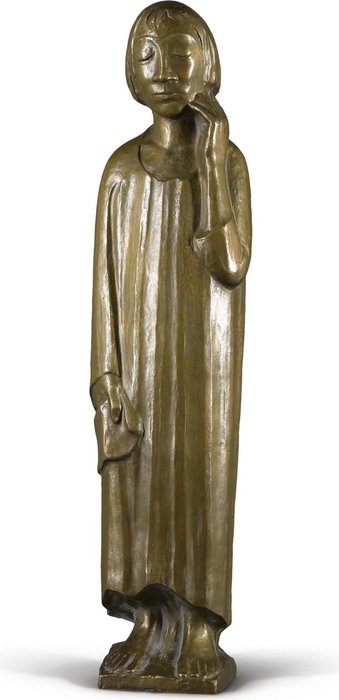
The Flutist (1936) на Ernst Barlach

The Flutist

1936 · Bronze · Lehmbruck Museum, Düsseldorf

In this bronze sculpture, titled The Flutist, Ernst Barlach presents a solitary figure captured in a moment of quietude. Created in 1936, the work depicts a musician seated in a chair, legs crossed, with the head tilted slightly downward toward the instrument. There is a palpable sense of introspection in the posture, as if the act of playing is a private communion between the man and his music. The figure's…

5
The Singing Man (1928) на Ernst Barlach

The Singing Man

1928 · Bronze

Ernst Barlach’s 1928 bronze sculpture, The Singing Man, captures a singular moment of release. The figure is seated, leaning back with a posture of profound relaxation, head tilted upward as if lost in a private melody. This gesture suggests a transition between the physical and the spiritual, a fleeting instance of joy that seems to touch a realm beyond the immediate. The form is characterized by simplified, elongated lines and…

7
Shepherd in a Storm (1908) на Ernst Barlach

Shepherd in a Storm

1908 · Wood · Kunsthalle Bremen, Бремен

In the evocative sculpture Shepherd in a Storm, created in 1908 by the German Expressionist master Ernst Barlach, we encounter a profound meditation on human resilience. The piece captures a moment of intense struggle, where a shepherd, with his head bowed and hat pulled low against the elements, battles an unseen, relentless wind. This atmospheric tension serves as a powerful metaphor for the adversities and tempests that define the human…

Знаменитите картини на Ernst Barlach, номера от 11 до 12

Темите, които привличат погледа на Ernst Barlach

Четирите найчесто срещани теми в тези оригинални творби, всяка с най-добрия си пример.

Музеите, в които се съхраняват оригиналите на Ernst Barlach

5 музея, които притежават най-голям брой от картините на тази страница.

Музеи Град Творения на Ernst Barlach Картини от този списък
Nelson-Atkins Museum of Art, Канзас СитиNelson-Atkins Museum of Art Канзас Сити 1 Frenzy (Der Berserker)
Aichi Prefectural Museum of Art, NagoyaAichi Prefectural Museum of Art Nagoya 1 Man in Ecstasy
Lehmbruck Museum, DüsseldorfLehmbruck Museum Düsseldorf 1 The Flutist
Staatliche Kunsthalle Karlsruhe, КарлсруеStaatliche Kunsthalle Karlsruhe Карлсруе 1 Panic Terror
Kunsthalle Bremen, БременKunsthalle Bremen Бремен 1 Shepherd in a Storm

Ernst Barlach през десетилетията: един уникален оригинал за всяко

Произведения по десетилетия

Изберете десетилетие, за да видите оригиналната творба, която го определя.

Картини на Ernst Barlach: въпроси към галерията

Кое е най-известното произведение на Ernst Barlach?Разкрийте отговора

Frenzy (Der Berserker) (1910), Nelson-Atkins Museum of Art, Канзас Сити. Следват Man in Ecstasy (1912) и The Flutist (1936).

На каква възраст Ernst Barlach създава Frenzy (Der Berserker)?Разкрийте отговора

40 години: Frenzy (Der Berserker) е от 1910 г., а Ernst Barlach е роден/а в 1870.

Кои са десетте най-известни картини на Ernst Barlach?Разкрийте отговора

Frenzy (Der Berserker), Man in Ecstasy, The Flutist, Panic Terror, The Singing Man, Untitled (727), Shepherd in a Storm, Untitled (305), Untitled (207) и Untitled (902). Класацията по-горе показва годината и музея за всяко от тях.

Колко са известните творби на Ernst Barlach?Разкрийте отговора

В нашия каталог са представени 12 произведения на Ernst Barlach, датирани от 1908 до 1936.

Къде могат да се видят най-известните оригинали на Ernst Barlach?Разкрийте отговора

Предимно в Nelson-Atkins Museum of Art (Канзас Сити), Aichi Prefectural Museum of Art (Nagoya) и Lehmbruck Museum (Düsseldorf). В горната таблица с музеи са изброени всички тях.

През кой период Ernst Barlach създава най-известните си картини?Разкрийте отговора

В 1910s: 3 от 12 произведенията на тази страница са създадени тогава, като Frenzy (Der Berserker) са сред тях.

Коя е най-ранната и коя е най-късната известна картина на Ernst Barlach?Разкрийте отговора

На тази страница най-старата е Shepherd in a Storm (1908), а най-новата е The Flutist (1936).

Какви теми предпочиташе Ernst Barlach?Разкрийте отговора

Sculpture (4), Man (3) и Bronze (2), разпределени в 12 произведения на тази страница.

С какви материали най-често е живописувал Ernst Barlach?Разкрийте отговора

Bronze, за 4 от 12 произведения на тази страница.

Към кое художествено направление принадлежи творчеството на Ernst Barlach?Разкрийте отговора

Expressionism, судейки по оригиналите на тази страница.

Ernst Barlach: портрет на художника

Ernst Barlach: Life and Legacy

Early Life and Education

  • Born in Wedel, Holstein (Germany) on January 2nd, 1870, Ernst Heinrich Barlach was the eldest of four sons.
  • His father, Dr. Georg Barlach, was a physician who died when Ernst was fourteen, leading to a move with his family.
  • He received his early education in Ratzeburg and Schönberg, growing up in a devout Lutheran household.
  • Barlach began his artistic training at the Gewerbeschule Hamburg (Hamburg School of Applied Arts) from 1888 to 1891.
  • He continued his studies at the Königliche Akademie der bildenden Künste zu Dresden (Royal Academy of Fine Arts in Dresden) between 1891 and 1895, creating his first major sculpture, Die Krautpflückerin (The Herb Plucker).
  • He briefly studied at the Académie Julian in Paris from 1895 to 1897 but remained critical of simply copying French styles.

Artistic Development and Influences

  • Initially, Barlach worked in an Art Nouveau style, creating illustrations for the magazine Jugend and ceramic sculptures.
  • A pivotal trip to Russia in 1906 profoundly influenced his artistic direction, exposing him to new perspectives and a more expressive aesthetic.
  • Financial support from art dealer Paul Cassirer allowed Barlach to develop his unique style, focusing on the emotional intensity of human figures.
  • He drew inspiration from early Gothic art, particularly its dramatic drapery and spiritual yearning.
  • Barlach’s work also reflects influences from Russian folk art and a growing interest in portraying the lives of ordinary people.

Key Themes and Artistic Style

  • Barlach's sculptures, prints, and writings often explored themes of human suffering, spiritual longing, and social injustice.
  • His figures are characterized by their elongated forms, expressive gestures, and a sense of inner turmoil.
  • He frequently used wood carving and bronze as his primary mediums, emphasizing the tactile qualities of these materials.
  • The Singing Man, Frenzy (Der Berserker), and Shepherd in a Storm are examples of his emotionally charged and symbolic works.

World War I and its Aftermath

  • Initially, Barlach was a patriotic supporter of World War I, anticipating artistic renewal through conflict.
  • His experience as an infantry soldier from 1915 to 1916 profoundly changed his views, transforming him into a staunch pacifist.
  • The horrors of war became a central theme in his subsequent work, leading to powerful anti-war sculptures like Der Rächer (The Avenger).

Recognition and Controversy

  • Barlach gained significant recognition after the war, becoming a member of prestigious art academies in Prussia and Munich.
  • However, his anti-war stance and expressive style drew criticism during the rise of Nazism.
  • His works were labeled as “degenerate art” by the Nazi regime and confiscated from museums.
  • The Magdeburg Cenotaph, a WWI memorial depicting the pain and futility of war, sparked intense controversy and was temporarily removed.

Legacy and Historical Significance

  • Ernst Barlach died in Güstrow, Mecklenburg, on October 24th, 1938, but his artistic legacy endures.
  • He is considered one of the most important German Expressionist sculptors of the 20th century.
  • His work continues to resonate with audiences today, offering a powerful commentary on the human condition and the devastating consequences of war.
  • Barlach’s commitment to artistic integrity in the face of political oppression makes him an important figure in art history.