Портрет на Едгар Дега

Едгар Дега Paintings: The 100 Most Famous, Through a Gallery's Eye

Обновено Октомври 2026 · класирано според нашия индекс на популярност (търсения, посещения и поръчки за всяко произведение) · 1074 творби на Едгар Дега в нашия каталог

In short

To the gallery's eye, Едгар Дега's most famous painting is Ла Абсинте (1876), whose original hangs in the Музей д’Орсе, Париж. Жена, която се суши and Танцовият клас (1873) complete the trio every eye recognises. Of the 1,074 works by Едгар Дега in our catalog, the gallery presents the 100 most famous below, each original with its year, its museum and what makes it unique.

1834 – 1917, Париж Импресионизъм Най-много творби: Метрополитън Музей на изкуствата

The gallery's top 10 Едгар Дега paintings

1
Ла Абсинте (1876) на Едгар Дега

Ла Абсинте

1876 · Масло върху платно · Музей д’Орсе, Париж

Едгар Дега с неговата „Ла Абсинте“ (1876) представя пронизващ портрет на парижката кафе-култура, улавящ самотата и вътрешната саморефлексия на урбанистичния живот през XIX век. Това шедьовър приканва зрителя в момент на тихо размисъл, в който две фигури седят една до друга, но остават светове далеч една от друга, всяка погълната в собствените си мисли.

2
Жена, която се суши на Едгар Дега

Жена, която се суши

Акрил върху платно · Национална галерия, Лондон

Появявайки се във Франция през втората половина на XIX век, импресионизмът бронира традиционните художествени конвенции. Художници като Дега се откъснаха от историческите и митологичните сюжети, насочвайки погледа си към сцени от модерния живот. *Интимизмът*, поджанр в рамките на импресионизма, се фокусира специфично върху домашните интериори и личните, интимни моменти. „Жена, която се суши“ е съвършен пример за тази тенденция. Въпреки че Дега се съпротивляваше на етикета „импресионист“, неговата творчество споделяше…

3
Танцовият клас (1873) на Едгар Дега

Танцовият клас

1873 · Масло върху платно · Музей д’Орсе, Париж

Да стъпиш в света на Едгар Дега и неговия шедьовър „Танцовият клас“ означава да трансцендираш границите на времето и да влезеш в убежище на дисциплинираната грация. Написана около 1873 г., тази картина не просто представя сцена от балетна репетиция; тя предлага интимен, почти съзерцателен поглед към тихата интензивност на танцовото студио. За разлика от грандиозните, поставени спектакли, които често се свързват с операта, Дега насочва нашия поглед към нефилтрираната реалност…

4
The Bellelli Family на Едгар Дега

The Bellelli Family

Oil On Canvas · Музей д’Орсе, Париж

In the quiet, shadowed corners of a Parisian room, Edgar Degas captures something far more profound than a mere family gathering. The Bellelli Family, painted between 1858 and 1867, stands as an exquisite masterwork that transcends the boundaries of traditional portraiture. It is not simply a record of faces, but a psychological landscape where every gaze and posture whispers of unspoken tensions and deep-seated emotions. As one gazes upon this…

5
Interior (also known as The Rape) (1868) на Едгар Дега

Interior (also known as The Rape)

1868 · Масло върху платно · Philadelphia Museum of Art, Филаделфия

Edgar Degas’s “Interior,” often referred to as “The Rape,” is not merely a painting; it's an experience—a carefully constructed tableau of psychological tension and unspoken drama. Completed in 1868, this grisaille masterpiece resides within the Philadelphia Museum of Art, yet its power transcends its physical location, resonating with viewers long after they’ve turned away. It’s a work that invites speculation, prompting us to confront uncomfortable truths about human relationships and…

6
Portraits in a New Orleans Cotton Office на Едгар Дега

Portraits in a New Orleans Cotton Office

Portraits in a New Orleans Cotton Office Edgar Degas, one of the most celebrated artists of the Impressionist movement, gifted us Portraits in a New Orleans Cotton Office, an oil painting that encapsulates the very essence of his uncle’s cotton brokerage business during its calamitous bankruptcy. Completed in 1873, this masterpiece transcends mere visual representation; it stands as a testament to Degas' unparalleled skill and occupies a significant place within…

7
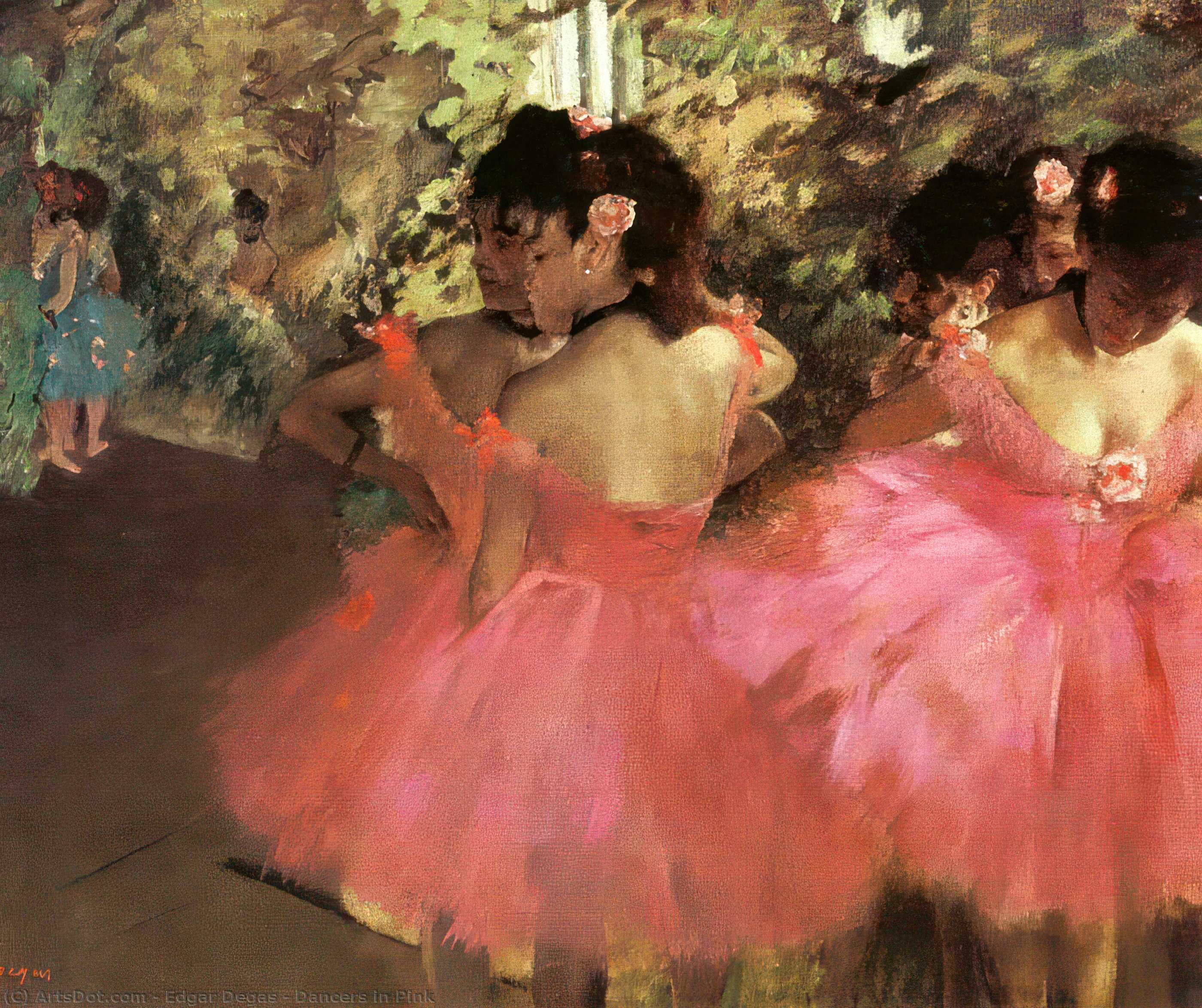
Танцьорки в розово (1885) на Едгар Дега

Танцьорки в розово

1885 · Масло върху платно · Hill-Stead Museum, Фармингтън

В сърцето на Париж, през 1885 година, Едгар Дега успява да улови нещо много повече от просто сценична картина – той запечатва миг на динамика, грация и неповторима емоция. "Денци в Розово" не е просто изображение; то е портал към света на балета, разкривайки сложния танц между форма и светлина, движение и момент. Този шедьовър, сега част от колекцията на Метрополитън Музея на изкуствата, ни потапя в атмосферата на задкулисните…

8
Танцьорка с букет цветя (Звездата на балета) (1878) на Едгар Дега

Танцьорка с букет цветя (Звездата на балета)

1878 · Акрил върху платно

Едгар Дега, един от най-влиятелните и загадъчни фигури в историята на изкуството, оставя след себе си наследство от картини, които не просто представят реалността, а улавят мимолетния момент, ефирната красота и динамиката на живота. "Денсър с букет цветя (Звезда на балета)", създадена през 1878 година, е емблематична творба, която ни пренася в сърцето на парижкия балет – свят на грация, дисциплина и неуловима елегантност. Тази картина не е просто изображение…

9
Мис Лола на цирка Фернандо (1879) на Едгар Дега

Мис Лола на цирка Фернандо

1879 · Масло върху платно

В сърцето на 19 век, Париж пулсира с енергията на нововъзникващи движения и революционни идеи. Сред тях се откроява фигурата на Едгар Дега – художник, който не се подчинява на конвенциите, а търси истината в движението, в светлината и в човешката душа. "Миси Лола в цирка на Фернандо" (1879) е свидетелство за това виждане – завладяваща картина, която пренася зрителя в бурния свят на цирковия спектакъл и разкрива дълбочината на…

10
Танцьорки на бара ```Dancers at the Barre 1``` (1888) на Едгар Дега

Танцьорки на бара ```Dancers at the Barre 1```

1888 · Масло върху платно · The Phillips Collection, Вашингтон, окръг Колумбия

В сърцето на Париж, през последните години на 19 век, художникът Едгар Дега се впуска в завладяващ свят на движение и красота – света на балета. „Dancers at the Barre 1“ не е просто картина; тя е момент уловен във времето, пресъздаден с неподражаема чувствителност към човешката форма и динамиката на танца. Представена е в пастелни нюанси, които създават мечтано, почти призрачно усещане за пространство и светлина, характерни за импресионистичния…

Едгар Дега paintings, ranked 11 to 100

11Кафе Концерт (Песента на Кучето) (1877) на Едгар ДегаКафе Концерт (Песента на Кучето)1877 12Женска баня (1892) на Едгар ДегаЖенска баня1892 13Г-жата (1873) на Едгар ДегаГ-жата1873 14В кафене, известно още като на Едгар ДегаВ кафене, известно още катоГранд Пале 15Дълбочина и движение (1898) на Едгар ДегаДълбочина и движение1898 16Танцуваща група (1874) на Едгар ДегаТанцуваща група1874 · Метрополитън Музей на изкуствата 17Пътни коне в Лоншам (1874) на Едгар ДегаПътни коне в Лоншам1874 · Музей на изкуствата във Бостън 18Танцьорка на сцената (1880) на Едгар ДегаТанцьорка на сцената1880 · Hamburger Kunsthalle 19Two Dancers in Their Dressing Room (1880) на Едгар ДегаTwo Dancers in Their Dressing Room1880 · Национална галерия 20The Star на Едгар ДегаThe Star 21Two Dancers Entering the Stage (1878) на Едгар ДегаTwo Dancers Entering the Stage1878 22Балерина и Дама с Фен (1885) на Едгар ДегаБалерина и Дама с Фен1885 23The Ballet Rehearsal on Stage (1874) на Едгар ДегаThe Ballet Rehearsal on Stage1874 24Head of a Woman (1874) на Едгар ДегаHead of a Woman1874 · Национална галерия 25Two harlequins (1886) на Едгар ДегаTwo harlequins1886 26Fan Mount: Ballet Girls (1879) на Едгар ДегаFan Mount: Ballet Girls1879 · Метрополитън Музей на изкуствата 27Седнала жена, която си печесне косата (1890) на Едгар ДегаСеднала жена, която си печесне косата1890 · Музей д’Орсе 28Yellow Dancers (In the Wings) (1875) на Едгар ДегаYellow Dancers (In the Wings)1875 · Art Institute of Chicago 29Café Singer (1879) на Едгар ДегаCafé Singer1879 · Art Institute of Chicago 30The Milliners (1882) на Едгар ДегаThe Milliners1882 · Музей Джейн Пол Гети 31Women Combing Their Hair (1876) на Едгар ДегаWomen Combing Their Hair1876 · The Phillips Collection 32Three Dancers Preparing for Class (1878) на Едгар ДегаThree Dancers Preparing for Class1878 · Метрополитън Музей на изкуствата 33А римска сирачка (1857) на Едгар ДегаА римска сирачка1857 · Бирмингамски музей и художествена галерия 34At the Ballet (1881) на Едгар ДегаAt the Ballet1881 35Dancer in Her Dressing Room (1879) на Едгар ДегаDancer in Her Dressing Room1879 36The Blue Dancers на Едгар ДегаThe Blue Dancers 37Seated Nude Combing Her Hair (1890) на Едгар ДегаSeated Nude Combing Her Hair1890 38Танцовщица в гримерната си (1879) на Едгар ДегаТанцовщица в гримерната си1879 · Музей Нортън Саймън 39Tuileries, the woman with a parasol (1877) на Едгар ДегаTuileries, the woman with a parasol1877 · Burrell Collection 40Orchestra of the Opera (1869) на Едгар ДегаOrchestra of the Opera1869 41The Bather (La Baigneuse) (1895) на Едгар ДегаThe Bather (La Baigneuse)1895 · Reading Public Museum 42Russian Dancers (1899) на Едгар ДегаRussian Dancers1899 43A Cotton Office in New Orleans (1873) на Едгар ДегаA Cotton Office in New Orleans1873 44Woman in Blue (Portrait of Mlle. Helene Rouart) (1886) на Едгар ДегаWoman in Blue (Portrait of Mlle. Helene Rouart)1886 45Manet at the Races (1870) на Едгар ДегаManet at the Races1870 46Singer in Green (1884) на Едгар ДегаSinger in Green1884 · Метрополитън Музей на изкуствата 47Три Танцьорки, Сини Поли, Червени Блузи (1903) на Едгар ДегаТри Танцьорки, Сини Поли, Червени Блузи1903 48Жена Косеща Косата (1894) на Едгар ДегаЖена Косеща Косата1894 · Метрополитън Музей на изкуствата 49Danseuse rajustant son chausson (1880) на Едгар ДегаDanseuse rajustant son chausson1880 50Three Dancers in Purple Skirts (1898) на Едгар ДегаThree Dancers in Purple Skirts1898 51Woman at a Window (1872) на Едгар ДегаWoman at a Window1872 · Courtauld Gallery 52Ballet Scene (1880) на Едгар ДегаBallet Scene1880 · Dixon Gallery and Gardens 53Four Dancers (1902) на Едгар ДегаFour Dancers1902 54A Carriage at the Races (1872) на Едгар ДегаA Carriage at the Races1872 · Музей на изкуствата във Бостън 55Lady with a Parasol (1871) на Едгар ДегаLady with a Parasol1871 · Courtauld Gallery 56Ballet Rehearsal on Stage, oil on canvas, Musée (1874) на Едгар ДегаBallet Rehearsal on Stage, oil on canvas, Musée1874 57Singer with a glove (1878) на Едгар ДегаSinger with a glove1878 58Mme Jacques Fourchy (1883) на Едгар ДегаMme Jacques Fourchy1883 59Field of Flax (1892) на Едгар ДегаField of Flax1892 60The Return of the Herd (1896) на Едгар ДегаThe Return of the Herd1896 · New Walk Museum - Art Gallery 61Жена на диван (1872) на Едгар ДегаЖена на диван1872 62Танцуващ репетитор в студиото на операта (1895) на Едгар ДегаТанцуващ репетитор в студиото на операта1895 · Музей Нортън Саймън 63Woman Tying the Ribbons of Her Hat (1882) на Едгар ДегаWoman Tying the Ribbons of Her Hat1882 64Group of Dancers (1905) на Едгар ДегаGroup of Dancers1905 65Standing Female Figure with Bared Torso (1868) на Едгар ДегаStanding Female Figure with Bared Torso1868 · Kunstmuseum Basel 66Dancer with Bouquet (1877) на Едгар ДегаDancer with Bouquet1877 67Conversation (1895) на Едгар ДегаConversation1895 · Yale University Art Gallery 68The Rehearsal of the Ballet on Stage (1874) на Едгар ДегаThe Rehearsal of the Ballet on Stage1874 · Метрополитън Музей на изкуствата 69Two Dancers (1898) на Едгар ДегаTwo Dancers1898 · Държавни изкуства Дрезден 70Spanish dance (2018) на Едгар ДегаSpanish dance2018 · Asociación Española de Pintores y Escultores 71On the Stage (1880) на Едгар ДегаOn the Stage1880 72Horses and Jockeys (1886) на Едгар ДегаHorses and Jockeys1886 73The Dancers (1885) на Едгар ДегаThe Dancers1885 · Метрополитън Музей на изкуствата 74Four dancers, ca National Galler (1899) на Едгар ДегаFour dancers, ca National Galler1899 · Национална галерия на изкуствата 75Dancer Tilting (1883) на Едгар ДегаDancer Tilting1883 76Ballet Scene на Едгар ДегаBallet SceneDixon Gallery and Gardens 77Меланхолия (1874) на Едгар ДегаМеланхолия1874 78Dancer's Dressing Room (1878) на Едгар ДегаDancer's Dressing Room1878 79Три балеринки, една с тъмночервена талия (1899) на Едгар ДегаТри балеринки, една с тъмночервена талия1899 80M. and Mme Edouard Manet (1869) на Едгар ДегаM. and Mme Edouard Manet1869 81Dancers Practicing at the Barre (1877) на Едгар ДегаDancers Practicing at the Barre1877 · Метрополитън Музей на изкуствата 82Woman in a Café (1877) на Едгар ДегаWoman in a Café1877 83Dancers (1895) на Едгар ДегаDancers1895 84Dancer Looking at the Sole of Her Right Foot (1921) на Едгар ДегаDancer Looking at the Sole of Her Right Foot1921 · Tel Aviv Museum of Art 85Жена Косеща Коса си Пред Огледало (1877) на Едгар ДегаЖена Косеща Коса си Пред Огледало1877 · Музей Нортън Саймън 86Dancers in the Wings (1885) на Едгар ДегаDancers in the Wings1885 87Четверо Денсисти (1900) на Едгар ДегаЧетверо Денсисти1900 · Национална галерия на изкуствата 88Банята (1889) на Едгар ДегаБанята1889 89Before the Curtain Call (1892) на Едгар ДегаBefore the Curtain Call1892 90Dancer on Stage with a Bouquet (1876) на Едгар ДегаDancer on Stage with a Bouquet1876 91Woman with a Bandage (1873) на Едгар ДегаWoman with a Bandage1873 · Детройтският институт за изкуства 92Dancers (8) (1900) на Едгар ДегаDancers (8)1900 93Cafe-Concert Singer (1878) на Едгар ДегаCafe-Concert Singer1878 94The Rehearsal (1878) на Едгар ДегаThe Rehearsal1878 · Dumbarton Oaks 95Dancers Practicing at the Barre (1877) на Едгар ДегаDancers Practicing at the Barre1877 96Russian Dancer (1895) на Едгар ДегаRussian Dancer1895 97Olive Trees against a Mountainous Background (1893) на Едгар ДегаOlive Trees against a Mountainous Background1893 98View of Saint-Valery-sur-Somme (1898) на Едгар ДегаView of Saint-Valery-sur-Somme1898 · Метрополитън Музей на изкуствата 99Leon Bonnat (1863) на Едгар ДегаLeon Bonnat1863 100Two Dancers in the Studio (Dance School) (1875) на Едгар ДегаTwo Dancers in the Studio (Dance School)1875

Едгар Дега's famous paintings, period by period

Mature Impression

1877 – 1890 · 3 произведения в този списък

The subjects that held Едгар Дега's eye

The four subjects that come back most often in these originals, each with its finest example.

The museums that keep Едгар Дега's originals

8 музея, които притежават най-голям брой от картините на тази страница.

Музеи Град Творения на Едгар Дега Картини от този списък
Метрополитън Музей на изкуствата, Ню ЙоркМетрополитън Музей на изкуствата Ню Йорк 52 Танцуваща група, Fan Mount: Ballet Girls, Three Dancers Preparing for Class
Музей д’Орсе, ПарижМузей д’Орсе Париж 55 Ла Абсинте, Танцовият клас, The Bellelli Family
Национална галерия, ЛондонНационална галерия Лондон 18 Жена, която се суши, Two Dancers in Their Dressing Room, Head of a Woman
Музей Нортън Саймън, ПасаденаМузей Нортън Саймън Пасадена 5 Танцовщица в гримерната си, Танцуващ репетитор в студиото на операта, Жена Косеща Коса си Пред Огледало
Национална галерия на изкуствата, УокшънтънНационална галерия на изкуствата Уокшънтън 28 Four dancers, ca National Galler, Четверо Денсисти
Музей на изкуствата във Бостън, БостънМузей на изкуствата във Бостън Бостън 10 Пътни коне в Лоншам, A Carriage at the Races
Art Institute of Chicago, ЧикагоArt Institute of Chicago Чикаго 8 Yellow Dancers (In the Wings), Café Singer
Courtauld Gallery, ЛондонCourtauld Gallery Лондон 7 Woman at a Window, Lady with a Parasol

Едгар Дега, one signature painting per decade

Произведения по десетилетия

Pick a decade to see the original that defines it.

Едгар Дега's paintings: the gallery answers

Which Едгар Дега painting is the most famous of all?Reveal the answer

Ла Абсинте (1876), Музей д’Орсе, Париж. Жена, която се суши and Танцовият клас (1873) come next.

How old was Едгар Дега on completing Ла Абсинте?Reveal the answer

42 years old: Ла Абсинте dates from 1876, and Едгар Дега was born in 1834.

Which are Едгар Дега's top 10 paintings?Reveal the answer

Ла Абсинте, Жена, която се суши, Танцовият клас, The Bellelli Family, Interior (also known as The Rape), Portraits in a New Orleans Cotton Office, Танцьорки в розово, Танцьорка с букет цветя (Звездата на балета), Мис Лола на цирка Фернандо и Танцьорки на бара ```Dancers at the Barre 1```. The ranking above gives each one's year and museum.

How many works did Едгар Дега create?Reveal the answer

Our catalog holds 1,074 works by Едгар Дега, dated from 1857 to 1905.

Where do Едгар Дега's most famous originals hang?Reveal the answer

Mostly in Метрополитън Музей на изкуствата (Ню Йорк), Музей д’Орсе (Париж) и Национална галерия (Лондон). The museum table above lists them all.

When did Едгар Дега create the most famous paintings?Reveal the answer

In 1870s: 40 of the 100 works on this page were made then, Ла Абсинте among them.

Which are Едгар Дега's earliest and latest famous works?Reveal the answer

On this page, the earliest is А римска сирачка (1857) and the latest Group of Dancers (1905).

Which subjects did Едгар Дега return to most?Reveal the answer

Ballet (20), Degas (15) и Dance (13), across the 100 works on this page.

Which medium did Едгар Дега work in most?Reveal the answer

Oil On Canvas, for 26 of the 100 works on this page.

Which movement is Едгар Дега associated with?Reveal the answer

Импресионизъм, judging by the originals on this page.

Which Едгар Дега originals does the Метрополитън Музей на изкуствата hold?Reveal the answer

Танцуваща група, Fan Mount: Ballet Girls и Three Dancers Preparing for Class: the Метрополитън Музей на изкуствата, Ню Йорк holds 9 of the works on this page.

Can I have a Едгар Дега painting reproduced by hand?Reveal the answer

Yes, as a reproduction: the original stays in its museum, but any painting on this page can be painted by hand for you, made to order one at a time, from the painting's own page.

Едгар Дега: the artist

The Life of Edgar Degas

Paris, 1834. A child is born into a moderately wealthy family to Hilaire-Germain-Edgar De Gas. The name he would eventually simplify to Edgar Degas marks the beginning of a life defined by the tension between social expectation and artistic obsession. He grows up within the sophisticated atmosphere of the French capital, a setting that will later serve as the backdrop for his observations of modern life.

The years pass in a blur of study and shifting interests. He moves from the structured environment of his upbringing toward the grit of the city's working spaces. He does not seek the sunlight of the outdoors, preferring the controlled, artificial light of the studio and the theater. His gaze settles on the dancers, the laundresses, and the racehorses of Paris, capturing the physical toll of labor and the fleeting movements of the stage. He remains a man of contradictions, often resisting the labels his contemporaries apply to him, insisting instead on his identity as a realist.

The end comes in Paris on 27 September 1917. He leaves behind a vast body of work that spans many decades, including:

Early Life, Family and Training

Paris, 1834. The son of a banker and Célestine Musson De Gas, a Creole from New Orleans, Louisiana, Hilaire-Germain-Edgar De Gas enters a world of bourgeois stability. At eleven, he is enrolled at the Lycée Louis-le-Grand. The academic path is set, yet the boy’s focus drifts toward the halls of the Louvre. By 1853, having graduated from the Lycée with a baccalauréat in literature, he bypasses his father's expectations of a legal career. Instead, he registers as a copyist in the Louvre Museum, spending his hours tracing the lines of the masters.

The training intensifies at the École des Beaux-Arts in Paris. He moves through the rigors of classical instruction, honing a precision that would define his later work. In 1855, a meeting occurs that leaves a permanent mark on his development: he meets Jean-Auguste-Dominique Ingres. The encounter cements a respect for draftsmanship and the importance of the line, even as he begins to move toward the modern subjects that would eventually define his career.

Technique and Artistic Style

Degas rejects the label of Impressionist. He prefers the term "Realist," a choice that dictates his entire approach to the canvas. He avoids the outdoor landscape and the loose, flickering brushstrokes favored by his contemporaries. Instead, he retreats into the controlled environment of the studio. Here, he masters the human form through rigorous draftsmanship. He is a superb draftsman, possessing a specific, technical command over the depiction of movement. He does not wait for the sun to hit a subject; he constructs his scenes through careful study in pencil or pastel. This preparation allows him to freeze a fleeting moment of motion with anatomical precision.

Light in a Degas composition is rarely natural. He utilizes artificial light to emphasize the figures, creating a sense of theatricality and depth. One notable method is contre-jour, where he places his subject in shadow while the background remains brightly lit. This technique isolates the figure, pulling it forward from the environment. The result is a tension between the subject and the space they inhabit, often revealing the physical strain or the quiet, unposed reality of modern life.

Key Works and Subjects

The stage and the stable dominate his visual world. More than half of his output focuses on dancers, capturing them in moments of rehearsal and performance. He moves between the grace of a pirouette and the physical strain of the dance class. Beyond the theater, he turns his gaze toward the speed of the racetrack, documenting racehorses and the jockeys who ride them. These subjects are not merely decorative; they are studies in tension and movement.

His reach extends into the private and the psychological. He produces portraits that reveal a complex inner life, often using unconventional angles to isolate his subjects. This focus on the human form is not limited to oil on canvas. He works through a variety of media, including prints, drawings, and wax sculptures. His ability to render the human figure is evident in his many studies of women, often focusing on the body in private, unobserved moments.

Legacy and Lasting Impact

The shift in late 19th-century art finds a central figure in Degas. Though he resisted the label, his presence helped establish the foundations of Impressionism. He moved away from the rigid, historical subjects of the academy, choosing instead to document the grit and grace of modern Parisian life. This departure from tradition paved the way for future generations of artists to explore the unvarnished reality of the human condition.

His influence reaches far beyond the initial Impressionist circle. The structural innovations and unconventional compositions he developed left a mark on the trajectory of modern art. Specifically, his approach to form and movement can be seen in the later works of Pablo Picasso and Henri Matisse. He taught the art world to look at the world through asymmetrical angles and unexpected crops, turning the private, fleeting moments of a dancer or a laundress into permanent studies of motion.

Where to See the Works Today

The traces of Degas's observation remain scattered across major institutions, preserved in the quiet halls of Paris and beyond. In France, the Musée d'Orsay holds significant collections of his work, capturing the movement he spent a lifetime studying. The Louvre Museum also houses his art, while the Bibliothèque Nationale de France in Paris maintains his works within its archives. These collections offer a direct look at the technical precision and the study of form that defined his career.

Across the Atlantic, the reach of his vision extends into the United States. The Metropolitan Museum of Art in New York holds his paintings, providing a window into the modern life he depicted with such scrutiny. In Philadelphia, the Philadelphia Museum of Art contains his works, ensuring his influence remains accessible to international audiences. These sites act as physical anchors for his legacy, where the lines and light he mastered are still visible to the modern eye.

Всички 1074 произведения на Едгар Дега →