Портрет на Александър Калдер

98-те най-известни картини на Александър Калдер, селекция от галерията

Обновено Октомври 2026 · класирано според нашия индекс на популярност (търсения, посещения и поръчки за всяко произведение) · 98 творби на Александър Калдер в нашия каталог

Накратко

От всички оригинали, оставени от Александър Калдер, най-известният е Untitled, който се намира в колекцията на Biennale Internazionale dell'Antiquariato di Firenze, Флоренция. След тях непосредствено следват Mobile (1932) и Romulus and Remus (1928). Нашият каталог съдържа 98 произведения на Александър Калдер; галерията е съхранила 98-те най-обожавани от света, всяко от тях представен с неговата дата, неговия музей и неговата история.

1898 – 1976, Абердин Abstract expressionism Най-много творби: Biennale Internazionale dell'Antiquariato di Firenze

Топ 10-те картини на Александър Калдер: изборът на галерията

3
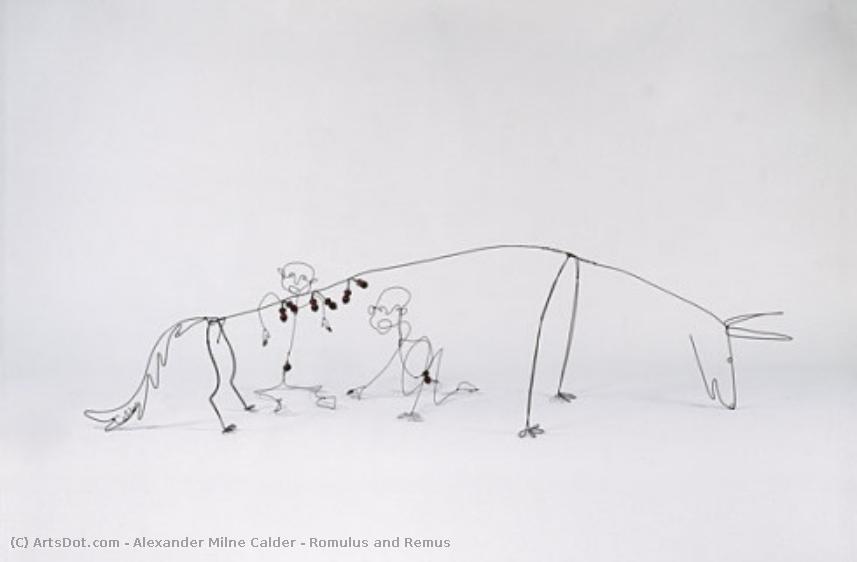
Romulus and Remus (1928) на Александър Калдер

Romulus and Remus

Alexander Milne Calder's "Romulus and Remus," crafted in 1928, isn’t merely a sculpture; it’s a distilled essence of myth rendered in delicate wire. This piece, a testament to the artist’s pioneering approach to three-dimensional form, transcends its subject matter – the legendary founders of Rome – to become a profound meditation on beginnings, brotherhood, and the very act of creation itself. Calder, deeply influenced by Constructivism and early Modernism, sought…

5
Red Lily Pads (Nénuphars rouges) (1956) на Александър Калдер

Red Lily Pads (Nénuphars rouges)

Alexander Milne Calder's "Red Lily Pads (Nénuphars rouges)" isn’t merely a depiction of a serene pond; it’s an invitation to lose oneself in the delicate balance of form, color, and movement. Created in 1956, this captivating sculpture – captured through a masterful photograph – embodies Calder's signature approach: embracing chance and celebrating the ephemeral beauty of nature within a distinctly modern aesthetic. The piece resides within a contemporary architectural space,…

9
Black Sun (1953) на Александър Калдер

Black Sun

1953 · Acrylic On Canvas · Tate Britain, Лондон

Alexander Milne Calder's "Black Sun," painted in 1953, isn’t merely a depiction of abstract forms; it’s an invitation to contemplate the interplay between chaos and order, darkness and light. Born in Aberdeen, Scotland, and later establishing himself as a pivotal figure in American sculpture alongside his son Alexander Stirling Calder and grandson Alexander ‘Sandy’ Calder, Milne Calder possessed a singular vision – one that sought to capture dynamic movement and…

10
Colored Spots (1970) на Александър Калдер

Colored Spots

1970 · Gouache

In Colored Spots, created in 1970, we encounter a moment of pure rhythmic energy. This gouache work moves away from the heavy permanence of sculpture to explore the lightness of color and shape. The composition is defined by a series of circles, varying in scale, that appear to drift across the surface. There is a specific tension in how these forms are placed; they do not sit static but seem…

Изборът на Александър Калдер продължава, от 11 до 98

11Calder's Circus (1931) на Александър КалдерCalder's Circus1931 · Уитни Музей на американското изкуство 12Ред Сън (1968) на Александър КалдерРед Сън1968 · Des Moines Art Center 13Lobster Trap and Fish Tail (1939) на Александър КалдерLobster Trap and Fish Tail1939 · MoMA - Музеят на модерното изкуство 14Violin (1960) на Александър КалдерViolin1960 15Untitled (400) на Александър КалдерUntitled (400) 16Untitled (2) на Александър КалдерUntitled (2) 17Untitled (362) на Александър КалдерUntitled (362) 18Sculpture in montreal на Александър КалдерSculpture in montreal 19Untitled (1937) на Александър КалдерUntitled1937 20Untitled (1948) на Александър КалдерUntitled1948 · The Phillips Collection 21Three Fingers (1944) на Александър КалдерThree Fingers1944 22The Antlers (1944) на Александър КалдерThe Antlers1944 23The Vine (1944) на Александър КалдерThe Vine1944 24The Fawn (1944) на Александър КалдерThe Fawn1944 25The Racket (1944) на Александър КалдерThe Racket1944 26The Flower (1944) на Александър КалдерThe Flower1944 27Yellow Tights (1945) на Александър КалдерYellow Tights1945 28Spiral Composition (1946) на Александър КалдерSpiral Composition1946 29Four Fish in Water (1947) на Александър КалдерFour Fish in Water1947 30The Acrobats (1944) на Александър КалдерThe Acrobats1944 31"Calder #1" Textile (Model No. 1-145) (1949) на Александър Калдер"Calder #1" Textile (Model No. 1-145)1949 · Метрополитън Музей на изкуствата 32Antennae with Red and Blue Dots (1953) на Александър КалдерAntennae with Red and Blue Dots1953 33Reef Fringe (1953) на Александър КалдерReef Fringe1953 34Black Widow (1959) на Александър КалдерBlack Widow1959 35Chevrons Noir sur Rouge et Jaune (1960) на Александър КалдерChevrons Noir sur Rouge et Jaune1960 36Saucers (1965) на Александър КалдерSaucers1965 377 Circles Abstract (1966) на Александър Калдер7 Circles Abstract1966 38Grid with Symbols (1966) на Александър КалдерGrid with Symbols1966 39Like Two Discs Sculpture (1962) на Александър КалдерLike Two Discs Sculpture1962 40A R на Александър КалдерA R 41Red, Blue and Black Balls on a Yellow Ground (1967) на Александър КалдерRed, Blue and Black Balls on a Yellow Ground1967 · Даласски музей на изкуствата 42Untitled (1968) на Александър КалдерUntitled1968 · Buffalo AKG Art Museum 43Across the Orange Moons (1967) на Александър КалдерAcross the Orange Moons1967 · Smithsonian American Art Museum 44Model for Nenuphar (1968) на Александър КалдерModel for Nenuphar1968 45Nenuphar (1968) на Александър КалдерNenuphar1968 46Gwenfritz (1968) на Александър КалдерGwenfritz1968 47Across the Orange Moons (1967) на Александър КалдерAcross the Orange Moons1967 48Pryamids and Clouds (1970) на Александър КалдерPryamids and Clouds1970 49Maquette for Flamingo (1972) на Александър КалдерMaquette for Flamingo1972 50Spiral (1970) на Александър КалдерSpiral1970 51The Big Wheel (1970) на Александър КалдерThe Big Wheel1970 52Yellow, Red, Blue Flowers (1970) на Александър КалдерYellow, Red, Blue Flowers1970 53Tableau Noir (1970) на Александър КалдерTableau Noir1970 54Pyramids (1975) на Александър КалдерPyramids1975 55Crosshatch на Александър КалдерCrosshatch 56Fish at Sunrise (1974) на Александър КалдерFish at Sunrise1974 57Red Polygons на Александър КалдерRed PolygonsThe Phillips Collection 58Untitled (665) на Александър КалдерUntitled (665) 59Untitled (226) на Александър КалдерUntitled (226) 60Untitled (728) на Александър КалдерUntitled (728) 61Untitled (3) на Александър КалдерUntitled (3)New York Historical Society 62Untitled (227) на Александър КалдерUntitled (227) 63Untitled (230) на Александър КалдерUntitled (230) 64Untitled (391) на Александър КалдерUntitled (391) 65Untitled (208) на Александър КалдерUntitled (208) 66Untitled (121) на Александър КалдерUntitled (121) 67Untitled (778) на Александър КалдерUntitled (778) 68Untitled (527) на Александър КалдерUntitled (527) 69Untitled (4) на Александър КалдерUntitled (4) 70Untitled (890) на Александър КалдерUntitled (890) 71Untitled (647) на Александър КалдерUntitled (647) 72Untitled (282) на Александър КалдерUntitled (282) 73Untitled (318) на Александър КалдерUntitled (318) 74Flamingo на Александър КалдерFlamingo 75Untitled, (1976) на Александър КалдерUntitled, (1976) 76Untitled (5) на Александър КалдерUntitled (5) 77Hair Comb на Александър КалдерHair Comb 78Untitled (210) на Александър КалдерUntitled (210) 79Untitled (937) на Александър КалдерUntitled (937) 80Untitled (571) на Александър КалдерUntitled (571) 81Winter Landscape на Александър КалдерWinter Landscape 82Untitled на Александър КалдерUntitled 83The Boston Society of Architects на Александър КалдерThe Boston Society of Architects 84Red, Yellow, Blue на Александър КалдерRed, Yellow, Blue 85Baluster на Александър КалдерBaluster 86Pin на Александър КалдерPin 87Boney на Александър КалдерBoney 88Four wings, (1972) на Александър КалдерFour wings, (1972) 89Necklace на Александър КалдерNecklace 90Smoke Rings на Александър КалдерSmoke Rings 91Untitled (6) на Александър КалдерUntitled (6) 92Bracelet на Александър КалдерBracelet 93Trois Spirales на Александър КалдерTrois Spirales 94On Yellow на Александър КалдерOn Yellow 95Nemo на Александър КалдерNemoBiennale Internazionale dell'Antiquariato di Firenze 96Red, Yelloe and Blue Gongs на Александър КалдерRed, Yelloe and Blue GongsCa' Pesaro - Международна галерия за модерно изкуство 97Tache Bleu на Александър КалдерTache Bleu 98Red Mobile на Александър КалдерRed MobileGalleria Civica di Arte Moderna e Contemporanea Torino

Знаменитите картини на Александър Калдер, период по период

Contemporary

3 произведения в този списък

Темите, които привличат погледа на Александър Калдер

Четирите найчесто срещани теми в тези оригинални творби, всяка с най-добрия си пример.

Музеите, в които се съхраняват оригиналите на Александър Калдер

8 музея, които притежават най-голям брой от картините на тази страница.

Музеи Град Творения на Александър Калдер Картини от този списък
Biennale Internazionale dell'Antiquariato di Firenze, ФлоренцияBiennale Internazionale dell'Antiquariato di Firenze Флоренция 2 Untitled, Nemo
Музей „Соломон Р. Гугенхайм“, Ню ЙоркМузей „Соломон Р. Гугенхайм“ Ню Йорк 2 Romulus and Remus, Red Lily Pads (Nénuphars rouges)
The Phillips Collection, Вашингтон, окръг КолумбияThe Phillips Collection Вашингтон, окръг Колумбия 2 Untitled, Red Polygons
Tate Britain, ЛондонTate Britain Лондон 1 Black Sun
Уитни Музей на американското изкуство, Ню ЙоркУитни Музей на американското изкуство Ню Йорк 1 Calder's Circus
Des Moines Art Center, Де МойнDes Moines Art Center Де Мойн 1 Ред Сън
MoMA - Музеят на модерното изкуство, Ню ЙоркMoMA - Музеят на модерното изкуство Ню Йорк 1 Lobster Trap and Fish Tail
Метрополитън Музей на изкуствата, Ню ЙоркМетрополитън Музей на изкуствата Ню Йорк 1 "Calder #1" Textile (Model No. 1-145)

Александър Калдер десетилетие по десетилетие: оригиналът, който дефинира всяко от тях

Произведения по десетилетия

Изберете десетилетие, за да видите оригиналната творба, която го определя.

Въпроси на колекционерите относно картините на Александър Калдер

С кое произведение е най-известен Александър Калдер?Разкрийте отговора

Untitled, Biennale Internazionale dell'Antiquariato di Firenze, Флоренция. Следват Mobile (1932) и Romulus and Remus (1928).

Кои са десетте най-известни картини на Александър Калдер?Разкрийте отговора

Untitled, Mobile, Romulus and Remus, Abstraction, Red Lily Pads (Nénuphars rouges), Orange and Black Composition, Puppet Man, Slanting Red Nose, Black Sun и Colored Spots. Класацията по-горе показва годината и музея за всяко от тях.

Колко картини е оставил Александър Калдер?Разкрийте отговора

В нашия каталог са представени 98 произведения на Александър Калдер, датирани от 1928 до 1975.

В кои музеи са изложени шедьоврите на Александър Калдер?Разкрийте отговора

Предимно в Biennale Internazionale dell'Antiquariato di Firenze (Флоренция), Музей „Соломон Р. Гугенхайм“ (Ню Йорк) и The Phillips Collection (Вашингтон, окръг Колумбия). В горната таблица с музеи са изброени всички тях.

В кои години Александър Калдер е създал най-известните си произведения?Разкрийте отговора

В 1960s: 17 от 98 произведенията на тази страница са създадени тогава, като Abstraction са сред тях.

Кои са първата и последната известни оригинални творби на Александър Калдер?Разкрийте отговора

На тази страница най-старата е Romulus and Remus (1928), а най-новата е Pyramids (1975).

Кои теми избира най-често Александър Калдер?Разкрийте отговора

Sculpture (6), Calder (6) и Geometric (5), разпределени в 98 произведения на тази страница.

Коя техника използва най-често Александър Калдер?Разкрийте отговора

Acrylic On Canvas, за 4 от 98 произведения на тази страница.

Към коهoто художествено направление принадлежи Александър Калдер?Разкрийте отговора

Abstract expressionism, судейки по оригиналите на тази страница.

Кои произведения на Александър Калдер се съхраняват в Biennale Internazionale dell'Antiquariato di Firenze?Разкрийте отговора

Untitled и Nemo: Biennale Internazionale dell'Antiquariato di Firenze, Флоренция притежава 2 от произведенията на тази страница.

Александър Калдер: живот и творчество

Introduction to Alexander Milne Calder

Alexander Milne Calder (MILL-nee) was a Scottish-American sculptor born in Aberdeen, Scotland, on August 23, 1846. He is best known for his monumental architectural sculpture of Philadelphia City Hall and as the father of renowned sculptor Alexander Stirling Calder, alongside whose grandson, Alexander ‘Sandy’ Calder, achieved considerable acclaim in the 20th century. His artistic journey began amidst the vibrant Arts and Crafts movement, nurtured by a formative education at the Royal Academy in Edinburgh and honed through studies with John Rhind. He subsequently established himself in London, immersing himself in the artistic milieu of his time and contributing to significant projects like the Albert Memorial. A pivotal moment arrived in 1868 when Calder emigrated to the United States and settled in Philadelphia, where he pursued further academic endeavors under the tutelage of Thomas Eakins at the Pennsylvania Academy of Fine Arts. This relocation marked the commencement of a prolific artistic career characterized by innovation and experimentation.

Early Life and Education

Calder’s upbringing instilled within him a profound appreciation for craftsmanship and artistic expression. Born to Nanette Lederer Calder, a painter, and Alexander Stirling Calder, a sculptor—who himself was a celebrated artist—he inherited a legacy of creative endeavor. His father's mastery of stone carving profoundly influenced his formative years, shaping his understanding of sculptural technique. Calder attended the Royal Academy in Edinburgh and studied with John Rhind, absorbing artistic principles that would inform his subsequent work. He honed his skills at the South Kensington School and collaborated closely with Thomas Eakins at the Pennsylvania Academy of Fine Arts, immersing himself in a stimulating environment conducive to artistic development. His father contracted tuberculosis during Calder’s youth, necessitating a relocation to Oracle, Arizona, where he resided alongside his wife, Louisa, fostering a familial bond that would endure throughout his life. Calder's formative years were enriched by friendships with Riley, an elderly resident of the ranch who imparted invaluable knowledge about sculpting and artistic vision.

Career Highlights

Calder’s professional trajectory commenced in 1872 when he accepted a commission from John McArthur Jr., to create sculptures adorning Philadelphia City Hall—a project that demanded meticulous planning and execution over two decades. This ambitious undertaking showcased Calder's dedication to craftmanship and his ability to translate conceptual ideas into tangible forms. Simultaneously, he undertook the prestigious role of artistic director for the Fairmount Park Art Association, crafting an equestrian statue honoring George Gordon Meade—a testament to his commitment to public art and historical commemoration. His groundbreaking contribution to kinetic art arrived in 1931 with the creation of his first mobile—a sculptural innovation that embraced chance and movement—inspired by Marcel Duchamp’s conceptual approach. Calder's work quickly gained recognition within the Parisian avant-garde, propelling him to prominence as one of America’s foremost contemporary sculptors. A landmark retrospective exhibition at the Museum of Modern Art in New York in 1953 solidified Calder’s artistic reputation and cemented his place among the titans of American art history. His monumental sculptures—including *Spirale* for UNESCO headquarters and *Flamingo* for Chicago's Federal Center Plaza—became enduring symbols of artistic ambition and innovation.

Legacy

Alexander Milne Calder’s influence extended far beyond his own creations, shaping the artistic landscape of subsequent generations. His son, Alexander Stirling Calder, followed in his father’s footsteps as a sculptor, perpetuating the Calder family tradition of artistic excellence. Similarly, Alexander ‘Sandy’ Calder—Calder's grandson—became a celebrated artist himself, carrying forward the legacy of innovation and experimentation established by his forefathers. Calder’s enduring contribution to art history continues to inspire artists worldwide, ensuring that his vision remains relevant for years to come.