Портрет на Албрехт Дюрер

100-те най-известни картини на Албрехт Дюрер, селекция от галерията

Обновено Ноември 2026 · класирано според нашия индекс на популярност (търсения, посещения и поръчки за всяко произведение) · 1220 творби на Албрехт Дюрер в нашия каталог

Накратко

От всички оригинални произведения, оставени от Албрехт Дюрер, най-известната е Рицарят, смъртта и дяволът (1513). След тях непосредствено следват Млад Заек (1502) и Автопортрет на 22 години (1493). Нашият каталог съдържа 1,220 произведения на Албрехт Дюрер; галерията е съхранила 100-те най-обожавани от света, всяко от тях представен с неговата дата, неговия музей и неговата история.

1471 – 1528, Нюрнберг Северен ренесанс Най-много творби: Метрополитън Музей на изкуствата

Топ 10-те картини на Албрехт Дюрер: изборът на галерията

1
Рицарят, смъртта и дяволът (1513) на Албрехт Дюрер

Рицарят, смъртта и дяволът

1513 · Гравюра

Това произведение е монохромна гравюра, която изобразява драматична сцена на сблъсък между три основни фигури. В центъра се издига рицар, облечен в броня и яздящ кон, който се движи през суров пейзаж. Той е придружен от куче, тичащо между конете. Отляво скелетна фигура, олицетворяваща Смъртта, язди бледен кон и държи пясъчен часовник. Отдясно, сред корените на дърветата, се притаи дявол с кози глава. Пейзажът е изпълнен с каменисти, тесни процени…

2
Млад Заек (1502) на Албрехт Дюрер

Млад Заек

1502 · Акварел · Албертина, Виена

Young Hare - A Masterclass in Naturalism Albrecht Dürer’s 1502 watercolor masterpiece transcends mere animal portraiture; it is a profound study of nature and a testament to the artist's unparalleled skill. This remarkably detailed depiction of a young hare captures not just its physical form, but also a sense of quiet alertness and fleeting beauty that resonates with viewers centuries later. It stands as one of Dürer’s most celebrated works,…

3
Автопортрет на 22 години (1493) на Албрехт Дюрер

Автопортрет на 22 години

1493 · Масло върху платно · Лувър, Пари

Albrecht Dürer’s “Self-portrait at 22,” painted in 1493, is far more than a simple depiction of a young man; it's a profound meditation on identity, ambition, and the burgeoning spirit of the Northern Renaissance. This remarkable artwork offers a rare glimpse into the mind of one of history’s most influential artists – a young Dürer grappling with his own potential and establishing himself as a master of his craft. The…

4
Автопортрет (1498) на Албрехт Дюрер

Автопортрет

1498 · Масло върху панел · Музей Прадо, Мадрид

The Self-Portrait by Albrecht Dürer is a significant work of the Northern Renaissance, executed in 1498. In this painting, the artist presents his own likeness, capturing a moment of profound psychological depth. It is a work that reflects the shifting artistic landscape of the late fifteenth century, moving toward a more honest and detailed portrayal of the individual.

5
Поклонението на тримата волхви (1504) на Албрехт Дюрер

Поклонението на тримата волхви

1504 · Масло върху панел

е картина върху дърво от Албрехт Дюрер. Завършена през 1504 г., тази творба произлиза от специфичен момент на покровителство и висша цел. Тя е създадена по поръчка на Фридрих Мъдри и е предназначена за алтаря на църквата в замъка (Schlosskirche) в Витенберг.

6
Автопортрет на 22 години, 1493, Лувър на Албрехт Дюрер

Автопортрет на 22 години, 1493, Лувър

Поглед към художествената зрялост: Автопортретът на Дюрер на 22 години Този впечатляващ автопортрет, създаден през 1500 г. от майсторския Албрехт Дюрер, е много повече от просто прилика; той е смело заявяване на художеска идентичност и ключово произведение в рамките на Северния Ренесанс. Написана, когато той е бил на едва двадесет и осем години (макар и погрешно датирана като 1493 г.), тази творба се намира в Лувър и демонстрира забележителния умение…

7
Адорация на Светата Троица (Алтарът на Ландауер) (1511) на Албрехт Дюрер

Адорация на Светата Троица (Алтарът на Ландауер)

1511 · Масло върху панел · Kunsthistorisches Museum, Виена

Адорацията на Светата Троица (Алтарът на Ландауер) се появява от киста на Албрехт Дюрер – присъствие, което завладява вниманието на зрителя чрез своя мащаб и духовна тежест. Създадено през 1511 г., това монументално произведение улавя момент на небесна конвергенция. То съществува като дълбок визуален химн, в който божественото и земното се срещат в единен, единно действие на почитание. Въздухът сякаш се сгъстява от тежестта на фигурите, събрани в това свещено…

8
Портрет на млада венецианка (1507) на Албрехт Дюрер

Портрет на млада венецианка

1507 · Масло върху панел · Kunsthistorisches Museum, Виена

Създаден през 1507 година по време на второто посещение на Албрехт Дюрер в Италия, този завладяващ портрет предлага рядък и интимен поглед към света на венецианските жени през Високия Ренесанс. Повече от просто подобие, това е изследване на тихата съзерцателност и фината красота, демонстриращо майсторската адаптация на Дюрер на италианските художествени техники в рамките на неговата северноевропейска чувствителност. Картината не просто представя една жена; тя улавя есенцията на един момент,…

9
Христо сред докторите (1506) на Албрехт Дюрер

Христо сред докторите

1506 · Масло върху панел · Музей Тисен-Борнемица, Мадрид

„Христос сред лекарите“ от Албрехт Дюрер, създаден през 1506 година, е завладяващо изследване на вярата, знанието и младежката мъдрост. Това маслено върху дърво изображение предлага рядък поглед към интимна сцена – Младият Исус, обсъждащ учени въпроси с образовани мъже в Храма на Йерусалим, както е описано в Евангелието от Лука. Това произведение не просто изобразява историческо събитие; то е сложна диалектика между вяра и разум, младост и опит, която Дюрер…

10
Празнество с рози (детайл) (1506) на Албрехт Дюрер

Празнество с рози (детайл)

1506 · Масло · Народна галерия, Прага

Да стоиш пред Празнество с рози на Албрехт Дюрер означава да бъдеш пренесен в самото сърце на немския Ренесанс — епоха, в която хуманистичният интелект и дълбоката религиозна преданост танцуват в съвършена хармония. Изработена през 1506 г., тази монументална маслена картина надхвърля границите на обикновената библейска илюстрация; тя е изящно създадено свидетелство за артистично майсторство, което продължава да очарова съвременната душа. Сцената се разгръща като гъсто населена картина, зашеметяващо сложна…

Изборът на Албрехт Дюрер продължава, от 11 до 100

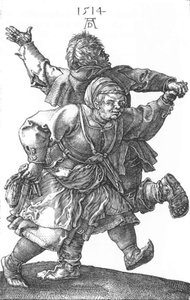
11Празник на Розовия Венец (1506) на Албрехт ДюрерПразник на Розовия Венец1506 12Самопортретът на Албрехт ДюрерСамопортретът 13Портрет на млада венецианка (1505) на Албрехт ДюрерПортрет на млада венецианка1505 · Kunsthistorisches Museum 14Четиримата апостоли (1526) на Албрехт ДюрерЧетиримата апостоли1526 · Баварски държавни списъци с произведения на изкуството 15Рицарят, смъртта и дяволът (1513) на Албрехт ДюрерРицарят, смъртта и дяволът1513 · Staatliche Kunsthalle Karlsruhe 16Рицарят, Смъртта и Демонът на Албрехт ДюрерРицарят, Смъртта и Демонът 17Мъжката баня (1497) на Албрехт ДюрерМъжката баня1497 · Британски музей 18Св. Иероним в пустинята (1495) на Албрехт ДюрерСв. Иероним в пустинята1495 · Национална галерия 19Морското чудовище (1498) на Албрехт ДюрерМорското чудовище1498 · Метрополитън Музей на изкуствата 20Вид на Долина Арко в Тирол (1495) на Албрехт ДюрерВид на Долина Арко в Тирол1495 · Лувър 21Разпятие (1508) на Албрехт ДюрерРазпятие1508 · Метрополитън Музей на изкуствата 22Седемте скръбни събития на Девата Мария (1496) на Албрехт ДюрерСедемте скръбни събития на Девата Мария1496 · Alte Pinakothek 23Свети Иероним в пустинята като каноник (1496) на Албрехт ДюрерСвети Иероним в пустинята като каноник1496 · Метрополитън Музей на изкуствата 24Преодоляване на ада или Христос в Лимб (№ 14) (1512) на Албрехт ДюрерПреодоляване на ада или Христос в Лимб (№ 14)1512 · Метрополитън Музей на изкуствата 25Животът на Дева Мария: 18. Коронацията на Дева Мария (1510) на Албрехт ДюрерЖивотът на Дева Мария: 18. Коронацията на Дева Мария1510 · Графическа колекция Албертина 26Заек (1502) на Албрехт ДюрерЗаек1502 · Албертина 27Small Passion: 2. Expulsion from the Paradise (1510) на Албрехт ДюрерSmall Passion: 2. Expulsion from the Paradise1510 · Британски музей 28Self-Portrait in a Fur-Collared Robe (1500) на Албрехт ДюрерSelf-Portrait in a Fur-Collared Robe1500 · Alte Pinakothek 29Agony in the Garden (1515) на Албрехт ДюрерAgony in the Garden1515 · Метрополитън Музей на изкуствата 30The Temptation of the Idler or The Dream of the Doctor (1498) на Албрехт ДюрерThe Temptation of the Idler or The Dream of the Doctor1498 · Метрополитън Музей на изкуствата 31Hands of an Apostle (1508) на Албрехт ДюрерHands of an Apostle1508 32St Peter and St John Healing the Cripple (No. 16) (1513) на Албрехт ДюрерSt Peter and St John Healing the Cripple (No. 16)1513 · Метрополитън Музей на изкуствата 33Saint Eustace (1501) на Албрехт ДюрерSaint Eustace1501 34Дворът на бившия замък Инсбрук със облаци (1494) на Албрехт ДюрерДворът на бившия замък Инсбрук със облаци1494 · Графическа колекция Албертина 35The Bagpiper (1514) на Албрехт ДюрерThe Bagpiper1514 · Метрополитън Музей на изкуствата 36The Harrowing of Hell or Christ in Limbo, from The Large Passion (1510) на Албрехт ДюрерThe Harrowing of Hell or Christ in Limbo, from The Large Passion1510 · Албертина 37Sudarium Displayed by Two Angels (1513) на Албрехт ДюрерSudarium Displayed by Two Angels1513 · Метрополитън Музей на изкуствата 38Силвани мъже с гербови щитове (1499) на Албрехт ДюрерСилвани мъже с гербови щитове1499 · Alte Pinakothek 39The Virgin Mary in Prayer (1518) на Албрехт ДюрерThe Virgin Mary in Prayer1518 · Държавните музеи в Берлин 40Pattern from the Series of Six Knots 3 (1505) на Албрехт ДюрерPattern from the Series of Six Knots 31505 · Британски музей 41Свети Евстахий (1501) на Албрехт ДюрерСвети Евстахий1501 · Национална галерия на Виктория 42Страданието на Десет хиляди (1508) на Албрехт ДюрерСтраданието на Десет хиляди1508 · Kunsthistorisches Museum 43St Jerome in his Study (1514) на Албрехт ДюрерSt Jerome in his Study1514 · Staatliche Kunsthalle 44St Christopher (1511) на Албрехт ДюрерSt Christopher1511 · Британски музей 45Upper Body of Christ (1508) на Албрехт ДюрерUpper Body of Christ1508 46Portrait of William Pirckheimer (1503) на Албрехт ДюрерPortrait of William Pirckheimer1503 47Portrait of Erasmus (1520) на Албрехт ДюрерPortrait of Erasmus1520 · Лувър 48Adam (1507) на Албрехт ДюрерAdam1507 · Музей Прадо 49Етюд на мъж на 93 години (1521) на Албрехт ДюрерЕтюд на мъж на 93 години1521 · Графическа колекция Албертина 50Erasmus of Rotterdam (1501) на Албрехт ДюрерErasmus of Rotterdam1501 51The Emperors Charlemagne and Sigismund (1510) на Албрехт ДюрерThe Emperors Charlemagne and Sigismund1510 · Courtauld Gallery 52Jabach Altar: Saints Simeon and Lazarus (1500) на Албрехт ДюрерJabach Altar: Saints Simeon and Lazarus1500 · Баварски държавни списъци с произведения на изкуството 53Wing of a Blue Roller (1512) на Албрехт ДюрерWing of a Blue Roller1512 · Графическа колекция Албертина 54The Small Courier (1496) на Албрехт ДюрерThe Small Courier1496 55Self-Portrait at 26 (1498) на Албрехт ДюрерSelf-Portrait at 261498 · Музей Прадо 56Virgin and child with a pear (1512) на Албрехт ДюрерVirgin and child with a pear1512 · Kunsthistorisches Museum 57Crowning with Thorns (1504) на Албрехт ДюрерCrowning with Thorns1504 58Small Passion: 9. Christ Washing Peter's Feet (1511) на Албрехт ДюрерSmall Passion: 9. Christ Washing Peter's Feet1511 · Британски музей 59Head of an Angel (1506) на Албрехт ДюрерHead of an Angel1506 · Графическа колекция Албертина 60Portrait Of A Woman With Her Hair Down (1497) на Албрехт ДюрерPortrait Of A Woman With Her Hair Down1497 · Städelsche Kunstinstitut Und Städtische Galerie 61Eve (1507) на Албрехт ДюрерEve1507 · Музей Прадо 62Way to Calvary (1527) на Албрехт ДюрерWay to Calvary1527 · Accademia Carrara di Belle Arti Bergamo 63Traumgesicht. Dürer dokumentiert einen seiner Albträume (1525) на Албрехт ДюрерTraumgesicht. Dürer dokumentiert einen seiner Albträume1525 · Kunsthistorisches Museum 64Jabach Altar: Saints Joseph and Joachim (1504) на Албрехт ДюрерJabach Altar: Saints Joseph and Joachim1504 · Баварски държавни списъци с произведения на изкуството 65Adoration of the Magi (1504) на Албрехт ДюрерAdoration of the Magi1504 · Галерия Уфици 66Virgin and Child (1516) на Албрехт ДюрерVirgin and Child1516 · Метрополитън Музей на изкуствата 67The Southern Hemisphere of the Celestial Globe (1515) на Албрехт ДюрерThe Southern Hemisphere of the Celestial Globe1515 · Британски музей 68Martyrdom of the Ten Thousand (1496) на Албрехт ДюрерMartyrdom of the Ten Thousand1496 · Графическа колекция Албертина 69Satyr Family (1505) на Албрехт ДюрерSatyr Family1505 70Study of Hands (1506) на Албрехт ДюрерStudy of Hands1506 · Колекция Блазиус 71Triumphal Arch (detail) (1515) на Албрехт ДюрерTriumphal Arch (detail)1515 · Germanisches Nationalmuseum 72Life of the Virgin: 6. Marriage of the Virgin (1504) на Албрехт ДюрерLife of the Virgin: 6. Marriage of the Virgin1504 · Графическа колекция Албертина 73Study of a Man with a Drill (1496) на Албрехт ДюрерStudy of a Man with a Drill1496 · Musée Bonnat 74Small Passion: 32. Christ and the Disciples at Emmaus (1511) на Албрехт ДюрерSmall Passion: 32. Christ and the Disciples at Emmaus1511 · Британски музей 75Illustration to Revelationes Sancte Birgitte (1500) на Албрехт ДюрерIllustration to Revelationes Sancte Birgitte1500 · Британски музей 76Self-Portrait at 26 (detail) (1498) на Албрехт ДюрерSelf-Portrait at 26 (detail)1498 · Музей Прадо 77The Cook And His Wife (1496) на Албрехт ДюрерThe Cook And His Wife1496 78The Flagellation (1511) на Албрехт ДюрерThe Flagellation1511 79Man Of Sorrows With Hands Raised (1500) на Албрехт ДюрерMan Of Sorrows With Hands Raised1500 80Prudentia (1494) на Албрехт ДюрерPrudentia1494 81The Four Witches (1497) на Албрехт ДюрерThe Four Witches1497 82Christ on the Cross with the Virgin and St John (1510) на Албрехт ДюрерChrist on the Cross with the Virgin and St John1510 · Британски музей 83Големият Страст: 4. Еце Хомо (1499) на Албрехт ДюрерГолемият Страст: 4. Еце Хомо1499 · Графическа колекция Албертина 84The Seven Trumpets Are Given to the Angels (1498) на Албрехт ДюрерThe Seven Trumpets Are Given to the Angels1498 85The Battle of the Angels (1498) на Албрехт ДюрерThe Battle of the Angels1498 86Studies of Self-Portrait, Hand and Pillow (1493) на Албрехт ДюрерStudies of Self-Portrait, Hand and Pillow1493 · Метрополитън Музей на изкуствата 87Christ before Caiaphas (No. 4) (1512) на Албрехт ДюрерChrist before Caiaphas (No. 4)1512 · Метрополитън Музей на изкуствата 88Jakob Fugger The Rich (1518) на Албрехт ДюрерJakob Fugger The Rich1518 · Staatsgalerie Augsburg 89The Annunciation (1511) на Албрехт ДюрерThe Annunciation1511 90The coat of arms with the skull (1507) на Албрехт ДюрерThe coat of arms with the skull1507 91Гледка в гората с фонтан и двама мъже (1505) на Албрехт ДюрерГледка в гората с фонтан и двама мъже1505 92St Simon (1523) на Албрехт ДюрерSt Simon1523 · Метрополитън Музей на изкуствата 93Южното Вечеряване (1511) на Албрехт ДюрерЮжното Вечеряване1511 94Peasant Couple Dancing (1514) на Албрехт ДюрерPeasant Couple Dancing1514 · Метрополитън Музей на изкуствата 95Studies on the Proportions of the Female Body (1528) на Албрехт ДюрерStudies on the Proportions of the Female Body1528 · Staatsbibliothek Bamberg 96The Revelation of St John: 11. St Michael Fighting the Dragon (1498) на Албрехт ДюрерThe Revelation of St John: 11. St Michael Fighting the Dragon1498 · Staatliche Kunsthalle 97Мадоната, кършеща Христос (1512) на Албрехт ДюрерМадоната, кършеща Христос1512 · Графическа колекция Албертина 98Портрет на Максимилиан I (1518) на Албрехт ДюрерПортрет на Максимилиан I1518 · Графическа колекция Албертина 99Muse Calliope (1494) на Албрехт ДюрерMuse Calliope1494 100The Large Horse (1509) на Албрехт ДюрерThe Large Horse1509

Знаменитите картини на Албрехт Дюрер, период по период

Темите, които привличат погледа на Албрехт Дюрер

Четирите найчесто срещани теми в тези оригинални творби, всяка с най-добрия си пример.

Музеите, в които се съхраняват оригиналите на Албрехт Дюрер

8 музея, които притежават най-голям брой от картините на тази страница.

Музеи Град Творения на Албрехт Дюрер Картини от този списък
Метрополитън Музей на изкуствата, Ню ЙоркМетрополитън Музей на изкуствата Ню Йорк 51 Морското чудовище, Разпятие, Свети Иероним в пустинята като каноник
Графическа колекция Албертина, ВиенаГрафическа колекция Албертина Виена 46 Животът на Дева Мария: 18. Коронацията на Дева Мария, Дворът на бившия замък Инсбрук със облаци, Етюд на мъж на 93 години
Британски музей, ЛондонБритански музей Лондон 67 Мъжката баня, Small Passion: 2. Expulsion from the Paradise, Pattern from the Series of Six Knots 3
Kunsthistorisches Museum, ВиенаKunsthistorisches Museum Виена 26 Адорация на Светата Троица (Алтарът на Ландауер), Портрет на млада венецианка, Портрет на млада венецианка
Музей Прадо, МадридМузей Прадо Мадрид 9 Автопортрет, Adam, Self-Portrait at 26
Alte Pinakothek, МюнхенAlte Pinakothek Мюнхен 25 Седемте скръбни събития на Девата Мария, Self-Portrait in a Fur-Collared Robe, Силвани мъже с гербови щитове
Албертина, ВиенаАлбертина Виена 19 Млад Заек, Заек, The Harrowing of Hell or Christ in Limbo, from The Large Passion
Баварски държавни списъци с произведения на изкуството, МюнхенБаварски държавни списъци с произведения на изкуството Мюнхен 9 Четиримата апостоли, Jabach Altar: Saints Simeon and Lazarus, Jabach Altar: Saints Joseph and Joachim

Албрехт Дюрер десетилетие по десетилетие: оригиналът, който дефинира всяко от тях

Произведения по десетилетия

Изберете десетилетие, за да видите оригиналната творба, която го определя.

Въпроси на колекционерите относно картините на Албрехт Дюрер

С кое произведение е най-известен Албрехт Дюрер?Разкрийте отговора

Рицарят, смъртта и дяволът (1513). Следващите са Млад Заек (1502) и Автопортрет на 22 години (1493).

На каква възраст е бил Албрехт Дюрер, когато е създадена Рицарят, смъртта и дяволът?Разкрийте отговора

42 години: Рицарят, смъртта и дяволът е от 1513 г., а Албрехт Дюрер е роден/а в 1471.

Кои са десетте най-известни картини на Албрехт Дюрер?Разкрийте отговора

Рицарят, смъртта и дяволът, Млад Заек, Автопортрет на 22 години, Автопортрет, Поклонението на тримата волхви, Автопортрет на 22 години, 1493, Лувър, Адорация на Светата Троица (Алтарът на Ландауер), Портрет на млада венецианка, Христо сред докторите и Празнество с рози (детайл). Класацията по-горе показва годината и музея за всяко от тях.

Колко картини е оставил Албрехт Дюрер?Разкрийте отговора

В нашия каталог са представени 1,220 произведения на Албрехт Дюрер, датирани от 1493 до 1528.

В кои музеи са изложени шедьоврите на Албрехт Дюрер?Разкрийте отговора

Предимно в Метрополитън Музей на изкуствата (Ню Йорк), Графическа колекция Албертина (Виена) и Британски музей (Лондон). В горната таблица с музеи са изброени всички тях.

В кои години Албрехт Дюрер е създал най-известните си произведения?Разкрийте отговора

В 1500s: 33 от 100 произведенията на тази страница са създадени тогава, като Млад Заек са сред тях.

Кои са първата и последната известни оригинални творби на Албрехт Дюрер?Разкрийте отговора

На тази страница най-старата е Автопортрет на 22 години (1493), а най-новата е Studies on the Proportions of the Female Body (1528).

Кои теми избира най-често Албрехт Дюрер?Разкрийте отговора

Renaissance (27), Renaissance art (22) и Dürer (12), разпределени в 100 произведения на тази страница.

Коя техника използва най-често Албрехт Дюрер?Разкрийте отговора

Engraving, за 18 от 100 произведения на тази страница.

Към коهoто художествено направление принадлежи Албрехт Дюрер?Разкрийте отговора

Северен ренесанс, судейки по оригиналите на тази страница.

Кои произведения на Албрехт Дюрер се съхраняват в Метрополитън Музей на изкуствата?Разкрийте отговора

Морското чудовище, Разпятие и Свети Иероним в пустинята като каноник: Метрополитън Музей на изкуствата, Ню Йорк притежава 14 от произведенията на тази страница.

Албрехт Дюрер: живот и творчество

The Life and Origins of Albrecht Dürer

In the bustling Franconian city of Nuremberg, a place where the air often carried the scent of metal and the precision of fine handiwork, Albrecht Dürer entered the world in 1471. He was born into a household defined by the steady, disciplined rhythm of craftsmanship. His father, Albrecht Dürer the Elder, was a successful goldsmith who had brought his trade and his lineage to the city. This environment of meticulous labor and material mastery provided the very soil in which the young boy's talents would eventually take root.

While his father might have envisioned a life spent working with precious metals, the boy possessed a different kind of hunger. His hands were drawn not to the hammer of the smith, but to the delicate precision of drawing and the profound possibilities of the image. This innate inclination would eventually transform him into a man of many disciplines. He would become a painter, a draftsman, a writer, and a printmaker, each role allowing him to explore the world through a different lens of observation and technical skill.

His early years were shaped by this tension between the family trade and his own burgeoning identity. The discipline of the goldsmith's workshop instilled in him a rigorous work ethic that he would carry into every medium he touched. Even as a child, his talent was evident, appearing in early works such as a silverpoint self-portrait from about 1484. This early sign of his skill hinted at the complex, intellectual artist he was destined to become.

Early Life, Family and Training

In the bustling streets of Nuremberg, the boy Albrecht was shaped by the steady, disciplined rhythm of his father's workshop. His father, a goldsmith who had traveled from Hungary to find his fortune, brought with him a lineage of meticulous craftsmanship. Young Albrecht began his training under his father's watchful eye, learning the precision required to work with metal. Yet, the boy's hand possessed a different kind of grace. It was evident to those around him that his true calling lay not in the shaping of gold, but in the fluid movement of a drawing tool across a surface.

By the age of thirteen, his talent led him away from the family trade and into the workshop of Michael Wolgemut, the leading artist of the city. This transition marked the beginning of a profound immersion into the visual language of the age. From 1486 to 1490, he labored under Wolgemut, absorbing the secrets of composition and design. He found himself surrounded by the heavy scent of ink and the constant activity of woodcut illustration. This period of apprenticeship was a deep education in the mechanics of image-making, where he learned how to translate complex ideas into the stark, powerful lines of a woodblock.

His early development was marked by a precocious ability to capture the world with startling accuracy. Even as a teenager, his skill was evident in his early drawings, such as a silverpoint self-portrait created when he was barely thirteen. These formative years in Nuremberg provided the technical foundation upon which his entire career would be built, blending the rigorous work ethic of a goldsmith with the expansive vision of a master illustrator.

Travels and the Italian Influence

Driven by a restless curiosity to master the secrets of form and perspective, Dürer turned his gaze toward the south. In 1494, he embarked on his first trip to Italy, seeking the source of the new artistic language emerging from the Mediterranean. He wandered through Venice and Bologna in the late 1490s, absorbing the classical motifs and the harmonious compositions that defined the Italian style. This was no mere sightseeing; he was a student of a different way of seeing. He sought to understand how the masters of the south organized space and human figure, bringing these lessons back to the northern lands.

His second sojourn to Italy occurred between 1505 and 1507, a period that further refined his understanding of proportion and grace. He did not simply adopt the Italian manner; instead, he merged it with his own meticulous northern sensibility. This synthesis allowed him to create works that possessed both the structural clarity of the south and the intense detail of his German upbringing. Even in his later years, his curiosity remained active, leading him through the Netherlands between 1520 and 1521. He remained a man in constant motion, always searching for the mathematical and visual truths that governed the natural world.

Mastery of Printmaking and Engraving

The workshop of a true craftsman is a place of intense labor, and Dürer found his greatest purpose in the rhythmic precision of the print. He was a man of immense technical skill, capable of both carving relief into woodblocks and working with the sharp, decisive bite of the metal burin. While many of his contemporaries used these methods merely to replicate existing images, he transformed the very nature of the medium. He turned printmaking into an independent art form, one that carried its own weight and dignity. Throughout his long career, he produced over 300 prints, each a product of his tireless hand and searching eye.

His mastery was most evident when he turned to the intaglio process, using copper plates to achieve a depth of tone that few could match. He did not rely on simple shading; instead, he built his images through a complex language of lines. By employing hatching, cross-hatching, and even double hatching, he could mimic the subtle shifts of light and shadow found in the natural world. This meticulous approach allowed him to move beyond the flat surfaces of earlier woodcuts, creating a sense of volume and atmosphere that felt startlingly real to those who held the paper.

Technique and Artistic Style

Dürer sought to find the hidden logic within the visible world, believing that art should be grounded in the certainties of mathematics and science. He did not merely observe the surface of things; he applied a rigorous, analytical approach to the way light falls upon a limb or how a body occupies space. This commitment to the mathematical foundations of representation allowed him to achieve a profound understanding of anatomy and proportion. He moved beyond the simple imitation of nature, striving instead to grasp the underlying rules that govern its form. Through this disciplined eye, he achieved a remarkable naturalism that felt both deeply human and intellectually precise.

His hand possessed a unique ability to bridge two distant worlds. He took the meticulous, sharp-edged precision of the Northern European tradition and infused it with the grace and harmonious composition he encountered in Italy. This synthesis allowed him to render textures with an almost obsessive attention to detail, yet he maintained a sense of fluid elegance. He even adopted the subtle blending of tones known as sfumato, using it to soften transitions and add a sense of atmospheric depth to his compositions. This marriage of technical rigor and aesthetic grace gave his work a weight and presence that was entirely his own.
Key Works and Major Series

The hunger to translate complex spiritual truths into wood and metal drove much of his creative output. In 1498, he produced the Apocalypse series, a collection of fourteen woodcuts that captured the intense imagery of the Book of Revelation. These prints demonstrated how much detail could be carved into a simple woodblock. His reach into the realm of engraving allowed for even greater precision, as seen in his 1504 engraving of Adam and Eve. This work sought to capture the human form with a new sense of anatomical accuracy. He also applied his skill to large-scale religious commissions, such as the Feast of the Rose Garlands altarpiece in 1506.

As he matured, his engravings became more introspective and intellectually dense. Between 1513 and 1514, he produced several works that are often called his master engravings, including Melencolia I and Saint Jerome in His Study. These pieces moved beyond simple illustration to explore profound psychological states through intricate line work and shadow. Even in his later years, his hand remained steady and purposeful. In 1526, he completed the Four Apostles, a work that continued his lifelong pursuit of combining technical mastery with deep spiritual meaning.

Legacy and Enduring Influence

The shadow cast by Dürer reaches deep into the history of Western art, touching the very way we perceive the creator's place in society. He sought to move the artist away from the status of a mere craftsman, laboring in a workshop to produce goods, and toward the dignity of an intellectual practitioner. This shift was fueled by his own rigorous study of the mathematical and scientific foundations of beauty. In his final years, he codified these convictions in his theoretical writings, including the Four Books of Human Proportion, published about 1528. Through these texts, he argued that art was a discipline of the mind, requiring a deep understanding of geometry and the natural world.

He acted as a vital bridge between two distinct worlds, weaving the meticulous, symbolic traditions of Northern Europe into the harmonious ideals of the Italian Renaissance. By absorbing the classical motifs and perspective of the south and blending them with the exacting detail of his German roots, he created a visual language that was entirely his own. This synthesis allowed for a new kind of naturalism, one that did not sacrifice spiritual depth for the sake of anatomical accuracy. His meticulous realism remains a point of study for scholars and artists who seek to understand the precise intersection of observation and expression.

Where to See the Works Today

To follow the path of his hand, one must travel across many borders, for his presence is felt in the great halls of Europe and beyond. In London, the British Museum holds a vast assembly of sixty-seven of his works, offering a deep look into the precision of his vision. Those who seek the spirit of his engravings might find themselves in Vienna at the Albertina, where fifty-one of his pieces remain preserved. The city of New York also keeps a significant portion of his output, with forty-seven works held within the Metropolitan Museum of Art.

The weight of his legacy is felt heavily in Germany as well. The Staatliche Museen zu Berlin maintains thirty-one of his works, while the Alte Pinakothek in Munich preserves twenty-nine. These collections allow us to witness the evolution of his skill, from the early silverpoint drawings of his youth to the complex, layered compositions of his later years. One might find the Four Apostles in Munich or the intricate details of his woodcuts in the various archives of Berlin.