Портрет на Robert Smithson

Картини на Robert Smithson: 4-те най-известни, през погледа на галерията

Обновено Ноември 2026 · класирано според нашия индекс на популярност (търсения, посещения и поръчки за всяко произведение) · 6 творби на Robert Smithson в нашия каталог

Накратко

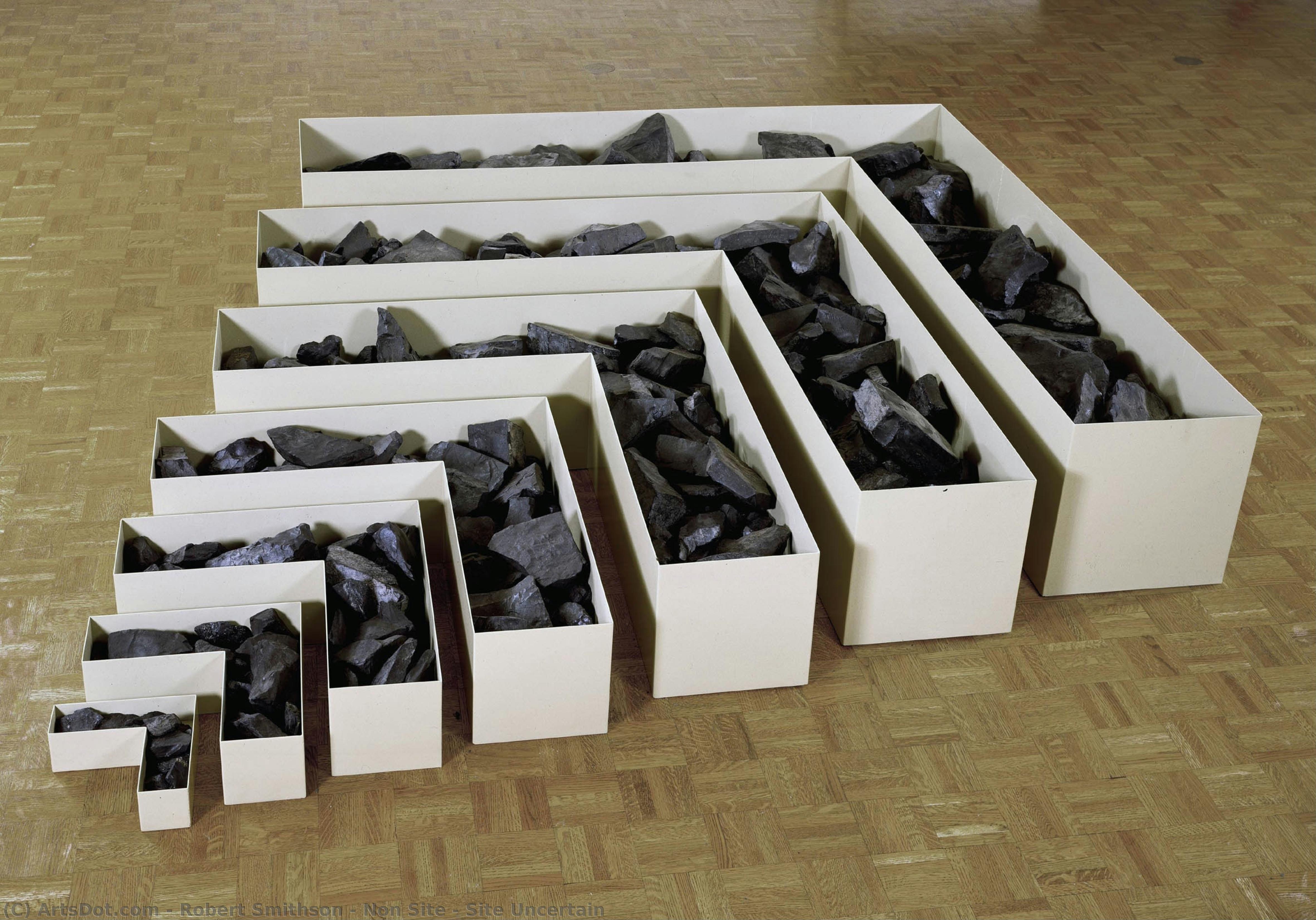
Според избора на галерията най-известната картина на Robert Smithson е Non Site - Site Uncertain, чийто оригинал се намира в Детройтският институт за изкуства, Детройт. Three-Sided Vortex (1966) и Ruin of Map of Hipparchus (100 B.C.) in Oswego Lake Quadrangle (1954 55) (1967) допълват трио, което всяко око разпознава. От 6 произведения на Robert Smithson в нашия каталог, галерията представя 4 най-известните по-долу – всяко от тях е оригинал с посочен година, музей и това, което го прави уникално.

1938 – 1973, Passaic Най-много творби: Детройтският институт за изкуства

Топ 10 карти на Robert Smithson в галерията

Музеите, в които се съхраняват оригиналите на Robert Smithson

2 музея, които притежават най-голям брой от картините на тази страница.

Музеи Град Творения на Robert Smithson Картини от този списък
Детройтският институт за изкуства, ДетройтДетройтският институт за изкуства Детройт 1 Non Site - Site Uncertain
Chrysler Museum of Art, НорфолкChrysler Museum of Art Норфолк 1 Three-Sided Vortex

Robert Smithson, емблематичните картини на всяка година

5 години, от 1966 до 1970, съхранени на тази страница – цялата датирана кариера на Robert Smithson: кратък преглед, представен тук година по година чрез най-известните оригинални творби.

Работи по години

Изберете година, за да разгледате оригиналите.

Картините на Robert Smithson: отговорите на галерията

Коя картина на Robert Smithson е най-известната от всички?Разкрийте отговора

Non Site - Site Uncertain, Детройтският институт за изкуства, Детройт. Следват Three-Sided Vortex (1966) и Ruin of Map of Hipparchus (100 B.C.) in Oswego Lake Quadrangle (1954 55) (1967).

Колко произведения е създал Robert Smithson?Разкрийте отговора

В нашия каталог са представени 6 произведения на Robert Smithson, датирани от 1966 до 1970.

Къде са изложени най-известните оригинали на Robert Smithson?Разкрийте отговора

Предимно в Детройтският институт за изкуства (Детройт) и Chrysler Museum of Art (Норфолк). В горната таблица с музеи са изброени всички тях.

Кои са най-ранните и най-късните известни творби на Robert Smithson?Разкрийте отговора

На тази страница най-старата е Three-Sided Vortex (1966), а най-новата е Torn Photograph from the 2nd Stop (Rubble) (2nd Mountain of Six Stops on a Section) from Artists Photographs (1970).

Robert Smithson: художникът

Early Life and Artistic Beginnings

  • Born: January 2, 1938, in Passaic, New Jersey
  • Early years spent in Rutherford and Clifton, New Jersey
  • Studied painting and drawing at the Art Students League of New York (1955-1956)
  • Early artwork explored collage influenced by homoerotic themes, science fiction, and pop art. Primarily identified as a painter during this period.
  • Influenced by William Carlos Williams, who was his pediatrician.

The Shift to Minimalism and Conceptual Art

  • After a three-year break from the art world, emerged in 1964 as a proponent of the minimalist movement.
  • Abandoned figurative work, focusing on glass sheet and neon lighting tubes exploring visual refraction and mirroring.
  • Developed interest in entropy (the second law of thermodynamics) – decay, renewal, chaos, order, non-sites, and earthworks. Saw entropy not as a disadvantage but as a form of transformation.
  • Associated with minimalist artists like Nancy Holt (his wife), Robert Morris, and Sol LeWitt.
  • Became a critic for *Arts Magazine* and *Artforum*, gaining recognition as a writer before his art.

Land Art and Earthworks: Spiral Jetty and Beyond

  • Fascination with industrial areas in New Jersey led to the development of "Non-Sites" – sculptures incorporating earth and rocks from specific locations, often combined with mirrors or glass.
  • Spiral Jetty (1970): His most famous work, a massive coil of basalt rock extending into the Great Salt Lake in Utah. A key example of land art, exploring themes of entropy, time, and geological processes.
  • Explored temporary sculptures using mirrors in the Yucatan Peninsula, documented in "Incidents of Mirror-Travel in the Yucatan."
  • Recovered 18th- and 19th-century conceptions of landscape architecture, influencing his later earthwork explorations.

Theoretical Writings and Landscape Perspectives

  • Wrote extensively on art theory, including "A Heap of Language," exploring how writing could become an artwork.
  • Examined Frederick Law Olmsted's design for Central Park in New York City, recovering issues of site specificity, human intervention, and the picturesque landscape.
  • His writings demonstrate a deep engagement with history, philosophy, geology, and cultural theory.

Legacy and Historical Significance

  • Died: July 20, 1973, in Tucson, Arizona (due to a heart attack while hiking).
  • Considered a pivotal figure in Land Art and Earthworks movements.
  • His work expanded the definition of art, blurring boundaries between sculpture, landscape, and natural processes.
  • Influenced generations of artists with his conceptual approach, exploration of entropy, and engagement with geological time scales.
  • The Holt/Smithson Foundation continues to preserve and promote his legacy.
