Портрет на Robert L Alexander

21-те най-известни картини на Robert L Alexander, селекция от галерията

Обновено Ноември 2026 · класирано според нашия индекс на популярност (търсения, посещения и поръчки за всяко произведение) · 27 творби на Robert L Alexander в нашия каталог

Накратко

От всички оригинални произведения, оставени от Robert L Alexander, най-известната е A Tangier Gateway (1887). След тях непосредствено следват The Happy Mother (1887) и Wat and Wearie (1886). Нашият каталог съдържа 27 произведения на Robert L Alexander; галерията е съхранила 21-те най-обожавани от света, всяко от тях представен с неговата дата, неговия музей и неговата история.

1840 – 1923 Най-много творби: Национална галерия на Шотландия

Топ 10-те картини на Robert L Alexander: изборът на галерията

1
A Tangier Gateway (1887) от Robert L Alexander

A Tangier Gateway

1887 · Oil

The sun hangs high over a stone archway in Tangier, casting a soft light that filters through the opening to reveal a slice of brilliant blue sky. Within this frame, a man moves with a quiet, practiced rhythm, guiding two donkeys through the ancient masonry. The animals walk close together, their forms overlapping as they navigate the narrow passage. One donkey leads the way, its head slightly forward, while the…

3
Wat and Wearie (1886) от Robert L Alexander

Wat and Wearie

1886 · Oil On Canvas · Royal Scottish Academy of Art - Architecture, Единбург

A man and his horse move along a rural path under the soft, diffused light of late afternoon. The figure, dressed in the practical attire of a 19th-century laborer, walks ahead with a sack slung over his shoulder, his silhouette defined by the heavy folds of his clothing. Beside him, the horse turns its head toward the viewer, its gaze creating a direct connection with the observer. The scene is…

10
The Happy Mother (1887) от Robert L Alexander

The Happy Mother

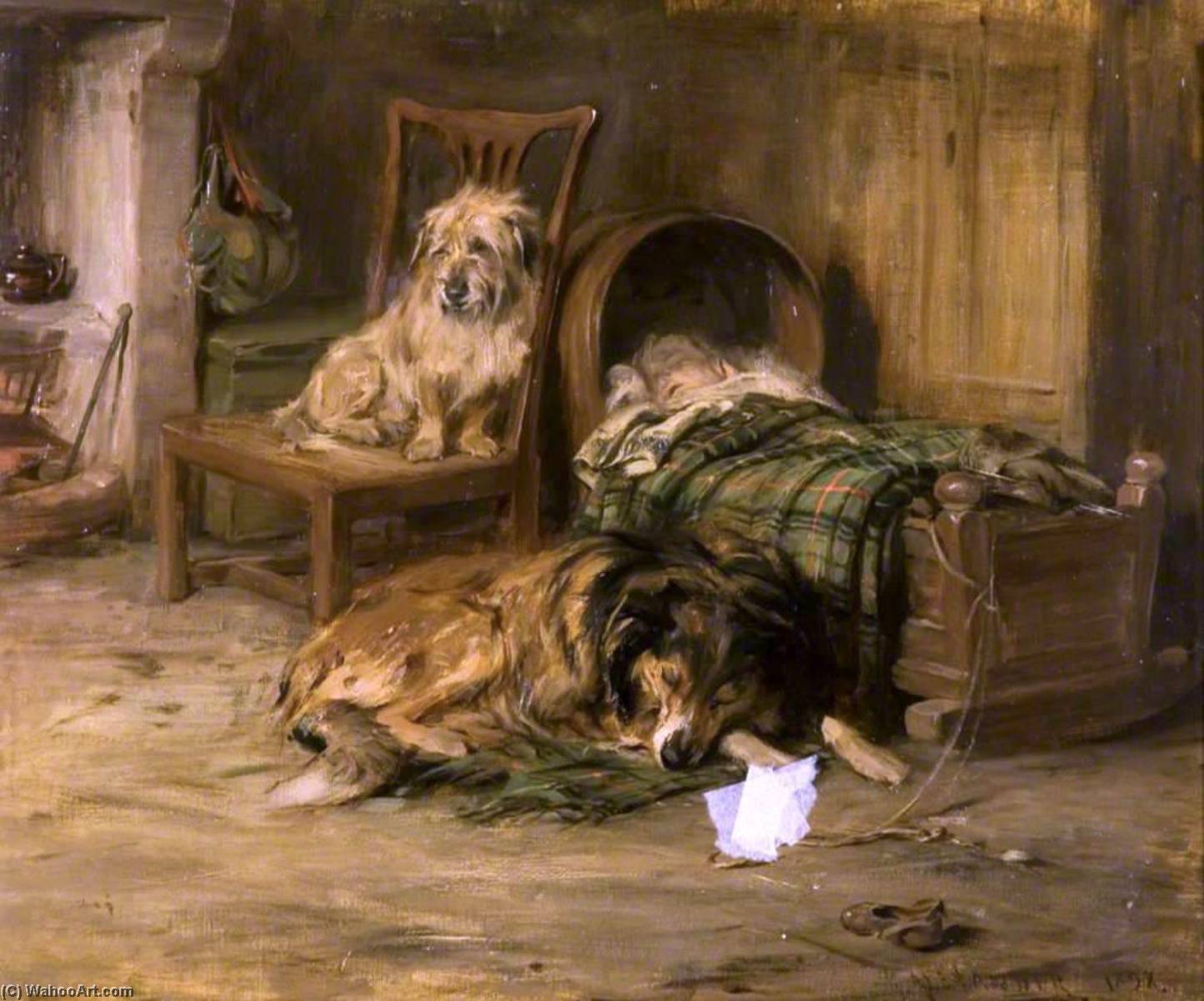
The Happy Mother is a captivating oil on canvas painting created by Robert L Alexander in 1887. This beautiful artwork is currently housed at the National Galleries of Scotland in the United Kingdom. The painting measures 82 x 116 cm and showcases the artist's exceptional skill in capturing the warmth and bond between a mother dog and her puppies. A Heartwarming Scene The scene depicts a mother dog lying down…
Изборът на Robert L Alexander продължава, от 11 до 21

Темите, които привличат погледа на Robert L Alexander

Четирите найчесто срещани теми в тези оригинални творби, всяка с най-добрия си пример.

Музеите, в които се съхраняват оригиналите на Robert L Alexander

8 музея, които притежават най-голям брой от картините на тази страница.

Музей Град Творения на Robert L Alexander Картини от този списък
Национална галерия на Шотландия, ЕдинбургНационална галерия на Шотландия Единбург 2 The Happy Mother, The Happy Mother
Perth And Kinross Council, PerthPerth And Kinross Council Perth 2 Head of a Jack Russell Terrier, Donkey and Foal
Royal Scottish Academy of Art - Architecture, ЕдинбургRoyal Scottish Academy of Art - Architecture Единбург 1 Wat and Wearie
Dundee Art Gallery And Museum, ДъндиDundee Art Gallery And Museum Дънди 1 Drowsy Cronies
City Art Centre, ЕдинбургCity Art Centre Единбург 1 Feeding the Horse
Kunstmuseum Den Haag, ХагаKunstmuseum Den Haag Хага 1 A St Bernard Dog
The National Trust For Scotland, ФорресThe National Trust For Scotland Форрес 1 Mr Wu – A Pekingese
The Fleming Collection, ЛондонThe Fleming Collection Лондон 1 The Dogs' Dinner (possibly 'More Free Than Welcome')

Robert L Alexander десетилетие по десетилетие: оригиналът, който дефинира всяко от тях

Произведения по десетилетия

Изберете десетилетие, за да видите оригиналната творба, която го определя.

Въпроси на колекционерите относно картините на Robert L Alexander

С кое произведение е най-известен Robert L Alexander?Разкрийте отговора

A Tangier Gateway (1887). Следващите са The Happy Mother (1887) и Wat and Wearie (1886).

На каква възраст е бил Robert L Alexander, когато е създадена A Tangier Gateway?Разкрийте отговора

47 години: A Tangier Gateway е от 1887 г., а Robert L Alexander е роден/а в 1840.

Кои са десетте най-известни картини на Robert L Alexander?Разкрийте отговора

A Tangier Gateway, The Happy Mother, Wat and Wearie, A Basset Hound, Head of a Deerhound, Goat and Kids, Auld Freens, Head of a Jack Russell Terrier, Head of a Jack Russell Terrier и The Happy Mother. Класацията по-горе показва годината и музея за всяко от тях.

Колко картини е оставил Robert L Alexander?Разкрийте отговора

В нашия каталог са представени 27 произведения на Robert L Alexander, датирани от 1874 до 1916.

В кои музеи са изложени шедьоврите на Robert L Alexander?Разкрийте отговора

Предимно в Национална галерия на Шотландия (Единбург), Perth And Kinross Council (Perth) и Royal Scottish Academy of Art - Architecture (Единбург). В горната таблица с музеи са изброени всички тях.

В кои години Robert L Alexander е създал най-известните си произведения?Разкрийте отговора

В 1880s: 4 от 21 произведенията на тази страница са създадени тогава, като A Tangier Gateway са сред тях.

Кои са първата и последната известни оригинални творби на Robert L Alexander?Разкрийте отговора

На тази страница най-старата е Head of a Goat (1874), а най-новата е Head of a Jack Russell Terrier (1916).

Кои теми избира най-често Robert L Alexander?Разкрийте отговора

Man (2), Horse (2) и Scottish art (2), разпределени в 21 произведения на тази страница.

Коя техника използва най-често Robert L Alexander?Разкрийте отговора

Oil On Canvas, за 2 от 21 произведения на тази страница.

Кои произведения на Robert L Alexander се съхраняват в Национална галерия на Шотландия?Разкрийте отговора

The Happy Mother и The Happy Mother: Национална галерия на Шотландия, Единбург притежава 2 от произведенията на тази страница.

Robert L Alexander: живот и творчество

A Life Immersed in the Scottish Countryside: The World of Robert Alexander

Robert Alexander, born in 1840 in the small village of Dalgarven near Kilwinning in Ayrshire, Scotland, was an artist whose work became synonymous with the gentle warmth of domestic life and the rugged beauty of his homeland. His path to becoming a celebrated painter wasn’t conventional; rather than formal art schooling, Alexander began as an apprentice to a house-painter in Irvine, learning the fundamentals of landscape painting alongside more practical skills. This early grounding instilled in him not only technical proficiency but also a keen observation of light and form that would later characterize his distinctive style. He subsequently found employment with the Royal Scottish Museum in Edinburgh, further honing his abilities before dedicating himself fully to easel painting around 1868 – the year he first exhibited at the prestigious Royal Scottish Academy.

Capturing the Essence of Animals: A Rising Star

Alexander quickly distinguished himself by focusing on animal subjects, particularly dogs and horses. He didn’t merely *depict* these creatures; he sought to capture their personalities, their inherent dignity, and their connection to the rural world around them. His work resonated with a growing Victorian audience that appreciated both realism and sentimentality. He possessed an exceptional skill for portraying expressive eyes and textured coats, bringing his subjects vividly to life on canvas. This talent led to consistent exhibitions at the RSA – over 125 works were displayed throughout his lifetime – establishing him as a prominent figure in Scottish art circles. His election as an Associate of the Royal Scottish Academy (ARSA) in 1878 and then as a full Royal Scottish Academician (RSA) in 1888 solidified his position within the artistic establishment.

Impressionistic Touches and Pastoral Charm

While firmly rooted in realism, Alexander’s work demonstrates a clear influence of Impressionism. This is not to say he abandoned precise detail altogether, but rather that he embraced a looser brushstroke and a more nuanced understanding of light and color. His paintings often evoke a sense of atmosphere, capturing the fleeting moments of everyday life with remarkable sensitivity. Works like “Goat and Kids” exemplify this approach – a serene scene rendered with earthy tones and a delicate play of sunlight. He wasn’t interested in grand historical narratives or dramatic compositions; instead, he found beauty in the simple rhythms of rural existence: feeding horses, quiet moments within barns, and the tender bonds between animals and people. His paintings offer a glimpse into a world where life moved at a slower pace, and nature held a central place.

Legacy and Historical Significance

Robert Alexander’s contribution to Scottish animal painting is undeniable. He elevated the genre beyond mere portraiture, infusing his work with both artistic skill and emotional depth. He was not simply recording what he saw; he was interpreting it through a lens of warmth, understanding, and genuine affection. His paintings provide valuable insights into Victorian rural life and the evolving relationship between humans and animals. Furthermore, Alexander’s influence extended to his own family – his son, John Edwin Alexander, also became a successful artist, continuing the legacy of capturing the beauty of the Scottish countryside. Today, Robert Alexander's works are cherished for their charm, realism, and ability to transport viewers to a simpler, more idyllic time. His paintings continue to be exhibited and admired, ensuring that his vision of Scotland’s pastoral heart endures.