Robert Gallon: A Master of English Light and Landscape
Robert Gallon (1845-1925) wasn’t a name that dominated the art world during his lifetime, yet his quietly evocative landscapes—primarily of Britain’s coastlines and rural interiors—hold a profound beauty and enduring appeal. He was an artist deeply rooted in the traditions of academic painting, but possessed a unique sensitivity to light, atmosphere, and the subtle poetry of everyday scenes. Gallon's work offers a serene glimpse into a bygone era, capturing the essence of English life with a delicate hand and a keen eye for detail.
Born in London, Gallon’s early life remains somewhat shrouded in anecdote, marked by struggles with addiction that would later inform his artistic journey. He spent time at boarding schools, battling personal demons while simultaneously developing an undeniable talent for observation and representation. This period of turbulence ultimately shaped his perspective, imbuing his paintings with a quiet melancholy and a deep appreciation for the simple pleasures of nature – themes he consistently explored throughout his career.
A Journey Through the British Isles
Gallon’s artistic focus centered largely on the landscapes of England and Wales. He was particularly drawn to the rugged coastlines, the rolling hills, and the tranquil waterways that defined these regions. His travels took him across Britain, from the dramatic cliffs of Deerness in Orkney to the serene Llugwy River near Capel Curig in North Wales. These journeys weren’t merely expeditions; they were deeply felt experiences, translated onto canvas with remarkable accuracy and sensitivity.
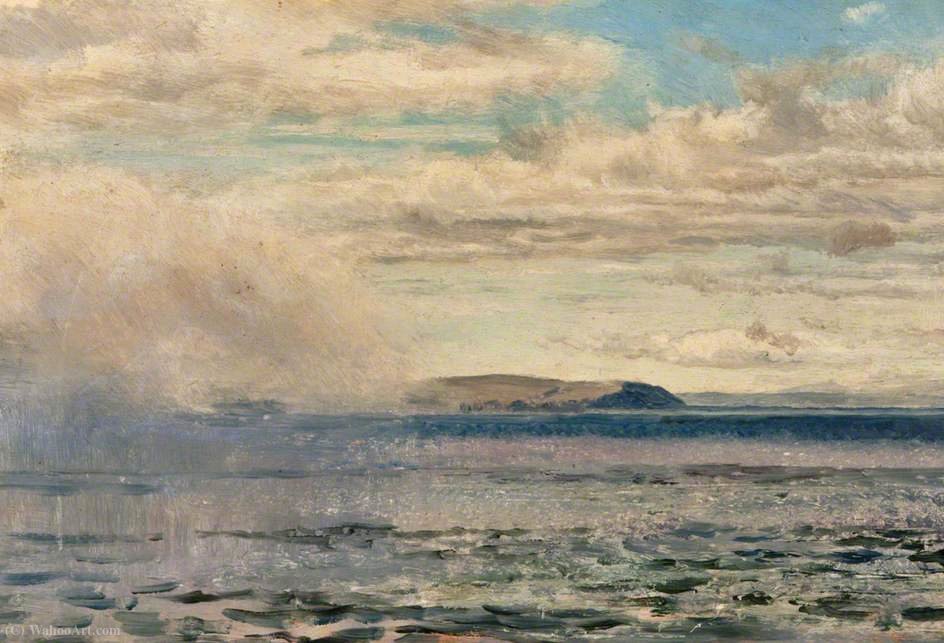
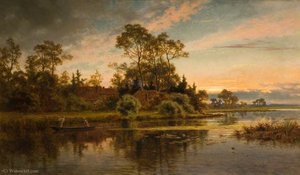
His paintings aren't grand, sweeping vistas—rather, they are intimate studies of specific locations. Consider “Deerness, Mull Head,” a breathtaking depiction of the North Sea crashing against the coastline. The muted palette, dominated by greys, blues, and ochres, perfectly captures the atmospheric conditions of that particular day. Similarly, "On the Llugwy near Capel Curig" presents a scene of quiet contemplation—a meandering river framed by verdant hillsides, inviting the viewer to lose themselves in its tranquility.
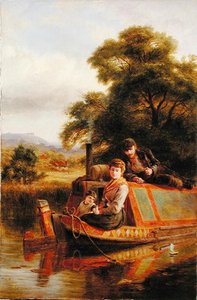
He also produced evocative portraits and genre scenes, often depicting rural life – “Evie, burgar rost” is an excellent example. These works demonstrate his ability to capture not just physical likeness but also the character and spirit of his subjects. The use of light and shadow creates a sense of depth and realism, while subtle details—a worn shawl, a weathered face—reveal layers of human experience.
Technique and Influences
Gallon’s style is firmly rooted in the academic tradition, characterized by meticulous detail, careful composition, and a commitment to realistic representation. However, he wasn't simply replicating what he saw; he was imbuing his paintings with a distinct sensibility. His brushwork is often loose and expressive, particularly in capturing the effects of light and atmosphere. He employed techniques learned from the Old Masters, but adapted them to suit his own artistic vision.
While influenced by the Romantic landscape painters of the 19th century—artists like Turner and Constable—Gallon developed a more restrained and contemplative approach. His work lacks the dramatic intensity of some of his contemporaries, instead prioritizing subtlety, nuance, and a quiet sense of beauty. The influence of Dutch Masters is also evident in his use of light and color, particularly in his depictions of interiors.
Legacy and Recognition
During his lifetime, Gallon’s work was exhibited at prestigious institutions such as the Royal Academy and the British Institution, though he never achieved widespread fame. However, in recent decades, there has been a growing appreciation for his art—a recognition of its quiet beauty, technical skill, and profound connection to the English landscape.
Today, Gallon’s paintings are held in public collections across Britain and beyond, including at The Robert McLaughlin Gallery in Oshawa, Canada, and the Robert Hull Fleming Museum in Burlington, Vermont. His work continues to resonate with viewers who appreciate his ability to capture the essence of a place and time—a testament to the enduring power of landscape painting.
Further research into Gallon’s life and work can be found at Artnet, as well as through museum collections like The Robert McLaughlin Gallery and the Robert Hull Fleming Museum.