Портрет на Ram Kinker Baij

6-те най-известни картини на Ram Kinker Baij, селекция от галерията

Обновено Ноември 2026 · класирано според нашия индекс на популярност (търсения, посещения и поръчки за всяко произведение) · 6 творби на Ram Kinker Baij в нашия каталог

Накратко

От всички оригинали, оставени от Ram Kinker Baij, най-известният е Binodini (1949), който се намира в колекцията на Национална галерия за модерно изкуство, Ню Делхи. След тях непосредствено следват Picnic (1937) и Untitled. Нашият каталог съдържа 6 произведения на Ram Kinker Baij; галерията е съхранила 6-те най-обожавани от света, всяко от тях представен с неговата дата, неговия музей и неговата история.

1906 – 1980, Bankura Най-много творби: Национална галерия за модерно изкуство

Топ 10-те картини на Ram Kinker Baij: изборът на галерията

1
Binodini (1949) на Ram Kinker Baij

Binodini

To stand before Binodini is not merely to observe a portrait; it is to step into a moment of profound, suspended contemplation. This masterful work by Ramkinkar Baij captures the essence of an inner life—a beautiful young woman from Manipur’s aristocratic lineage, caught in what seems to be a delicate confluence of thought and emotion. The painting transcends simple representation, offering instead a window into the complexities of the human…

2
Picnic (1937) на Ram Kinker Baij

Picnic

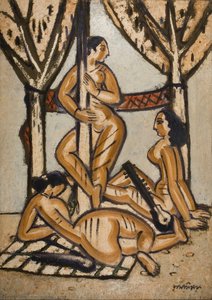
In the vibrant tapestry of Indian modernism, few works capture the raw, rhythmic pulse of life as evocatively as Ramkinkar Baij’s Picnic. Created in 1937, this oil painting serves as a profound intersection where the ancient soul of India meets the radical energy of European modernism. As a pioneer of what would later be termed Contextual Modernism, Baij possessed an unparalleled ability to translate the rural landscapes of Santiniketan into…

5
Untitled на Ram Kinker Baij

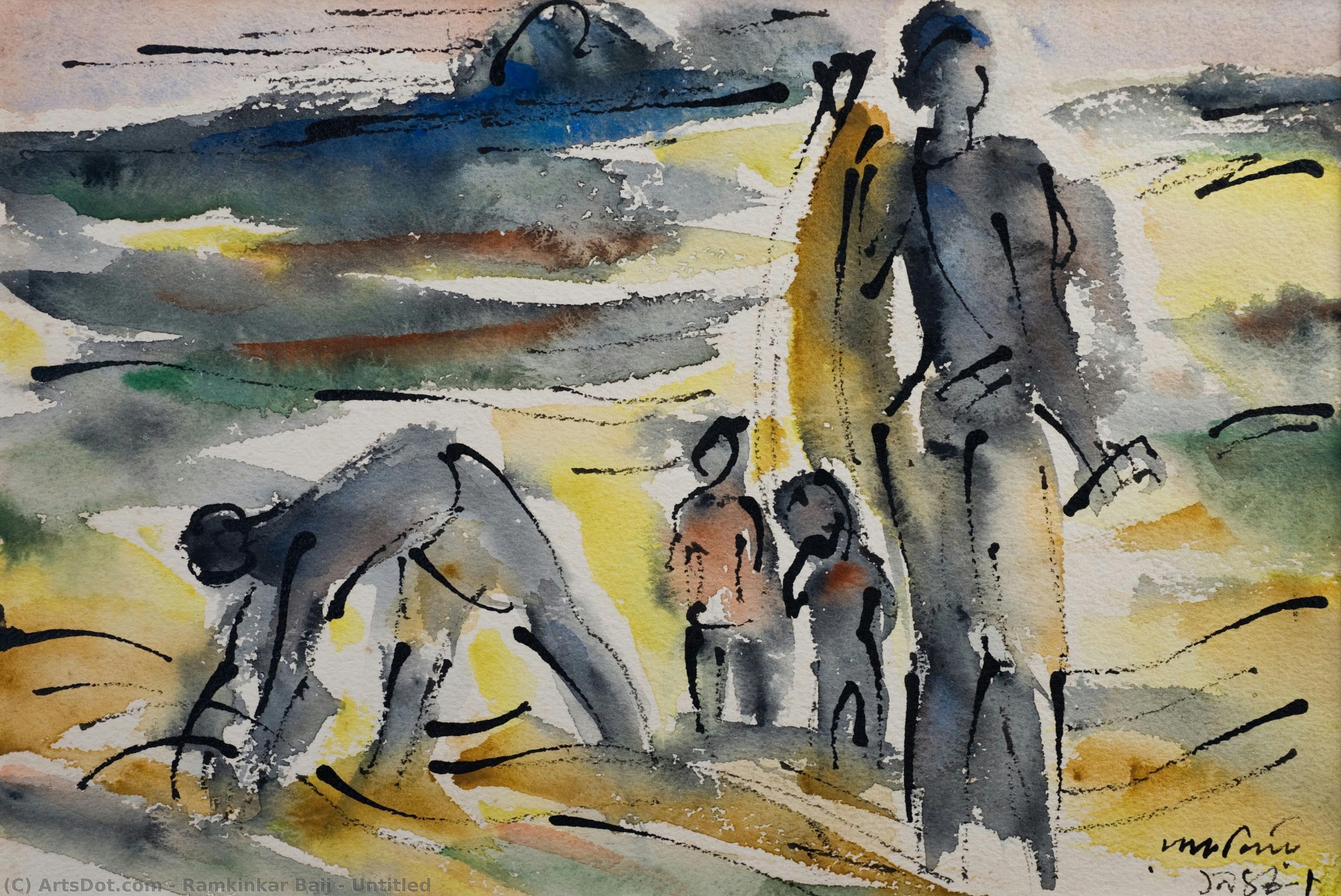
Untitled

· Kerala Museum, Кочи

Ramkinkar Baij is remembered as the Father of Modern Indian Sculpture. He taught and worked in Santiniketan for most of his life. His large figurative sculptures are among his best-known works. He drew inspiration for his figures from the tribal Santhal community, whose spirit and resilience were greatly admired by the Santiniketan artists. His sculptures were usually made using experimental materials like rubble, cement and concrete.

6
Portrait of Rabindranath Tagore (1941) на Ram Kinker Baij

Portrait of Rabindranath Tagore

Ramknikar Baij was one of the most outstanding sculptors in modern Indian art. He came from a rural background to study art under Nandalal Bose at Visva Bharati, Santiniketan. Ramkinkar was discovered to have an innate genius for form and for experimenting with visual language. A wonderful portraitist, Ramkinkar did not paint or sculpt portraits as commissions, but because he was attracted to something in their inner self. Similarly, his…

Музеите, в които се съхраняват оригиналите на Ram Kinker Baij

3 музея, които притежават най-голям брой от картините на тази страница.

Музеи Град Творения на Ram Kinker Baij Картини от този списък
Национална галерия за модерно изкуство, Ню ДелхиНационална галерия за модерно изкуство Ню Делхи 3 Binodini, Picnic, Portrait of Rabindranath Tagore
Kiran Nadar Museum of Art, Ню ДелиKiran Nadar Museum of Art Ню Дели 2 Untitled, Untitled
Kerala Museum, КочиKerala Museum Кочи 1 Untitled

Ram Kinker Baij година по година: оригиналите, които дефинират всяка една

Изборът обхваща периода от 13 години, от 1937 до 1949, представяйки най-добрите оригинални творби на Ram Kinker Baij за всяка година.

Работи по години

Изберете година, за да разгледате оригиналите.

Въпроси на колекционерите относно картините на Ram Kinker Baij

С кое произведение е най-известен Ram Kinker Baij?Разкрийте отговора

Binodini (1949), Национална галерия за модерно изкуство, Ню Делхи. Следват Picnic (1937) и Untitled.

На каква възраст е бил Ram Kinker Baij, когато е създадена Binodini?Разкрийте отговора

43 години: Binodini е от 1949 г., а Ram Kinker Baij е роден/а в 1906.

Колко картини е оставил Ram Kinker Baij?Разкрийте отговора

В нашия каталог са представени 6 произведения на Ram Kinker Baij, датирани от 1937 до 1949.

В кои музеи са изложени шедьоврите на Ram Kinker Baij?Разкрийте отговора

Предимно в Национална галерия за модерно изкуство (Ню Делхи), Kiran Nadar Museum of Art (Ню Дели) и Kerala Museum (Кочи). В горната таблица с музеи са изброени всички тях.

Кои са първата и последната известни оригинални творби на Ram Kinker Baij?Разкрийте отговора

На тази страница най-старата е Picnic (1937), а най-новата е Binodini (1949).

Коя техника използва най-често Ram Kinker Baij?Разкрийте отговора

Oil, за 2 от 6 произведения на тази страница.

Кои произведения на Ram Kinker Baij се съхраняват в Национална галерия за модерно изкуство?Разкрийте отговора

Binodini, Picnic и Portrait of Rabindranath Tagore: Национална галерия за модерно изкуство, Ню Делхи притежава 3 от произведенията на тази страница.

Ram Kinker Baij: живот и творчество

The Architect of Modern Indian Form

Ramkinkar Baij (1906-1980) stands as a monumental figure in the annals of Indian art history, rightfully recognized as the progenitor of modern Indian sculpture. Born on May 25th, 1906, in the rustic landscapes of Bankura, West Bengal, Baij’s artistic journey was far more than a mere pursuit of aesthetic perfection; it was a profound mission to redefine the very essence of Indian identity through form and texture. His life's work served as a bridge between the ancient rhythms of rural India and the burgeoning international modernist movement, forging a path that allowed Indian art to breathe with a new, contemporary vitality.

His formative years were deeply rooted in the soil of Bengal, where the rhythms of village life and an innate appreciation for local craftsmanship first took hold. This early connection to the earth would later become the heartbeat of his sculptural language. A pivotal moment in his early development occurred when the journalist Ramananda Chatterjee recognized his raw talent through striking portraits of Indian freedom fighters during the Nonviolent Resistance movement. This exposure not only provided him with a platform but also infused his work with a sense of social urgency and nationalistic fervor that would persist throughout his career.

The Santiniketan Transformation

The trajectory of Baij’s genius was irrevocably altered when he enrolled at Visva-Bharati University in Santiniketan. Under the mentorship of the legendary Nandalal Bose, Baij entered an intellectual sanctuary where Rabindranath Tagore’s vision of liberation flourished. It was within this unique environment that he began to develop his signature style of contextual modernism. This approach was not a simple imitation of Western trends; rather, it was a sophisticated, deliberate fusion of European modernist principles—such as dynamic movement and expressive abstraction—with the indigenous traditions and lived realities of the Indian people.

As a faculty member at Kala Bhavana, the art school established by Tagore, Baij became a cornerstone of Santiniketan’s reputation as India’s premier center for modern art. He moved away from the polished, classical finishes of traditional sculpture, opting instead for rugged, textured surfaces that mirrored the raw energy of his subjects. His mastery extended beyond sculpture into painting, where he utilized oil to capture both the spiritual depth and the physical vitality of his surroundings. In works such as Picnic, one can witness this vibrant blend of European modernism and Indian classical tradition, a dynamic interplay of color and motion that invites the viewer into a spirited, outdoor narrative.

Legacy of the Earth and Spirit

The historical significance of Ramkinkar Baij lies in his courage to experiment with unconventional materials and themes. He was a pioneer in using cement and laterite, materials that allowed him to create large-scale, rugged figures that felt as though they had emerged directly from the Bengal landscape. His most iconic subjects were often the marginalized communities, such as the Santal tribes, whose strength and dignity he immortalized in works like Santal Family. Through these depictions, he elevated the everyday struggle of the rural populace to the level of high art.

Even in his more intimate portraiture, such as the evocative Binodini (1949), Baij demonstrated an unparalleled ability to convey complex human emotions and inner conflicts through textured, heavy brushwork. His legacy is defined by several key contributions:

  • The Creation of a New Language: He successfully synthesized Western modernism with Indian aesthetic sensibilities, creating a unique vernacular for 20th-century Indian art.
  • Material Innovation: By utilizing cement and other non-traditional media, he broke the shackles of classical sculpture and introduced a sense of raw, tactile reality.
  • Social Consciousness: His work served as a powerful medium for documenting the lives, struggles, and dignity of the Indian peasantry and freedom fighters.
  • Institutional Impact: As a teacher and leader at Kala Bhavana, he helped shape the pedagogical foundations of modern Indian art education.

Today, Ramkinkar Baij is remembered not just as a sculptor, but as a visionary who captured the soul of a nation in transition. His works remain enduring testaments to the power of art to bridge the gap between tradition and modernity, making him an eternal icon of the Indian modernist movement.