Портрет на Педро Фигари

56-те най-известни картини на Педро Фигари, всяка от които е уникална

Обновено Ноември 2026 · класирано според нашия индекс на популярност (търсения, посещения и поръчки за всяко произведение) · 56 творби на Педро Фигари в нашия каталог

Накратко

Tertulia at the inn before eating. The inn (1919) е картината на Педро Фигари, която привлича най-много погледи; оригиналът се намира в Национален музей за изкуства в Буенос Айрес, Буенос Айрес. След това погледът се насочва към Candombe carnival (1932) и Lavanderas En Los Medanos O Los Amigos. Сред 56 произведения на Педро Фигари в нашия каталог, тези 56 са най-известните – всяко от тях е уникален оригинал, представен с годината на създаване, музея и причината за неговата вечност.

1861 – 1938, Монтевидео Impressionism Най-много творби: Национален музей за изкуства в Буенос Айрес

Топ 10 картини на Педро Фигари, през погледа на галерията

4
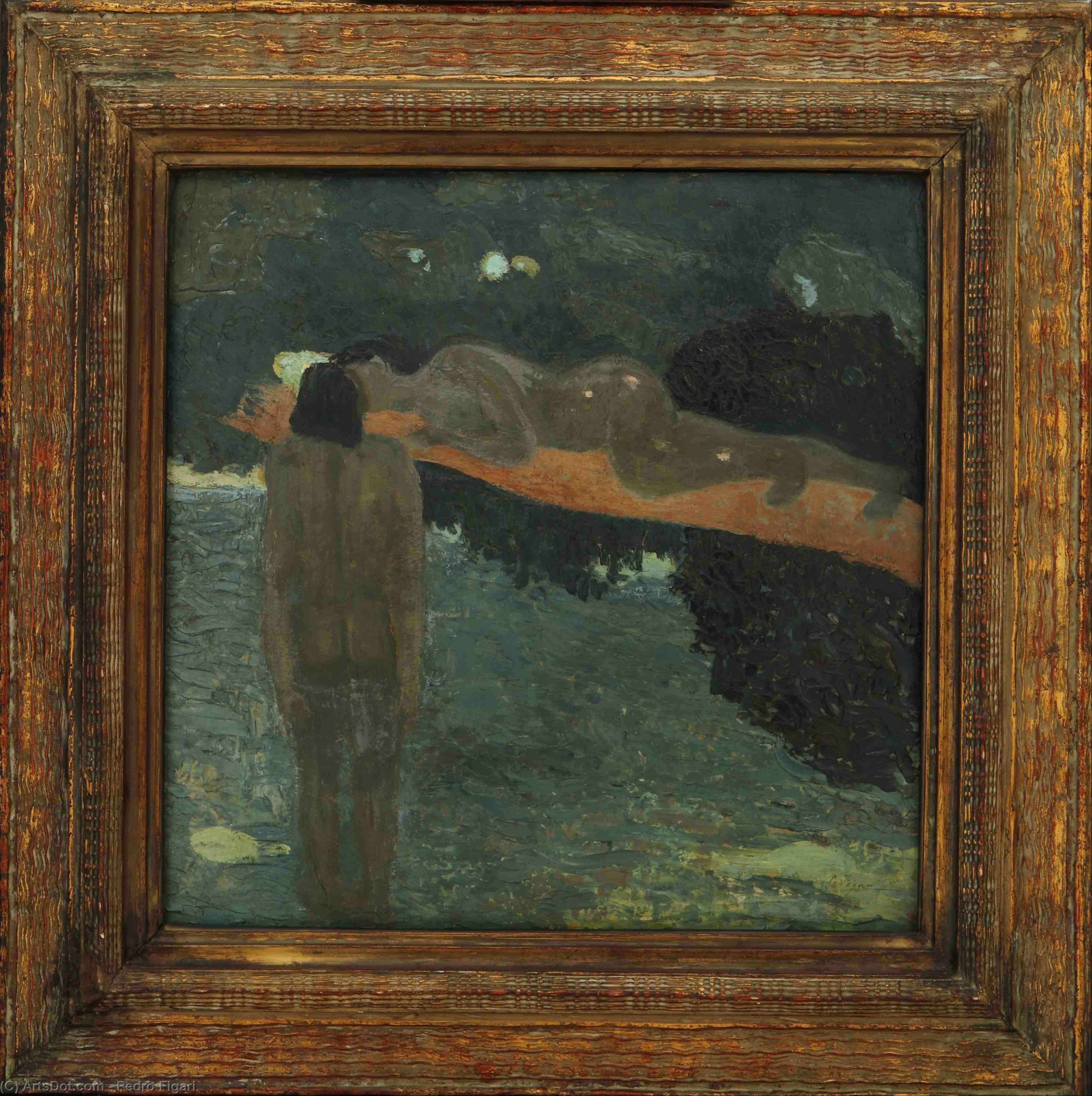
El Beso на Педро Фигари

El Beso

El Beso is an oil painting on canvas by Pedro Figari. Born in Montevideo in 1861, the artist lived until 1938, a period that saw him transition from a career in law and politics to a dedicated practice in the visual arts. His later years were defined by a shift toward a unique, intuitive approach to painting, often reconstructing scenes from memory rather than direct observation.

Знаменитите картини на Педро Фигари, номера от 11 до 56

11La Vida на Педро ФигариLa Vida 12El Requiebro на Педро ФигариEl Requiebro 13El Patio O Patio Unitario на Педро ФигариEl Patio O Patio UnitarioНационален музей за изкуства в Буенос Айрес 14El Gaucho Candioti на Педро ФигариEl Gaucho CandiotiНационален музей за изкуства в Буенос Айрес 15Negras En La Puerta O Negras En Zaguán на Педро ФигариNegras En La Puerta O Negras En ZaguánНационален музей за изкуства в Буенос Айрес 16The Dance (Bailongo) (1925) на Педро ФигариThe Dance (Bailongo)1925 17Creole Dance (1925) на Педро ФигариCreole Dance1925 18Peeling the pava (1925) на Педро ФигариPeeling the pava1925 · Национален музей за изкуства в Буенос Айрес 19Off for the Honeymoon (1925) на Педро ФигариOff for the Honeymoon1925 20Double Wedding (1930) на Педро ФигариDouble Wedding1930 21Idilio campero (1935) на Педро ФигариIdilio campero1935 · Inter-American Development Bank 22Ноктюрн (1918) на Педро ФигариНоктюрн1918 · Colección de Arte Amalia Lacroze de Fortabat 23A Request to Rosas на Педро ФигариA Request to Rosas 24Mass departure на Педро ФигариMass departureНационален музей за изкуства в Буенос Айрес 25The pampas or return of the dance на Педро ФигариThe pampas or return of the danceНационален музей за изкуства в Буенос Айрес 26Injuria на Педро ФигариInjuria 27La Diligancia на Педро ФигариLa Diligancia 28Damas Antiguas на Педро ФигариDamas Antiguas 29Rincón De Negros на Педро ФигариRincón De Negros 30Las Visitas на Педро ФигариLas Visitas 31La Media Caña на Педро ФигариLa Media Caña 32Pericón - на Педро ФигариPericón -Национален музей за изкуства в Буенос Айрес 33Jardín Bajo La Luna O Quietud En La Quinta на Педро ФигариJardín Bajo La Luna O Quietud En La QuintaНационален музей за изкуства в Буенос Айрес 34El Pericón на Педро ФигариEl Pericón 35Negros Y Mulatas на Педро ФигариNegros Y Mulatas 36Patio на Педро ФигариPatioНационален музей за изкуства в Буенос Айрес 37Cuestión De Razas на Педро ФигариCuestión De Razas 38Alevosía на Педро ФигариAlevosía 39Works Of Pedro Figari на Педро ФигариWorks Of Pedro Figari 40Los miriñaques на Педро ФигариLos miriñaques 41Reunión Colonial на Педро ФигариReunión Colonial 42Pampa на Педро ФигариPampaНационален музей за изкуства в Буенос Айрес 43Deliberando на Педро ФигариDeliberando 44Hacia La Fiesta на Педро ФигариHacia La Fiesta 45Cuarteleras на Педро ФигариCuartelerasНационален музей за изкуства в Буенос Айрес 46Confidencia на Педро ФигариConfidenciaНационален музей за изкуства в Буенос Айрес 47Camelias Blancas на Педро ФигариCamelias Blancas 48Las Vecinas на Педро ФигариLas VecinasНационален музей за изкуства в Буенос Айрес 49Candombe на Педро ФигариCandombeНационален музей за изкуства в Буенос Айрес 50Candombe O Candombe Bajo La Luna на Педро ФигариCandombe O Candombe Bajo La LunaНационален музей за изкуства в Буенос Айрес 51Lamento на Педро ФигариLamentoНационален музей за изкуства в Буенос Айрес 52Cancha De Bochas на Педро ФигариCancha De BochasНационален музей за изкуства в Буенос Айрес 53Pericón на Педро ФигариPericónНационален музей за изкуства в Буенос Айрес 54Baile En El Rancho на Педро ФигариBaile En El RanchoНационален музей за изкуства в Буенос Айрес 55Una Diligencia на Педро ФигариUna DiligenciaНационален музей за изкуства в Буенос Айрес 56Tertulia на Педро ФигариTertuliaНационален музей за изкуства в Буенос Айрес

Знаменитите картини на Педро Фигари, период по период

Modern

3 произведения в този списък

Темите, които привличат погледа на Педро Фигари

Четирите найчесто срещани теми в тези оригинални творби, всяка с най-добрия си пример.

Музеите, в които се съхраняват оригиналите на Педро Фигари

3 музея, които притежават най-голям брой от картините на тази страница.

Музеи Град Творения на Педро Фигари Картини от този списък
Национален музей за изкуства в Буенос Айрес, Буенос АйресНационален музей за изкуства в Буенос Айрес Буенос Айрес 25 Tertulia at the inn before eating. The inn, Candombe carnival, Lavanderas En Los Medanos O Los Amigos
Inter-American Development Bank, Washington, D.C.Inter-American Development Bank Washington, D.C. 1 Idilio campero
Colección de Arte Amalia Lacroze de Fortabat, Буенос АйресColección de Arte Amalia Lacroze de Fortabat Буенос Айрес 1 Ноктюрн

Педро Фигари през десетилетията: един уникален оригинал за всяко

Произведения по десетилетия

Изберете десетилетие, за да видите оригиналната творба, която го определя.

Картини на Педро Фигари: въпроси към галерията

Кое е най-известното произведение на Педро Фигари?Разкрийте отговора

Tertulia at the inn before eating. The inn (1919), Национален музей за изкуства в Буенос Айрес, Буенос Айрес. Следват Candombe carnival (1932) и Lavanderas En Los Medanos O Los Amigos.

На каква възраст Педро Фигари създава Tertulia at the inn before eating. The inn?Разкрийте отговора

58 години: Tertulia at the inn before eating. The inn е от 1919 г., а Педро Фигари е роден/а в 1861.

Кои са десетте най-известни картини на Педро Фигари?Разкрийте отговора

Tertulia at the inn before eating. The inn, Candombe carnival, Lavanderas En Los Medanos O Los Amigos, El Beso, While the Ball Rolls, El Maturrango, Encuentro En El Camino, Carreta, La Amita и Preparando El Candombe. Класацията по-горе показва годината и музея за всяко от тях.

Колко са известните творби на Педро Фигари?Разкрийте отговора

В нашия каталог са представени 56 произведения на Педро Фигари, датирани от 1918 до 1935.

Къде могат да се видят най-известните оригинали на Педро Фигари?Разкрийте отговора

Предимно в Национален музей за изкуства в Буенос Айрес (Буенос Айрес), Inter-American Development Bank (Washington, D.C.) и Colección de Arte Amalia Lacroze de Fortabat (Буенос Айрес). В горната таблица с музеи са изброени всички тях.

През кой период Педро Фигари създава най-известните си картини?Разкрийте отговора

В 1920s: 4 от 56 произведенията на тази страница са създадени тогава, като The Dance (Bailongo) са сред тях.

Коя е най-ранната и коя е най-късната известна картина на Педро Фигари?Разкрийте отговора

На тази страница най-старата е Ноктюрн (1918), а най-новата е Idilio campero (1935).

Какви теми предпочиташе Педро Фигари?Разкрийте отговора

Social gathering (4), Uruguayan culture (3) и Uruguayan art (3), разпределени в 56 произведения на тази страница.

Към кое художествено направление принадлежи творчеството на Педро Фигари?Разкрийте отговора

Impressionism и Modernism, судейки по оригиналите на тази страница.

Какви оригинални творби на Педро Фигари мога да видя в Национален музей за изкуства в Буенос Айрес?Разкрийте отговора

Tertulia at the inn before eating. The inn, Candombe carnival и Lavanderas En Los Medanos O Los Amigos: Национален музей за изкуства в Буенос Айрес, Буенос Айрес притежава 25 от произведенията на тази страница.

Педро Фигари: портрет на художника

A Life Imbued with Uruguayan Essence

Pedro Figari, a name now inextricably linked to the vibrant heart of Latin American modernism, was far more than simply a painter; he was a complex and deeply engaged intellectual – a lawyer, a writer, a politician, and ultimately, an artist who dedicated his entire life to capturing the very essence of Uruguay. Born in Montevideo in 1861, Figari’s artistic journey wasn't one of immediate, deliberate pursuit. Initially drawn to the structured world of law, he earned his degree in 1886, a profession that profoundly shaped his understanding of society’s intricacies and injustices – experiences which would later find powerful expression through his art. His early career as a defense attorney for the marginalized and impoverished exposed him to the raw realities of life, fostering within him a deep empathy and a keen awareness of social dynamics. This formative period, marked by encounters with hardship and injustice, simmered beneath the surface until it finally erupted in a torrent of creative energy. A marriage in the same year led to travels in France, a pivotal moment that introduced him to the burgeoning world of post-impressionism – an encounter that subtly influenced his artistic direction without fundamentally altering his core vision. However, it was in 1921, at the remarkable age of sixty, that Figari truly embraced painting, unleashing a creative force that would redefine Latin American art and cement his place as a leading figure.

From Legal Chambers to Artistic Visions

For decades prior to 1921, Figari skillfully balanced his demanding legal and political commitments with sporadic artistic endeavors. He was deeply involved in Uruguayan public life, serving as a respected member of Parliament, directing the Escuela Nacional de Artes y Oficios (National School of Arts and Crafts), and contributing significantly to intellectual discourse through his insightful writings on law, education, aesthetics, and even utopian ideals – reflecting a mind constantly engaged with the complexities of human existence. This diverse background wasn’t a distraction from his art; rather, it profoundly enriched it, providing him with a unique perspective shaped by legal reasoning, political engagement, and a deep understanding of social structures. His legal training instilled in him an acute observational skill and a sensitivity to the nuances of human interaction, while his literary pursuits honed his ability to articulate complex ideas with clarity and precision. The move to Buenos Aires in 1921 proved to be a catalyst for this transformation. It was there that he shed the constraints imposed by earlier, academically-influenced styles – styles rooted in traditional European techniques – and began to forge a truly unique artistic voice, one deeply connected to his Uruguayan roots. He abandoned meticulous realism, opting instead for a more intuitive approach—painting not what he *saw*, but what he *remembered*. This deliberate reliance on memory wasn’t simply a technical choice; it allowed him to distill the essence of his experiences, imbuing his work with a profoundly personal and nostalgic quality – a feeling that resonated powerfully with viewers.

A Pioneer's Palette: Style and Subject Matter

Figari’s artistic style is immediately recognizable for its vibrant color palettes, bold brushstrokes, and seemingly naïve simplicity. He wasn’t interested in creating illusions of depth or photographic accuracy; instead, he treated his canvases as studies in color and form, reconstructing Uruguayan scenes from the fragmented recollections of his memory. His subjects were drawn almost exclusively from the world he knew intimately – the gauchos (cowboys) roaming the vast pampas grasslands, lively carnival celebrations brimming with music and dance, the quiet rituals and daily life of Montevideo’s black community, and the intimate beauty of colonial patios bathed in golden light. These weren't merely picturesque depictions; they were poignant reflections on Uruguayan identity, social customs, and a disappearing way of life – a sense of nostalgia for a rapidly changing world. He captured fleeting moments—a dance in progress, a gathering of friends, a street scene teeming with activity—with an immediacy that felt both timeless and deeply rooted in place. His technique, often employing *impasto* (thickly applied paint) with visible brushstrokes, further emphasized the expressive power of color and texture, creating paintings that pulsated with energy and emotion – works that seemed to breathe with life.

Influences and Artistic Development

Figari’s artistic development wasn't a linear progression but rather a complex interplay of influences. While his early training in law provided him with a rigorous analytical mind, it was his exposure to post-impressionism in France that fundamentally shifted his approach to painting. He admired the bold colors and expressive brushwork of artists like Van Gogh and Gauguin, but he resisted adopting their more overtly emotional style. Instead, he synthesized these influences with his own unique perspective, creating a distinctly Uruguayan aesthetic. His early works, often characterized by meticulous detail and academic precision, gradually evolved into looser, more intuitive compositions – reflecting his growing confidence in his artistic vision. The influence of indigenous art and folklore is also evident in his work, particularly in the use of vibrant colors and symbolic imagery. He was deeply interested in preserving Uruguayan cultural heritage, and his paintings often served as a celebration of national identity.

Legacy and Enduring Influence

Pedro Figari’s legacy extends far beyond his individual artistic achievements. He is remembered not simply as a painter but as one of the first Latin American artists to successfully forge a distinctly regional style – prioritizing feeling and essence over strict realism. His work continues to inspire artists and art lovers alike with its vibrant energy, emotional depth, and unwavering commitment to capturing the spirit of Uruguay. He demonstrated that true modernity wasn’t about imitating European trends but about finding one's own voice—a lesson that resonated throughout Latin America and beyond. He died in 1938, leaving behind a rich body of work that stands as a testament to his artistic vision, intellectual curiosity, and enduring love for his homeland – paintings that are not merely representations of Uruguayan life but *are* Uruguay itself, its colors, its rhythms, its soul, preserved on canvas for generations to come.