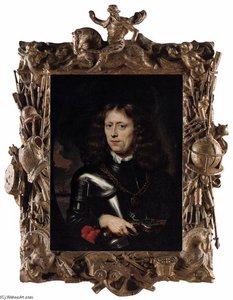
Nicolaes Maes (1634 - 1693): The Soul of Dutch Light
Nicolaes Maes, a name whispered reverently within the annals of Dutch Golden Age painting, emerged from Dordrecht in January 1634—a son of Gerrit Maes, a prosperous cloth merchant and soap boiler—into an era pulsating with mercantile ambition and artistic innovation. His formative years were steeped in Rembrandt’s shadow, a connection that would irrevocably shape his artistic vision and bequeath to him the indelible mark of *chiaroscuro*, the dramatic interplay of light and darkness that defines Rembrandt's oeuvre. This apprenticeship wasn’t merely academic; it was an immersion into a creative ethos that championed emotional depth and masterful technique—a foundation upon which Maes would build a career distinguished by both profound sensitivity and unparalleled artistic prowess.
Early Influences and Rembrandt’s Legacy
The initial instruction in drawing Maes received from “an ordinary master,” likely a local artist of modest renown, yet it was Rembrandt van Rijn who truly ignited his artistic flame. Around 1648, he ventured to Amsterdam, entering Rembrandt's workshop—a pivotal decision that would propel him into the orbit of one of the era’s most celebrated figures. Rembrandt’s influence wasn’t merely stylistic; it permeated Maes’s understanding of composition and color theory—a legacy that manifests itself prominently in his earliest paintings, particularly depictions of biblical scenes rendered with astonishing realism and bathed in luminous hues. As Houbraken recounts, “Rembrandt taught him the art of painting,” cementing Rembrandt's position as Maes’s primary mentor and shaping his artistic sensibilities for decades to come.
Houbraken, Arnold. *De Groote Sch"
Genre Painting: Capturing Everyday Life with Radiant Color
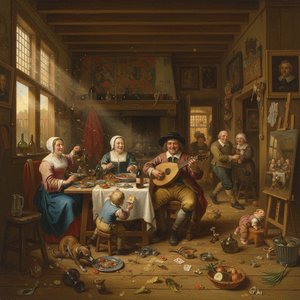
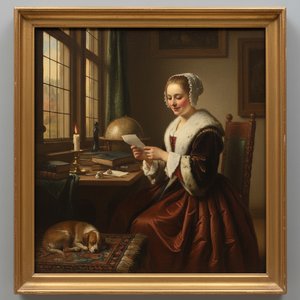
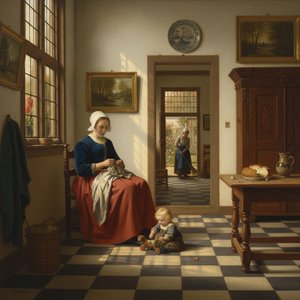
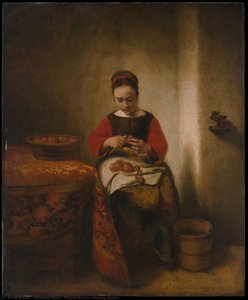
Maes swiftly transitioned from direct imitation of Rembrandt to forging his own distinctive path—one characterized by a profound engagement with the domestic sphere. From 1654 onwards, he dedicated himself to capturing the quiet dignity and subtle narratives woven into the fabric of daily life in Dordrecht and Amsterdam. His genre scenes—images of women spinning wool, reading scripture, preparing meals—are imbued with remarkable detail and infused with Maes’s signature use of color—a vibrant palette reminiscent of Rembrandt's boldest experiments.
These paintings aren’t merely representations; they are windows into the human experience, revealing not just *what* people did but *how* they felt while doing so.
His meticulous observation and masterful technique elevated commonplace activities to artistic significance.
The Portraitist Ascendant: Mastering Psychological Insight
By 1673, Maes relocated to Amsterdam—a move driven by both ambition and astute adaptation to the evolving art market. Recognizing the burgeoning demand for portraiture amongst Amsterdam’s affluent elite, he swiftly established himself as one of the city's foremost practitioners.
He abandoned much of his earlier genre work, focusing instead on capturing the likenesses and personalities of prominent citizens. His portraits are distinguished by refined elegance and psychological insight—a testament to Maes’s ability to convey character through subtle gestures and expressions. Works like “Portrait of Gerard Röver” exemplify this skill, presenting a dignified portrayal of wealth and civic pride.
Maes became adept at conveying status through meticulous detail—the quality of fabrics, the cut of clothing, the confident posture of his sitters.
A Legacy Illuminated: Enduring Appeal and Artistic Significance
Nicolaes Maes passed away in Amsterdam in December 1693—leaving behind a substantial body of work that continues to captivate audiences today.
Encyclopaedia Britannica. His paintings offer invaluable insights into the social customs, domestic interiors, and psychological complexities of the Dutch Golden Age. While his early works bear the unmistakable imprint of Rembrandt’s influence—particularly in their masterful use of *chiaroscuro*—Maes ultimately developed a distinctive style characterized by its meticulous detail, vibrant color palette, and sensitive portrayal of human emotion.
His ability to elevate everyday scenes and individuals to artistic significance ensures his place among the most important painters of his era.
Today, Maes’s masterpieces reside in prestigious collections worldwide—including the Rijksmuseum in Amsterdam and the National Gallery in London—accessible for study and appreciation through platforms like OriginalUniqueArt.com, guaranteeing that the luminous legacy of this Dutch master endures for generations to come.
National Gallery.