Портрет на Marcin Kober

Картини на Marcin Kober: 9-те най-известни, през погледа на галерията

Обновено Ноември 2026 · класирано според нашия индекс на популярност (търсения, посещения и поръчки за всяко произведение) · 9 творби на Marcin Kober в нашия каталог

Накратко

Според избора на галерията най-известната картина на Marcin Kober е Miniature of Queen Anna Habsburg (1598), чийто оригинал се намира в Галерия Уфици, Флоренция. Miniature portrait of King Sigismund III Vasa (1591) и Portrait of King Stephen Bathory (1583) допълват трио, което всяко око разпознава. От 9 произведения на Marcin Kober в нашия каталог, галерията представя 9 най-известните по-долу – всяко от тях е оригинал с посочен година, музей и това, което го прави уникално.

Renaissance Най-много творби: Кралски замък Вавел

Топ 10 карти на Marcin Kober в галерията

1
Miniature of Queen Anna Habsburg (1598) от Marcin Kober

Miniature of Queen Anna Habsburg

1598 · Oil On Panel · Галерия Уфици, Флоренция

Marcin Kober’s “Miniature of Queen Anna Habsburg,” painted in 1598, isn't merely a portrait; it’s a meticulously crafted window into the heart of late 16th-century European courtly life. This exquisite oval painting, encased within an opulent gold frame, transcends its diminutive size to radiate an aura of regal dignity and quiet strength. Kober, considered a pioneer in establishing the Polish royal portraiture tradition, masterfully captures the essence of Queen Anna…

4
Portrait of Stephen Báthory (1586) от Marcin Kober

Portrait of Stephen Báthory

1586 · Oil On Canvas · Кралски замък Вавел, Краков

The Portrait of Stephen Báthory by Marcin Kober is a formal, close-up depiction that centers on the subject's face and upper torso. The figure is positioned against a dark background, which isolates the subject and emphasizes the contours of his facial features and clothing. The color palette is dominated by shades of red and brown, accented by touches of black and gold. These tones define the textures of the garments…

5
Portrait of Queen Anna Jagiellon in a widow costume (1595) от Marcin Kober

Portrait of Queen Anna Jagiellon in a widow costume

1595 · Oil On Canvas · Кралски замък Вавел, Краков

Portrait of Queen Anna Jagiellon in a widow costume by Marcin Kober captures the Polish monarch in a state of formal mourning. The work is dated about 1595. It belongs to a period when Kober served as a court painter, establishing a visual language for the Polish-Lithuanian Commonwealth through a blend of Renaissance realism and the decorative elegance of Spanish-influenced portraiture.

6
Miniature of Sigismund Vasa and Anna Habsburg (1598) от Marcin Kober

Miniature of Sigismund Vasa and Anna Habsburg

The Miniature of Sigismund Vasa and Anna Habsburg presents a quiet, intimate encounter between two figures of immense historical weight. Painted by the court artist Marcin Kober, this work captures the likenesses of Sigismund Vasa and Anna Habsburg in a moment of stillness. The piece dates to 1598. It focuses entirely on the two individuals, drawing the viewer into their immediate presence through a tightly framed composition.

7
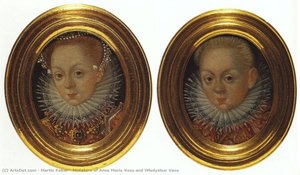
Miniature of Anna Maria Vasa and Władysław Vasa (1598) от Marcin Kober

Miniature of Anna Maria Vasa and Władysław Vasa

In this intimate Miniature of Anna Maria Vasa and Władysław Vasa, Marcin Kober presents us with a quiet encounter with the Vasa dynasty. Painted about 1598, the work captures two young individuals, likely members of the royal family, in a formal and dignified manner. There is a sense of stillness in their presentation, a characteristic of the courtly portraiture that Kober mastered during his service to the Polish-Lithuanian Commonwealth.

8
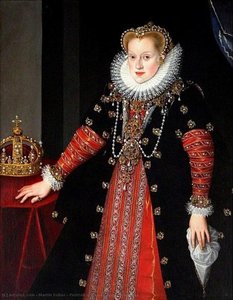
Portrait of Queen Anne of Austria (1595) от Marcin Kober

Portrait of Queen Anne of Austria

1595 · Oil On Canvas · Галерия Уфици, Флоренция

Marcin Kober's “Portrait of Queen Anne of Austria” is more than just a painting; it’s a meticulously crafted window into the heart of 16th-century European courtly life. Completed around 1595, this remarkable work transcends mere portraiture, offering a profound glimpse into the power, grace, and carefully constructed image of Queen Anne – a woman who navigated the turbulent political landscape of Poland and Austria with both strength and diplomacy.

9
Portrait of King Stephen Báthory of Poland (1583) от Marcin Kober

Portrait of King Stephen Báthory of Poland

1583 · Oil On Canvas · Kunsthistorisches Museum, Виена

Marcin Kober’s “Portrait of King Stephen Báthory of Poland,” painted in 1583, is more than just a royal likeness; it's a meticulously crafted window into the heart of late Renaissance Europe and the burgeoning power of the Polish-Lithuanian Commonwealth. This arresting portrait, now housed within the Congregation of Missions Convent’s Historical-Missionary Museum in Kraków, captures not merely the physical appearance of Stephen Báthory but also his commanding presence, projecting an…

Темите, които привличат погледа на Marcin Kober

Четирите найчесто срещани теми в тези оригинални творби, всяка с най-добрия си пример.

Музеите, в които се съхраняват оригиналите на Marcin Kober

4 музея, които притежават най-голям брой от картините на тази страница.

Музей Град Творения на Marcin Kober Картини от този списък
Кралски замък Вавел, КраковКралски замък Вавел Краков 3 Miniature portrait of King Sigismund III Vasa, Portrait of Stephen Báthory, Portrait of Queen Anna Jagiellon in a widow costume
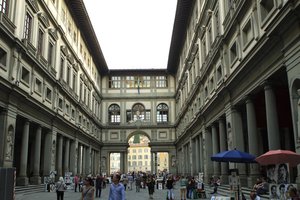
Галерия Уфици, ФлоренцияГалерия Уфици Флоренция 2 Miniature of Queen Anna Habsburg, Portrait of Queen Anne of Austria
Баварски държавни списъци с произведения на изкуството, МюнхенБаварски държавни списъци с произведения на изкуството Мюнхен 2 Miniature of Sigismund Vasa and Anna Habsburg, Miniature of Anna Maria Vasa and Władysław Vasa
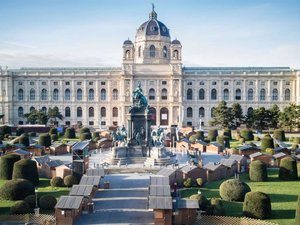
Kunsthistorisches Museum, ВиенаKunsthistorisches Museum Виена 1 Portrait of King Stephen Báthory of Poland

Marcin Kober, емблематичните картини на всяка година

16 години от изкуството на Marcin Kober, от 1583 до 1598: галерията ги проследява година по година чрез най-известните им оригинални творби.

Работи по години

Изберете година, за да разгледате оригиналите.

Картините на Marcin Kober: отговорите на галерията

Коя картина на Marcin Kober е най-известната от всички?Разкрийте отговора

Miniature of Queen Anna Habsburg (1598), Галерия Уфици, Флоренция. Следват Miniature portrait of King Sigismund III Vasa (1591) и Portrait of King Stephen Bathory (1583).

Колко произведения е създал Marcin Kober?Разкрийте отговора

В нашия каталог са представени 9 произведения на Marcin Kober, датирани от 1583 до 1598.

Къде са изложени най-известните оригинали на Marcin Kober?Разкрийте отговора

Предимно в Кралски замък Вавел (Краков), Галерия Уфици (Флоренция) и Баварски държавни списъци с произведения на изкуството (Мюнхен). В горната таблица с музеи са изброени всички тях.

Кога Marcin Kober създава най-известните си картини?Разкрийте отговора

В 1598: 3 от 9 произведенията на тази страница са създадени тогава, като Miniature of Queen Anna Habsburg са сред тях.

Кои са най-ранните и най-късните известни творби на Marcin Kober?Разкрийте отговора

На тази страница най-старата е Portrait of King Stephen Bathory (1583), а най-новата е Miniature of Queen Anna Habsburg (1598).

Към кои сюжети Marcin Kober се връща най-често?Разкрийте отговора

Portrait (6), Man (4) и Baroque (3), разпределени в 9 произведения на тази страница.

С коя техника е работил най-често Marcin Kober?Разкрийте отговора

Oil On Canvas, за 5 от 9 произведения на тази страница.

С кое художествено направление е свързан(а) Marcin Kober?Разкрийте отговора

Renaissance, судейки по оригиналите на тази страница.

Кои оригинални творби на Marcin Kober притежава Кралски замък Вавел?Разкрийте отговора

Miniature portrait of King Sigismund III Vasa, Portrait of Stephen Báthory и Portrait of Queen Anna Jagiellon in a widow costume: Кралски замък Вавел, Краков притежава 3 от произведенията на тази страница.

Marcin Kober: художникът

The Architect of Royal Identity: The Life and Legacy of Marcin Kober

In the grand, sweeping tapestry of Central European history, few artists have played as vital a role in weaving the visual identity of monarchs as Marcin Kober. Born around 1550 in the vibrant city of Wrocław, Poland, Kober was far more than a mere chronicler of faces; he was a pioneer who transformed the way power was perceived and recorded. His journey began not in the courts of kings, but through the rigorous discipline of the guild system. As a young journeyman, he traveled through Germany, absorbing the diverse techniques and stylistic nuances of various workshops. This period of wandering was essential, providing him with a cosmopolitan artistic vocabulary that would later allow him to bridge the gap between the local traditions of the Polish-Lithuanian Commonwealth and the sophisticated, Spanish-influenced aesthetics of the Habsburg courts.

The true metamorphosis of Kober’s career occurred when his path intersected with the highest echelons of European royalty. By 1583, he had arrived in the Polish-Lithuanian Commonwealth, quickly ascending to the position of court painter for King Stephen Báthory and Queen Anna Jagiellon. It was during this era that Kober began to develop what would become known as the "Báthory School." His work during this period was characterized by a profound sense of Renaissance realism, where the physical likeness of the subject was married to a symbolic grandeur. He did not simply paint skin and fabric; he painted authority, legitimacy, and the divine right of kings. His ability to capture the commanding presence of Báthory established a visual language for Polish royalty that would endure for well over a century.

A Master of Courtly Elegance and Symbolism

Kober’s artistic evolution was deeply shaped by his time in Prague, a city that served as a melting pot of international styles under the reign of Emperor Rudolf II. In the vibrant atmosphere of the Imperial court, Kober encountered the subtle, decorative elegance of Spanish portraiture, which favored a meticulous attention to detail and a refined use of color. This influence is palpable in his later works, where the heavy, regal textures of velvet and lace are rendered with such precision that they seem almost tactile. His portraits became masterclasses in psychological depth; he possessed a rare ability to present a sovereign as both an untouchable icon of state and a human being possessing quiet strength and introspective grace.

The breadth of his technical mastery is perhaps best seen in the diversity of his formats. While his large-scale royal portraits commanded the halls of palaces, Kober also excelled in the intimate medium of miniatures. His Miniature of Queen Anna Habsburg serves as a breathtaking example of how he could condense an entire aura of majesty into a small, oval frame. In these smaller works, every brushstroke carries weight, using light and shadow to create a sense of three-dimensional life that transcends the physical limitations of the medium. His work was never merely decorative; it was a carefully constructed instrument of diplomacy and propaganda, designed to project an image of stability and continuity during turbulent political eras.

Historical Significance and the Polish Portrait Tradition

The historical importance of Marcin Kober cannot be overstated. Before his emergence, portraiture in Poland had not yet established itself as a dominant or specialized branch of fine art. Kober changed this trajectory forever, acting as the precursor to the Polish Sarmatian portrait genre. By integrating the sophisticated humanist ideals of the Renaissance with the specific cultural identity of the Polish nobility, he provided the foundation upon which future generations of Polish artists would build. His influence can be traced through the decades, as the iconography he established for the Vasa dynasty became the standard for how the Commonwealth viewed its own leadership.

Even as his career took him across borders—from the workshops of Germany to the Imperial splendor of Prague and back to the royal centers of Kraków and Warsaw—his core mission remained the same: the documentation of a changing world through the lens of royal dignity. Today, his works reside in prestigious museums across Europe, serving as silent witnesses to the grandeur of a bygone era. To study Kober is to study the very birth of a national artistic identity, making him one of the most significant figures in the history of Central European portraiture.