Портрет на Джон Едуард Брет

Картини на Джон Едуард Брет: 45-те най-известни, през погледа на галерията

Обновено Ноември 2026 · класирано според нашия индекс на популярност (търсения, посещения и поръчки за всяко произведение) · 48 творби на Джон Едуард Брет в нашия каталог

Накратко

Според избора на галерията най-известната картина на Джон Едуард Брет е Lady with a Dove: Madame Loeser (1864), чийто оригинал се намира в Tate Gallery, Лондон. Forest Cove, Cardigan Bay (1883) и Cape Cornwall from Whitesand Bay (1872) допълват трио, което всяко око разпознава. От 48 произведения на Джон Едуард Брет в нашия каталог, галерията представя 45 най-известните по-долу – всяко от тях е оригинал с посочен година, музей и това, което го прави уникално.

1830 – 1902 Pre-raphaelite Най-много творби: Tate Gallery

Топ 10 карти на Джон Едуард Брет в галерията

2
Forest Cove, Cardigan Bay (1883) на Джон Едуард Брет

Forest Cove, Cardigan Bay

1883 · Oil · Amgueddfa Cymru, Кардиф

The sun hangs high over Cardigan Bay, casting a bright, clear light across a scene of quiet activity. Along the shoreline, the beach is alive with the presence of people, each figure caught in a moment of leisure as they enjoy the warmth of the day. The water meets the land in a gentle rhythm, while several boats drift upon the surface—some resting near the shallow shore and others appearing…

3
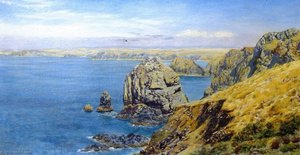
Cape Cornwall from Whitesand Bay (1872) на Джон Едуард Брет

Cape Cornwall from Whitesand Bay

1872 · Oil On Panel · Fitzwilliam Museum

The oil on panel painting depicts a rocky shoreline where large boulders are scattered across the foreground and middle ground. These stones meet a sandy beach that extends toward the ocean. The water appears calm, meeting the horizon under a light that provides depth to the scene. In the distance, several small figures are positioned along the shore, appearing as minute details against the scale of the landscape. The composition…

Картини на Джон Едуард Брет, класирани от 11 до 45

Знаменитите картини на Джон Едуард Брет, период по период

19th Century

1858 – 1877 · 4 произведения в този списък

Темите, които привличат погледа на Джон Едуард Брет

Четирите найчесто срещани теми в тези оригинални творби, всяка с най-добрия си пример.

Музеите, в които се съхраняват оригиналите на Джон Едуард Брет

8 музея, които притежават най-голям брой от картините на тази страница.

Музеи Град Творения на Джон Едуард Брет Картини от този списък
Tate Gallery, ЛондонTate Gallery Лондон 2 Lady with a Dove: Madame Loeser, Florence from Bellosguardo
Fitzwilliam MuseumFitzwilliam Museum 2 Cape Cornwall from Whitesand Bay, Landscape
Amgueddfa Cymru, КардифAmgueddfa Cymru Кардиф 1 Forest Cove, Cardigan Bay
Walker Art Gallery, ЛивърпулWalker Art Gallery Ливърпул 1 The Stonebreaker
Tate Britain, ЛондонTate Britain Лондон 1 The Glacier of Rosenlaui
Sheffield City Art Galleries, SheffieldSheffield City Art Galleries Sheffield 1 Mount Etna from Taormina, Sicily
Barber Institute of Fine Arts, БирмингамBarber Institute of Fine Arts Бирмингам 1 Kennack Sands, Cornwall
Russell, BournemouthRussell Bournemouth 1 The Land's End, Cornwall

Джон Едуард Брет, по една емблематична картина на десетилетие

Произведения по десетилетия

Изберете десетилетие, за да видите оригиналната творба, която го определя.

Картините на Джон Едуард Брет: отговорите на галерията

Коя картина на Джон Едуард Брет е най-известната от всички?Разкрийте отговора

Lady with a Dove: Madame Loeser (1864), Tate Gallery, Лондон. Следват Forest Cove, Cardigan Bay (1883) и Cape Cornwall from Whitesand Bay (1872).

На каква възраст беше Джон Едуард Брет, когато завърши Lady with a Dove: Madame Loeser?Разкрийте отговора

34 години: Lady with a Dove: Madame Loeser е от 1864 г., а Джон Едуард Брет е роден/а в 1830.

Кои са 10-те най-добри картини на Джон Едуард Брет?Разкрийте отговора

Lady with a Dove: Madame Loeser, Forest Cove, Cardigan Bay, Cape Cornwall from Whitesand Bay, Landscape, Val di Cogne, Switzerland, Preliminary watercolor sketch for 'The Glacier of Rosenlaut], Norbury on the Mole, The Stonebreaker, The Glacier of Rosenlaui и Florence from Bellosguardo. Класацията по-горе показва годината и музея за всяко от тях.

Колко произведения е създал Джон Едуард Брет?Разкрийте отговора

В нашия каталог са представени 48 произведения на Джон Едуард Брет, датирани от 1850 до 1891.

Къде са изложени най-известните оригинали на Джон Едуард Брет?Разкрийте отговора

Предимно в Tate Gallery (Лондон), Fitzwilliam Museum и Amgueddfa Cymru (Кардиф). В горната таблица с музеи са изброени всички тях.

Кога Джон Едуард Брет създава най-известните си картини?Разкрийте отговора

В 1870s: 22 от 45 произведенията на тази страница са създадени тогава, като Cape Cornwall from Whitesand Bay са сред тях.

Кои са най-ранните и най-късните известни творби на Джон Едуард Брет?Разкрийте отговора

На тази страница най-старата е Head of a Young Boy (1850), а най-новата е The Isles of Skomer and Skokholm (1891).

Към кои сюжети Джон Едуард Брет се връща най-често?Разкрийте отговора

Beach (5), Saints (5) и Coastal landscape (3), разпределени в 45 произведения на тази страница.

С кое художествено направление е свързан(а) Джон Едуард Брет?Разкрийте отговора

Pre-raphaelite и Romanticism, судейки по оригиналите на тази страница.

Кои оригинални творби на Джон Едуард Брет притежава Tate Gallery?Разкрийте отговора

Lady with a Dove: Madame Loeser и Florence from Bellosguardo: Tate Gallery, Лондон притежава 2 от произведенията на тази страница.

Джон Едуард Брет: художникът

John Edward Brett: A Pioneer of Scientific Landscape Painting

John Edward Brett (1830-1902) stands as a pivotal figure in British Pre-Raphaelite art, distinguished by his unwavering dedication to meticulous observation and artistic representation of the natural world. Born in Lincolnshire, England, Brett’s formative years instilled within him a profound fascination for geology and botany – passions that would irrevocably shape his artistic vision and propel him to become one of the foremost landscape painters of his era. Unlike many of his contemporaries who prioritized idealized beauty, Brett approached nature with a scientist's rigor, meticulously documenting geological formations and plant species with unparalleled accuracy. This commitment to scientific detail wasn’t merely an intellectual pursuit; it served as the bedrock for his artistic endeavors, informing his compositions and imbuing them with palpable realism.
  • Early Life & Education: Brett's upbringing fostered a love of science alongside artistic inclination. He studied at Lincoln Art School and later honed his skills at the Royal Academy in London, absorbing influences from artists like Turner and Ruskin – figures who championed the revival of medieval art and advocated for a return to naturalistic representation.
  • The Cornish Influence: Brett’s artistic breakthrough occurred during his expeditions to Cornwall, where he embarked on extensive geological surveys alongside fellow Pre-Raphaelites. The rugged coastline, dramatic granite tors, and vibrant flora captivated him, inspiring a prolific output of paintings depicting these landscapes with breathtaking detail.
  • Technique & Style: Brett’s distinctive style is characterized by thick impasto brushstrokes—a technique deliberately chosen to convey the texture and physicality of stone and vegetation. He employed glazing methods to achieve luminous color palettes that captured the subtleties of light and atmosphere, mirroring Ruskin's belief in the importance of capturing “the spirit of place.”

Notable Works & Artistic Achievements

Brett’s oeuvre encompasses a remarkable range of subjects, reflecting his multifaceted interests. Among his most celebrated paintings are "Cape Cornwall from Whitesand Bay," "Head of a Young Boy," and "The Glacier of Rosenlaui"—each demonstrating his mastery of landscape painting and his ability to convey profound emotional resonance. “Cape Cornwall” exemplifies his meticulous geological rendering, capturing the grandeur of Cornwall’s coastline with astonishing precision. Similarly, “Head of a Young Boy,” showcases Brett's skill in portraiture alongside his commitment to realism. However, it was "The Glacier of Rosenlaui" that cemented his reputation as a visionary artist—a monumental canvas depicting the sublime beauty of Switzerland’s glacial landscape and embodying Ruskin’s aesthetic ideals.

Legacy & Historical Significance

John Edward Brett’s contribution to British art extends far beyond his individual paintings. He championed Ruskin’s aesthetic philosophy—a belief that art should serve as a conduit for moral instruction and inspire contemplation of the natural world—establishing himself as one of the foremost voices advocating for scientific observation within artistic practice. His meticulous depictions of landscapes resonated deeply with Victorian audiences, fostering an appreciation for geological science and bolstering the Pre-Raphaelite movement’s commitment to portraying nature truthfully. Today, Brett's artworks continue to inspire admiration for their technical brilliance and emotional depth—testaments to his enduring legacy as a pioneer of scientific landscape painting and a champion of Ruskinian ideals.