Портрет на Джон Кром

54-те най-известни картини на Джон Кром, всяка от които е уникална

Обновено Октомври 2026 · класирано според нашия индекс на популярност (търсения, посещения и поръчки за всяко произведение) · 54 творби на Джон Кром в нашия каталог

Накратко

Boys Bathing on the River Wensum, Norwich (1817) е картината на Джон Кром, която привлича най-много погледи; оригиналът се намира в Yale Center for British Art, Ню Хейвън. След това погледът се насочва към Grove Scene (1820) и Slate Quarries (1803). Сред 54 произведения на Джон Кром в нашия каталог, тези 54 са най-известните – всяко от тях е уникален оригинал, представен с годината на създаване, музея и причината за неговата вечност.

1768 – 1821, Норич Romanticism Най-много творби: Yale Center for British Art

Топ 10 картини на Джон Кром, през погледа на галерията

1
Boys Bathing on the River Wensum, Norwich (1817) на Джон Кром

Boys Bathing on the River Wensum, Norwich

1817 · Oil On Canvas · Yale Center for British Art, Ню Хейвън

Boys Bathing on the River Wensum, Norwich – A Reflection of Norfolk’s Soul John Crome's “Boys Bathing on the River Wensum, Norwich” isn’t merely a depiction of a picturesque riverside scene; it’s a distillation of the very spirit of Norfolk—a region steeped in tradition and celebrated for its understated beauty. Painted in 1817 during the height of the Romantic era, this landscape masterpiece encapsulates the fascination with nature that characterized…

2
Grove Scene (1820) на Джон Кром

Grove Scene

1820 · Oil On Canvas · Norwich Castle Museum And Art Gallery, Норич

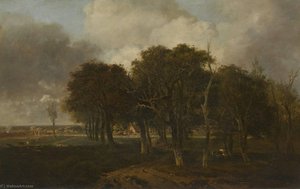
A small clearing within a Norfolk forest provides the setting for this 1820 oil on canvas. Two figures stand amidst the trees, appearing as quiet observers of the landscape. Nearby, a horse grazes in the grass, contributing to the pastoral stillness of the scene. The composition uses these figures to anchor the expansive vista, establishing a connection between the human presence and the natural environment.

6
A Mountain Scene (1806) на Джон Кром

A Mountain Scene

In his 1806 masterpiece, A Mountain Scene, John Crome captures a panoramic vista of East Anglian hills, a scene that serves as a profound embodiment of Romantic ideals. The composition is dominated by a substantial rock outcrop in the foreground, its rugged presence acting as a symbol of resilience and permanence against the relentless forces of time and weather. Through a skillful application of perspective, Crome draws the viewer’s gaze…

Знаменитите картини на Джон Кром, номера от 11 до 54

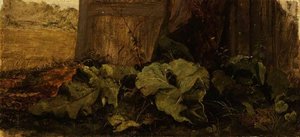
11The Beaters (1810) на Джон КромThe Beaters1810 · Национална галерия на Шотландия 12Yarmouth Jetty (1810) на Джон КромYarmouth Jetty1810 · Yale Center for British Art 13Woodland Landscape near Norwich (1810) на Джон КромWoodland Landscape near Norwich1810 · Yale Center for British Art 14View near Thorpe; Moonlight scene (1807) на Джон КромView near Thorpe; Moonlight scene1807 · Vanderbilt Museum of Art 15Hautbois Common, Norfolk (1810) на Джон КромHautbois Common, Norfolk1810 · Метрополитън Музей на изкуствата 16High Tor, Matlock (1811) на Джон КромHigh Tor, Matlock1811 · Fitzwilliam Museum 17Hautbois Common, Norfolk (1810) на Джон КромHautbois Common, Norfolk1810 18Dock Leaves (1813) на Джон КромDock Leaves1813 · Norwich Castle Museum And Art Gallery 19A Heath Scene: Sun after Storm (1818) на Джон КромA Heath Scene: Sun after Storm1818 · Национална галерия в Ирландия 20A Windmill near Norwich (1816) на Джон КромA Windmill near Norwich1816 21Yarmouth Harbour - Evening (1817) на Джон КромYarmouth Harbour - Evening1817 22The Poringland Oak (1819) на Джон КромThe Poringland Oak1819 23A Sandy Bank (1820) на Джон КромA Sandy Bank1820 · Национална галерия на Шотландия 24The Harling Gate (1817) на Джон КромThe Harling Gate1817 · Vanderbilt Museum of Art 25The Edge of the Forest (1821) на Джон КромThe Edge of the Forest1821 · Vanderbilt Museum of Art 26Landscape with Trees and Cattle (1820) на Джон КромLandscape with Trees and Cattle1820 27Marlingford Grove (1815) на Джон КромMarlingford Grove1815 28Mousehold Heath, Norwich (1820) на Джон КромMousehold Heath, Norwich1820 29The Fish Market, Boulogne, France (1820) на Джон КромThe Fish Market, Boulogne, France1820 · Norwich Castle Museum And Art Gallery 30Moonlight on the Yare (1817) на Джон КромMoonlight on the Yare1817 · Национална галерия на изкуствата 31Moonrise on the Yare ( ) (1816) на Джон КромMoonrise on the Yare ( )1816 32Ruined Buildings на Джон КромRuined BuildingsНационална галерия на Канада 33Windmill near Norwich на Джон КромWindmill near NorwichМузей на изкуствата във Бостън 34Landscape Edge of a Wood (1820) на Джон КромLandscape Edge of a Wood1820 · Courtauld Gallery 35The Lime Kiln (1806) на Джон КромThe Lime Kiln1806 36An Egyptian Poppy and a Water Mole (1812) на Джон КромAn Egyptian Poppy and a Water Mole1812 · Yale Center for British Art 37View near Weymouth на Джон КромView near WeymouthДетройтският институт за изкуства 38A sandy hollow на Джон КромA sandy hollowFitzwilliam Museum 39Yarmouth Beach на Джон КромYarmouth BeachХудожествена галерия на Йейлския университет 40A Barge with a Wounded Soldier на Джон КромA Barge with a Wounded SoldierYale Center for British Art 41Moonlight Norwich, Norfolk на Джон КромMoonlight Norwich, NorfolkRussell 42The Edge of the Forest на Джон КромThe Edge of the Forest 43Landscape with a Waterfall near Norwich, Norfolk, 1819 на Джон КромLandscape with a Waterfall near Norwich, Norfolk, 1819The Wilson: Cheltenham Art Gallery And Museum 44Wooded Landscape with an Oak на Джон КромWooded Landscape with an Oak 45The Mill на Джон КромThe MillNorfolk Museums 46Moonlight на Джон КромMoonlight 47Mousehold Heath на Джон КромMousehold Heath 48The Mill (after Rembrandt van Rijn) на Джон КромThe Mill (after Rembrandt van Rijn)Norfolk Museums 49Lane near Norwich на Джон КромLane near NorwichWolverhampton Art Gallery 50Landscape with a Cottage and Trees на Джон КромLandscape with a Cottage and TreesNorfolk Museums 51Плугвачът на Джон КромПлугвачътSheffield City Art Galleries 52Landscape with a River на Джон КромLandscape with a RiverSheffield City Art Galleries 53Mousehold Heath, Norwich (1819) на Джон КромMousehold Heath, Norwich1819 54The River Wensum, Norwich (1814) на Джон КромThe River Wensum, Norwich1814 · Yale Center for British Art

Темите, които привличат погледа на Джон Кром

Четирите найчесто срещани теми в тези оригинални творби, всяка с най-добрия си пример.

Музеите, в които се съхраняват оригиналите на Джон Кром

8 музея, които притежават най-голям брой от картините на тази страница.

Музеи Град Творения на Джон Кром Картини от този списък
Yale Center for British Art, Ню ХейвънYale Center for British Art Ню Хейвън 6 Boys Bathing on the River Wensum, Norwich, Yarmouth Jetty, Woodland Landscape near Norwich
Национална галерия на Шотландия, ЕдинбургНационална галерия на Шотландия Единбург 4 A Mountain Scene, The Bell Inn, The Beaters
Norwich Castle Museum And Art Gallery, НоричNorwich Castle Museum And Art Gallery Норич 3 Grove Scene, Dock Leaves, The Fish Market, Boulogne, France
Vanderbilt Museum of Art Nashville 3 View near Thorpe; Moonlight scene, The Harling Gate, The Edge of the Forest
Norfolk Museums, NorwichNorfolk Museums Norwich 3 The Mill, The Mill (after Rembrandt van Rijn), Landscape with a Cottage and Trees
Бирмингамски музей и художествена галерия, БирмингамБирмингамски музей и художествена галерия Бирмингам 2 The Way Through the Wood, View At Blofield, Near Norwich
Национална галерия на Канада, ОтаваНационална галерия на Канада Отава 2 The Old Oak, Ruined Buildings
Fitzwilliam MuseumFitzwilliam Museum 2 High Tor, Matlock, A sandy hollow

Джон Кром през десетилетията: един уникален оригинал за всяко

Произведения по десетилетия

Изберете десетилетие, за да видите оригиналната творба, която го определя.

Картини на Джон Кром: въпроси към галерията

Кое е най-известното произведение на Джон Кром?Разкрийте отговора

Boys Bathing on the River Wensum, Norwich (1817), Yale Center for British Art, Ню Хейвън. Следват Grove Scene (1820) и Slate Quarries (1803).

На каква възраст Джон Кром създава Boys Bathing on the River Wensum, Norwich?Разкрийте отговора

49 години: Boys Bathing on the River Wensum, Norwich е от 1817 г., а Джон Кром е роден/а в 1768.

Кои са десетте най-известни картини на Джон Кром?Разкрийте отговора

Boys Bathing on the River Wensum, Norwich, Grove Scene, Slate Quarries, The Willow, Sheds and Old Houses on the Yare, A Mountain Scene, The Way Through the Wood, View At Blofield, Near Norwich, The Old Oak и The Bell Inn. Класацията по-горе показва годината и музея за всяко от тях.

Колко са известните творби на Джон Кром?Разкрийте отговора

В нашия каталог са представени 54 произведения на Джон Кром, датирани от 1800 до 1821.

Къде могат да се видят най-известните оригинали на Джон Кром?Разкрийте отговора

Предимно в Yale Center for British Art (Ню Хейвън), Национална галерия на Шотландия (Единбург) и Norwich Castle Museum And Art Gallery (Норич). В горната таблица с музеи са изброени всички тях.

През кой период Джон Кром създава най-известните си картини?Разкрийте отговора

В 1810s: 22 от 54 произведенията на тази страница са създадени тогава, като Boys Bathing on the River Wensum, Norwich са сред тях.

Коя е най-ранната и коя е най-късната известна картина на Джон Кром?Разкрийте отговора

На тази страница най-старата е The Willow (1800), а най-новата е The Edge of the Forest (1821).

Какви теми предпочиташе Джон Кром?Разкрийте отговора

Landscape (11), Norfolk (6) и Rural scene (4), разпределени в 54 произведения на тази страница.

С какви материали най-често е живописувал Джон Кром?Разкрийте отговора

Oil On Canvas, за 5 от 54 произведения на тази страница.

Към кое художествено направление принадлежи творчеството на Джон Кром?Разкрийте отговора

Romanticism, судейки по оригиналите на тази страница.

Какви оригинални творби на Джон Кром мога да видя в Yale Center for British Art?Разкрийте отговора

Boys Bathing on the River Wensum, Norwich, Yarmouth Jetty и Woodland Landscape near Norwich: Yale Center for British Art, Ню Хейвън притежава 6 от произведенията на тази страница.

Джон Кром: портрет на художника

John Crome (1768–1821) - Art UK

Открийте „Мелницата Флатфорд от шлюза“ на Джон Констабъл – шедьовър на английския романтизъм, улавящ спокойствието и красотата на провинциалната Англия. Разгледайте детайлите и символиката на тази емблематична картина!

John Crome, affectionately known as “Old Crome” to distinguish him from his artist son, stands as a pivotal figure in British art history—a founder and leading light of the celebrated Norwich School. Born in 1768 in the bustling market town of Norwich, Norfolk, Crome’s journey was one of remarkable self-education and dedication, rising from humble beginnings to become a respected landscape painter who captured the very essence of his beloved East Anglian countryside. His father, a weaver, instilled a strong work ethic, but it was an apprenticeship with house, coach, and sign painter Francis Whisler that first nurtured Crome’s artistic inclinations, providing him with foundational skills in design and color. This practical training proved invaluable as he began to explore his passion for depicting the natural world around him.

A formative friendship with Robert Ladbrooke, a fellow aspiring artist, further fueled his development; together they sketched en plein air, honing their observational abilities and sharing a burgeoning enthusiasm for art. He was born on 22 December 1768 in Norwich, UK, baptised on 25 December at St George’s Church, Tombland, Norwich.

Early Life and Apprenticeship

John Crome was the son of John Crome, a weaver (who is also described as either an innkeeper or a lodger at a Norwich inn), and his wife Elizabeth. After a period working as an errand boy for a doctor (from the age of 12), he was apprenticed to Francis Whisler, a house, coach and sign painter. This early experience instilled in him a disciplined approach to craftmanship and exposed him to techniques vital for mastering landscape painting.

The Norwich School and Influences

Crome’s artistic trajectory was significantly shaped by the generosity of Thomas Harvey of Old Catton, who granted him access to his impressive art collection. This exposure to masterpieces by artists like Gainsborough and Hobbema proved transformative, providing Crome with crucial models for composition, light, and atmosphere. Further guidance came from established figures such as Sir William Beechey and John Opie, cementing his connection to the wider artistic community. However, it was in 1803 that Crome truly left his mark on the art world, co-founding the Norwich Society of Artists with Robert Ladbrooke. This bold initiative marked the formal beginning of the Norwich School—a groundbreaking movement that championed direct observation of nature and sought to capture the unique character of the Norfolk landscape, distinct from the prevailing artistic trends emanating from London.

He drew heavily from Dutch 17th-century masters like Hobbema – a lifelong admiration culminating in his famous last words, “Oh Hobbema, my dear Hobbema, how I have loved you!” – he also acknowledged the influence of Richard Wilson’s lyrical landscapes. Crome distinguished himself by being among the first English artists to accurately represent identifiable tree species, moving beyond generalized forms and demonstrating a keen botanical eye.

Notable Works and Legacy

Crome produced over 300 paintings throughout his career, each imbued with a sense of intimacy and authenticity. His works weren’t merely representations of places; they were evocations of mood and feeling, capturing the spirit of Norfolk with remarkable sensitivity. Views of Norwich regularly feature in his oeuvre, as does the Norfolk coast.

His paintings include “The Lime Kiln,” “Grove Scene” and “Mousehold Heath.” They are held in public art galleries, including the Tate Gallery and the Royal Academy in London, and the Castle Museum in Norwich. He taught art and produced etchings.

John Crome passed away on April 22, 1821, in his beloved Norwich, leaving behind a legacy as one of England’s most important landscape painters. His life serves as an inspiring example of how artistic vision, combined with a deep connection to one's surroundings, can create a body of work that resonates across generations.

His work continues to captivate viewers with its quiet beauty, evocative atmosphere, and enduring connection to the heart of Norfolk.