


1


Обновено Ноември 2026 · класирано според нашия индекс на популярност (търсения, посещения и поръчки за всяко произведение) · 38 творби на John Arthur Evans в нашия каталог
Накратко
За галерията най-известната картина на John Arthur Evans е The County Gaol and the Bridge over the Monnow, Monmouth (1903). The Old Schoolroom, Snow и The Wye and the Seven Sisters допълват трио, което всяко око разпознава. От 38 произведения на John Arthur Evans в нашия каталог, галерията представя 29 най-известните по-долу – всяко от тях е оригинал с посочен година, музей и това, което го прави уникално.


 Mitchel Troy Stocks
12
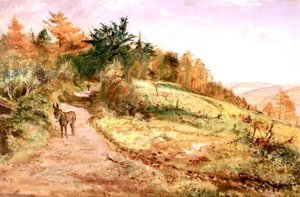 Donkey on a Path
13
 Monmouth Races
14
 Dixton Church from the Hadnock Side of Wye
15
 Monnow Bridge and Chippenham
16
 Monnow Weir
17
 The Buckstone, Monmouth
18
 Monnow Bridge, Monmouth
19
 The Leys and The Doward
20
 Monnow Bridge and Chippenham
21
 Cottage and Garden
22
 Monmouth from the Staunton Road with a Cottage and a Spring
23
 Monnow Bridge and St Thomas's Square, Monmouth
24
 The Artist's Cottage
25
 Tintern Abbey
26
 Dixton Church from the Hadnock Side of Wye
27
 The Leys and the River Wye
28
 The Naval Temple and the Round House, Kymin
29
 Unidentified Landscape (possibly Rockfield Road)
Четирите найчесто срещани теми в тези оригинални творби, всяка с най-добрия си пример.
Всяка датирана оригинална творба на John Arthur Evans на тази страница е създадена през 1903: ето ги, започвайки от най-известните.
Изберете година, за да разгледате оригиналите.
The County Gaol and the Bridge over the Monnow, Monmouth (1903). Следващите са The Old Schoolroom, Snow и The Wye and the Seven Sisters.
52 години: The County Gaol and the Bridge over the Monnow, Monmouth е от 1903 г., а John Arthur Evans е роден/а в 1851.
The County Gaol and the Bridge over the Monnow, Monmouth, The Old Schoolroom, Snow, The Wye and the Seven Sisters, Wye Bridge and Monmouth School, Cottage at Wyesham, Cottage on the Kymin, Monnow Bridge, Wye Bridge and the Bark House, Monmouth, Self Portrait и Donkey on a Path (possibly The Kymin). Класацията по-горе показва годината и музея за всяко от тях.
В нашия каталог са представени 38 произведения на John Arthur Evans.
Welsh countryside (4), Rural landscape (3) и Landscape (2), разпределени в 29 произведения на тази страница.
Newport, 1851. A child is born into the landscape that will eventually define his entire creative existence. John Arthur Evans grows up amidst the valleys of Monmouthshire, a place where the geological bones of the earth are visible in limestone cliffs and winding riverbeds. This is not merely a backdrop for him; it is the primary subject of a lifelong devotion.
His early training at the Newport School of Art brings him under the influence of William Dyce. The presence of a painter so closely tied to the Pre-Raphaelite aesthetic introduces Evans to a specific way of seeing. He learns to look for the minute details in a leaf, the precise way light hits a stone, and the heavy atmosphere of a Welsh morning. This training anchors his work in a commitment to observation, even as he moves toward more fluid, impressionistic methods later in life.
The brushwork shifts. The rigid lines of early training begin to soften into something more atmospheric. Evans turns his attention to the Wye Valley and its tributaries, seeking to capture the shifting moods of the landscape. He does not merely record the topography of places like Pen y Bryn or Raglan Castle; he records how they feel under a heavy mist or in the low light of dusk.
His technique relies on layered brushstrokes and subtle tonal gradations. He manipulates pigments to create a sense of depth, making the viewer feel the moisture in the air or the rough texture of a rock face. In works such as The Naval Temple and the Round House, Kymin, the landscape takes on an impressionistic quality where light and shadow dictate the composition.
By the time Evans reaches the end of his life in 1941, he has left behind a visual archive of a specific era of Wales. His paintings act as a record of geological formations and the quiet rhythms of the countryside before the modern age transformed them. He captures the stillness of the valleys and the turbulent flow of the rivers with a precision that honors the land's history.
His work remains in public collections across Britain and Wales. These canvases continue to hold the light of the Welsh valleys, preserving the specific character of Monmouthshire for those who look closely at the textures of his oil on canvas. He remains a chronicler of the region, a man who saw the grandeur in the local and the profound in the familiar.