Jean-François Raffaëlli: Bridging Realism and Impressionism
Jean-François Raffaëlli (1850–1924) stands as a singular figure in the panorama of late 19th-century French art, embodying an uncommon synthesis between the tenets of Realism and the burgeoning spirit of Impressionism. Born in Paris on April 20, 1850, Raffaëlli’s artistic journey began not with grand ambitions but with a fascination for theatrical performance—a passion that would subtly permeate his oeuvre. However, it was an encounter with Jean-Léon Gérôme, one of Europe's foremost Academic painters, at the École des Beaux-Arts in 1870, that irrevocably steered him toward a path of meticulous observation and artistic innovation.
Early Life and Artistic Training
Despite Gérôme’s conservative pedagogical approach—focused on classical ideals and technical precision—Raffaëlli possessed an innate inclination for visual art, recognizing its capacity to capture the essence of human experience beyond mere surface appearances. His brief formal training served as a catalyst for his independent exploration of artistic styles and techniques. Rejecting the rigid conventions of Academia, Raffaëlli swiftly embraced a more personal vision, prioritizing empathy and psychological insight over stylistic adherence. This decisive break from tradition would prove pivotal in shaping his distinctive artistic identity.
- Musical Pursuits: Raffaëlli’s initial inclination toward music foreshadowed his later engagement with theatrical artistry, influencing his aesthetic sensibilities.
- The Influence of Jean-Léon Gérôme: Despite disagreements over stylistic priorities, Gérôme's technical prowess undeniably impacted Raffaëlli’s artistic development.
A Distinctive Artistic Style – Caractérisme
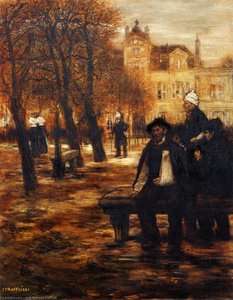
Raffaëlli’s artistic philosophy revolved around “caractérisme”—a theory championed by critics like J.-K. Huysmans and Edgar Degas—that advocated for portraying individuals within their social context with unflinching honesty. Rejecting the idealized representations favored by Academic art, Raffaëlli sought to convey not merely physical likeness but also psychological depth and emotional resonance. This approach distinguished him from many of his contemporaries and cemented his reputation as a pioneer of observational realism.
- Observation and Context: Raffaëlli’s method prioritized capturing the nuances of human experience within specific social environments.
- Rejecting Idealization: Unlike Academic painters, Raffaëlli eschewed idealized portrayals, favoring instead depictions that reflected the complexities of everyday life.
Major Works and Artistic Evolution
Raffaëlli’s artistic trajectory unfolded across several pivotal periods, marked by stylistic shifts and thematic explorations. Initially captivated by costume paintings—a genre reflecting his theatrical interests—he swiftly transitioned to depicting the lives of Parisian laborers and marginalized communities. This transformative decision signaled a profound engagement with social commentary and a commitment to representing the dignity and struggles of ordinary people.
- Early Costume Paintings: Raffaëlli’s initial focus on costume paintings demonstrated his fascination for visual aesthetics and theatrical presentation.
- The Parisian Suburbs: His depiction of the Parisian suburbs—particularly areas undergoing industrialization—revealed a keen interest in documenting social change.
Recognition and Legacy
Raffaëlli’s artistic endeavors garnered considerable acclaim during his lifetime, culminating in prestigious honors such as the Légion d'honneur bestowed upon him in 1889. His association with Edgar Degas—a fellow Impressionist innovator—further solidified his position within the avant-garde movement of the era. Raffaëlli continued to refine his artistic style throughout his career, experimenting with color printmaking and sculpting—though few examples survive today—demonstrating an unwavering dedication to artistic exploration. Jean-François Raffaëlli passed away on February 11, 1924, leaving behind a legacy characterized by empathy, observational acuity, and a singular contribution to the history of French art. His work remains influential for its ability to capture the spirit of modernity while honoring the human condition.
- Association with Degas: Raffaëlli’s collaboration with Degas fostered his engagement with Impressionist principles and techniques.
- Sculptural Pursuits: Raffaëlli explored sculpture alongside painting, albeit with limited surviving works.
### Meta Description: Discover Jean-François Raffaëlli's realist paintings & sculptures depicting Parisian life. Champion of 'caractérisme,' he bridged Impressionism & social realism. Explore his legacy at OriginalUniqueArt!
### Meta Keywords: Jean-François Raffaëlli, Raffaelli paintings, French Realism, Impressionist art, Parisian life, 19th Century Art, Caractérisme style