Портрет на Jean Bourdichon

4-те най-известни картини на Jean Bourdichon, всяка от които е уникална

Обновено Ноември 2026 · класирано според нашия индекс на популярност (търсения, посещения и поръчки за всяко произведение) · 4 творби на Jean Bourdichon в нашия каталог

Накратко

The Wealthy Man (1500) е картината на Jean Bourdichon, която привлича най-много погледи; оригиналът се намира в École Nationale Supérieure des Beaux-Arts, Париж. След това погледът се насочва към Adoration of the Magi и Manuscript Leaf with the Annunciation from a Book of Hours (1485). Сред 4 произведения на Jean Bourdichon в нашия каталог, тези 4 са най-известните – всяко от тях е уникален оригинал, представен с годината на създаване, музея и причината за неговата вечност.

1457 – 1521, Tours Най-много творби: École Nationale Supérieure des Beaux-Arts

Топ 10 картини на Jean Bourdichon, през погледа на галерията

2
Adoration of the Magi на Jean Bourdichon

Adoration of the Magi

Manuscript · Лувър, Пари

The scene unfolds within the quiet intimacy of a stable, where the light seems to emanate from the infant itself. Mary sits as a pillar of calm, her blue cloak a deep, celestial weight against the wooden structure. In her lap, the child is swathed in white, a small spark of divinity amidst the earthly textures of the barn. Three figures approach, their presence marked by the heavy weight of…

3
Manuscript Leaf with the Annunciation from a Book of Hours (1485) на Jean Bourdichon

Manuscript Leaf with the Annunciation from a Book of Hours

1485

As part of a daily cycle of prayers in honor of the Virgin, Matins is habitually illustrated by an Annunciation, with the angel Gabriel announcing to Mary that she will bear the infant Jesus. Inhabitual, however, are details of this composition by Jean Bourdichon of Tours, the foremost illuminator to the court of France during the reigns of Louis XI, Charles VIII, Louis XII, and Francis I (1461-1547). Despite his…

Музеите, в които се съхраняват оригиналите на Jean Bourdichon

3 музея, които притежават най-голям брой от картините на тази страница.

Музеи Град Творения на Jean Bourdichon Картини от този списък
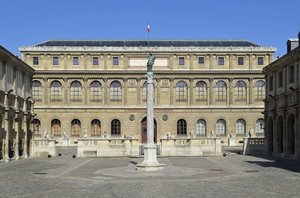
École Nationale Supérieure des Beaux-Arts, ПарижÉcole Nationale Supérieure des Beaux-Arts Париж 1 The Wealthy Man
Лувър, ПариЛувър Пари 1 Adoration of the Magi
Certosa di San Martino, НеаполCertosa di San Martino Неапол 1 Madonna with Child and saints

Jean Bourdichon през годините: уникатните оригинали на всеки

Дългата кариера от 16 години, от 1485 до 1500: най-известните оригинални творби на Jean Bourdichon, представени година по година.

Работи по години

Изберете година, за да разгледате оригиналите.

Картини на Jean Bourdichon: въпроси към галерията

Кое е най-известното произведение на Jean Bourdichon?Разкрийте отговора

The Wealthy Man (1500), École Nationale Supérieure des Beaux-Arts, Париж. Следват Adoration of the Magi и Manuscript Leaf with the Annunciation from a Book of Hours (1485).

На каква възраст Jean Bourdichon създава The Wealthy Man?Разкрийте отговора

43 години: The Wealthy Man е от 1500 г., а Jean Bourdichon е роден/а в 1457.

Колко са известните творби на Jean Bourdichon?Разкрийте отговора

В нашия каталог са представени 4 произведения на Jean Bourdichon, датирани от 1485 до 1500.

Къде могат да се видят най-известните оригинали на Jean Bourdichon?Разкрийте отговора

Предимно в École Nationale Supérieure des Beaux-Arts (Париж), Лувър (Пари) и Certosa di San Martino (Неапол). В горната таблица с музеи са изброени всички тях.

През кой период Jean Bourdichon създава най-известните си картини?Разкрийте отговора

В 1500: 2 от 4 произведенията на тази страница са създадени тогава, като The Wealthy Man са сред тях.

Коя е най-ранната и коя е най-късната известна картина на Jean Bourdichon?Разкрийте отговора

На тази страница най-старата е Manuscript Leaf with the Annunciation from a Book of Hours (1485), а най-новата е The Wealthy Man (1500).

Jean Bourdichon: портрет на художника

Jean Bourdichon (c.1457-1521): A Pioneer of Humanist Gothic

Jean Bourdichon stands as a singular figure in the artistic landscape of late Gothic France, bridging the gap between the austere formality of medieval tradition and the burgeoning humanist spirit of the Renaissance. Born around 1457 in Tours, he emerged from a milieu steeped in ecclesiastical patronage—a circumstance that profoundly shaped his artistic trajectory and ensured his legacy would endure for centuries. While biographical details remain scarce, scholarly consensus points to Bourdichon’s formative years spent absorbing the stylistic conventions of Reims Cathedral and other monumental churches, establishing him firmly within the Gothic canon.
  • Early Influences: Bourdichon's artistic education likely commenced under the tutelage of Jean Félibert, a prominent Reims painter known for his meticulous depictions of religious iconography. This mentorship instilled in Bourdichon a dedication to precision and detail—characteristics that would become hallmarks of his oeuvre.
  • The Book of Hours Tradition: Bourdichon’s fame rests primarily upon his contribution to the Book of Hours tradition, a devotional manuscript illuminated with exquisitely rendered scenes from the Gospels and saints' lives. These works exemplify Bourdichon’s mastery of sfumato—a technique pioneered by Leonardo da Vinci—allowing him to achieve unparalleled atmospheric depth and luminosity.
  • Notable Commissions: Bourdichon secured prestigious commissions from aristocratic patrons, notably François Ier, demonstrating his ability to adapt stylistic innovations to the demands of royal clientele. His portraits of François Ier and his family are considered masterpieces of humanist portraiture, capturing not merely physical likeness but also psychological nuance.

A Synthesis of Gothic Style and Renaissance Humanism

Bourdichon’s artistic vision transcended mere stylistic imitation; he skillfully blended the grandeur of Gothic formalism with the intellectual currents of humanist thought. Unlike many of his contemporaries who clung rigidly to medieval conventions, Bourdichon embraced perspectival illusion—a technique championed by Filippo Brunelleschi—to create images that conveyed a sense of spatial realism previously unattainable in religious painting. This daring experimentation reflects Bourdichon’s engagement with Renaissance ideals of observation and anatomical accuracy.
  • Technique: Bourdichon's meticulous brushwork, combined with his masterful use of sfumato, resulted in paintings characterized by velvety gradations of tone—a technique that imbues his compositions with an ethereal quality.
  • Subject Matter: Bourdichon’s subjects consistently revolved around religious themes—the Annunciation, the Nativity, and depictions of saints—yet he approached these narratives with a humanist sensibility, portraying figures with dignity and compassion.

Major Achievements & Legacy

Jean Bourdichon's contribution to French art history is undeniable. His Book of Hours, particularly the Très Sainte Anne manuscript housed in the Musée National Jean-Jacques Henner, stands as a testament to his artistic genius and represents one of the finest examples of sfumato achieved during the fifteenth century. Furthermore, his portraits of François Ier solidified Bourdichon’s reputation as a humanist artist—a figure who skillfully navigated the transition between medieval and Renaissance aesthetics. His influence extended beyond his immediate contemporaries, inspiring subsequent generations of painters to explore innovative techniques and embrace humanistic ideals. Today, Bourdichon's works continue to captivate audiences worldwide, securing his place among the most celebrated artists of his era.

Further Exploration

For deeper insights into Jean Bourdichon’s life and art, consult resources such as Wikipedia () and The Getty Museum (), where you can admire reproductions of his masterpieces—including “Adoration of the Magi” and “The Wealthy Man”—and delve into scholarly analyses of his stylistic innovations.