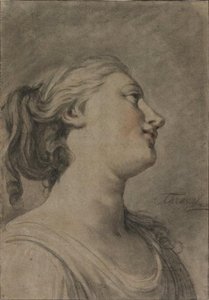
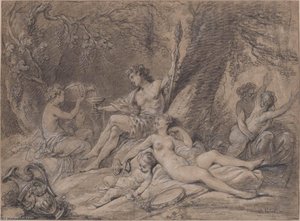
Портрет на Hugues Taraval

26-те най-известни картини на Hugues Taraval, всяка от които е уникална

Обновено Ноември 2026 · класирано според нашия индекс на популярност (търсения, посещения и поръчки за всяко произведение) · 27 творби на Hugues Taraval в нашия каталог

Накратко

The Infant Hercules Strangling Serpents in his Cradle (1785) е картината на Hugues Taraval, която привлича най-много погледи. След това погледът се насочва към Hercules Strangling the Serpents in His Cradle (1750) и The Triumph of Amphitrite (1775). Сред 27 произведения на Hugues Taraval в нашия каталог, тези 26 са най-известните – всяко от тях е уникален оригинал, представен с годината на създаване, музея и причината за неговата вечност.

1729 – 1785, Paris Най-много творби: Musée Bonnat-Helleu

Топ 10 картини на Hugues Taraval, през погледа на галерията

1
The Infant Hercules Strangling Serpents in his Cradle (1785) на Hugues Taraval

The Infant Hercules Strangling Serpents in his Cradle

1785 · Oil

In this 1785 composition, we find ourselves witnessing a quiet yet profound moment of divine destiny. The scene captures the infant Hercules in his cradle, a setting that should suggest peace but instead holds a sudden, violent struggle. Two serpents, sent to end the hero's life before his legend could truly begin, find themselves caught in the grip of a child. There is a striking contrast between the vulnerability of…

2
Hercules Strangling the Serpents in His Cradle (1750) на Hugues Taraval

Hercules Strangling the Serpents in His Cradle

1750 · Oil On Canvas · Musée Bonnat-Helleu, Байон

The oil painting titled Hercules Strangling the Serpents in His Cradle was executed by the French painter Hugues Taraval. Dated 1785, this work depicts a specific episode from classical mythology. The scene focuses on the infant Hercules as he engages in a struggle with serpents. These creatures were sent by the goddess Hera to threaten the child in his nursery.

3
The Triumph of Amphitrite (1775) на Hugues Taraval

The Triumph of Amphitrite

1775 · Oil On Canvas · Musée Des Beaux, Tours

The scene unfolds as The Triumph of Amphitrite, a work that captures a moment of divine consequence. Painted by Hugues Taraval in 1780, the canvas brings to life the heavy weight of Zeus’ judgment. This celestial decree follows the defiance of Poseidon, focusing on the fates of Amphitrite and Triton as they navigate the swirling currents of myth. The tension of the narrative hangs in the air, frozen in the…

4
Autumn (1769) на Hugues Taraval

Autumn

1769 · Fresco

In this large-scale neoclassical ceiling fresco, the season of Autumn unfolds across a vast, upward-looking expanse. Painted by Hugues Taraval around 1769, the mural captures a moment of mythological movement. Figures gather in a dynamic, pyramidal arrangement that draws the eye toward a central group, creating a sense of celestial activity. A chariot pulled by dark oxen moves through the scene, while a figure plays a flute, adding a silent…

6
The Triumph of Amphitrite (1777) на Hugues Taraval

The Triumph of Amphitrite

1777 · Oil On Canvas

In this large-scale oil on canvas, we find ourselves drawn into a swirling, mythological sea scene. The composition follows a pyramidal structure, centering on the figure of Amphitrite as she reclines amidst the movement of the tides. Around her, the ocean is alive with tritons and putti, their forms emerging from frothing waves and sea creatures. The atmosphere feels light, almost airy, achieved through a palette of soft pastels—pale blues,…

8
The Cumaean Sibyl Predicts the Birth of Jesus Christ to Augustus and Shows Him a Virgin and a Child in the Sky (1781) на Hugues Taraval

The Cumaean Sibyl Predicts the Birth of Jesus Christ to Augustus and Shows Him a Virgin and a Child in the Sky

1781 · Oil On Canvas

The Cumaean Sibyl Predicts the Birth of Jesus Christ to Augustus and Shows Him a Virgin and a Child in the Sky is a large-scale oil painting by Hugues Taraval. Created about 1781, the work captures a moment of celestial revelation. The canvas holds a vision of a Virgin and a Child appearing in the sky, a sight directed toward Augustus by the prophetic Sibyl. It is a scene of…

9
The Waking of Cupid (1781) на Hugues Taraval

The Waking of Cupid

1781 · Oil · Wallace Collection, Лондон

In this oil painting, titled The Waking of Cupid, the artist Hugues Taraval captures a moment of mythological transition. Created about 1781, the work presents an allegorical scene that invites the viewer to wonder about the nature of love or the suddenness of an awakening. Three cherubic figures, known as putti, occupy the center of the composition, their soft forms appearing amidst a pastoral landscape that feels light and airy.

10
The Triumph of Amphitrite (1780) на Hugues Taraval

The Triumph of Amphitrite

1780 · Oil · Mead Art Museum, Amherst

In this 1780 oil painting, we find ourselves drawn into a swirling, mythological drama centered on the goddess Amphitrite. The composition follows a dynamic pyramidal structure, pulling the eye upward toward the central figure as she reclines with a sense of divine grace. She is surrounded by a lively assembly of sea deities, tritons, and cherubs, all caught in a moment of movement. The palette relies heavily on soft pastels—sky…

Знаменитите картини на Hugues Taraval, номера от 11 до 26

Темите, които привличат погледа на Hugues Taraval

Четирите найчесто срещани теми в тези оригинални творби, всяка с най-добрия си пример.

Музеите, в които се съхраняват оригиналите на Hugues Taraval

6 музея, които притежават най-голям брой от картините на тази страница.

Музеи Град Творения на Hugues Taraval Картини от този списък
Musée Bonnat-Helleu, БайонMusée Bonnat-Helleu Байон 2 Hercules Strangling the Serpents in His Cradle, The Governor of the Seraglio Chosing the Concubines
Национален музей, СтокхолмНационален музей Стокхолм 2 Venus and Adonis, Portrait of a Girl with a Birdcage
Musée Des Beaux, ToursMusée Des Beaux Tours 1 The Triumph of Amphitrite
Wallace Collection, ЛондонWallace Collection Лондон 1 The Waking of Cupid
Mead Art Museum, AmherstMead Art Museum Amherst 1 The Triumph of Amphitrite
Château de Fontainebleau, ФонтенблоChâteau de Fontainebleau Фонтенбло 1 The Nativity

Hugues Taraval през десетилетията: един уникален оригинал за всяко

Произведения по десетилетия

Изберете десетилетие, за да видите оригиналната творба, която го определя.

Картини на Hugues Taraval: въпроси към галерията

Кое е най-известното произведение на Hugues Taraval?Разкрийте отговора

The Infant Hercules Strangling Serpents in his Cradle (1785). Следващите са Hercules Strangling the Serpents in His Cradle (1750) и The Triumph of Amphitrite (1775).

На каква възраст Hugues Taraval създава The Infant Hercules Strangling Serpents in his Cradle?Разкрийте отговора

56 години: The Infant Hercules Strangling Serpents in his Cradle е от 1785 г., а Hugues Taraval е роден/а в 1729.

Кои са десетте най-известни картини на Hugues Taraval?Разкрийте отговора

The Infant Hercules Strangling Serpents in his Cradle, Hercules Strangling the Serpents in His Cradle, The Triumph of Amphitrite, Autumn, The Feast of Tantalus, The Triumph of Amphitrite, The Nativity, The Cumaean Sibyl Predicts the Birth of Jesus Christ to Augustus and Shows Him a Virgin and a Child in the Sky, The Waking of Cupid и The Triumph of Amphitrite. Класацията по-горе показва годината и музея за всяко от тях.

Колко са известните творби на Hugues Taraval?Разкрийте отговора

В нашия каталог са представени 27 произведения на Hugues Taraval, датирани от 1750 до 1785.

Къде могат да се видят най-известните оригинали на Hugues Taraval?Разкрийте отговора

Предимно в Musée Bonnat-Helleu (Байон), Национален музей (Стокхолм) и Musée Des Beaux (Tours). В горната таблица с музеи са изброени всички тях.

През кой период Hugues Taraval създава най-известните си картини?Разкрийте отговора

В 1780s: 6 от 26 произведенията на тази страница са създадени тогава, като The Infant Hercules Strangling Serpents in his Cradle са сред тях.

Коя е най-ранната и коя е най-късната известна картина на Hugues Taraval?Разкрийте отговора

На тази страница най-старата е Hercules Strangling the Serpents in His Cradle (1750), а най-новата е The Infant Hercules Strangling Serpents in his Cradle (1785).

Какви теми предпочиташе Hugues Taraval?Разкрийте отговора

Woman (11), People (5) и Man (5), разпределени в 26 произведения на тази страница.

С какви материали най-често е живописувал Hugues Taraval?Разкрийте отговора

Oil On Canvas, за 10 от 26 произведения на тази страница.

Какви оригинални творби на Hugues Taraval мога да видя в Musée Bonnat-Helleu?Разкрийте отговора

Hercules Strangling the Serpents in His Cradle и The Governor of the Seraglio Chosing the Concubines: Musée Bonnat-Helleu, Байон притежава 2 от произведенията на тази страница.

Hugues Taraval: портрет на художника

Hugues Taraval: A Pioneer of Rococo Decoration

Hugues Taraval (1729-1785) stands as a pivotal figure in the artistic landscape of 18th century France, particularly renowned for his contributions to decorative arts and mythological painting. Born in Paris amidst the burgeoning fervor of the Baroque era, Taraval’s artistic journey unfolded against the backdrop of a transformative period marked by aristocratic patronage and an embrace of opulent aesthetics—the Rococo style. His legacy resides not merely in individual canvases but in shaping the visual vocabulary of royal palaces and influencing generations of artists.
  • Early Life and Artistic Training:
  • Family Background: Guillaume Taraval, a painter himself, instilled in Hugues a passion for artistic pursuits from an early age.
  • Formal Education: Taraval’s studies commenced with Jean-Baptiste Marie Pierre and Charles-André van Loo at the Académie Royale de peinture et de sculpture, establishing him within the influential artistic circles of Paris.

The Triumph of Amphitrite: A Masterpiece of Rococo Composition

Taraval’s most celebrated work, “The Triumph of Amphitrite,” executed in 1780 for the Galerie d'Apollon at Versailles, exemplifies the stylistic hallmarks of Rococo. This monumental ceiling fresco depicts Zeus’ judgment over Amphitrite and Triton following Poseidon’s defiance—a narrative steeped in classical mythology rendered with breathtaking dynamism and intricate detail. The painting showcases Taraval’s masterful command of chiaroscuro, utilizing dramatic contrasts of light and shadow to heighten emotional impact and sculpt the figures within a swirling vortex of color and texture. Its grandeur reflects the aspirations of Louis XVI's court and cemented Taraval’s reputation as one of the era’s foremost decorators.

Royal Commissions and Architectural Decoration

Beyond his paintings, Taraval secured prestigious commissions throughout France, transforming spaces like Bellevue Château in Meudon and the École Militaire of Paris into opulent showcases of Rococo artistry. His meticulous attention to detail extended beyond mere ornamentation; he conceived entire architectural schemes—including chandeliers—that harmoniously blended artistic vision with structural engineering. These projects underscored his belief that decoration should serve as an integral component of the building’s overall character.

Influence and Legacy

Hugues Taraval's impact on French art extends far beyond his immediate output. He mentored younger artists, fostering a stylistic continuity that embraced the elegance and theatricality of Rococo. His work served as inspiration for subsequent generations of painters and decorators, shaping the visual culture of the late Enlightenment. Today, “The Triumph of Amphitrite” remains an enduring symbol of artistic achievement—a testament to Taraval’s ability to translate mythological narratives into visually arresting experiences.

Further Exploration

For deeper insights into Hugues Taraval's life and oeuvre, consult scholarly publications such as Lee, Simon (1996). “Taraval”, vol. 30, p. 343, in The Dictionary of Art (34 volumes), edited by Jane Turner. New York: Grove. Also at Oxford Art Online. Riot (Delphine), Hugues Taraval: a state of the art, Master Thesis, University of Lille III, Lille, 2001 (Unpublished). Riot (Delphine), Hugues Taraval (1729-1785): Painter Ordinary King. (Article in preparation). Sources include Carl G. Laurin, Konsthistoria, Stockholm, 1919; and Riot (Delphine), Hugues Taraval (1729-1785): Painter Ordinary King. (Article in preparation).