


1


Обновено Ноември 2026 · класирано според нашия индекс на популярност (търсения, посещения и поръчки за всяко произведение) · 31 творби на Hercules Brabazon Brabazon в нашия каталог
Накратко
От всички оригинални произведения, оставени от Hercules Brabazon Brabazon, най-известната е A Street in Cairo. След тях непосредствено следват Florence (1880) и Ischia. Нашият каталог съдържа 31 произведения на Hercules Brabazon Brabazon; галерията е съхранила 31-те най-обожавани от света, всяко от тях представен с неговата дата, неговия музей и неговата история.


 Landscape with Industrial Buildings by a RiverYale Center for British Art
12
 Fish baskets, Chioggia, south of Venice
13
 Beaulieu-sur-MerIsabella Stewart Gardner Museum
14
 Above Menton
15
 Villa d'Este
16
 A Group Of Houses
17
 Lake maggiore
18
 A market scene in North Africa
19
 The Date Palms At Elche
20
 The infanta margarita
21
 Landscape After Turner's 'the Dogana
22
 Blue Water and Figures in the foreground
23
 A Moor in a Crimson
24
 Durham
25
 Rhododendrons
26
 Coast scene
27
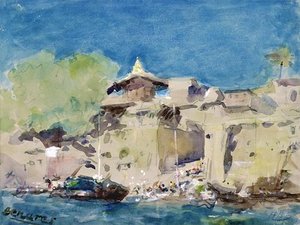 Benares
28
 The Harbour of Split
29
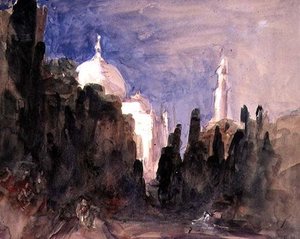 The Gardens Of The Taj Mahal
30
 June roses
31
 Head Of Goya
Четирите найчесто срещани теми в тези оригинални творби, всяка с най-добрия си пример.
2 музея, които притежават най-голям брой от картините на тази страница.
| Музеи | Град | Творения на Hercules Brabazon Brabazon | Картини от този списък |
|---|---|---|---|
 Yale Center for British Art |
Ню Хейвън | 2 | Florence, Landscape with Industrial Buildings by a River |
 Isabella Stewart Gardner Museum |
Бостън | 1 | Beaulieu-sur-Mer |
1880 е годината на всяка датирана творба на Hercules Brabazon Brabazon в този списък: ето ги, подредени по популярност.
Изберете година, за да разгледате оригиналите.
A Street in Cairo. Следващите са Florence (1880) и Ischia.
A Street in Cairo, Florence, Ischia, A Mosque in Cairo, Street Scene In Delhi, A market scene in Karachi, White houses, The Grand Canal and Church of Santa Maria, Andscape With Cottage And Windmill и The Fondamenta delle Zattere. Класацията по-горе показва годината и музея за всяко от тях.
В нашия каталог са представени 31 произведения на Hercules Brabazon Brabazon.
Предимно в Yale Center for British Art (Ню Хейвън) и Isabella Stewart Gardner Museum (Бостън). В горната таблица с музеи са изброени всички тях.
Scenes (3), Buildings (3) и Roads (2), разпределени в 31 произведения на тази страница.
Impressionism, судейки по оригиналите на тази страница.
Florence и Landscape with Industrial Buildings by a River: Yale Center for British Art, Ню Хейвън притежава 2 от произведенията на тази страница.
Born in Paris to English parents as Hercules Brabazon Sharpe, the man who would become known to history as Hercules Brabazon Brabazon lived a life defined by a profound devotion to aesthetic beauty. His early years were shaped by a cosmopolitan upbringing, moving from the cultural heart of France to the English countryside of East Sussex. Though he initially pursued a path in mathematics at Trinity College, Cambridge, his true calling lay far beyond the rigors of logic and law. Driven by an irresistible passion for the arts, he sought out the musical and visual traditions of Rome, enrolling in prestigious academies such as the Accademia di Santa Cecilia and the Accademia di San Luca. This period of intense study laid the foundation for a career that would eventually bridge the gap between the gentleman amateur and the master watercolorist.
The trajectory of his life changed irrevocably through inheritance, which granted him the financial independence necessary to pursue his wanderlust. Upon inheriting family estates in Connaught, he adopted his new surname, a requirement of a will that would forever link his identity to his lineage. This newfound freedom allowed him to embark on extensive travels across Europe, Africa, and India, always returning with treasures captured in watercolor. He famously described himself as living "for Art and Sunshine," a sentiment that permeated his approach to the natural world.
Brabazon’s artistic technique was deeply rooted in the tradition of great masters, most notably the atmospheric brilliance of J. M. W. Turner. His works are celebrated for their ability to capture the ephemeral qualities of light and the fluid movement of water, particularly when responding to the shifting landscapes of Venice. As a watercolorist, he possessed a rare ability to translate the changeable atmosphere of a Venetian street scene or the grandeur of Mughal India into delicate, evocative washes of color. His style often leaned toward a more spontaneous, almost impressionistic sensibility, where the boundaries between form and light began to dissolve.
While he viewed himself as a gentleman amateur for much of his life, his technical prowess was undeniable. His development saw him moving through various expressive modes:
For decades, Brabazon resisted the public eye, choosing not to exhibit or sell his work until his mid-seventies. It was only through the encouragement of esteemed contemporaries, such as John Singer Sargent, that he finally stepped into the light of the professional art world. His debut at the New English Art Club and subsequent solo exhibitions at the Goupil Gallery on Bond Street brought him much-needed acclaim, proving that his "amateur" pursuits were, in fact, works of significant merit. Though much of his inherited collection was dispersed by relatives due to later financial hardships, his reputation as a skilled observer of the world's beauty remains etched in the annals of 19th-century art history.


