Giuseppe Maria Crespi (1665-1747): A Bolognese Pioneer of Genre Painting
Giuseppe Maria Crespi, affectionately known as “Lo Spagnuolo,” stands apart from his contemporaries in the Baroque landscape of Italy—a singular figure whose artistic vision challenged established conventions and cemented his place as one of the foremost innovators of genre painting. Born in Bologna in 1665, Crespi’s nickname wasn't derived from lineage but from a deliberate stylistic choice: he favored the looser, more expressive clothing styles prevalent in Spain during his formative years, signaling an independent spirit that would define his entire artistic trajectory. This rebellious streak foreshadowed his refusal to conform to the rigid academic doctrines dominating Rome when invited by Carlo Maratti, opting instead for a path of self-discovery that would ultimately reshape Bolognese art history.
Early Influences and Artistic Training: The Foundations of Innovation
Crespi’s artistic journey began with a traditional apprenticeship under Angelo Michele Toni and Domenico Maria Canuti, absorbing the foundational techniques of Bolognese painting—primarily focused on illusionistic fresco decoration. However, unlike many artists of his time who diligently honed their skills in Rome's prestigious academies, Crespi embarked on a broader exploration of artistic styles. He traveled extensively throughout Italy, immersing himself in the vibrant atmosphere of Venice and Parma, where he encountered the burgeoning influence of early Baroque painters like Rembrandt and Giovanni Battista Gaulli—artists whose mastery of chiaroscuro and psychological realism profoundly impacted Crespi’s developing aesthetic sensibilities. This exposure to diverse artistic traditions fueled his desire to transcend mere imitation and forge a distinctly personal style.
Breaking with Tradition: The Birth of Genre Painting
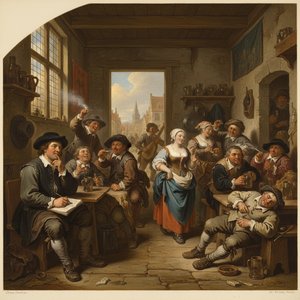
Crespi’s most enduring contribution to art lies in his pioneering embrace of genre painting—a revolutionary departure from the prevailing preoccupation with mythological narratives and historical grandeur. Rejecting the idealized forms favored by academic painters, Crespi turned his gaze inward, capturing the everyday lives of ordinary people engaged in commonplace activities. This decision wasn't merely stylistic; it represented a fundamental rethinking of artistic purpose—moving away from didactic storytelling toward a more nuanced exploration of human emotion and experience. His canvases depict scenes of domestic life with remarkable immediacy and sensitivity, portraying women washing dishes, families sharing meals, children playing – subjects previously relegated to the margins of artistic discourse. Unlike his peers who sought to elevate grand themes, Crespi focused on capturing the subtle dramas unfolding within the confines of the home, achieving a level of psychological realism unparalleled in Bolognese art at the time.
The Seven Sacraments and Venetian Influence: A Synthesis of Styles
Perhaps Crespi’s most ambitious project was *The Seven Sacraments*, commissioned by Cardinal Ottoboni around 1712—a monumental fresco cycle that showcased his ability to tackle complex religious themes while simultaneously integrating elements of Venetian artistic style. Departing from the formal conventions of Roman Baroque, Crespi placed his scenes within a contemporary setting, populated by figures recognizable to viewers of his era. This innovative approach mirrored the stylistic tendencies prevalent in Venice during Crespi’s formative years—characterized by looser brushwork and a preference for atmospheric perspective—demonstrating his willingness to absorb influences from diverse artistic traditions. The resulting fresco cycle stands as a testament to Crespi's mastery of technique and his profound understanding of human psychology, solidifying his reputation as one of the foremost artists of his generation.
Legacy and Enduring Significance: A Timeless Vision
Giuseppe Maria Crespi died in Bologna in 1747, leaving behind a legacy that continues to inspire admiration and scholarly debate. He was recognized as a singular figure—a Bolognese artist who defied academic dogma and championed the expressive power of genre painting. His influence extended beyond Italy; he mentored artists like Giovanni Battista Piazzetta and Pietro Longhi, fostering a new generation of painters committed to realism and psychological depth. Crespi’s paintings remain remarkably relevant today, offering a poignant reminder of the enduring human capacity for empathy and observation—a testament to his unwavering belief that beauty could be found not only in grand narratives but also in the quiet moments of daily life. His work continues to resonate with audiences worldwide, securing his place as one of the most important artists of the Baroque era and ensuring that Lo Spagnuolo’s vision persists across centuries.