Меню
БЕЗПЛАТНА КОНСУЛТАЦИЯ ЗА ИЗКУСТВО

Йоанни Белини

1433 - 1516

Бързи факти

  • Art period: Ренесанс
  • Top 3 works:
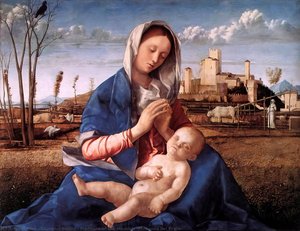
    • Мадона на ливадата (Мадона дел Прато)
    • Свети Йоан Златоуст Читащ
  • Color intensity:
    • балансиран
    • ярък
  • Gift suitability: other-none
  • Copyright status: Public domain
  • Nationality: Италия
  • Movements:
    • early renaissance
    • renaissance
  • Museums on APS:
    • Национална галерия на изкуствата
    • Национална галерия
    • Национална галерия на изкуствата
    • Галерия Уфици
    • Галерия Уфици
  • Mediums: масло върху платно
  • Born: 1433, Венеция, Италия
  • Vibe: спокоен
  • Разгърни скритите подробности
  • Lifespan: 83 years
  • Also known as:
    • Джoванни Белини
    • Zuane Belin
    • Jacopo Bellini (баща)
    • Gentile Bellini (брат)
  • Emotional tone: спокоен
  • Room fit: дневна
  • Top-ranked work: Мадона на ливадата (Мадона дел Прато)
  • Works on APS: 364
  • Creative periods: mature period
  • Typical colors: еспресо
  • Best occasions:
    • декларация
    • акцент
  • Died: 1516

Тест за изкуство

Има само един верен отговор за всеки въпрос.

Въпрос 1:
Кой е основният период в творчеството на Джовани Белини, който се характеризира с използването на масло и създаване на дълбоки, богати нюанси?
Въпрос 2:
Кой художник оказа значително влияние върху ранния стил на Джовани Белини, особено в отношението към композицията и формите?
Въпрос 3:
Каква е основната тема на много от картините на Джовани Белини, която го отличава от другите художници на неговото време?
Въпрос 4:
В коя институция Джовани Белини работи като консерватор на картините?
Въпрос 5:
Кои двама художници са най-значително повлияни от стила и техниките на Джовани Белини?

A Venetian Master: The Life and Legacy of Giovanni Bellini

Giovanni Bellini, a name inextricably linked to the heart of Venice, stands as one of the most pivotal figures in the transition from the late Gothic to the burgeoning Renaissance. Born around 1430 – though some sources suggest 1433 – into a family deeply rooted in the artistic traditions of the city, his life was a continuous evolution, marked by an unparalleled sensitivity to color, light, and the evolving humanism of his era. The precise details of his familial connections have been subject to scholarly debate for decades; traditionally, Jacopo Bellini was considered his father, but modern research increasingly points towards Jacopo being Giovanni’s elder half-brother, with Gentile Bellini as his nephew rather than sibling. Regardless of these intricacies, young Giovanni grew up immersed in a vibrant workshop environment, absorbing the foundational techniques and artistic principles from an early age. His initial training likely involved mastering the traditional tempera methods prevalent at the time, but it was his innate talent for observation, emotional expression, and a profound understanding of color that would ultimately distinguish him as a revolutionary artist.

Early Influences and Artistic Development

The 15th-century Venetian art scene presented a fascinating confluence of influences – a unique blend of Byzantine heritage, the innovations arriving from Florence, and the established traditions of the city itself. Venice’s position as a major trading hub exposed its artists to diverse styles and ideas from across Europe, while the enduring legacy of Byzantium continued to exert a powerful pull on their work. Bellini's early paintings reflect this complex duality. Initially, his style mirrored that of his father and brother, Gentile, characterized by meticulous detail, a restrained emotional palette, and a focus on formal precision. However, even in these early pieces, subtle hints of his future brilliance began to emerge – a delicate handling of light, an increasing interest in naturalistic settings, and a remarkable ability to imbue religious figures with a palpable sense of human pathos and vulnerability. A significant influence during this formative period was Andrea Mantegna, his brother-in-law, whose innovative use of perspective, dramatic lighting, and sculptural forms profoundly impacted Bellini’s artistic development. Mantegna's work served as a crucial bridge between the more traditional Venetian style and the emerging Renaissance ideals.

The Revolution of Color and Technique

Giovanni Bellini’s most significant contribution to Venetian painting was his groundbreaking embrace of oil paint. While not the inventor of this technique, he skillfully exploited its potential in ways that fundamentally transformed the artistic landscape of Venice. Unlike tempera, which demanded a swift and decisive approach due to its quick-drying nature, oil paint allowed for unprecedented blending, richer colors, subtle gradations of tone, and extended working time. This newfound freedom enabled Bellini to create paintings with an astonishing depth and luminosity – a quality that had previously been unattainable in Venetian art. His use of color became increasingly sophisticated, moving away from the often-harsh and overly bright hues of earlier Venetian painters towards a more nuanced, harmonious, and emotionally resonant palette. He masterfully captured the effects of light and atmosphere, imbuing his landscapes with a sense of serenity, mystery, and realism that was truly revolutionary for its time. This mastery of oil paint not only transformed his own work but also laid the foundation for the distinctive style that would come to define the Venetian school – a style celebrated for its sensuousness, coloristic richness, and atmospheric perspective.

Mature Works and Lasting Influence

As Bellini matured as an artist, his artistic vision continued to evolve and deepen. His altarpieces, such as those created for the churches of San Zaccaria and Santa Corona, demonstrate his remarkable ability to create complex compositions filled with symbolic meaning, emotional resonance, and a profound understanding of human psychology. The *Transfiguration*, now housed in the Capodimonte Museum in Naples, stands as a prime example of his mature style – a harmonious blend of spiritual contemplation and artistic mastery. He also served as conservator of the paintings within Doge’s Palace, further solidifying his reputation as Venice's leading artist and ensuring the preservation of its invaluable artistic heritage. Bellini’s influence extended far beyond his own lifetime. He became a mentor to a generation of younger painters, including Giorgione and Titian, who would build upon his innovations and push the boundaries of Venetian art even further. These pupils absorbed Bellini’s techniques and aesthetic principles, adapting them to their own individual styles and contributing significantly to the golden age of Venetian painting. Giovanni Bellini died in Venice in 1516, leaving behind a legacy that continues to inspire awe and admiration centuries later – a testament to his genius as one of the most important artists in Western art history.

A Symbol of Venetian Identity

Giovanni Bellini’s significance transcends mere artistic achievement; he embodied the spirit of a changing Venice – a city grappling with new ideas about humanity, spirituality, and the relationship between art and nature. His paintings are not simply representations of religious scenes; they are profound meditations on faith, beauty, and the human condition. His ability to imbue his figures with dignity, grace, and an underlying sense of melancholy created a visual language that resonated deeply with his contemporaries and continues to captivate audiences today. *Bellini’s legacy is not simply one of artistic brilliance; it is a testament to the power of art to transcend time and connect us to the enduring values of human experience.* From the serene beauty of his Madonnas to the dramatic intensity of his religious scenes, Bellini's work remains a cornerstone of Western art history – a vibrant reflection of Venice itself.