George Barret Sr.: Life & Legacy
George Barret Sr., born between 1728 and 1732 in Libertyville, Ireland – the son of a cloth merchant – stands as a pivotal figure in the history of British landscape painting. His artistic journey began humbly, initially apprenticed as a staymaker before discovering an innate talent for drawing that would propel him to international acclaim. This early aptitude secured him a place at Robert West’s Academy in Dublin around 1747, where he was generously supported by the Royal Dublin Society and honed his skills under renowned instruction. Notably, his friendship with Edmund Burke – forged during Burke's formative years at Trinity College – proved enduring and profoundly influential on Barret’s artistic sensibilities.Early Artistic Development & Influences
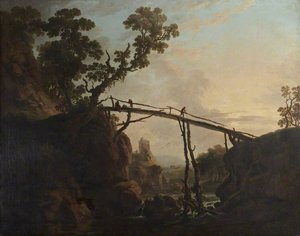
- Barret’s initial canvases frequently depicted idealized Italianate landscapes imbued with classical mythology.
- He drew inspiration from the philosophical explorations of Edmund Burke, specifically *A Philosophical Enquiry into the Origin of Our Ideas of the Sublime and Beautiful*. Burke's treatise profoundly shaped Barret’s artistic approach to landscape, emphasizing grandeur, emotion, and a preoccupation with capturing the sublime experience.
- Recognizing the established conventions of his time, Barret skillfully adapted engravings by artists like Claude Lorrain – reworking them to reflect Italian scenery – demonstrating a masterful grasp of stylistic precedents.
- Despite portraying landscapes rooted in Italy, there’s scant evidence that Barret ever undertook personal expeditions to explore the Italian peninsula himself.
Move to London and Rise to Prominence
- Driven by ambition and seeking greater artistic opportunities, Barret relocated to London in 1762. Almost immediately, he ascended to prominence as a leading landscape artist of his era.
- His exhibitions at the Society of Artists of Great Britain garnered considerable attention and secured lucrative patronage from influential collectors – bolstering his reputation and establishing him as a respected voice within the artistic community.
- A Pivotal Moment: In 1768, Barret played an instrumental role in the formation of the Royal Academy – a landmark event that fundamentally reshaped British art history. This decisive step signified a rejection of the established Salon system and championed a new model for artistic development centered on public support and scholarly discourse.
Artistic Style and Themes
- Barret’s stylistic evolution mirrored broader trends in 18th-century art, transitioning from overtly idealized Italianate landscapes to more nuanced depictions of English and Irish scenery.
- He undertook extensive travels throughout England, Wales, Scotland, and Ireland – meticulously documenting diverse landscapes and capturing their beauty with remarkable precision.
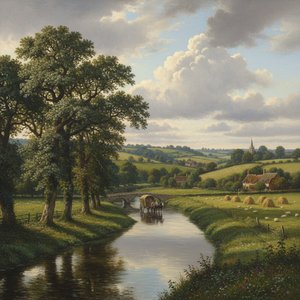
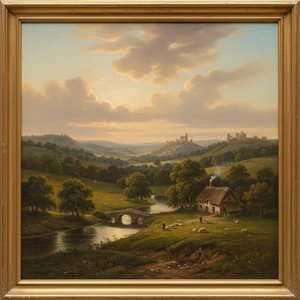
- Recurring motifs included tranquil vistas bathed in golden light, picturesque countryside scenes populated by shepherds and cottages, and dramatic representations of waterfalls—most notably *The Powerscourt Waterfall*, which became one of Barret’s most celebrated works.
- Furthermore, his paintings often incorporated figures within the landscape – adding a dimension of narrative and scale that resonated deeply with viewers of the period.
Later Life & Patronage
- Suffering from asthma—a condition that dogged him throughout his life—Barret moved to Westbourne Green in 1772 seeking respite from illness. Despite achieving considerable financial success, he was described as “feckless” with money and occasionally faced periods of hardship.
- A Loyal Benefactor: Edmund Burke remained a steadfast friend and provided Barret with invaluable support—both financially and professionally—sustaining him through challenging circumstances.
- In 1782, Burke championed Barret’s candidacy for the position of Master Painter of Chelsea Hospital – securing him this prestigious role until his untimely death in 1784. This appointment underscored Barret's standing within the artistic world and ensured a modest pension upon his passing.
- His legacy extends beyond individual paintings; Barret’s work represents a crucial transition in British landscape painting—marking a decisive departure from classical imitation toward a distinctly national aesthetic. Numerous masterpieces reside in prominent collections, including the National Gallery of Ireland and Yale Center for British Art – guaranteeing that Barret's contribution to art history will endure for generations to come.
Въпроси и отговори
Колко произведения на Йоан Баррет Старши са налични за разглеждане?
Можете да разгледате 122 произведения на изкуството творби на Йоан Баррет Старши на страницата Всички произведения на изкуството.
Мога ли да сортирам творбите на Йоан Баррет Старши по цвят?
Работите на Йоан Баррет Старши могат да бъдат разгледани по цвят на страницата Спектър по цвят на художника.
В кои художествени направления е работил/а Йоан Баррет Старши?
Работите на Йоан Баррет Старши могат да бъдат разгледани по художествени направления на страницата за Всички художествени направления на артиста.