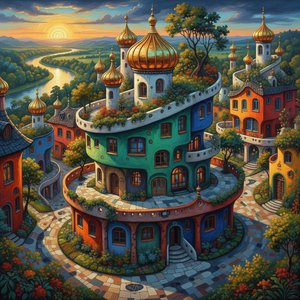
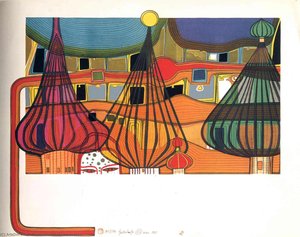
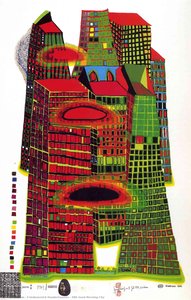
Фридерих Хунтервассер: Живот, посветен на хармония и цвят
- Роден: 15 декември 1928 г., Виена, Австрия
- Починал: 19 февруари 2000 г. (на 71 години), на борда на RMS Queen Elizabeth 2 в морето
- Пълно име: Фридрих Штоуасер (приел псевдонима Фридерих Регентдаг Дункелбрунт Хунтервассер)
Фридерих Хунтервассер, роден като Фридрих Штоуасер, е австрийски художник и архитект, прочут със своите уникални, органични дизайни, които предизвикаха утвърдените архитектурни норми. Самото му име отразява неговата философия – „Царство на мира, сто вода“, въплъщавайки визия за хармония с природата и отхвърляне на скованите структури.
Ранен живот и артистично развитие
- Трудни начала: Ранният живот на Хунтервассер е белязан от трудности, особено по време на нацистката епоха. Той и неговата еврейска майка едва успяват да избегнат преследването, представяйки се за християни. Този опит дълбоко оформи неговата световна представа и последващата му артистична експресия.
- <Артистично обучение и отхвърляне на конвенциите: Той прекарва кратък период в Академията по изкуства във Виена, но бързо отхвърля нейния строг академичен стил. Това неприяприятие подхрака неговото независимо творческо пътешествие, водещо до създаването на специфичен визуален език, характеризиращ се с жизнени цветове, спирални модели и аверсия към правите линии.
- <Пътувания и влияния: Обширните пътувания из Европа и Африка през 50-те години на миналия век излагат Хунтервассер на разнообразни култури и пейзажи, влияейки на неговото изкуство и затвърждавайки ангажимента му към органичните форми и природната красота. Във Флоренция той среща Рене Бро, което полага началото на доживотна дружба, оказала значително влияние върху артистичното му развитие.
- <Мотивът на спиралата: Спиралата се превръща в централен мотив в творбите на Хунтервассер, символизирайки растеж, хармония и цикличността на живота – директен контраст на строгата геометрия, която той е презирал.
Архитектурна философия и забележителни проекти
- <Отхвърляне на „традиционната архитектура“ в полза на „лечебната архитектура“: Хунтервассер разработва собствена концепция за архитектура, която нарича „лечебна архитектура“. Той вярва, че сградите трябва да бъдат в хармония с природата, насържавайки благополучието и креативността на своите обитатели.
- <Hundertwasserhaus (Виена): Може би най-известното му творение, Hundertwasserhaus е жизненост жилищна сграда във Виена, характеризираща се с вълнообразни етажи, неправилни прозорци и цветен фасад, украсен с дървета и растения. Тя е идеален пример за неговото отхвърляне на правите линии и стандартизирания дизайн.
- <Къщата с бутилки (Нова Зеландия): Разположена в Каварау Фолс, Нова Зеландия, Къщата с бутилки е уникална резиденция, построена с използването на рециклирани стъклени бутилки като строителен материал. Този проект демонстрира ангажимента на Хунтервассер към устойчивостта и иновативното използване на ресурсите.
- <Giardino Eden (Италия): Той придобива и реставрира Giardino Eden, включително Palazzo Villa delle Rose, в Италия, демонстрирайки поредно своята страст към съхраняването на исторически градини и интегрирането на архитектурата с природните пейзажи.
Екологичен активизъм и наследство
- <Защитник на екологичните каузи: Хунтервассер е страстен екологичен активист, който неуморно се бори за екологична осъзнатост и устойчиви практики. Той се застъпва за засаждане на дървета, създаване на зелени площи в градските райони и защита на водните ресурси.
- <„Правото на прозореца“: Ключов елемент от неговата архитектурна философия е „правото на прозорека“, което предоставя на жителите свободата да променят своите прозорци по своя преценка, насърчавайки индивидуалността и креативността в общото жилищно пространство.
- <Застъпничество за конституционна монархия: Хунтервассер изразява и силни политически възгледи, настоявайки за конституционна монархия в Австрия и критикувайки пренебрежението на Европейския съюз към регионалните особености.
- <Трайно влияние: Наследството на Фридерих Хунтервассер надхвърля неговите артистични творения. Той вдъхнови поколения художници, архитекти и еколози да приемат творчеството, да предизвикват конвенциите и да се стремят към по-хармонични отношения между човечеството и природата. Неговата работа продължава да резонира с публиката по целия свят, напомняйки ни за важността на красотата, индивидуалността и екологичната отговорност.