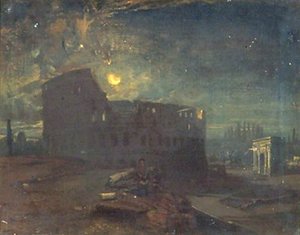
Frederick Lee Bridell: A Fleeting Glimpse of Brilliance
Frederick Lee Bridell, a name perhaps less familiar than those of Turner or Constable, nevertheless represents a poignant and remarkably brief chapter in 19th-century British landscape painting. Born William Bridle in Southampton in 1830, his career spanned only three decades, yet within that time he produced a body of work characterized by an extraordinary sensitivity to light, atmosphere, and the evocative beauty of Italian landscapes. His story is one of humble beginnings, nurtured talent, European inspiration, and a tragically premature end – a legacy now being rediscovered with growing appreciation. Bridell’s journey began not amidst the hallowed halls of art academies, but in the practical world of labor; initially as a pageboy, later finding work as a house painter. Even within these seemingly mundane tasks, however, his innate artistic inclination shone through, recognized and fostered by Henry Rose, a local engraver who identified and encouraged the young man’s burgeoning talent. This early grounding instilled in Bridell a meticulous attention to detail and an acute observational skill that would become hallmarks of his mature style. At eighteen, adopting the more distinguished name Frederick Lee Bridell, he created a portrait of Rose – an act signifying not merely artistic proficiency but also a deliberate assertion of identity and ambition.
From Apprenticeship to Italian Inspiration
The pivotal moment in Bridell’s formal training arrived with his apprenticeship under Edwin Holder, a picture dealer and restorer. This wasn't simply a transaction of skills; it was an immersion into the world of Old Masters – a carefully curated introduction to the techniques and philosophies of artists like Cuyp, Van der Velde, and Berchem. Copying their works provided Bridell with a foundational understanding of composition, color theory, and the masterful manipulation of light – elements he would later synthesize into his own unique artistic vision. Holder’s influence extended beyond technical instruction; he facilitated travel across Europe, particularly to Germany and the Tyrol, experiences that profoundly shaped Bridell's artistic sensibilities. The dramatic landscapes of the Tyrol, with their towering, snow-capped mountains and verdant valleys bathed in ethereal light, ignited a deep passion for expansive vistas and atmospheric effects. He was captivated by the way light played upon the rugged terrain, creating an illusion of depth and drama. However, it was Italy that truly captured Bridell’s imagination – a destination he would eventually call home. Arriving in Rome in 1858, he was immediately drawn to the city's ancient ruins, its sun-drenched countryside, and the vibrant artistic community that thrived within its walls. This period marked a decisive turning point; Bridell consciously shifted his focus away from portraiture and wholeheartedly embraced landscape painting as his primary subject matter.
Patronage, Recognition, and the Echoes of Turner
Bridell’s ascent within the art world wasn't solely predicated on innate talent; it was also significantly aided by fortunate patronage. James Wolff, a wealthy shipping magnate with an astute appreciation for art, became a devoted supporter, establishing a gallery at his opulent home to showcase Bridell’s work. This provided not only crucial financial stability but also invaluable exposure to a discerning audience – collectors, critics, and fellow artists alike. The artist's ability to capture the grandeur of Italian landscapes – scenes like *The Temple of Venus* and *The Colosseum by Moonlight* – resonated deeply with this elite circle. While undeniably influenced by J.M.W. Turner’s dramatic use of light and shadow, Bridell developed a distinct style characterized by meticulous detail, vibrant color palettes, and an almost photographic realism. He wasn't merely imitating Turner; he was building upon that legacy, infusing it with his own unique sensibility – a sensitivity to the nuances of light and atmosphere honed through years of observation. His paintings weren’t simply representations of picturesque views; they were carefully constructed narratives designed to evoke emotion and transport the viewer to another time and place. The recognition extended beyond the art world itself; Bridell enjoyed the favor of literary figures like Elizabeth Barrett Browning, who hosted a celebratory gathering in Rome honoring his wedding – a testament to the artist’s growing social standing and influence.
A Legacy Cut Short
Tragically, Frederick Lee Bridell’s promising career was abruptly curtailed by consumption – a debilitating illness that robbed him of his vitality. He succumbed to the disease in Kensington, London, in 1863 at the young age of thirty-three. His untimely death was met with profound sorrow and lamentation within artistic circles; Sir Theodore Martin, a prominent art critic, expressed deep regret over Bridell’s premature demise, recognizing the immense potential that had been tragically extinguished. Despite his brief life, Bridell left behind a remarkable body of work – approximately 80 paintings – that testifies to his skill, vision, and unwavering dedication to his craft. These landscapes offer a captivating glimpse into the romanticized vision of Italy prevalent in Victorian England, reflecting both the beauty of the natural world and the artist’s own unique artistic sensibilities.
Key Works & Enduring Appeal
- The Temple of Venus: A painting that Bridell hoped would stand alongside works by Turner and Claude Monet in the National Gallery, showcasing his ambition and technical mastery.
- The Colosseum at Rome by Moonlight: Held by Southampton Art Gallery, this work exemplifies Bridell’s masterful manipulation of light and shadow, capturing the romantic allure of ancient Rome under a silvery moon.
- In the Austrian Tyrol: Demonstrates his early fascination with mountainous landscapes and his ability to capture dynamic lighting effects within dramatic vistas.
- Wooded Landscape: A serene depiction showcasing Bridell’s talent for conveying the tranquility and beauty of nature.
Frederick Lee Bridell's paintings continue to resonate with audiences today, inviting us to experience the beauty and serenity of the Italian landscapes he so skillfully captured on canvas – a lasting testament to the brilliance of an artist whose life was tragically short but whose artistic legacy endures. His work serves as a poignant reminder that even fleeting moments of creative genius can leave an indelible mark on the history of art.