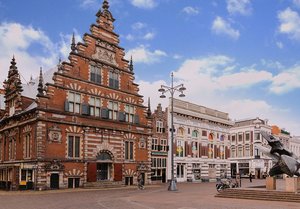
Портрет на Floris van Dyck

6-те най-известни картини на Floris van Dyck, селекция от галерията

Обновено Ноември 2026 · класирано според нашия индекс на популярност (търсения, посещения и поръчки за всяко произведение) · 6 творби на Floris van Dyck в нашия каталог

Накратко

От всички оригинали, оставени от Floris van Dyck, най-известният е Laid Table with Cheeses and Fruit (detail) (1615), който се намира в колекцията на Rijksmuseum, Амстердам. След тях непосредствено следват Laid Table with Cheese, Fruit and a Berkemeyer (1610) и Laid Table (1622). Нашият каталог съдържа 6 произведения на Floris van Dyck; галерията е съхранила 6-те най-обожавани от света, всяко от тях представен с неговата дата, неговия музей и неговата история.

1575 – 1651, Delft Най-много творби: Rijksmuseum

Топ 10-те картини на Floris van Dyck: изборът на галерията

1
Laid Table with Cheeses and Fruit (detail) (1615) на Floris van Dyck

Laid Table with Cheeses and Fruit (detail)

1615 · Oil · Rijksmuseum, Амстердам

In the quiet, contemplative realm of Dutch Golden Age still life, few artists captured the ephemeral beauty of a moment as exquisitely as Floris Claesz van Dijck. His work, Laid Table with Cheeses and Fruit (detail), serves as a breathtaking masterclass in the art of observation. At first glance, the viewer is greeted by a scene of deceptive simplicity: a table draped in white cloth, scattered with the bountiful offerings…

2
Laid Table with Cheese, Fruit and a Berkemeyer (1610) на Floris van Dyck

Laid Table with Cheese, Fruit and a Berkemeyer

1610 · Oil On Panel

The scene presents a banquet arrangement set upon a white tablecloth with intricate lace edges. A large wedge of cheese and a whole wheel of cheese occupy the central space, their surfaces showing a porous and crumbly texture. Beside them, a bowl contains pears and apples, while a cluster of grapes adds deep purple and green tones to the arrangement. A loaf of bread, various nuts, and a lemon are…

3
Laid Table (1622) на Floris van Dyck

Laid Table

1622 · Oil On Canvas · Национална галерия, Лондон

In this 1622 oil on canvas, Floris Claesz van Dijck invites us into a moment of stillness. The scene is a banquet still life, a genre he helped define, centered upon a table draped in a crisp white cloth. This linen provides a stark, clean stage for the objects arranged across it. We see a collection of fruits—apples, oranges, and grapes—resting alongside a loaf of bread and several rolls. There…

4
Still-Life (1610) на Floris van Dyck

Still-Life

1610 · Oil On Panel

The oil on panel painting presents a collection of food and vessels arranged upon a table. A red cloth drapes over the surface, partially covering a white tablecloth underneath. At the top center, a loaf of bread sits as a focal point. To its right, three apples are stacked vertically. In the lower left corner, a bowl contains several oranges. A glass pitcher and a wine glass, both containing liquid,…

5
Still-Life with Fruit, Nuts and Cheese (1613) на Floris van Dyck

Still-Life with Fruit, Nuts and Cheese

1613 · Oil On Panel · Frans Halsmuseum, Haren

In this 1613 composition, we find ourselves seated before a table laid with the humble yet profound offerings of a Dutch household. There is a stillness here, a moment caught in the soft, diffused light that defines the early seventeenth century. Apples are scattered with a natural, unstudied grace—some resting on the left, others tucked into the center, and a few more toward the right. They are accompanied by clusters…

Темите, които привличат погледа на Floris van Dyck

Четирите найчесто срещани теми в тези оригинални творби, всяка с най-добрия си пример.

Музеите, в които се съхраняват оригиналите на Floris van Dyck

3 музея, които притежават най-голям брой от картините на тази страница.

Музеи Град Творения на Floris van Dyck Картини от този списък
Rijksmuseum, АмстердамRijksmuseum Амстердам 2 Laid Table with Cheeses and Fruit (detail), Laid Table with Cheeses and Fruit
Национална галерия, ЛондонНационална галерия Лондон 1 Laid Table
Frans Halsmuseum, HarenFrans Halsmuseum Haren 1 Still-Life with Fruit, Nuts and Cheese

Floris van Dyck година по година: оригиналите, които дефинират всяка една

Изборът обхваща периода от 13 години, от 1610 до 1622, представяйки най-добрите оригинални творби на Floris van Dyck за всяка година.

Работи по години

Изберете година, за да разгледате оригиналите.

Въпроси на колекционерите относно картините на Floris van Dyck

С кое произведение е най-известен Floris van Dyck?Разкрийте отговора

Laid Table with Cheeses and Fruit (detail) (1615), Rijksmuseum, Амстердам. Следват Laid Table with Cheese, Fruit and a Berkemeyer (1610) и Laid Table (1622).

На каква възраст е бил Floris van Dyck, когато е създадена Laid Table with Cheeses and Fruit (detail)?Разкрийте отговора

40 години: Laid Table with Cheeses and Fruit (detail) е от 1615 г., а Floris van Dyck е роден/а в 1575.

Колко картини е оставил Floris van Dyck?Разкрийте отговора

В нашия каталог са представени 6 произведения на Floris van Dyck, датирани от 1610 до 1622.

В кои музеи са изложени шедьоврите на Floris van Dyck?Разкрийте отговора

Предимно в Rijksmuseum (Амстердам), Национална галерия (Лондон) и Frans Halsmuseum (Haren). В горната таблица с музеи са изброени всички тях.

В кои години Floris van Dyck е създал най-известните си произведения?Разкрийте отговора

В 1610: 2 от 6 произведенията на тази страница са създадени тогава, като Laid Table with Cheese, Fruit and a Berkemeyer са сред тях.

Кои са първата и последната известни оригинални творби на Floris van Dyck?Разкрийте отговора

На тази страница най-старата е Laid Table with Cheese, Fruit and a Berkemeyer (1610), а най-новата е Laid Table (1622).

Кои теми избира най-често Floris van Dyck?Разкрийте отговора

Wine glass (4), Grapes (4) и Bread (4), разпределени в 6 произведения на тази страница.

Коя техника използва най-често Floris van Dyck?Разкрийте отговора

Oil On Panel, за 3 от 6 произведения на тази страница.

Кои произведения на Floris van Dyck се съхраняват в Rijksmuseum?Разкрийте отговора

Laid Table with Cheeses and Fruit (detail) и Laid Table with Cheeses and Fruit: Rijksmuseum, Амстердам притежава 2 от произведенията на тази страница.

Floris van Dyck: живот и творчество

The Master of the Banquet Still Life

In the quiet, contemplative realm of the Dutch Golden Age, few artists captured the ephemeral beauty of a moment as exquisitely as Floris Claesz van Dijck. A pioneer of the still-life genre, his work serves as a breathtaking masterclass in the art of observation. Born in Delft, Netherlands, his early life and travels would eventually shape him into one of the most significant figures in the development of the banketje, or banquet still life. This specific subgenre, characterized by tables laid with bountiful offerings of cheese, fruit, nuts, and fine tableware, found its definitive voice through his meticulous brushwork.

Van Dijck's artistic journey was marked by a profound connection to the broader European art scene. Around 1600, he was documented in Rome, where he moved within influential circles, including a friendship with Joseph van Arpino. This period of exposure to Italian influences likely contributed to the sophisticated light and texture found in his later works. Upon returning to the Netherlands in 1606, he settled in Haarlem, a city that would become his primary home and the stage for his greatest achievements. In this vibrant artistic hub, he became an established presence, eventually joining the Haarlem Guild of St. Luke and serving as its dean.

A Symphony of Light and Texture

The true magic of Van Dijck’s oeuvre lies in his ability to breathe life into inanimate objects. He did not merely paint surfaces; he explored the very essence of matter. Through a masterful manipulation of illumination, he created a world where one can almost feel the velvety skin of an apple or the cool, reflective sheen of a polished pewter plate. Unlike the more aggressive shadows seen in the works of the Caravaggisti, Van Dijck employed a soft, diffused glow that sculpted his subjects, creating an illusion of depth and tactile reality.

His technical prowess allowed him to differentiate between various states of existence with extraordinary precision:

  • The crispness of a fruit's skin under the light.
  • The translucent delicacy of a fine wine glass.
  • The heavy, crumbly richness of a piece of cheese.
This level of descriptive detail transformed simple meal scenes into profound sensory experiences, inviting the viewer to linger on the beauty of the mundane.

Legacy and Historical Significance

Beyond his individual technical skill, Floris Claesz van Dijck holds a vital place in art history as an innovator. Alongside Nicolaes Gillis, he is credited with inventing the ontbijt, or breakfast and banquet display piece. His influence rippled through the Dutch Golden Age, shaping the trajectories of subsequent painters such as Pieter Claesz and Roelof Koets. He acted as a bridge between the stylized elegance of Mannerism and the robust naturalism of the Baroque period.

While his surviving works are remarkably rare—with fewer than twenty known pieces existing today—their impact remains monumental. Most of his masterpieces are now preserved in prestigious institutions like the Rijksmuseum and the National Gallery, serving as enduring testaments to a man who could turn a simple table setting into a profound exploration of light, order, and the fleeting nature of life.