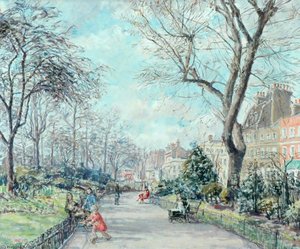
Портрет на Fairlie Harmar

18-те най-известни картини на Fairlie Harmar, селекция от галерията

Обновено Октомври 2026 · класирано според нашия индекс на популярност (търсения, посещения и поръчки за всяко произведение) · 18 творби на Fairlie Harmar в нашия каталог

Накратко

От всички оригинали, оставени от Fairlie Harmar, най-известният е After A Game Of Tennis (1923), който се намира в колекцията на Бирмингамски музей и художествена галерия, Бирмингам. След тях непосредствено следват St Giles, Oxford и The Bridge at Monxton (1916). Нашият каталог съдържа 18 произведения на Fairlie Harmar; галерията е съхранила 18-те най-обожавани от света, всяко от тях представен с неговата дата, неговия музей и неговата история.

1876 – 1945, Weymouth Най-много творби: Wolverhampton Art Gallery

Топ 10-те картини на Fairlie Harmar: изборът на галерията

Изборът на Fairlie Harmar продължава, от 11 до 18

Темите, които привличат погледа на Fairlie Harmar

Четирите найчесто срещани теми в тези оригинални творби, всяка с най-добрия си пример.

British painting 2 произведения

Музеите, в които се съхраняват оригиналите на Fairlie Harmar

5 музея, които притежават най-голям брой от картините на тази страница.

Музеи Град Творения на Fairlie Harmar Картини от този списък
Wolverhampton Art Gallery, УулвърхамптънWolverhampton Art Gallery Уулвърхамптън 2 Ships on the Thames, Flowers
Бирмингамски музей и художествена галерия, БирмингамБирмингамски музей и художествена галерия Бирмингам 1 After A Game Of Tennis
Walker Art Gallery, ЛивърпулWalker Art Gallery Ливърпул 1 The Bridge at Monxton
Ашмолеан Музей на изкуството и археологията, ОксфордАшмолеан Музей на изкуството и археологията Оксфорд 1 The Laurel Walk
Darlington Library, DarlingtonDarlington Library Darlington 1 Chibbet, Exmoor, Somerset

Fairlie Harmar десетилетие по десетилетие: оригиналът, който дефинира всяко от тях

Произведения по десетилетия

Изберете десетилетие, за да видите оригиналната творба, която го определя.

Въпроси на колекционерите относно картините на Fairlie Harmar

С кое произведение е най-известен Fairlie Harmar?Разкрийте отговора

After A Game Of Tennis (1923), Бирмингамски музей и художествена галерия, Бирмингам. Следват St Giles, Oxford и The Bridge at Monxton (1916).

На каква възраст е бил Fairlie Harmar, когато е създадена After A Game Of Tennis?Разкрийте отговора

47 години: After A Game Of Tennis е от 1923 г., а Fairlie Harmar е роден/а в 1876.

Кои са десетте най-известни картини на Fairlie Harmar?Разкрийте отговора

After A Game Of Tennis, St Giles, Oxford, The Bridge at Monxton, The Laurel Walk, Women's Royal Air Force Workers Drilling at Andover Aerodrome, Birthday Celebration, Garden Gate, L'Aveyron, Cheyne Walk Gardens и Sarson Farm, Early Spring. Класацията по-горе показва годината и музея за всяко от тях.

Колко картини е оставил Fairlie Harmar?Разкрийте отговора

В нашия каталог са представени 18 произведения на Fairlie Harmar, датирани от 1912 до 1938.

В кои музеи са изложени шедьоврите на Fairlie Harmar?Разкрийте отговора

Предимно в Wolverhampton Art Gallery (Уулвърхамптън), Бирмингамски музей и художествена галерия (Бирмингам) и Walker Art Gallery (Ливърпул). В горната таблица с музеи са изброени всички тях.

В кои години Fairlie Harmar е създал най-известните си произведения?Разкрийте отговора

В 1920s: 4 от 18 произведенията на тази страница са създадени тогава, като After A Game Of Tennis са сред тях.

Кои са първата и последната известни оригинални творби на Fairlie Harmar?Разкрийте отговора

На тази страница най-старата е The Laurel Walk (1912), а най-новата е Cheyne Walk Gardens (1938).

Кои произведения на Fairlie Harmar се съхраняват в Wolverhampton Art Gallery?Разкрийте отговора

Ships on the Thames и Flowers: Wolverhampton Art Gallery, Уулвърхамптън притежава 2 от произведенията на тази страница.

Fairlie Harmar: живот и творчество

Fairlie Harmar (1876–1945): A Painter of Quiet Landscapes and Intimate Portraits

Fairlie Harmar (1876-1945) was an English painter who quietly established herself as a significant figure in early 20th-century British art. Born in Weymouth, Dorset, she pursued her artistic ambitions at the Slade School of Fine Art under the tutelage of Henry Tonks and Fred Brown—a formative experience that instilled in her a meticulous approach to observation and representation. Her oeuvre is characterized by evocative landscapes imbued with subtle tonal harmonies alongside delicately rendered portraits capturing fleeting moments of human emotion. Harmar’s work offers a poignant glimpse into the domestic life and artistic sensibilities of her era, reflecting both Impressionistic influences and a deep connection to the natural world.
  • Early Life & Education: Fairlie Harmar's formative years were spent in Weymouth, Dorset, where she absorbed the beauty of the coastal landscape—a visual element that would permeate much of her subsequent artistic output. Her studies at the Slade School of Fine Art provided her with invaluable technical skills and intellectual grounding, fostering a disciplined eye for detail and composition.
  • Style & Technique: Harmar’s distinctive style leaned heavily towards Impressionism, prioritizing capturing atmospheric conditions and conveying subjective experience rather than striving for photographic accuracy. She skillfully employed muted palettes—often dominated by greens, blues, and browns—to evoke mood and atmosphere, layering brushstrokes to create textured surfaces that subtly shimmered with light.
  • Notable Works: Among Harmar’s most celebrated paintings are “A la Chaumière” (1928), a luminous depiction of a Parisian apartment interior bathed in diffused sunlight, and “St Giles, Oxford” (1920), which captures the serene grandeur of Oxford University Chapel. These pieces exemplify her ability to distill complex emotions into simple visual forms—a hallmark of her artistic vision.
  • Influences & Connections: Harmar’s artistic sensibilities were undoubtedly shaped by the broader intellectual currents of her time, including discussions surrounding Symbolism and Modernism. Her association with Ezra Pound and fellow artists fostered a stimulating environment for experimentation and critical engagement.
  • Legacy & Recognition: Fairlie Harmar's contribution to British art history is recognized through inclusion in prominent collections such as the Ashmolean Museum and the Royal Collection, where her paintings continue to inspire admiration for their understated beauty and psychological depth. Her work stands as a testament to the power of quiet observation and skillful execution—qualities that resonate powerfully with viewers today.

Exploring Landscapes & Domestic Interiors

Harmar’s landscapes frequently depict tranquil scenes of Dorset countryside, capturing the subtle shifts in light and color throughout the seasons. She meticulously rendered details—such as foliage textures and reflections on water surfaces—to convey a profound sense of place. Simultaneously, her portraits delve into the inner lives of her subjects, portraying them with sensitivity and empathy. These intimate depictions reveal nuanced expressions of emotion and capture fleeting moments of human connection. Her ability to translate psychological states onto canvas solidified her reputation as one of Britain’s foremost portrait artists.

The Royal Collection & Artistic Patronage

Fairlie Harmar’s artistic achievements gained considerable recognition when she secured a place within the Royal Collection—a prestigious honor bestowed upon artists whose work embodies excellence and reflects the spirit of their time. Notably, she smuggled in drawing paper to create sketches for a painting that was subsequently acquired by King George VI. This episode underscores Harmar's unwavering dedication to her craft and her commitment to artistic innovation.

Further Information & Resources

For more detailed biographical information and scholarly analyses of Fairlie Harmar’s life and work, consult the Ashmolean Museum Complete Illustrated Catalogue of Paintings (Art UK) and explore online resources dedicated to Modern British Art.