Ева Хес: живот и творчество
Eva Hesse - A Life Interrupted: The Poetic Vulnerability of Eva Hesse
Eva Hesse’s story is one of profound displacement and a relentless pursuit of artistic expression in the face of personal tragedy. Born in 1936 in Hamburg, Germany, her early life was irrevocably altered by the looming shadow of Nazism. Fleeing persecution, her family sought refuge in the United States in 1938, an act that would forever shape Hesse’s identity as a displaced person navigating two worlds. This sense of rootlessness, coupled with the emotional trauma of her parents' separation and her mother’s subsequent suicide when Hesse was just ten years old, became a subtle yet powerful undercurrent in her art—a haunting exploration of fragility, loss, and the ephemeral nature of existence. Her formal artistic training began at Pratt Institute in Brooklyn, followed by studies at Cooper Union and Yale University School of Art and Architecture, where she encountered the rigorous material explorations championed by Josef Albers. However, it was not within the confines of traditional painting that Hesse found her true voice; rather, she embarked on a path of radical experimentation with materials and form, ultimately becoming a pivotal figure in the development of Postminimalism and Eccentric Abstraction.
Early Life: Displacement and Trauma
Eva Hesse’s formative years were marked by upheaval and loss. Born to an Orthodox Jewish family in Hamburg during the rise of Nazi Germany, she experienced firsthand the terror of antisemitic persecution. Her parents, fearing for their safety, emigrated to Amsterdam in 1938, where they faced difficulties securing visas for emigration due to bureaucratic obstacles. The family was reunited shortly thereafter and moved to England before finally settling in New York City in 1939, sponsored by cousins who had already established themselves in the United States. Hesse’s Dutch aunt and uncle were deported to concentration camps during World War II—a harrowing experience that profoundly impacted her childhood psyche. Despite these hardships, Hesse’s father, a lawyer specializing in criminal law, instilled in her a strong intellectual curiosity and fostered an appreciation for learning. Her mother, a celebrated beauty who struggled with manic depression, provided Hesse with artistic inspiration but tragically succumbed to suicide when Hesse was just ten years old—a devastating event that left an indelible mark on her emotional landscape. This early trauma fueled Hesse’s lifelong preoccupation with themes of vulnerability, loss, and psychological exploration—themes that would permeate her artistic output throughout her career.
The Influence of Surrealism and Abstract Expressionism
Hesse’s artistic sensibilities were shaped by encounters with influential movements and artists during her formative years. She was drawn to the surrealist explorations of form and subconscious imagery championed by André Breton and Salvador Dalí, recognizing in their dreamlike visions a parallel to her own inner turmoil. Simultaneously, she absorbed the gestural energy and expressive freedom of Abstract Expressionism—particularly the work of Jackson Pollock and Willem de Kooning—finding inspiration in their bold brushstrokes and rejection of representational conventions. These influences instilled in Hesse a desire to transcend literal depiction and convey emotional resonance through unconventional materials and techniques. Her exposure to Hans Arp’s biomorphic sculptures—organic forms inspired by natural patterns—further broadened her artistic horizons, encouraging her to embrace spontaneity and experimentation. Jean Dubuffet's textured surfaces and rejection of academic standards similarly resonated with Hesse’s aesthetic sensibilities, prompting her to challenge established norms and forge her own distinctive path.
A Sculptural Revolution: Embracing Materiality
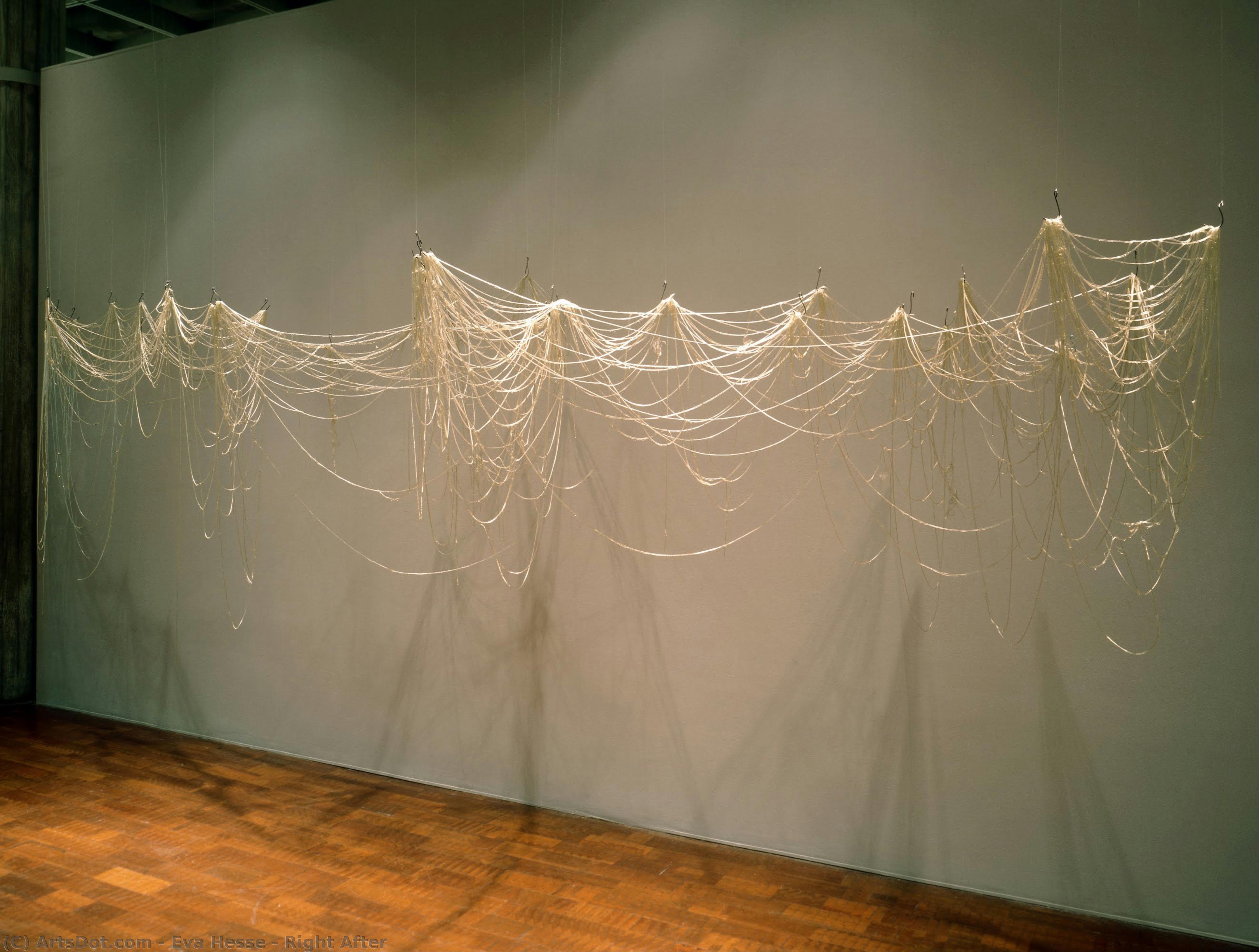
Initially drawn to abstract painting, Hesse quickly felt constrained by its limitations—the need for precise representation and adherence to formal rules. She yearned for a more visceral engagement with materiality—a way to imbue her sculptures with the raw immediacy of feeling and experience. This desire led her to explore a diverse range of artistic influences, mirroring her own journey toward self-discovery. Hesse’s breakthrough came during an exhibition featuring Louise Bourgeois’s psychologically charged sculptures—particularly Bourgeois’s exploration of feminine anxieties and repressed desires—which profoundly impacted Hesse's artistic vision. Bourgeois’s willingness to confront uncomfortable truths about the human condition inspired Hesse to embrace vulnerability as a central element of her art. Hesse decisively turned towards sculpture, rejecting Minimalism’s emphasis on geometric precision in favor of embracing unconventional materials like latex rubber, plastic, lead, polythene, copper, felt, chicken-wire, dirt, sawdust, and paper pulp—materials often associated with industrial production or everyday life. She wasn’t interested in their intended purpose; instead, she manipulated them in unexpected ways, brushing latex like paint to create layered surfaces, allowing materials to sag, droop, and defy conventional notions of form and stability.
Legacy: Postminimalism and Eccentric Abstraction
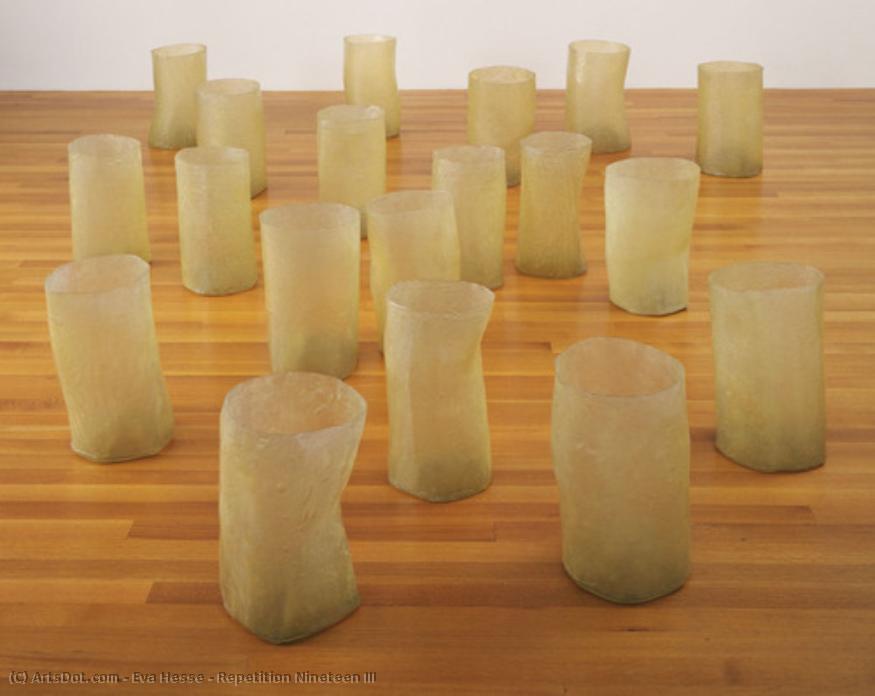
Hesse's sculptural innovations cemented her place as a pioneer in Postminimalism—a movement that rejected the austere aesthetic of Minimalism and embraced subjectivity, emotion, and organic irregularity. Her willingness to experiment with unconventional materials and techniques challenged established norms and paved the way for new forms of artistic expression. Hesse’s sculptures are characterized by repetitive forms arranged in grid structures or clustered arrangements, evoking a sense of both order and chaos—a deliberate juxtaposition that reflects the complexities of human experience. Works like Hang Up (1966), featuring painted circles suspended from cords, exemplify her exploration of absurdity and extreme feeling. The series Repetition Nineteen III (1968) showcases translucent fiberglass boxes containing phallic forms—a bold statement about sexuality and identity that defied the conventions of the time. Hesse’s sculptures continue to inspire artists today, demonstrating the transformative power of creativity to confront personal trauma and explore the depths of human emotion. Her legacy lies not only in her groundbreaking artistic achievements but also in her courageous embrace of vulnerability—a quality that resonates deeply with audiences worldwide. Eva Hesse died unexpectedly from cancer in 1970 at the age of thirty-four, leaving behind a body of work that remains influential and enigmatic—a testament to her enduring vision and unwavering commitment to artistic exploration.