Портрет на Ежен Янсон

Картини на Ежен Янсон: 36-те най-известни, през погледа на галерията

Обновено Ноември 2026 · класирано според нашия индекс на популярност (търсения, посещения и поръчки за всяко произведение) · 36 творби на Ежен Янсон в нашия каталог

Накратко

За галерията най-известната картина на Ежен Янсон е Naval Bathhouse (1907). Athletes (1912) и Ring gymnast I (1911) допълват трио, което всяко око разпознава. От 36 произведения на Ежен Янсон в нашия каталог, галерията представя 36 най-известните по-долу – всяко от тях е оригинал с посочен година, музей и това, което го прави уникално.

1862 – 1915, Якоб и Йоханес Най-много творби: Национален музей

Топ 10 карти на Ежен Янсон в галерията

1
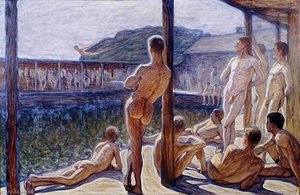
Naval Bathhouse (1907) от Ежен Янсон

Naval Bathhouse

1907 · Oil On Canvas

In this 1907 oil on canvas, a group of thirteen nude men is gathered around a body of water. The figures are positioned at varying depths within the frame, with several individuals in the foreground and others receding toward the middle ground. These men are depicted in states of repose or quiet movement, some looking out toward the water while others face one another. The setting is a pool or…

3
Ring gymnast I (1911) от Ежен Янсон

Ring gymnast I

1911 · Oil On Canvas · Национална галерия на Виктория, Мелбърн

In the evocative masterpiece Ring gymnast I, created in 1911, the Swedish painter Eugène Jansson invites us into a realm where physical prowess meets profound artistic expression. The painting captures a moment of breathtaking suspended animation, depicting a male figure performing an acrobatic feat, his body contorted with grace and strength as he hangs from a rope. This is not merely a study of anatomy, but a celebration of the…

4
Still Life with Onions (1882) от Ежен Янсон

Still Life with Onions

1882 · Национален музей, Стокхолм

Still Life with Onions is a somber and tactile oil painting that emphasizes volume and texture through a dramatic use of light and shadow. The composition is tightly cropped, focusing on three large onions and a ceramic vessel set against a dark, indistinct background. The color palette is earthy and muted, dominated by deep browns, ochres, burnt sienna, and creamy whites, with subtle blue accents appearing on the pottery.

5
Gripsholm castle (1881) от Ежен Янсон

Gripsholm castle

1881 · Oil On Canvas

The castle rises from the surface of Lake Mälaren, a heavy silhouette anchored to its island. Two towers, crowned with domes of differing heights, reach toward a pale sky. Below, a single boat drifts near the shore, its presence a quiet punctuation in the stillness of the water. A lone figure moves upon the island, a small presence amidst the stone and the expanse of the lake. The scene is…

6
Dusk (1890) от Ежен Янсон

Dusk

1890 · Oil

There is a specific, quiet moment when the daylight retreats from the streets of Stockholm, leaving behind a world painted in shades of indigo and cobalt. In this 1890 work, Dusk, we find ourselves observing the city at that precise transition. The sky is a deep, serene blue, casting a soft light over an urban landscape that feels both populated and profoundly solitary. Buildings rise in the background, their silhouettes…

7
Döbelns street (1889) от Ежен Янсон

Döbelns street

1889 · Oil

A small village street, unpaved and composed of dirt, stretches through the center of the composition. Two figures walk along this rustic path, their presence adding a sense of scale to the surrounding architecture. In the background, several houses line the horizon, their forms contributing to the quiet charm of the settlement. A single lamp post stands to one side, a silent sentinel in the stillness. Further back, a third…

8
In the Park (1887) от Ежен Янсон

In the Park

1887 · Oil

Painted in 1887, this work belongs to a period of transition in Swedish art. During this time, artists were moving toward more personal, psychological interpretations of the natural world. The piece reflects a quiet introspection, capturing a fleeting moment of peace within the landscape. It avoids the grandiosity of traditional landscape painting, opting instead for a grounded, intimate view of nature.

9
Stormy Night (1898) от Ежен Янсон

Stormy Night

In "Stormy Night" by Eugene Jansson, the composition is dominated by a vast, swirling sky that occupies the upper two-thirds of the canvas. This expansive celestial space creates a sense of movement and cosmic energy above the terrestrial elements. A large, dark, rectangular structure sits horizontally across the middle ground, its form softened by shadow and light. Below this structure, a series of glowing, white or pale yellow orbs represent…

10
Summer Night (1898) от Ежен Янсон

Summer Night

In Summer Night by Eugene Jansson, an urban night scene unfolds through a heavy, textured application of paint. The composition is dominated by a strong verticality that pulls the eye upward and inward. Two towering, dark building masses flank a narrow street, creating a deep, receding perspective that draws the viewer into the heart of the city. This one-point perspective looks down a narrow urban canyon, which creates a palpable…

Картини на Ежен Янсон, класирани от 11 до 36

Знаменитите картини на Ежен Янсон, период по период

Темите, които привличат погледа на Ежен Янсон

Четирите найчесто срещани теми в тези оригинални творби, всяка с най-добрия си пример.

Музеите, в които се съхраняват оригиналите на Ежен Янсон

5 музея, които притежават най-голям брой от картините на тази страница.

Музей Град Творения на Ежен Янсон Картини от този списък
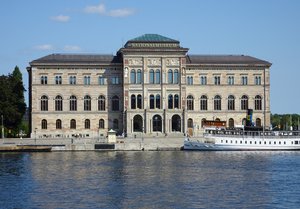
Национален музей, СтокхолмНационален музей Стокхолм 13 Athletes, Still Life with Onions, A Night in May
Национален музей за изкуство, архитектура и дизайн, ОслоНационален музей за изкуство, архитектура и дизайн Осло 2 Stormy Night, Summer Night
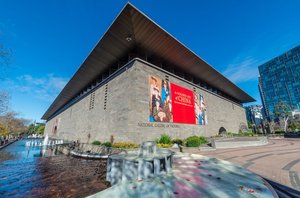
Национална галерия на Виктория, МелбърнНационална галерия на Виктория Мелбърн 1 Ring gymnast I
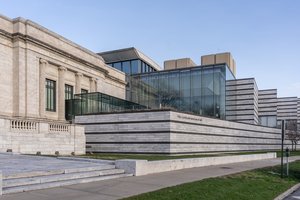
Cleveland Museum of Art, КливландCleveland Museum of Art Кливланд 1 Evening Mood-Lidingö
Детройтският институт за изкуства, ДетройтДетройтският институт за изкуства Детройт 1 Gymnast

Ежен Янсон, по една емблематична картина на десетилетие

Произведения по десетилетия

Изберете десетилетие, за да видите оригиналната творба, която го определя.

Картините на Ежен Янсон: отговорите на галерията

Коя картина на Ежен Янсон е най-известната от всички?Разкрийте отговора

Naval Bathhouse (1907). Следващите са Athletes (1912) и Ring gymnast I (1911).

На каква възраст беше Ежен Янсон, когато завърши Naval Bathhouse?Разкрийте отговора

45 години: Naval Bathhouse е от 1907 г., а Ежен Янсон е роден/а в 1862.

Кои са 10-те най-добри картини на Ежен Янсон?Разкрийте отговора

Naval Bathhouse, Athletes, Ring gymnast I, Still Life with Onions, Gripsholm castle, Dusk, Döbelns street, In the Park, Stormy Night и Summer Night. Класацията по-горе показва годината и музея за всяко от тях.

Колко произведения е създал Ежен Янсон?Разкрийте отговора

В нашия каталог са представени 36 произведения на Ежен Янсон, датирани от 1881 до 1914.

Къде са изложени най-известните оригинали на Ежен Янсон?Разкрийте отговора

Предимно в Национален музей (Стокхолм), Национален музей за изкуство, архитектура и дизайн (Осло) и Национална галерия на Виктория (Мелбърн). В горната таблица с музеи са изброени всички тях.

Кога Ежен Янсон създава най-известните си картини?Разкрийте отговора

В 1890s: 16 от 36 произведенията на тази страница са създадени тогава, като Dusk са сред тях.

Кои са най-ранните и най-късните известни творби на Ежен Янсон?Разкрийте отговора

На тази страница най-старата е Gripsholm castle (1881), а най-новата е Lifting Weights with One Arm (1914).

Към кои сюжети Ежен Янсон се връща най-често?Разкрийте отговора

Sky (16), Water (12) и Cityscape (7), разпределени в 36 произведения на тази страница.

С коя техника е работил най-често Ежен Янсон?Разкрийте отговора

Oil On Canvas, за 22 от 36 произведения на тази страница.

Кои оригинални творби на Ежен Янсон притежава Национален музей?Разкрийте отговора

Athletes, Still Life with Onions и A Night in May: Национален музей, Стокхолм притежава 13 от произведенията на тази страница.

Ежен Янсон: художникът

A Life Bathed in Blue: The Enigmatic World of Eugène Jansson

Eugène Fredrik Jansson, born in Stockholm in 1862, was a Swedish painter whose work occupies a unique and haunting space within the landscape of late 19th and early 20th-century art. He wasn’t merely documenting his surroundings; he was translating an internal emotional state onto canvas, one steeped in melancholy, longing, and a profound sensitivity to light and atmosphere. Jansson's life, marked by chronic illness and a quiet introspection, profoundly shaped his artistic vision, leading him to become known as “Blåmålaren” – the Blue Painter – for his evocative nocturnal scenes of Stockholm. His story is not one of flamboyant social circles or dramatic breakthroughs, but rather a slow, deliberate exploration of color, form, and the human condition, culminating in a body of work that continues to resonate with its quiet power.

Early Years and Artistic Formation

Jansson’s upbringing was relatively modest, his parents striving for cultural enrichment despite their position between the working class and lower middle class. This instilled in him an early appreciation for both art and music – he received piano lessons as a child. However, at fourteen, scarlet fever struck, leaving him with lasting health problems: impaired eyesight, hearing difficulties, and chronic kidney issues. These physical limitations undoubtedly contributed to his withdrawal from the bustling world and fostered a more internal focus. He initially studied at the Tekniska Skolan (now Konstfack) under Edvard Perséus, a portrait painter who provided foundational training. While accepted into the Royal Swedish Academy of Arts’ antique school in 1881, financial constraints prevented him from joining his peers in Paris, then the epicenter of artistic innovation. This meant Stockholm itself became his primary subject matter, and he remained largely within its confines for much of his career. His early works reflect this – assisting Perséus with portraits and experimenting with still lifes before discovering his signature style.

The Nocturnes: Painting the Soul of a City

It was in the 1890s that Jansson truly found his voice, embarking on a series of night scenes that would define his reputation. These weren’t simply depictions of Stockholm at night; they were explorations of mood and emotion rendered through an almost monochromatic palette dominated by shades of blue. He painted views over Riddarfjärden bay, as seen from his home on Södermalm, and streetscapes imbued with a sense of stillness and solitude. The brushstrokes are visible, expressive, contributing to the overall feeling of atmospheric haze and dreamlike quality. These paintings weren’t about precise representation; they were about capturing the *feeling* of being in Stockholm at night – the quiet hum of the city, the play of light on water, the sense of isolation amidst urban life. The influence of Impressionism is present, but Jansson pushed beyond its focus on fleeting moments of light to create something more deeply psychological. He wasn’t merely observing; he was internalizing and re-presenting his emotional response to the city around him.

A Shift in Focus: The Male Nudes

Around 1904, Jansson's artistic focus underwent a significant transformation. While continuing to paint nocturnes, he began to create a series of male nudes, often depicted in intimate settings or with symbolic objects. These paintings are remarkable for their frankness and sensitivity, challenging the conventions of the time. They weren’t overtly erotic but rather explorations of beauty, vulnerability, and the human form. The exact reasons behind this shift remain debated, but it's likely a combination of personal exploration and a growing interest in symbolism and psychological themes. These nudes were often painted in private, away from public scrutiny, reflecting a deeply personal artistic endeavor. They are characterized by soft lighting, delicate modeling, and an overall sense of quiet contemplation.

Legacy and Historical Significance

Eugène Jansson died in 1915, leaving behind a relatively small but profoundly impactful body of work. He didn’t achieve widespread recognition during his lifetime, remaining somewhat outside the mainstream art world. However, his paintings have gained increasing appreciation in recent decades, recognized for their unique aesthetic and psychological depth. His influence can be seen in later Scandinavian artists who explored themes of isolation, melancholy, and the beauty of the natural world. He stands as a testament to the power of individual vision – an artist who dared to paint not what he saw, but what he *felt*, creating a hauntingly beautiful and enduring legacy that continues to captivate audiences today. His paintings are more than just landscapes or portraits; they are windows into the soul, bathed in the evocative light of a Stockholm night.