Портрет на Elliott Daingerfield

49-те най-известни картини на Elliott Daingerfield, всяка от които е уникална

Обновено Ноември 2026 · класирано според нашия индекс на популярност (търсения, посещения и поръчки за всяко произведение) · 57 творби на Elliott Daingerfield в нашия каталог

Накратко

Grand Canyon, Moonlight (1913) е картината на Elliott Daingerfield, която привлича най-много погледи. След това погледът се насочва към Monk Smelling a Bottle of Wine (1880) и Sunset Hour (1893). Сред 57 произведения на Elliott Daingerfield в нашия каталог, тези 49 са най-известните – всяко от тях е уникален оригинал, представен с годината на създаване, музея и причината за неговата вечност.

1859 – 1932, Harpers Ferry Най-много творби: The Johnson Collection

Топ 10 картини на Elliott Daingerfield, през погледа на галерията

1
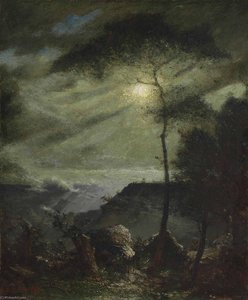
Grand Canyon, Moonlight (1913) на Elliott Daingerfield

Grand Canyon, Moonlight

1913 · Oil On Canvas

Grand Canyon, Moonlight is a work by Elliott Daingerfield. Created in 1913, the painting emerged during a period of significant travel for the artist, who explored the American West in 1911 and 1913. This specific piece is one of seven paintings the artist produced of the Grand Canyon.

2
Monk Smelling a Bottle of Wine (1880) на Elliott Daingerfield

Monk Smelling a Bottle of Wine

1880 · Oil On Canvas

In "Monk Smelling a Bottle of Wine" by Elliott Daingerfield, a young man dressed in the robes of a monk or friar occupies the center of the frame. He is positioned within a dark, shadowy setting that obscures the background. The figure holds several bottles, appearing to drink from one as he engages in a solitary activity. The composition remains relatively simple, focusing the viewer's attention on the man and…

3
Sunset Hour (1893) на Elliott Daingerfield

Sunset Hour

1893 · Oil On Canvas · The Johnson Collection, Spartanburg County

A seated woman and a small child occupy the foreground of this 1893 oil on canvas, sheltered beneath the heavy, spreading canopy of a dark tree. The composition centers on their stillness, a moment of rest amidst a rural landscape. Earthy tones dominate the scene, from the deep greens of the meadow to the muted browns and greys of the figures' clothing. On the horizon, a striking red sun provides…

Знаменитите картини на Elliott Daingerfield, номера от 11 до 49

Темите, които привличат погледа на Elliott Daingerfield

Четирите найчесто срещани теми в тези оригинални творби, всяка с най-добрия си пример.

Rural landscape 2 произведения

Музеите, в които се съхраняват оригиналите на Elliott Daingerfield

8 музея, които притежават най-голям брой от картините на тази страница.

Музеи Град Творения на Elliott Daingerfield Картини от този списък
The Johnson Collection Spartanburg County 3 Sunset Hour, Springtime, Troubled Waters
The Mint Museum, CharlotteThe Mint Museum Charlotte 3 Call of the Winds, Moonlight, Cornelia Vanderbilt
Smithsonian American Art Museum, Вашингтон, окръг КолумбияSmithsonian American Art Museum Вашингтон, окръг Колумбия 2 Bringing home the new born lamb, Return from the Farm
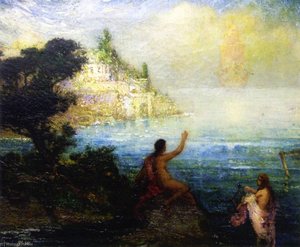
Morris Museum of Art Location, AugustaMorris Museum of Art Location Augusta 2 The Genius of the Canyon, A Fantasy
High Museum of Art, АтлантаHigh Museum of Art Атланта 1 Tanagra
Метрополитън Музей на изкуствата, Ню ЙоркМетрополитън Музей на изкуствата Ню Йорк 1 Slumbering Fog
Mint Museums, CharlotteMint Museums Charlotte 1 Landscape with Green Mountain
Reading Public Museum, РейдингReading Public Museum Рейдинг 1 Mountain Country

Elliott Daingerfield през десетилетията: един уникален оригинал за всяко

Произведения по десетилетия

Изберете десетилетие, за да видите оригиналната творба, която го определя.

Картини на Elliott Daingerfield: въпроси към галерията

Кое е най-известното произведение на Elliott Daingerfield?Разкрийте отговора

Grand Canyon, Moonlight (1913). Следващите са Monk Smelling a Bottle of Wine (1880) и Sunset Hour (1893).

На каква възраст Elliott Daingerfield създава Grand Canyon, Moonlight?Разкрийте отговора

54 години: Grand Canyon, Moonlight е от 1913 г., а Elliott Daingerfield е роден/а в 1859.

Кои са десетте най-известни картини на Elliott Daingerfield?Разкрийте отговора

Grand Canyon, Moonlight, Monk Smelling a Bottle of Wine, Sunset Hour, Shepherdess, Flowers, Bringing home the new born lamb, The Drover, Home and Harvest, My Lady Rhododendron и Tanagra. Класацията по-горе показва годината и музея за всяко от тях.

Колко са известните творби на Elliott Daingerfield?Разкрийте отговора

В нашия каталог са представени 57 произведения на Elliott Daingerfield, датирани от 1880 до 1927.

Къде могат да се видят най-известните оригинали на Elliott Daingerfield?Разкрийте отговора

Предимно в The Johnson Collection (Spartanburg County), The Mint Museum (Charlotte) и Smithsonian American Art Museum (Вашингтон, окръг Колумбия). В горната таблица с музеи са изброени всички тях.

През кой период Elliott Daingerfield създава най-известните си картини?Разкрийте отговора

В 1910s: 13 от 49 произведенията на тази страница са създадени тогава, като Grand Canyon, Moonlight са сред тях.

Коя е най-ранната и коя е най-късната известна картина на Elliott Daingerfield?Разкрийте отговора

На тази страница най-старата е Monk Smelling a Bottle of Wine (1880), а най-новата е Springtime (1927).

С какви материали най-често е живописувал Elliott Daingerfield?Разкрийте отговора

Oil On Canvas, за 3 от 49 произведения на тази страница.

Какви оригинални творби на Elliott Daingerfield мога да видя в The Johnson Collection?Разкрийте отговора

Sunset Hour, Springtime и Troubled Waters: The Johnson Collection, Spartanburg County притежава 3 от произведенията на тази страница.

Elliott Daingerfield: портрет на художника

The Visionary Spirit of Elliott Daingerfield

Elliott Daingerfield stands as one of North Carolina’s most celebrated and evocative artists, a painter whose work bridged the gap between the tangible beauty of the American landscape and the profound depths of spiritual symbolism. Born in 1859 in Harpers Ferry, West Virginia, to a Confederate officer, Daingerfield’s early life was shaped by the rugged landscapes of his youth in Fayetteville, North Carolina. This deep-seated connection to the natural world would later become the foundation of his artistic language, providing him with an endless reservoir of inspiration for his sweeping vistas and luminous compositions.

His journey into the heart of the American art establishment began at the age of twenty-one when he moved to New York City. It was here that Daingerfield’s formal training took root under the guidance of Walter Satterlee, an apprenticeship that not only introduced him to the delicate nuances of still life painting but also placed him within a vibrant circle of influential masters. The shadows and light of his early studies were profoundly transformed by his encounters with titans such as George Inness and Albert Pinkham Ryder. These luminaries, along with the burgeoning influence of European Symbolism which he encountered during his travels abroad around 1897, guided him toward a visionary style. His work began to transcend mere representation, moving toward an expressive mode where color palettes became more luminous and brushwork more meticulous, designed to convey unseen spiritual truths.

A Legacy of Light and Devotion

As his career matured, Daingerfield achieved significant recognition within the prestigious National Academy of Design, ascending from an associate member in 1902 to full membership by 1906. This era marked his emergence as a master of religious and monumental art. His ability to weave narrative and emotion into large-scale works was perhaps most brilliantly demonstrated in his impactful commissions for sacred spaces, most notably the monumental mural adorning Saint Mary the Virgin Church in New York City. In these works, Daingerfield utilized a dramatic interplay of light and shadow to tell stories of faith, much like his more intimate pieces such as Monk Smelling a Bottle of Wine, which explores the delicate tension between indulgence and devotion.

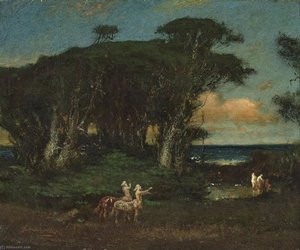
Beyond the confines of religious iconography, Daingerfield’s fascination with the grandeur of the American wilderness led him to remarkable heights. His travels to the American West in 1911 and 1913 resulted in a series of breathtaking paintings of the Grand Canyon, where he captured the geological majesty of the landscape through a Romantic lens. Whether depicting a moonlit forest in A Fantasy or the melancholic beauty of a young girl in Shepherdess, his oeuvre is characterized by an impasto texture and an evocative mood that invites the viewer into a dreamlike state.

Daingerfield’s contribution to American art extends beyond the canvas; he was also a dedicated scholar and biographer, documenting the lives of his contemporaries like George Inness and Ralph Albert Blakelock. His life, marked by both personal tragedy and immense professional triumph, concluded in Manhattan in 1932. Today, his legacy remains etched in the landscapes of North Carolina and the halls of museums worldwide, reminding us of a time when art served as a profound window into the soul of nature.