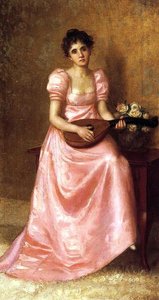
1


Обновено Ноември 2026 · класирано според нашия индекс на популярност (търсения, посещения и поръчки за всяко произведение) · 20 творби на De Scott Evans в нашия каталог
Накратко
Free Sample, Take One (1891) е картината на De Scott Evans, която привлича най-много погледи; оригиналът се намира в Дейтон Арти Институт, Дейтон. След това погледът се насочва към Free Sample / Try One (1885) и Try One (1885). Сред 20 произведения на De Scott Evans в нашия каталог, тези 19 са най-известните – всяко от тях е уникален оригинал, представен с годината на създаване, музея и причината за неговата вечност.


Четирите найчесто срещани теми в тези оригинални творби, всяка с най-добрия си пример.
8 музея, които притежават най-голям брой от картините на тази страница.
| Музей | Град | Творения на De Scott Evans | Картини от този списък |
|---|---|---|---|
 Художествена галерия на Йейлския университет |
Ню Хейвън | 2 | Free Sample / Try One, Two Hanging Apple |
 Дейтон Арти Институт |
Дейтон | 1 | Free Sample, Take One |
 Birmingham Museum of Art |
Бирмингъм | 1 | Try One |
 Crystal Bridges Museum of American Art |
Бентовил | 1 | Daisies |
 Columbus Museum of Art |
Колумбс | 1 | A New Variety, Try One |
 Indianapolis Museum of Art |
Индианаполис | 1 | Scene on the Island of Jamaica |
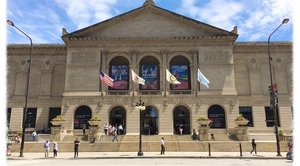 Art Institute of Chicago |
Чикаго | 1 | The Irish Question |
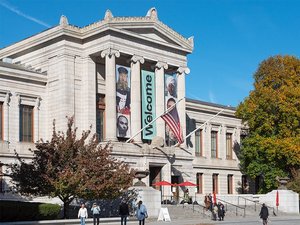 Музей на изкуствата във Бостън |
Бостън | 1 | A New Variety, Try One |
Дългата кариера от 18 години, от 1881 до 1898: най-известните оригинални творби на De Scott Evans, представени година по година.
Изберете година, за да разгледате оригиналите.
Free Sample, Take One (1891), Дейтон Арти Институт, Дейтон. Следват Free Sample / Try One (1885) и Try One (1885).
44 години: Free Sample, Take One е от 1891 г., а De Scott Evans е роден/а в 1847.
Free Sample, Take One, Free Sample / Try One, Try One, Daisies, Grandfather's Clock, Two Hanging Apple, A New Variety, Try One, The Connoisseur, A new variety try one и Scene on the Island of Jamaica. Класацията по-горе показва годината и музея за всяко от тях.
В нашия каталог са представени 20 произведения на De Scott Evans, датирани от 1881 до 1898.
Предимно в Художествена галерия на Йейлския университет (Ню Хейвън), Дейтон Арти Институт (Дейтон) и Birmingham Museum of Art (Бирмингъм). В горната таблица с музеи са изброени всички тях.
В 1885: 3 от 19 произведенията на тази страница са създадени тогава, като Free Sample / Try One са сред тях.
На тази страница най-старата е Grandfather's Clock (1881), а най-новата е A new variety try one (1898).
Free Sample / Try One и Two Hanging Apple: Художествена галерия на Йейлския университет, Ню Хейвън притежава 2 от произведенията на тази страница.
De Scott Evans remains one of the most captivating enigmas in the annals of nineteenth-century American art, a painter whose true mastery was only fully realized through the ghostly echoes of his posthumous reputation. Born David Scott Evans in 1847 in the quiet landscape of Boston, Indiana, his life was marked by a profound dedication to the pursuit of visual truth. While he spent much of his career navigating the academic circles of Ohio and New York, it is his ability to manipulate the very fabric of perception that has secured his place in art history. Evans did not merely paint objects; he breathed a deceptive vitality into them, creating works so convincingly three-dimensional that they seemed to defy the flat confines of the canvas.
His artistic journey was shaped by a rigorous classical foundation, beginning with his studies under Professor Adrian Beaugureau at Miami University and later in Cincinnati. This early immersion in the principles of meticulous observation provided the technical scaffolding for what would become his signature style. However, it was his transformative sojourn to Paris in the late 1870s that truly refined his vision. Studying under the legendary Adolphe William Bouguereau, Evans absorbed the essence of the Beaux Arts tradition—a method defined by an unwavering commitment to anatomical precision and idealized beauty. This Parisian influence instilled in him a reverence for light and texture, allowing him to later execute trompe l'oeil works that could trick even the most discerning eye.
During his lifetime, Evans was primarily celebrated as a painter of genre scenes and elegant portraits, capturing the refined domesticity and fashionable grace of the Victorian era. He possessed a remarkable ability to render the soft textures of fabric and the subtle glow of skin, making him a sought-after chronicler of contemporary life. Yet, it is in the realm of trompe l'oeil—the art of "deceiving the eye"—where his most enduring magic resides. Decades after his tragic death, scholars began to attribute a series of breathtaking still lifes to him, works that utilized hyper-realistic detail to create startling illusions.
These masterpieces often featured mundane objects elevated to the level of high drama through sheer technical prowess. One might encounter a cupboard scene where almonds appear trapped behind splintered glass, or a composition where a simple string of pears seems to extend beyond the frame and attach itself to a physical nail on the wall. His skill in rendering the grain of weathered wood, the translucency of fruit, and the delicate sheen of paper was nothing short of miraculous. This mastery of texture and depth allowed him to play with the viewer's sense of reality, turning a simple viewing experience into a playful, intellectual game of perception.
The life of De Scott Evans was cut short by a maritime catastrophe that left a void in the American art world. In July 1898, while traveling aboard the ocean liner La Bourgogne bound for Paris, Evans and his three beloved daughters were lost when the ship collided with another vessel and sank in the North Atlantic. This sudden, violent end to his life added a layer of melancholy to his legacy, leaving behind a body of work that continues to haunt and delight collectors. Because he frequently utilized various pseudonyms—including D. Scott Evans, S. S. David, and Stanley S. David—his true identity was long obscured, much like the illusions he so expertly crafted.
Today, the significance of Evans lies in his unique position at the intersection of academic realism and playful deception. He stands as a bridge between the formal traditions of the nineteenth century and a more modern fascination with the boundaries of representation. His work serves as a poignant reminder that art possesses the power to transcend the physical plane, inviting us to question not only what we see, but how we perceive the very world around us. Through his rediscovered brilliance, Evans continues to command our attention, proving that even in death, an artist's vision can remain vibrantly, deceptively alive.