Накратко
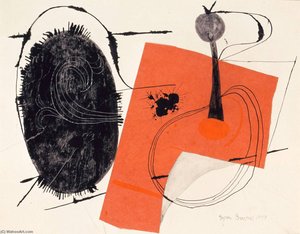
От всички оригинални произведения, оставени от Byron Browne, най-известната е Abstract Collage (1933). След тях непосредствено следват Untitled, from the portfolio American Abstract Artists (1937) и Head (1938). Нашият каталог съдържа 11 произведения на Byron Browne; галерията е съхранила 9-те най-обожавани от света, всяко от тях представен с неговата дата, неговия музей и неговата история.
Топ 10-те картини на Byron Browne: изборът на галерията
Музеите, в които се съхраняват оригиналите на Byron Browne
Музеят, който притежава най-голям брой от картините на тази страница.
| Музеи | Град | Творения на Byron Browne | Картини от този списък |
|---|---|---|---|
| Dublin City | 1 | Head |
Byron Browne десетилетие по десетилетие: оригиналът, който дефинира всяко от тях
Произведения по десетилетия
Изберете десетилетие, за да видите оригиналната творба, която го определя.
Въпроси на колекционерите относно картините на Byron Browne
С кое произведение е най-известен Byron Browne?Разкрийте отговора
Abstract Collage (1933). Следващите са Untitled, from the portfolio American Abstract Artists (1937) и Head (1938).
На каква възраст е бил Byron Browne, когато е създадена Abstract Collage?Разкрийте отговора
26 години: Abstract Collage е от 1933 г., а Byron Browne е роден/а в 1907.
Колко картини е оставил Byron Browne?Разкрийте отговора
В нашия каталог са представени 11 произведения на Byron Browne, датирани от 1933 до 1958.
В кои музеи са изложени шедьоврите на Byron Browne?Разкрийте отговора
Предимно в Национална галерия в Ирландия (Dublin City). В горната таблица с музеи са изброени всички тях.
В кои години Byron Browne е създал най-известните си произведения?Разкрийте отговора
В 1930s: 3 от 9 произведенията на тази страница са създадени тогава, като Abstract Collage са сред тях.
Кои са първата и последната известни оригинални творби на Byron Browne?Разкрийте отговора
На тази страница най-старата е Abstract Collage (1933), а най-новата е (Seated Nude) (1958).
Byron Browne: живот и творчество
Byron Browne: Pioneer of American Abstract Art
Byron Browne (1907 – 1961) stands as a cornerstone figure in the burgeoning field of American Abstract Expressionism, recognized primarily for his contributions to mural commissions and collaborations with Hans Hofmann. Born in London, England, Browne’s artistic journey began amidst the vibrant Pre-Raphaelite movement, profoundly shaping his aesthetic sensibilities before he embraced the radical experimentation of postwar abstraction. His formative years were marked by exposure to influential artists like Ford Madox Brown, whose visionary approach to Victorian social commentary instilled a deep appreciation for conveying complex ideas through visual language.- Early Influences: Browne’s initial artistic explorations centered around landscapes and portraits, reflecting the stylistic conventions of his time. However, he quickly gravitated toward Hofmann's teachings at Provincetown Art Colony, where he honed his skills in color theory and compositional techniques – principles that would become integral to his distinctive style.
- Provincetown Collaboration: Browne’s partnership with Hofmann proved pivotal in establishing him as a leader within the American Abstract Artists Group (AAA). Together, they tackled ambitious mural projects for public spaces across the United States, notably the “Massachusetts State House Mural” and “The Metropolitan Opera House Mural,” demonstrating a commitment to large-scale artistic endeavors that pushed boundaries of expression.
- Distinctive Style: Browne’s paintings are characterized by layered textures, bold color palettes—often dominated by rosy hues reminiscent of Hofmann's favored shades—and dynamic brushstrokes. He skillfully blended elements of Surrealism and Cubism, creating compositions that evoke emotional resonance while simultaneously engaging with geometric forms.
- Notable Works: Among his celebrated paintings are “Jester,” a captivating depiction of expressive gesture and color harmony; “Abstract Collage,” showcasing meticulous layering and textural interplay; and “Rosy Brown Hues,” which exemplifies Browne’s masterful manipulation of chromatic hues to convey mood and atmosphere. These pieces continue to inspire admiration for their artistic innovation and enduring beauty.


