Портрет на Bob Brighton

36-те най-известни картини на Bob Brighton, селекция от галерията

Обновено Ноември 2026 · класирано според нашия индекс на популярност (търсения, посещения и поръчки за всяко произведение) · 36 творби на Bob Brighton в нашия каталог

Накратко

От всички оригинали, оставени от Bob Brighton, най-известният е Squares on Copper (2009), който се намира в колекцията на Централна библиотека Шефилд, Шефилд. След тях непосредствено следват Turquoise Squares (2009) и Small Squares 3 (2009). Нашият каталог съдържа 36 произведения на Bob Brighton; галерията е съхранила 36-те най-обожавани от света, всяко от тях представен с неговата дата, неговия музей и неговата история.

1936 – 2017 Abstract art Най-много творби: Централна библиотека Шефилд

Топ 10-те картини на Bob Brighton: изборът на галерията

1
Squares on Copper (2009) на Bob Brighton

Squares on Copper

The painting Squares on Copper by Bob Brighton is a thought-provoking artwork that showcases the artist's unique style and technique. Created in 2009, this painting features three squares of different colors, each with its own distinct character. The use of color and composition in this piece is reminiscent of the works of other notable artists, such as Imre Von Santho, who was known for his captivating portraits like Jabot. Background…

2
Turquoise Squares (2009) на Bob Brighton

Turquoise Squares

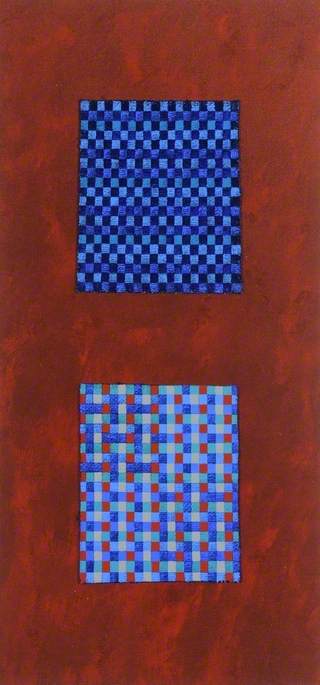
In the captivating realm of abstract expressionism, few works achieve the hypnotic clarity found in Bob Brighton’s Turquoise Squares. Created in 2009, this piece serves as a masterclass in visual rhythm, inviting the viewer into a meticulously structured world where color and form exist in perfect equilibrium. The painting presents a mesmerizing checkerboard of blue squares set against a lush, verdant background. Each square is delicately framed by a crisp…

3
Small Squares 3 (2009) на Bob Brighton

Small Squares 3

In the quiet intersection of structural precision and chromatic vitality lies Small Squares 3, a mesmerizing exploration of form by the late British master Bob Brighton. To encounter this piece is to step into a world where chaos is meticulously tamed through the language of geometry. Created in 2009, this work serves as a profound testament to Brighton’s lifelong pursuit of visual rhythm. The painting does not merely present shapes;…

Изборът на Bob Brighton продължава, от 11 до 36

114.4.96–18.4.96 (panel 4 of 4) (2005) на Bob Brighton4.4.96–18.4.96 (panel 4 of 4)2005 · Chelsea And Westminster Hospital 12579 (2005) на Bob Brighton5792005 · Централна библиотека Шефилд 13Squares on Black (2009) на Bob BrightonSquares on Black2009 · Централна библиотека Шефилд 14Purple Squares on Brown (2009) на Bob BrightonPurple Squares on Brown2009 · Централна библиотека Шефилд 15Squares on Terracotta (2009) на Bob BrightonSquares on Terracotta2009 · Централна библиотека Шефилд 16Yellow Blue 3 (2009) на Bob BrightonYellow Blue 32009 · Централна библиотека Шефилд 17Yellow Blue 2 (2009) на Bob BrightonYellow Blue 22009 · Централна библиотека Шефилд 18Yellow Blue 1 (2009) на Bob BrightonYellow Blue 12009 · Централна библиотека Шефилд 19Small Squares 1 (2009) на Bob BrightonSmall Squares 12009 · Централна библиотека Шефилд 20Orange Multi Coloured Squares (2009) на Bob BrightonOrange Multi Coloured Squares2009 · Централна библиотека Шефилд 21Small Squares 5 (2009) на Bob BrightonSmall Squares 52009 · Централна библиотека Шефилд 22Orange Blocks (2009) на Bob BrightonOrange Blocks2009 · Централна библиотека Шефилд 23Small Squares 2 (2009) на Bob BrightonSmall Squares 22009 · Централна библиотека Шефилд 24Large Squares Two (polyptych) на Bob BrightonLarge Squares Two (polyptych) 25Large Squares One (polyptych) на Bob BrightonLarge Squares One (polyptych) 26Squares in Squares (polyptych) на Bob BrightonSquares in Squares (polyptych) 27Chequerboards (polyptych) на Bob BrightonChequerboards (polyptych) 28Squares (polyptych) на Bob BrightonSquares (polyptych) 29Untitled на Bob BrightonUntitledИмпериал коледж Лондон 30Untitled на Bob BrightonUntitledИмпериал коледж Лондон 315 7.2.97 (panel 2 of 4) (2005) на Bob Brighton5 7.2.97 (panel 2 of 4)2005 · Chelsea And Westminster Hospital 32Squares on Brown (2009) на Bob BrightonSquares on Brown2009 · Централна библиотека Шефилд 3313.9.94 (1994) на Bob Brighton13.9.941994 34Squares on Gold (2009) на Bob BrightonSquares on Gold2009 · Централна библиотека Шефилд 35582 (2005) на Bob Brighton5822005 · Централна библиотека Шефилд 36Four (1996) на Bob BrightonFour1996

Знаменитите картини на Bob Brighton, период по период

Темите, които привличат погледа на Bob Brighton

Четирите найчесто срещани теми в тези оригинални творби, всяка с най-добрия си пример.

Музеите, в които се съхраняват оригиналите на Bob Brighton

3 музея, които притежават най-голям брой от картините на тази страница.

Музеи Град Творения на Bob Brighton Картини от този списък
Централна библиотека Шефилд, ШефилдЦентрална библиотека Шефилд Шефилд 20 Squares on Copper, Turquoise Squares, Small Squares 3
Chelsea And Westminster Hospital, LondonChelsea And Westminster Hospital London 4 19 21.10.96 (panel 3 of 4), 5 6.8.96 (panel 1 of 4), 4.4.96–18.4.96 (panel 4 of 4)
Империал коледж Лондон, ЛондонИмпериал коледж Лондон Лондон 2 Untitled, Untitled

Bob Brighton година по година: оригиналите, които дефинират всяка една

От 1994 до 2009, Bob Brighton твори в продължение на 16 години: тази селекция проследява дългия му кариерен път година по година, чрез най-добрите му оригинални творби.

Работи по години

Изберете година, за да разгледате оригиналите.

Въпроси на колекционерите относно картините на Bob Brighton

С кое произведение е най-известен Bob Brighton?Разкрийте отговора

Squares on Copper (2009), Централна библиотека Шефилд, Шефилд. Следват Turquoise Squares (2009) и Small Squares 3 (2009).

На каква възраст е бил Bob Brighton, когато е създадена Squares on Copper?Разкрийте отговора

73 години: Squares on Copper е от 2009 г., а Bob Brighton е роден/а в 1936.

Кои са десетте най-известни картини на Bob Brighton?Разкрийте отговора

Squares on Copper, Turquoise Squares, Small Squares 3, 15.9.94, 21.9.94, 12.10.94, 580, 19 21.10.96 (panel 3 of 4), 5 6.8.96 (panel 1 of 4) и 581. Класацията по-горе показва годината и музея за всяко от тях.

Колко картини е оставил Bob Brighton?Разкрийте отговора

В нашия каталог са представени 36 произведения на Bob Brighton, датирани от 1994 до 2009.

В кои музеи са изложени шедьоврите на Bob Brighton?Разкрийте отговора

Предимно в Централна библиотека Шефилд (Шефилд), Chelsea And Westminster Hospital (London) и Империал коледж Лондон (Лондон). В горната таблица с музеи са изброени всички тях.

В кои години Bob Brighton е създал най-известните си произведения?Разкрийте отговора

В 2009: 16 от 36 произведенията на тази страница са създадени тогава, като Squares on Copper са сред тях.

Кои са първата и последната известни оригинални творби на Bob Brighton?Разкрийте отговора

На тази страница най-старата е 15.9.94 (1994), а най-новата е Squares on Copper (2009).

Кои теми избира най-често Bob Brighton?Разкрийте отговора

Geometric (4), Squares (4) и Pattern (4), разпределени в 36 произведения на тази страница.

Коя техника използва най-често Bob Brighton?Разкрийте отговора

Painting, за 3 от 36 произведения на тази страница.

Към коهoто художествено направление принадлежи Bob Brighton?Разкрийте отговора

Abstract art, судейки по оригиналите на тази страница.

Кои произведения на Bob Brighton се съхраняват в Централна библиотека Шефилд?Разкрийте отговора

Squares on Copper, Turquoise Squares и Small Squares 3: Централна библиотека Шефилд, Шефилд притежава 20 от произведенията на тази страница.

Bob Brighton: живот и творчество

The Geometric Soul of Bob Brighton

Bob Brighton, a name now synonymous with the captivating world of geometric squares and abstract color fields, wasn’t initially destined for the art world. Born in 1936 in Hastings, East Sussex, his early life was rooted in the practicalities of carpentry – a trade he learned from his father, a skilled craftsman. This foundational experience, working with wood and understanding its inherent structure, would profoundly influence his later artistic explorations. Brighton’s journey into art began somewhat unexpectedly, driven by a desire to create order out of chaos, a need to impose visual rhythm on the seemingly random. He initially experimented with collage techniques, but it wasn't until he discovered the power of simple geometric forms – primarily squares – that his unique style truly emerged. This shift represents a deliberate move away from representational art and towards an intensely focused exploration of color, shape, and composition.

Early Influences and Artistic Evolution

Brighton’s artistic development wasn't entirely solitary; he drew inspiration from a diverse range of sources. The reductive aesthetic of Piet Mondrian, with its emphasis on primary colors and orthogonal lines, undoubtedly played a significant role in shaping his approach to composition. However, Brighton’s work transcends mere mimicry. He developed a distinctly personal vocabulary within this framework, prioritizing the interplay of color and the dynamic tension between positive and negative space. The influence of Josef Albers' "Homage to the Square" is also evident – Albers’ exploration of how colors interact when placed adjacent to each other served as a crucial guide for Brighton, demonstrating that the meaning of a color isn’t inherent but rather emerges from its relationship with others. Furthermore, his background in carpentry instilled an appreciation for structure and precision, which he translated into the deliberate arrangement of his squares. Early works often featured muted palettes and subtle variations in tone, gradually evolving towards bolder, more saturated colors as his style matured.

The Rise of the Squares: Technique and Process

Brighton’s technique was remarkably consistent yet subtly nuanced. He typically began with a large sheet of paper – often watercolor paper – and would meticulously draw a grid of squares using a ruler and pencil. The size, spacing, and orientation of these squares were determined intuitively, reflecting his subconscious state at the time. He then applied acrylic paint directly to the surface, building up layers of color through a process of controlled layering and blending. Crucially, he avoided brushes, preferring instead to use sponges, rags, and other tools to manipulate the paint and create textures and variations in tone. This hands-on approach resulted in a tactile quality to his work – a sense that the paintings are not merely flat surfaces but rather three-dimensional entities. The repetition of squares creates a mesmerizing visual rhythm, while the subtle shifts in color and value maintain a dynamic tension within each composition. His process was deeply meditative; he often worked for extended periods, losing himself in the act of creation.

Themes and Interpretations

While Brighton resisted offering definitive interpretations of his work, it’s clear that his paintings explore fundamental concepts such as order, chaos, balance, and harmony. The squares themselves can be seen as symbols of stability and structure, while the vibrant colors evoke a sense of energy and vitality. Critics have noted parallels between his work and Zen Buddhist philosophy, suggesting that he sought to capture the essence of emptiness – the space between things – through the repetition of simple forms. The paintings are not about depicting anything specific but rather about creating an experience—a visual meditation for the viewer. The seemingly random arrangement of squares can be interpreted as a reflection of the complexities and uncertainties of life, while the bold colors represent the potential for joy and beauty.

Legacy and Recognition

Bob Brighton’s work gained significant recognition in the late 1980s and early 1990s, establishing him as a leading figure in British abstract art. His paintings have been exhibited widely throughout the UK and internationally, and are held in numerous public collections, including those of the Tate Gallery, Sheffield City Council, and Brighton & Hove Museums. He continued to paint until his death in 2017, consistently refining his style and exploring new approaches to color and composition. Despite eschewing overt self-promotion, Brighton’s influence on contemporary abstract artists is undeniable. His dedication to simplicity, his masterful control of color, and his profound understanding of visual rhythm have left an enduring legacy—a testament to the power of geometric abstraction to evoke emotion and stimulate contemplation. His work remains a vibrant reminder that beauty can be found in the most unexpected places, even within the repetition of squares.