


1


Обновено Ноември 2026 · класирано според нашия индекс на популярност (търсения, посещения и поръчки за всяко произведение) · 12 творби на Barent Gael в нашия каталог
Накратко
Peasants by a cottage with a horse stalling (1655) е картината на Barent Gael, която привлича най-много погледи. След това погледът се насочва към Pig Trade (1664) и Rest Before the Tavern (1662). Сред 12 произведения на Barent Gael в нашия каталог, тези 11 са най-известните – всяко от тях е уникален оригинал, представен с годината на създаване, музея и причината за неговата вечност.


6 музея, които притежават най-голям брой от картините на тази страница.
| Музей | Град | Творения на Barent Gael | Картини от този списък |
|---|---|---|---|
 Баварски държавни списъци с произведения на изкуството |
Мюнхен | 4 | Pig Trade, Rest Before the Tavern, Farmhouse |
 Музей Бойманс ван Беунхиген |
Роттердам | 2 | The Pancake Cook, Rest at a Village Inn |
 Museum Flehite |
Amersfoort | 1 | Riders and Infantry near a Smithy in a Village |
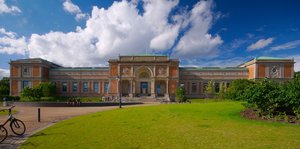 Statens Museum for Kunst |
Копенхаген | 1 | Horsemen by an Inn |
 Кралските музеи на изкуствата в Белгия |
Брюксел | 1 | The inn |
 Национална галерия в Ирландия |
Dublin City | 1 | Landscape with Figures |
Изберете десетилетие, за да видите оригиналната творба, която го определя.
Peasants by a cottage with a horse stalling (1655). Следващите са Pig Trade (1664) и Rest Before the Tavern (1662).
25 години: Peasants by a cottage with a horse stalling е от 1655 г., а Barent Gael е роден/а в 1630.
Peasants by a cottage with a horse stalling, Pig Trade, Rest Before the Tavern, Riders and Infantry near a Smithy in a Village, Horsemen by an Inn, The Pancake Cook, Rest at a Village Inn, The inn, Farmhouse и Landscape with Figures. Класацията по-горе показва годината и музея за всяко от тях.
В нашия каталог са представени 12 произведения на Barent Gael, датирани от 1655 до 1680.
Предимно в Баварски държавни списъци с произведения на изкуството (Мюнхен), Музей Бойманс ван Беунхиген (Роттердам) и Museum Flehite (Amersfoort). В горната таблица с музеи са изброени всички тях.
В 1660s: 4 от 11 произведенията на тази страница са създадени тогава, като Pig Trade са сред тях.
На тази страница най-старата е Peasants by a cottage with a horse stalling (1655), а най-новата е The Pancake Cook (1680).
Pig Trade, Rest Before the Tavern и Farmhouse: Баварски държавни списъци с произведения на изкуството, Мюнхен притежава 4 от произведенията на тази страница.
In the bustling heart of the Dutch Golden Age, a period defined by a profound appreciation for the tangible world, Barent Gael emerged as a painter of quiet observation. Born in Haarlem, his life was deeply intertwined with the cultural pulse of the Netherlands. He was a man of particular temperament, possessed of a certain stubborn independence that occasionally put him at odds with those who sought his services. There is a story of a patron who arrived at his home for a viewing, only to be told by the artist that he was not at home. This refusal to bend to the whims of others followed him; when the same patron later met him to receive a finished work, Gael reportedly claimed he was once again not at home, leading the insulted man to refuse payment.
His artistic path was shaped by the rigorous traditions of the Haarlem school. While the archives do not provide a definitive record of his apprenticeship, he showed a strong influence from his Haarlem colleagues and the style of Philips Wouwerman. This connection is visible in his ability to compose scenes involving animals and travelers with a sense of structured harmony. He mastered the art of atmospheric perspective, layering subtle tones of color to create an illusion of vast, receding space. Through this method, distant hills and hazy horizons seem to breathe, pulling the spectator into the painted environment.
Gael’s work often focused on the serene beauty of the countryside, finding a sense of permanence in the mundane. He moved from the established artistic circles of Haarlem to the bustling streets of Amsterdam between 1661 and 1673, remaining in the latter city until his death. His canvases provide a window into a soul captivated by the simplicity of rural existence, from the soft glow of sunlight hitting a wayside inn to the delicate interplay of light and shadow upon a shepherd’s path.
His technical approach was marked by a deliberate and understated hand. Rather than relying on flamboyant strokes, he employed a restraint that allowed him to focus on the nuances of texture. His subjects often included:
Though his large oeuvre is sometimes described as somewhat monotonous, his dedication to realism and tonal balance remained constant. He was a prominent figure in the Haarlem Guild of St. Luke by 1642, and his presence in the artistic community was noted long after his most active years. His latest known dated painting dates to 1679, yet his work continues to offer a view into a world where time slows down, inviting the viewer to find meaning in the details of the natural landscape.
