Портрет на Адволф Шрайер

Картини на Адволф Шрайер: 84-те най-известни, през погледа на галерията

Обновено Ноември 2026 · класирано според нашия индекс на популярност (търсения, посещения и поръчки за всяко произведение) · 85 творби на Адволф Шрайер в нашия каталог

Накратко

За галерията най-известната картина на Адволф Шрайер е Arabian Horseman Near A Watering Place. Arab on Horseback (1853) и truck at a waterplace (1853) допълват трио, което всяко око разпознава. От 85 произведения на Адволф Шрайер в нашия каталог, галерията представя 84 най-известните по-долу – всяко от тях е оригинал с посочен година, музей и това, което го прави уникално.

1828 – 1899, Франкфурт на Майн Academicism Най-много творби: Art Institute of Chicago

Топ 10 карти на Адволф Шрайер в галерията

1
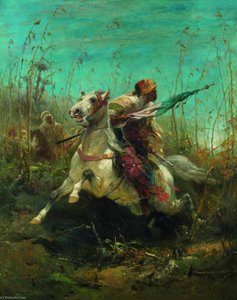
Arabian Horseman Near A Watering Place на Адволф Шрайер

Arabian Horseman Near A Watering Place

Oil On Canvas

Arabian Horseman Near A Watering Place is an oil painting by Adolf Schreyer. The canvas captures a moment of stillness in the desert, where riders and horses gather near a source of water. This work reflects the specific focus of Schreyer, a German Orientalist artist who spent his life observing the light and movement of the East. He was associated with the Düsseldorf school of painting, a tradition known for…

3
truck at a waterplace (1853) на Адволф Шрайер

truck at a waterplace

1853 · Oil

There is a profound sense of gravity in this 1853 oil painting. We find ourselves observing a heavy, horse-drawn wagon as it navigates a rugged, rural landscape. The scene captures a moment of laborious movement, where the sheer weight of the load is felt through the straining muscles of the horses and the deep, textured tracks left in the dirt. This work, often identified as a Wallachian transport, follows a…

7
Arabs on the March (1873) на Адволф Шрайер

Arabs on the March

The oil on canvas work titled Arabs on the March belongs to the artist Adolf Schreyer. Born in Frankfurt, Germany, in 1828, Schreyer developed a style deeply rooted in the observation of distant lands. This specific piece is an Orientalist painting. It resides within the collection of the Metropolitan Museum of Art in New York.

8
Arabian Horsemen (1885) на Адволф Шрайер

Arabian Horsemen

1885 · Oil On Canvas · Phoenix Art Museum, Финикс

The oil painting Arabian Horsemen by Adolf Schreyer captures a group of riders moving through a rugged, arid landscape. Dated 1885, the work focuses on the nobility and intensity of nomadic life. A central white horse moves through the scene, its pale coat contrasting against the deep ochre and sienna tones of the earth. The riders wear flowing garments that catch the light of a vast sky.

Картини на Адволф Шрайер, класирани от 11 до 84

11Arab Horsemen на Адволф ШрайерArab Horsemen 12The Chase на Адволф ШрайерThe Chase 13Arab Warrior Leading A Charge на Адволф ШрайерArab Warrior Leading A Charge 14carriage + horses in moore-landscape (1853) на Адволф Шрайерcarriage + horses in moore-landscape1853 15Arab Caravan (1860) на Адволф ШрайерArab Caravan1860 · Дейтон Арти Институт 16landscape four Cossacks with their horses (1857) на Адволф Шрайерlandscape four Cossacks with their horses1857 17The Charge (1869) на Адволф ШрайерThe Charge1869 18Halt at the Inn (1872) на Адволф ШрайерHalt at the Inn1872 · Детройтският институт за изкуства 19The Attack (1881) на Адволф ШрайерThe Attack1881 · New York Historical Society 20In Front of the Tavern на Адволф ШрайерIn Front of the TavernБаварски държавни списъци с произведения на изкуството 21Arabs на Адволф ШрайерArabsХудожественият музей в Сейнт Луис 22Eastern Soldiers with a Horse Drinking на Адволф ШрайерEastern Soldiers with a Horse DrinkingНационална галерия в Ирландия 23Arab Horsemen Resting at a Fountain на Адволф ШрайерArab Horsemen Resting at a FountainМузей на изкуствата във Бостън 24Arabs on Horseback на Адволф ШрайерArabs on Horseback 25The Wallachian Team на Адволф ШрайерThe Wallachian Team 26Arab Horsemen на Адволф ШрайерArab HorsemenReading Public Museum 27The Plains of Hungary на Адволф ШрайерThe Plains of HungaryWalters Art Museum 28Cossacks In A Landscape на Адволф ШрайерCossacks In A Landscape 29Cossacks Watering Their Horses на Адволф ШрайерCossacks Watering Their Horses 30Horseman On The Russian Steppe на Адволф ШрайерHorseman On The Russian Steppe 31Arab Scouts On Horseback на Адволф ШрайерArab Scouts On Horseback 32Battle Scene: Arabs Making a Detour на Адволф ШрайерBattle Scene: Arabs Making a DetourМетрополитън Музей на изкуствата 33Persued By Wolves на Адволф ШрайерPersued By Wolves 34Arab Chieftain And His Entourage на Адволф ШрайерArab Chieftain And His Entourage 35Horses at the Water на Адволф ШрайерHorses at the WaterБаварски държавни списъци с произведения на изкуството 36Arab Horsemen на Адволф ШрайерArab HorsemenНационална галерия в Ирландия 37Two Arab Horsemen на Адволф ШрайерTwo Arab HorsemenМузей на изкуствата във Бостън 38Untitled (D2X838) на Адволф ШрайерUntitled (D2X838) 39Arab Warriors на Адволф ШрайерArab Warriors 40Wallachian Wagon Under Attack на Адволф ШрайерWallachian Wagon Under Attack 41Wallachian Horsemen In A Winter Landscape на Адволф ШрайерWallachian Horsemen In A Winter Landscape 42The Shelter на Адволф ШрайерThe Shelter 43Man with Lance Riding Through the Snow на Адволф ШрайерMan with Lance Riding Through the SnowArt Institute of Chicago 44Arabs in Egypt, Sunrise на Адволф ШрайерArabs in Egypt, SunriseWalters Art Museum 45Cavaliers на Адволф ШрайерCavaliersНационален музей във Варшава 46Ottoman Encampment на Адволф ШрайерOttoman Encampment 47Wallachian Blizzard на Адволф ШрайерWallachian Blizzard 48A Rest By The Fountain на Адволф ШрайерA Rest By The Fountain 49The Lonely Rider на Адволф ШрайерThe Lonely Rider 50Arab Horseman In A Landscape на Адволф ШрайерArab Horseman In A Landscape 51The Chase Of The Cossacks на Адволф ШрайерThe Chase Of The Cossacks 52The Warrior на Адволф ШрайерThe Warrior 53Hitching Horses to the Wagon на Адволф ШрайерHitching Horses to the Wagon 54The Watering Place на Адволф ШрайерThe Watering Place 55Arabs Watering Their Horses на Адволф ШрайерArabs Watering Their Horses 56The Ambush на Адволф ШрайерThe Ambush 57The Pursuit на Адволф ШрайерThe Pursuit 58The Lion Hunt на Адволф ШрайерThe Lion Hunt 59A Horse Race In The Hippodrome на Адволф ШрайерA Horse Race In The Hippodrome 60Arabs On Horseback на Адволф ШрайерArabs On Horseback 61A Troika In Winter на Адволф ШрайерA Troika In Winter 62Arab Horsemen On The March на Адволф ШрайерArab Horsemen On The March 63The Messenger на Адволф ШрайерThe Messenger 64The Pass Over The Hills на Адволф ШрайерThe Pass Over The Hills 65A Rest before the Battle на Адволф ШрайерA Rest before the Battle 66Approaching The City на Адволф ШрайерApproaching The City 67Arabian Patrol на Адволф ШрайерArabian Patrol 68Arabian Horseman на Адволф ШрайерArabian Horseman 69The Skirmish на Адволф ШрайерThe Skirmish 70Arabs on Horseback 1 на Адволф ШрайерArabs on Horseback 1 71Caravan On The Open Road на Адволф ШрайерCaravan On The Open Road 72Arab Horsemen By A Watering Hole на Адволф ШрайерArab Horsemen By A Watering Hole 73Arab Cavalry Approaching An Oasis на Адволф ШрайерArab Cavalry Approaching An Oasis 74In Pursuit на Адволф ШрайерIn Pursuit 75On The March на Адволф ШрайерOn The March 76At The Watering Place на Адволф ШрайерAt The Watering Place 77Scouts On The Lookout на Адволф ШрайерScouts On The Lookout 78Fording a Stream на Адволф ШрайерFording a Stream 79Desert Canter на Адволф ШрайерDesert Canter 80Homeward Bound на Адволф ШрайерHomeward Bound 81Arabischer Schimmelreiter на Адволф ШрайерArabischer Schimmelreiter 82Arab Warriors On A Hillside на Адволф ШрайерArab Warriors On A Hillside 83The Oasis на Адволф ШрайерThe Oasis 84Arabischer Reiter An Einter Tranke на Адволф ШрайерArabischer Reiter An Einter Tranke

Знаменитите картини на Адволф Шрайер, период по период

19th Century

3 произведения в този списък

Темите, които привличат погледа на Адволф Шрайер

Четирите найчесто срещани теми в тези оригинални творби, всяка с най-добрия си пример.

Музеите, в които се съхраняват оригиналите на Адволф Шрайер

8 музея, които притежават най-голям брой от картините на тази страница.

Музеи Град Творения на Адволф Шрайер Картини от този списък
Art Institute of Chicago, ЧикагоArt Institute of Chicago Чикаго 2 Peasants and Horses, Man with Lance Riding Through the Snow
Метрополитън Музей на изкуствата, Ню ЙоркМетрополитън Музей на изкуствата Ню Йорк 2 Arabs on the March, Battle Scene: Arabs Making a Detour
Баварски държавни списъци с произведения на изкуството, МюнхенБаварски държавни списъци с произведения на изкуството Мюнхен 2 In Front of the Tavern, Horses at the Water
Национална галерия в Ирландия, Dublin CityНационална галерия в Ирландия Dublin City 2 Eastern Soldiers with a Horse Drinking, Arab Horsemen
Музей на изкуствата във Бостън, БостънМузей на изкуствата във Бостън Бостън 2 Arab Horsemen Resting at a Fountain, Two Arab Horsemen
Walters Art Museum, БалтиморWalters Art Museum Балтимор 2 The Plains of Hungary, Arabs in Egypt, Sunrise
Städel Museum, ФранкфуртStädel Museum Франкфурт 1 Arabs Resting by a Marble Fountain
Phoenix Art Museum, ФиниксPhoenix Art Museum Финикс 1 Arabian Horsemen

Адволф Шрайер, по една емблематична картина на десетилетие

Произведения по десетилетия

Изберете десетилетие, за да видите оригиналната творба, която го определя.

Картините на Адволф Шрайер: отговорите на галерията

Коя картина на Адволф Шрайер е най-известната от всички?Разкрийте отговора

Arabian Horseman Near A Watering Place. Следващите са Arab on Horseback (1853) и truck at a waterplace (1853).

Кои са 10-те най-добри картини на Адволф Шрайер?Разкрийте отговора

Arabian Horseman Near A Watering Place, Arab on Horseback, truck at a waterplace, Arabs Resting by a Marble Fountain, Peasants and Horses, Hungarian landscape with a herd of horses, Arabs on the March, Arabian Horsemen, An Arab Horseman On The March и Arab Horsemen 1. Класацията по-горе показва годината и музея за всяко от тях.

Колко произведения е създал Адволф Шрайер?Разкрийте отговора

В нашия каталог са представени 85 произведения на Адволф Шрайер, датирани от 1853 до 1885.

Къде са изложени най-известните оригинали на Адволф Шрайер?Разкрийте отговора

Предимно в Art Institute of Chicago (Чикаго), Метрополитън Музей на изкуствата (Ню Йорк) и Баварски държавни списъци с произведения на изкуството (Мюнхен). В горната таблица с музеи са изброени всички тях.

Кога Адволф Шрайер създава най-известните си картини?Разкрийте отговора

В 1850s: 6 от 84 произведенията на тази страница са създадени тогава, като Arab on Horseback са сред тях.

Кои са най-ранните и най-късните известни творби на Адволф Шрайер?Разкрийте отговора

На тази страница най-старата е Arab on Horseback (1853), а най-новата е Arabian Horsemen (1885).

Към кои сюжети Адволф Шрайер се връща най-често?Разкрийте отговора

Horses (15), Wars (11) и Landscape (10), разпределени в 84 произведения на тази страница.

С коя техника е работил най-често Адволф Шрайер?Разкрийте отговора

Oil On Canvas, за 7 от 84 произведения на тази страница.

С кое художествено направление е свързан(а) Адволф Шрайер?Разкрийте отговора

Academicism, судейки по оригиналите на тази страница.

Кои оригинални творби на Адволф Шрайер притежава Art Institute of Chicago?Разкрийте отговора

Peasants and Horses и Man with Lance Riding Through the Snow: Art Institute of Chicago, Чикаго притежава 2 от произведенията на тази страница.

Адволф Шрайер: художникът

Adolf Schreyer - A Life Immersed in Equine Grace and Eastern Light

Adolf Schreyer (1828 – 1899) stands as a singular figure within the Düsseldorf School of Painting, renowned for his captivating depictions of horses—particularly Arabian warriors—and his masterful renderings of landscapes imbued with the spirit of the East. His artistic journey began amidst the intellectual fervor of Frankfurt’s Städel Institute, followed by formative studies in Stuttgart and Munich, establishing him upon a foundation of classical principles that would inform his distinctive style for decades to come. However, it was Schreyer’s expeditions—most notably his association with Prince Maximilian Karl of Thurn and Taxis—that truly propelled him toward artistic greatness and cemented his place as one of the era's most celebrated painters.

Early Influences and Artistic Formation

Schreyer’s initial training at the Städel Institute instilled in him a deep appreciation for academic tradition, exposing him to the works of artists like Anton Raphael Mengelsdorf and Wilhelm Leibl—figures who championed anatomical accuracy and tonal gradation as cornerstones of artistic expression. These influences would prove invaluable as he honed his skills at Stuttgart’s Kunstakademie and Munich’s Königliche Akademie der Künste, where he studied under Johann Baptist Wilhelm Amman and Franz Xaver Winterhalter respectively. Amman’s emphasis on meticulous observation and Winterhalter’s mastery of portraiture further refined Schreyer's technique—skills that would serve him admirably throughout his prolific career.

The Crimean War and Battlefield Sketches

A pivotal moment in Schreyer’s artistic development arrived with the outbreak of the Crimean War in 1854. Assigned to document the Austrian army’s maneuvers across the Wallachian frontier, he gained firsthand experience of military life—a formative encounter that profoundly impacted his artistic sensibilities. Unlike many artists of his time who sought to glorify warfare, Schreyer approached the battlefield with a keen eye for detail and an unwavering commitment to realism. His sketches captured not merely the physical spectacle of combat but also its psychological intensity—the fear, determination, and camaraderie of soldiers striving for victory. These sketches foreshadowed the dramatic artillery charges that would become hallmarks of his oeuvre, demonstrating Schreyer’s ability to convey emotion through visual representation.

Orientalist Voyages: Egypt, Syria, Algeria

Schreyer’s artistic passion found its fullest expression during his voyages into the Orient—specifically Egypt (1856), Syria (1856), and Algeria (1861). Driven by an insatiable curiosity for diverse cultures and landscapes, he embarked on expeditions that would transform his artistic vision. He immersed himself in Arabic language and customs, befriending Bedouin horsemen and documenting their nomadic life with unwavering dedication. Unlike many Orientalist painters who relied on idealized depictions—often filtered through European prejudices—Schreyer sought to portray the East with honesty and nuance. His canvases captured not only the grandeur of desert vistas but also the subtle beauty of everyday life—the faces of Bedouin men, the intricate patterns of Arab textiles, and the vibrant colors of the marketplace. This immersive approach resulted in paintings that resonated with authenticity and challenged conventional artistic tropes.

Style and Technique: Mastering Equine Anatomy

Schreyer’s distinctive style was characterized by a remarkable command of equine anatomy—a skill honed through years of meticulous observation and personal experience as a rider. He possessed an unparalleled understanding of muscle structure, bone alignment, and movement dynamics—knowledge that he translated into breathtaking depictions of horses rendered with astonishing precision. His brushstrokes were bold yet controlled, conveying both power and grace—a stylistic hallmark that distinguishes his paintings from those of many contemporaries. Furthermore, Schreyer’s palette was rich and luminous—infused with vibrant hues that captured the essence of Eastern light—creating canvases that pulsed with life and emotion. He achieved this remarkable feat through a combination of careful tonal gradation and masterful use of color theory—techniques that cemented his reputation as one of the Düsseldorf School's foremost masters. Schreyer’s legacy extends beyond the beauty of his paintings; it resides in his unwavering commitment to artistic integrity—his refusal to succumb to sentimentality or glorify violence—and his profound respect for cultural diversity. His work continues to inspire admiration and scholarly study, serving as a testament to the transformative power of travel, observation, and artistic dedication. He remains an enduring symbol of the Düsseldorf School’s pursuit of realism and its celebration of the human spirit's capacity for wonder and understanding.