

The Historical Context: Counter-Reformation & The Rise of Baroque
 Wikipedia: Baroque
The Baroque (UK: bə-ROK, US: bə-ROHK, French: [baʁɔk]) is a Western style of architecture, music, dance, painting, sculpture, poetry, and other arts that flourished from the early 17th century until the 1750s. It followed Renaissance art and Manner...
The early 17th century was a period of profound upheaval for Europe, marked by religious conflict and shifting power dynamics. The Protestant Reformation had fractured the established order, prompting the Catholic Church to embark on a sweeping campaign of renewal known as the Counter-Reformation. This wasn’t merely a theological response; it was a strategic effort to reclaim lost ground – and art became its most potent weapon. Where earlier Renaissance styles often emphasized humanist ideals and classical restraint, the Baroque aesthetic emerged as a deliberate counterpoint: an embrace of drama, emotion, and grandeur designed to inspire awe and reaffirm Catholic doctrine. The Church sought not simply to educate but to *move* its audience, to overwhelm them with sensory experience and draw them back into the fold. This context is crucial for understanding the fervor that fueled the artistic innovations of the era, particularly in countries like Spain, where religious zeal burned intensely.
Dramatic Realism & Emotional Intensity in Spanish Baroque Painting
 The Golden Age Reforged: Dramatic Realism & Religious Zeal in Spanish Baroque Art
Explore the dramatic world of Spanish Baroque art! Discover masters like Zurbarán & the powerful influence of religious zeal on painting techniques – a guide for collectors and enthusiasts.
Spain, a staunch defender of Catholicism, became a hotbed of Baroque creativity. Artists weren’t simply illustrating biblical stories; they were enacting them with visceral immediacy. This is powerfully exemplified in the work of Francisco Zurbarán (1598-1664), whose paintings are characterized by an almost startling realism. Unlike the idealized figures often found in Italian Renaissance art, Zurbarán's saints and ascetics possess a tangible physicality – their worn habits, calloused hands, and expressions of profound devotion feel strikingly authentic. He eschewed elaborate backgrounds and complex narratives, focusing instead on the solitary figure immersed in prayer or contemplation. This deliberate simplicity served to heighten the emotional impact, forcing viewers to confront the raw humanity of faith. Zurbarán’s mastery lay not just in his technical skill but in his ability to convey a sense of spiritual weight, a palpable presence that transcends mere representation.
Chiaroscuro & Tenebrism: Mastering Light and Shadow for Spiritual Effect
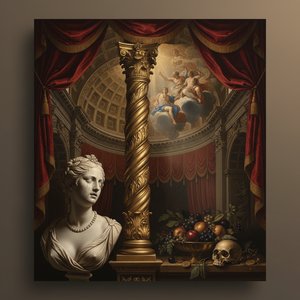 The Dramatic Flourish of Baroque Art: History, Characteristics & Enduring Influence
Explore the dramatic world of Baroque art! Discover its history, defining characteristics, and lasting influence on painting, sculpture & architecture. A comprehensive guide for art lovers.
Central to the dramatic power of Spanish Baroque painting is the masterful use of light and shadow. Techniques like chiaroscuro – the contrast between light and dark – were employed not merely as aesthetic devices but as tools to evoke a sense of mystery, revelation, and divine intervention. Zurbarán, along with contemporaries like Caravaggio, pushed this further into tenebrism, an even more extreme form where darkness dominates and figures emerge from deep shadows illuminated by a single, intense light source. This wasn’t accidental; it was a deliberate attempt to mimic the experience of religious ecstasy – the sudden flash of insight, the overwhelming presence of God. Consider St. Francis Kneeling, where the saint is almost swallowed by darkness, his face and hands illuminated as if by an inner light. This isn’t simply a portrait; it's a depiction of spiritual transformation, a visual representation of grace descending upon a humble soul.
Iconography & Symbolism: Decoding the Religious Narratives of Zurbarán’s Works
Zurbarán’s paintings are rich with religious symbolism, often subtle but profoundly meaningful. The objects surrounding his saints aren't merely props; they are carefully chosen to convey specific theological messages. For example, in St. Bonaventure, the skull resting on the table serves as a *memento mori*, a reminder of mortality and the fleeting nature of earthly existence. The books represent his scholarly pursuits, but also allude to the limitations of human knowledge compared to divine wisdom. The simple white cloth draped over the saint’s shoulder symbolizes purity and renunciation of worldly possessions. Even the arrangement of light and shadow contributes to the overall symbolism; the upward direction of the illumination suggests a striving towards heaven, a yearning for spiritual enlightenment. Understanding these layers of meaning unlocks a deeper appreciation for Zurbarán's artistry – he wasn’t just painting pictures, he was constructing visual sermons.
Baroque Theatricality: Staging Faith and Power Through Art
 Theatricality & Triumph: Baroque Drama in Painting & Sculpture
Explore the dramatic world of Baroque art! Discover its history, defining characteristics, & lasting influence on painting & sculpture. Expert insights into Caravaggio, Zurbarán, and Bernini – plus high-quality reproductions at OriginalUniqueArt.
The Baroque period embraced theatricality as a means of engaging the viewer. Paintings weren’t meant to be passively observed; they were intended to create an immersive experience, drawing the audience into the scene itself. This is evident in Zurbarán's depictions of St Francis of Assisi Receiving the Stigmata. The composition isn’t merely a representation of a miraculous event; it feels like a staged drama, complete with dramatic lighting, intense emotion, and a sense of heightened realism. The artist carefully controls our gaze, directing our attention to the moment of divine intervention – the wounds appearing on the saint's hands and feet. This wasn’t about historical accuracy; it was about conveying the power and mystery of faith through visual spectacle. The use of strong diagonals and dynamic compositions further enhances this sense of movement and energy, creating a scene that feels both immediate and overwhelming.
The Enduring Legacy of Baroque Art: Influence on Subsequent Movements
While the Baroque period eventually gave way to Rococo and Neoclassicism, its influence continues to resonate in art today. The emphasis on emotional intensity, dramatic realism, and theatricality paved the way for Romanticism, which similarly sought to evoke powerful feelings through art. The mastery of light and shadow pioneered by artists like Zurbarán continues to inspire painters and filmmakers alike. Moreover, the Baroque’s exploration of religious themes remains relevant in a world grappling with questions of faith and spirituality. The works of Zurbarán, available through platforms like OriginalUniqueArt.com, offer not just beautiful images but windows into a pivotal moment in art history – a time when artists harnessed the power of visual language to shape beliefs, inspire devotion, and capture the very essence of the human spirit.



