Превключване към принт
 Прочети повече







































 За произведения на изкуството или репродукции, чийто размер е над 105 см (приблизително 41 инча) във всяка страна, рамката ще бъде изпратена в разглобен вид като комплект за сглобяване. Този метод гарантира безопасна доставка и предотвратява повреди по време на транспортиране.


Claude Monet’s Water Lilies: A Symphony of Light and Tranquility
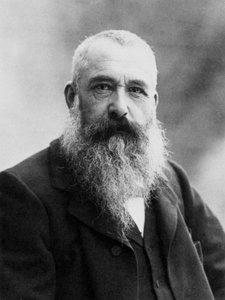
Claude Monet (1840–1926), arguably the most consistent champion of Impressionism, wasn't merely a painter of landscapes; he was a meticulous observer of fleeting moments, translating the ephemeral beauty of nature onto canvas with unparalleled sensitivity. Born in Paris on November 14, 1840, his artistic journey began unexpectedly when his family relocated to Le Havre, Normandy, at the age of five—a formative experience that instilled within him an enduring fascination for the coastal environment.
Monet’s early training focused on drawing and sketching, honing his skills before he embarked on a more formal academic pursuit. However, it was his encounter with Eugène Boudin that proved pivotal. Boudin didn't just teach Monet *how* to paint; he fundamentally shifted his artistic perspective by introducing him to the revolutionary practice of plein air—painting outdoors directly from nature—a decision that would define Monet’s entire oeuvre.
The Water Lilies series represents the culmination of Monet’s lifelong dedication to capturing the transformative effects of light and atmosphere. Beginning in 1896, he embarked on a monumental project at his Giverny estate, transforming his garden into a living laboratory for artistic experimentation. These canvases—approximately 250 in total—became the centerpiece of his artistic output during his final decade, reflecting not only his technical mastery but also his profound emotional engagement with the natural world.
Impressionist Style and Artistic Technique
Monet’s approach to painting was characterized by a deliberate rejection of academic conventions. Instead of striving for photographic realism, he sought to convey the subjective experience of seeing—the way light dances across surfaces, creating shimmering illusions of color and form. This ethos is vividly embodied in his technique: loose, expressive brushstrokes layered upon one another to build up texture and luminosity.
He meticulously studied how sunlight interacted with water, adapting his palette accordingly. The dominant hues—greens, blues, purples—were blended seamlessly to create harmonious compositions that captured the subtle nuances of color variations throughout the day. Monet’s use of glazing—applying thin layers of translucent paint over previous coats—further enhanced the depth and vibrancy of his canvases.
Historical Context and Artistic Significance
Monet's Water Lilies emerged during a period of significant artistic innovation, coinciding with the rise of Impressionism as a dominant movement. Influenced by artists like Eugène Boudin and Frédéric Bazille, Monet sought to break free from the constraints of traditional art academies, prioritizing observation and emotion over meticulous detail.
The series reflects the broader intellectual currents of the Belle Époque—a time marked by optimism, technological advancement, and a fascination with scientific discoveries. Monet’s exploration of color theory and his embrace of experimental techniques anticipated developments in modern art that would extend far beyond Impressionism itself.
Symbolism and Emotional Resonance
The Water Lilies are imbued with profound symbolic meaning—representing purity, renewal, and the serenity of nature. Monet's meticulous depiction of Giverny’s pond captures not merely a visual scene but also an emotional state—a desire for contemplation and escape from the pressures of urban life.
The shimmering reflections on the water surface evoke a meditative mood, inviting viewers to immerse themselves in the beauty of the natural world. Monet's canvases convey a sense of timelessness, reminding us that art can transcend temporal concerns and connect with universal human emotions.
A Perfect Addition for Art Lovers and Interior Design
This high-quality reproduction offers art enthusiasts and interior designers an opportunity to bring a piece of Impressionist brilliance into their spaces. Its calming palette complements a variety of décor styles, from minimalist chic to rustic farmhouse—creating an atmosphere of tranquility and artistic sophistication.
Въпроси и отговори
Мога ли да гледам "Водна Лилия" като слайдшоу на цял екран?
Диапорамата на „Водна Лилия“ може да бъде разгледана на страницата Слайдшоу на произведението.
За какво се препоръчва използването на принт от "Водна Лилия"?
Репродукцията на „Водна Лилия“ на Клод Моне е препоръчителна за Спокойствие и релаксация. Това предложение произтича от темата, настроението и цветовете на произведението.
Каква е техниката на изпълнение и размерите на "Водна Лилия"?
„Водна Лилия“ е създадена в Масло върху платно и в оригиналния си вид е с размери 200 x 213 cm.
 Преглед в реален мащаб
 Изпрати
 Сподели
 Детайли
 Ръководство

 Изтегляне
 Подобни артикули
 Рентгенова снимка
 Слайдшоу
 Q&A
Q&A Статистика