Преглед в реален мащаб
 Изпрати
 Сподели
 Детайли
 Ръководство

 Изтегляне
 Подобни артикули
 Рентгенова снимка
 Слайдшоу
 Въпроси и отговори
 Статистика
Картина


 Прочети повече
Изкуството, представено на тази страница, е защитено от законите за авторско право, което означава, че не можем законно да създаваме или продаваме идентични репродукции. Тази защита се прилага съгласно международни споразумения като Бернска конвенция и от националното законодателство, включително разпоредбите на Закон за авторското право на САЩ – Раздел 17.
Този метод е напълно съвместим с законите за авторско право, тъй като не включва копиране или дублиране на защитеното произведение. Вместо това става въпрос за творческа реинтерпретация – нова картина, която е вдъхновена от оригинала, но не е идентична с него.
Жикле / Художествен принт
Giclée печат или принт върху платно с музейно качество, бързо производство и гъвкави опции за завършен вид. ( Купете ръчно рисувана картина Превключване към дигитално изображение)




P118B €10

P118H €10

P118W €10

P438Z €10

P508JH €12

P508YH €12

P805H €10

P805Z €10

P919BZ €10

P919G €10

P919XJ €10

P959ZH €10

P968JZ €12

W106C €8

W218G €10

W218JH €8

W218Y €10

W307PJ €10

W316G €10

W316PJ €8

W316Y €10

W398PJ €8

W4111J €10

W500HY €15

W500JH €15

W692G €12

W849H €8

W940BG €15

W953PJ €8




Изберете от нашите предварително зададени размери, които съответстват на оригиналните пропорции на произведението.

Въведете необходимата ширина и височина, за да паснат на вашата рамка или стена. Принтовете могат само да се изрязват, но никога не могат да бъдат по-големи от оригиналната картина, така че при размер с различен формат част от изображението ще бъде загубена. Преди да започнем печат, ще ви изпратим дигитален мок업 за одобрение. Изображението, показано на тази страница, не показва реалното изрязване — само мок업ът го показва.
Доставка по целия свят () в рамките на 2 седмици вместо стандартните 4/5 седмици. (11 Ноември)

Безплатна експресна доставка по целия свят

Висококачествено ленено платно

Пълно застраховане на доставката

Гаранция за възстановяване на митнически такси

Гаранция за пълно съответствие на цветовете

Политика за връщане в рамките на 100 дни (само при дефекти)

100% Гаранция за връщане на сумата

Оферта за отстъпка при поръчка на повече бройки
 Опцията със стъкло е налична само за размери под 110 см

Картина
Жикле / Художествен принт
Размер на репродукцията
-


Обща цена
€ 73
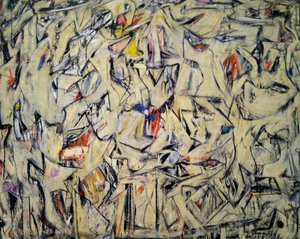
A Dance of Chaos and Control: Willem de Kooning’s “Painting” (1948)
Willem de Kooning's "Painting," completed in 1948, isn’t merely a canvas adorned with black and white; it’s an embodiment of the turbulent energy that defined Abstract Expressionism at its nascent stage. This monumental work, measuring over four by five feet, immediately commands attention not through representational imagery – there is none to be found – but through a visceral engagement with line, form, and texture. De Kooning, a pivotal figure in American art’s post-war transformation, wasn't interested in replicating the world; he sought to distill its essence, its anxieties, and its raw vitality onto the surface of the canvas.
The painting’s genesis lies within de Kooning’s exploration of the human form, a subject he had wrestled with for decades. However, by 1948, this engagement shifted dramatically. Rather than meticulously rendering figures, he began transferring fragmented sketches – hints of limbs, torsos, and even suggestive anatomical details – onto the canvas as a starting point. These ghostly outlines then became the foundation for a dynamic process of layering, scraping, and reworking. The result is a complex interplay between control and chaos, a deliberate tension that mirrors the artist’s own internal state during this period.
The Language of Line and Gesture
De Kooning's technique in "Painting" is nothing short of revolutionary. He eschewed traditional brushwork, favoring instead a rapid, almost frantic application of paint – primarily enamel sign paint, a readily available industrial product – using his fingers, palette knives, and even rags to manipulate the medium. The lines aren’t clean or precise; they are jagged, broken, and often overlapping, creating a sense of movement and instability. Thick impasto areas contrast sharply with thinner washes, adding depth and texture to the composition. The painting is not built up gradually but rather through a series of impulsive gestures, as if the artist were wrestling with the image itself.
Notice how the black forms, delineated by stark white lines, seem to both define and dissolve into one another. These shapes aren’t static; they vibrate with an internal energy, suggesting a constant state of flux. The use of negative space is equally crucial – the areas *between* the forms are just as important as the forms themselves, contributing to the painting's overall sense of dynamism.
Symbolism and Emotional Resonance
While de Kooning vehemently resisted assigning definitive meaning to his work, "Painting" undeniably evokes a powerful emotional response. The fragmented figures, reminiscent of both human anatomy and abstract shapes, can be interpreted as representing the anxieties and uncertainties of post-war America. The painting’s chaotic composition mirrors the social and political upheaval of the time, while its stark black and white palette suggests a sense of isolation and alienation.
Some viewers have identified hints of female forms within the abstract shapes – breasts, limbs, even suggestive buttocks – reflecting de Kooning's ongoing exploration of the feminine. However, these figures are never fully realized; they remain elusive and ambiguous, adding to the painting’s unsettling power. The overall effect is one of intense emotionality, a raw expression of the artist’s inner turmoil.
A Legacy of Abstraction
"Painting" stands as a pivotal work in de Kooning's oeuvre and a cornerstone of Abstract Expressionism. Its innovative technique, its exploration of form and gesture, and its profound emotional resonance continue to captivate viewers today. The painting’s influence can be seen in the works of countless artists who followed in de Kooning’s footsteps, solidifying his place as one of the most important figures in 20th-century art. Reproductions of this dynamic masterpiece offer a glimpse into the mind of a visionary artist grappling with the complexities of modern life.
Въпроси и отговори
Каква техника е използвана за „Картина“ на Вилем Де Кунинг?
Вилем Де Кунинг е използвал/а техниката Акрил върху платно за „Картина“. Тази техника определя материалната природа на оригиналното произведение.
Към кой период от кариерата на Вилем Де Кунинг принадлежи „Картина“?
„Картина“ принадлежи към Зрял период от кариерата на Вилем Де Кунинг. Тази класификация свързва творбата с развитието на художника.
Каква ориентация има „Картина“ на Вилем Де Кунинг?
„Картина“ на Вилем Де Кунинг е в Хоризонтален формат формат. Форматът описва пропорциите на композицията.
Свързани статии

Топ 25 шедьоври на Василий Кандински: Абстрактно изкуство за вашия дом | OriginalUniqueArt.com
Разгледайте топ 25 шедьоври на Василий Кандински – пионер на абстрактното изкуство и експресионизма. Открийте историите зад цветните композиции, техниките и вдъхновението му. Купете висококачествени репродукции на картини Кандински за вашия дом на OriginalUniqueArt.com!

Willem de Kooning: Abstraction, Gesture & the Evolution of Post-War American Painting
Explore the evolution of Willem de Kooning's iconic Abstract Expressionist paintings. Discover his signature style, key themes & investment potential with expert insights for discerning art collectors.

Топ 10 шедьовъра на абстрактния експресионизъм – изкуство за вашия дом от OriginalUniqueArt.com
Разгледайте топ 10 шедьовъра на абстрактния експресионизъм – Полък, Ротко, де Кунинг и други. Открийте историите зад тези емблематични картини и преобразете дома си с изкуство от OriginalUniqueArt.com! Разгледайте пълната колекция онлайн.

Топ 25 шедьоври на Франсиско Гоя: Изкуство, история и лукс за вашия дом
Разгледайте топ 25 шедьоври на Франсиско Гоя – от портрети до исторически картини. Открийте историите, техниките и емоциите зад неговите най-известни творби. Луксозни репродукции за вашия дом в OriginalUniqueArt.com!
Beyond Representation: Exploring the Emotional Landscape of Abstract Expressionism
Explore the profound emotional world of Abstract Expressionism with OriginalUniqueArt. Discover key artists like Pollock & Rothko, learn about collecting, and find museum-quality reproductions to inspire your space.