Меню
БЕЗПЛАТНА КОНСУЛТАЦИЯ ЗА ИЗКУСТВО
Купи принт Купи принтКупи изображение Купи изображение ИзпратиИзпрати
ДетайлиДетайли Добавяне към любими Добавяне към любими ИзтеглянеИзтегляне ПодобниПодобни Рентгенова снимкаРентгенова снимка СлайдшоуСлайдшоу

Litho 2 (Waves 2)

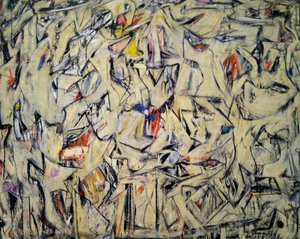
Experience Willem de Kooning's 'Litho 2 (Waves 2)' – a dynamic lithograph capturing figures amidst swirling waves, embodying Abstract Expressionism’s raw emotion and innovative technique.

Уилем де Кунинг (1904-1997) е ключова фигура в абстрактния експресионизъм. Известен с динамичните картини, серията "Жена" и влиянието си върху Ню Йоркската школа. Разгледайте творчеството му!

Ръчно изработена маслена репродукция

Ръчно рисувана маслена картина върху платно във вашия размер и рамка, изработена по поръчка от нашите художници.

Standard
custom
CM
INCH

Изберете от предварително зададените размери, които съответстват на оригиналните пропорции на произведението.

ширина
височина

Можете да въведете свои собствени размери, за да пасне на конкретна рамка или пространство. Ако избраният от вас размер не съответства на пропорциите на оригиналното изображение, ние ще изрежем произведението или ще удължим картината с допълнителни ръчно рисувани елементи. Дигитален макет ще бъде изпратен за ваше одобрение преди започване на производството.
Моля, обърнете внимание, че прегледът на екрана не отразява действителното изрязване или разширяване. Само макетът ще покаже точно финалния състав.
Въпреки че са налични персонализирани размери, препоръчваме да изберете размер от предварително дефинирания списък, за да запазите оригиналните пропорции.

Примери за това какво може да се промени: Заменете лице с клиентска снимка; Добавете домашен любимец (например заменете котка с куче); Включете скрито послание на фона; Променете пейзажа или елементите на фона.
След поръчка, екипът на OriginalUniqueArt.com ще изпрати имейл на клиента за инструкции и ще предостави преглед на макет.

Доставка по целия свят () в рамките на 3/4 седмици вместо стандартните 5 седмици. (19 Юли). Без компромис с качеството.

why_choose_icon
Безплатна експресна доставка по целия свят
why_choose_icon
Висококачествено ленено платно
why_choose_icon
Пълно застраховане при доставка
why_choose_icon
Гаранция за възстановяване на митнически такси
why_choose_icon
Гаранция за цветова точност
why_choose_icon
60-Дневен период за връщане (Само при дефекти)
why_choose_icon
100% Гаранция за връщане на парите
why_choose_icon
Предложение за отстъпка при поръчка на едро

Обща цена

-

reproduction

Litho 2 (Waves 2)

Репродукционен метод

Размер на репродукцията

-

Обща цена

-

Бързи факти

  • Location: Cleveland Art Museum
  • Influences: Surrealism
  • Artistic style: Dynamic composition
  • Notable elements: Three figures, waves
  • Dimensions: 117 x 81 cm
  • Year: 1960
  • Medium: Lithograph

Тест за изкуство

Има само един верен отговор за всеки въпрос.

Въпрос 1:
What artistic movement is Willem de Kooning most closely associated with?
Въпрос 2:
The lithograph 'Litho 2 (Waves 2)' depicts primarily:
Въпрос 3:
In what year was 'Litho 2 (Waves 2)' created?
Въпрос 4:
Based on the description, what technique is evident in 'Litho 2 (Waves 2)'?
Въпрос 5:
The image description suggests that De Kooning's work in this period reflects a shift away from:

Описание на произведението

A Raw Expression of Movement and Emotion

Willem de Kooning’s “Litho 2 (Waves 2),” created in 1960, is a potent distillation of the artist's signature style – a dynamic blend of abstraction and figuration that pulsates with raw energy. This lithograph, measuring 117 x 81 cm, offers a glimpse into de Kooning’s intensely personal vision, capturing not just a scene but a state of being. The work immediately commands attention through its bold contrasts and unsettling juxtapositions, hallmarks of the Abstract Expressionist movement that defined much of mid-20th century American art.

The image depicts three distinct figures engaged in an ambiguous interaction within a swirling landscape dominated by waves. These aren’t idealized representations; they are fragmented, distorted forms – almost violently rendered – suggesting a struggle for control and a confrontation with the primal forces of nature. De Kooning deliberately avoids smooth transitions or harmonious compositions, instead favoring jagged lines, abrupt shifts in tone, and an overall sense of instability. This deliberate disruption mirrors the turbulent emotional landscape that informed much of his work.

The Language of Abstraction and Gesture

As a lithograph, “Litho 2 (Waves 2)” showcases de Kooning’s masterful control over printmaking techniques while retaining the spontaneity and immediacy characteristic of his painting. The process involved transferring ink from a stone to paper, resulting in a textured surface that amplifies the sense of movement and physicality within the image. The artist's gestural marks – visible brushstrokes and energetic lines – are particularly pronounced, echoing the “action painting” style he pioneered alongside Jackson Pollock. These aren’t simply decorative flourishes; they represent the physical act of creation itself, conveying a sense of urgency and emotional intensity.

Interestingly, de Kooning's exploration of lithography occurred during a period when printmaking was less favored in America compared to painting. This shift reflects a broader movement within Abstract Expressionism towards large-scale canvases and a rejection of traditional artistic conventions. The lithograph format allowed him to experiment with scale and composition while retaining the expressive power of his hand.

Symbolism and the Human Condition

The figures in “Litho 2 (Waves 2)” are open to interpretation, inviting viewers to project their own emotions and experiences onto the scene. Some scholars suggest they represent a confrontation with mortality or the anxieties of modern life. The waves themselves can be seen as metaphors for overwhelming forces – both internal and external – that threaten to engulf the individual. De Kooning’s deliberate ambiguity ensures that the work remains perpetually relevant, resonating with viewers across generations.

Considering de Kooning's biography—his difficult childhood marked by parental separation and a restless spirit—it’s not surprising that his art often grapples with themes of isolation, struggle, and the search for identity. “Litho 2 (Waves 2)” embodies this internal conflict through its fragmented forms and unsettling atmosphere, offering a powerful meditation on the complexities of the human condition.

A Reproduction Worthy of Display

OriginalUniqueArt offers meticulously crafted hand-painted reproductions of “Litho 2 (Waves 2),” capturing the essence of de Kooning’s original work with exceptional detail and fidelity. Our artists utilize archival-quality materials to ensure that each reproduction will endure for generations, preserving the vibrancy and emotional impact of this iconic painting. Whether you're a seasoned art collector or seeking a striking piece to elevate your interior design, a OriginalUniqueArt reproduction of “Litho 2 (Waves 2)” is an investment in timeless artistry.


Биография на художника

A Life Forged in Abstraction

Willem de Kooning, a name synonymous with the raw energy and emotional depth of Abstract Expressionism, was born in Rotterdam, Netherlands, in 1904. His early life was marked by a familial split – his parents divorced when he was young – which perhaps instilled within him a sense of restless searching that would permeate his artistic journey. Leaving formal schooling at twelve, de Kooning apprenticed with a commercial art firm, laying the groundwork for his technical skill while simultaneously fueling a desire to break free from conventional constraints. Evening classes at the Academie van Beeldende Kunsten en Technische Wetenschappen in Rotterdam provided further foundational training, but it was a yearning for something more – a bolder, more expressive language – that ultimately propelled him towards America in 1926. His arrival wasn’t straightforward; he famously stowed away on a ship, embodying the spirit of an outsider seeking new horizons. New York City became his adopted home, and its vibrant, often gritty energy profoundly shaped his evolving style. He navigated various jobs – house painter, carpenter – all while relentlessly pursuing his artistic vision, absorbing the city’s pulse into his work.

From Urban Scenes to Abstract Fury

De Kooning's early paintings reflected his immediate surroundings: urban landscapes and portraits that captured the dynamism of New York life. These works, often rendered in muted tones and characterized by a sense of movement, offered a glimpse into the burgeoning metropolis. However, these were merely stepping stones towards a more profound exploration of form and emotion. A pivotal moment came with his connection to Arshile Gorky, whose influence proved transformative. Gorky encouraged de Kooning’s experimentation with abstraction, fostering a willingness to dismantle traditional representation in pursuit of something deeper. De Kooning began to loosen his brushwork, layering colors and creating gestural marks that conveyed feeling rather than precise detail. This shift marked the beginning of a radical departure from representational art, laying the foundation for his later, more abstract works. The 1930s saw de Kooning engage with social realism and mural projects through the Works Progress Administration (WPA), a period that honed his skills but also highlighted the limitations of purely representational art. He found himself drawn to the work of Stuart Davis and John Graham, artists who were pushing boundaries in their own right, exploring new ways to capture the energy and complexity of modern life. This confluence of influences gradually steered him away from literal depiction and toward an increasingly abstract vocabulary.

The Woman Series: A Landmark Achievement

Following World War II, de Kooning emerged as a central figure in the burgeoning Abstract Expressionist movement. This period marked a turning point, culminating in his iconic “Woman” series (1950-1953). These paintings – including the monumental *Woman I*, *Woman II*, and *Woman III* – are not merely depictions of female figures; they are visceral explorations of femininity, sexuality, and the complexities of human emotion. Characterized by aggressive brushstrokes, fragmented forms, and a jarring juxtaposition of colors, the “Woman” series challenged conventional notions of beauty and representation. They were controversial, even shocking to some, but their power lay precisely in their refusal to conform. De Kooning wasn’t interested in creating idealized images; he sought to capture the raw, untamed essence of his subjects. The figures are often distorted and unsettling, reflecting a deeper psychological landscape. Alongside this series, works like *The Glazier* and *Excavation* further demonstrated his dynamic approach to painting, showcasing a masterful command of texture, color, and composition. He didn't shy away from chaos or ambiguity; instead, he embraced them as integral components of his artistic language.

Evolving Landscapes and Enduring Legacy

In the 1960s and beyond, de Kooning’s style underwent another significant evolution. While abstraction remained central to his work, landscape elements began to play a more prominent role, often rendered with a brighter palette and a looser, more fluid brushstroke. He continued to experiment relentlessly throughout his life, exploring different techniques and materials, never content to rest on his laurels. He revisited themes from earlier periods, incorporating them into new compositions with a renewed sense of freedom and experimentation. His later works – such as *Easter Monday* (1976) – demonstrate a remarkable ability to reinvent himself while remaining true to his core artistic principles. De Kooning’s historical significance is undeniable. He helped establish New York City as a global center for art, challenging the dominance of European traditions and paving the way for future generations of artists. His work continues to inspire awe and provoke debate, reminding us of the power of abstraction to convey profound emotional truths. Willem de Kooning passed away in 1997, leaving behind a vast and influential body of work that stands as a testament to his unwavering commitment to artistic innovation and his enduring legacy as one of the most important American artists of the 20th century. His paintings are not just objects; they are windows into a complex and intensely felt inner world.

Key Influences

De Kooning’s artistic development was shaped by a diverse range of influences, both formal and personal. Early exposure to commercial art instilled in him a strong sense of technical skill and an understanding of visual communication. The work of European masters like Picasso and Matisse provided inspiration for his early explorations of form and color. However, it was the encounter with Arshile Gorky that proved particularly transformative, encouraging him to abandon traditional representation and embrace abstraction. Furthermore, the vibrant energy of New York City itself – its diverse population, its rapid pace of change, its gritty underbelly – served as a constant source of stimulation and inspiration. The works of Stuart Davis and John Graham also played a significant role in shaping his artistic vision, demonstrating the possibilities of capturing modern life through abstraction.
Уилям де Кунинг

Уилям де Кунинг

1904 - 1997 , Нидерландия

Бързи факти

  • Artistic Movement Or Style: Абстрактен експресионизъм
  • Artists Or Movements Influenced By This Artist: ['New York School']
  • Artists Who Influenced This Artist:
    • Аршиле Горки
    • Stuart Davis
    • John Graham
  • Date Of Birth: 24 април 1904
  • Date Of Death: 19 март 1997
  • Full Name: Willem de Kooning
  • Nationality: Нидерландски-американец
  • Notable Artworks:
    • Woman I
    • Marilyn Monroe
    • Reclining Man (JFK)
    • Excavation
  • Place Of Birth: Роттердам, Нидерландия
Разгледайте произведения на изкуството, организирани по теми, стилове и характеристики.