Превключване към принт
 Прочети повече







































 За произведения на изкуството или репродукции, чийто размер е над 105 см (приблизително 41 инча) във всяка страна, рамката ще бъде изпратена в разглобен вид като комплект за сглобяване. Този метод гарантира безопасна доставка и предотвратява повреди по време на транспортиране.


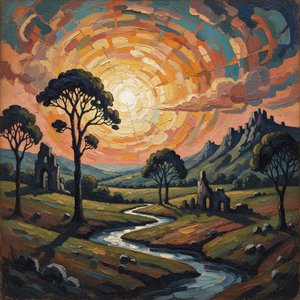
Stephen Bone – Dust in Normandy
Dust in Normandy stands as a poignant testament to Stephen Bone’s artistic vision during World War II, capturing not merely the visual landscape but also the profound emotional atmosphere of August 1944. Painted shortly after the Allied invasion of France, this oil on canvas depicts a desolate field near Caen – a scene rendered with remarkable sensitivity and detail by Bone. The artwork's composition centers around several horses scattered across the expanse of dusty earth, symbolizing resilience and endurance amidst devastation. A solitary rider dominates the foreground, conveying a sense of determination and quiet contemplation against the backdrop of wartime hardship. Bone’s distinctive style—characterized by vibrant color palettes and loose brushstrokes—is evident throughout the painting. He skillfully employs impasto technique, layering thick strokes of pigment to create textural surfaces that capture the gritty reality of the Normandy terrain. The artist's masterful use of light and shadow enhances the dramatic effect, emphasizing the rugged beauty of the landscape while simultaneously hinting at the anxieties inherent in the moment. Bone’s palette leans heavily on earthy tones—ochres, browns, and greys—reflecting the muted hues of a battlefield scarred by conflict. Yet, flashes of brighter colors – particularly yellows and reds – punctuate the scene, symbolizing hope amidst despair. The painting's historical significance extends beyond its depiction of Normandy itself. Bone’s involvement with the War Artists’ Advisory Committee underscored his commitment to documenting the experiences of ordinary Britons during wartime. This commission demanded an honest portrayal of the challenges faced by soldiers and civilians alike—a task Bone undertook with unwavering dedication. The inclusion of horses is particularly noteworthy, as they represent not only physical strength but also spiritual fortitude – qualities deemed essential for navigating the turbulent times of 1944. Furthermore, Dust in Normandy embodies the broader Neo-Romantic movement prevalent during Bone’s era. Artists like Bone sought to reconnect with nature and express profound emotions through landscape painting—a reaction against the sterile formalism of Impressionism. Bone's ability to convey both visual beauty and psychological depth solidified his place as a pivotal figure in British art history. The artwork continues to resonate today, serving as a powerful reminder of courage, perseverance, and the enduring allure of the natural world amidst times of crisis. Bone’s meticulous attention to detail—particularly in capturing the nuances of light and texture—elevates Dust in Normandy beyond mere representation. It is an immersive experience for the viewer, transporting them back to August 1944 and prompting reflection on themes of resilience and remembrance. The painting's enduring appeal lies in its ability to capture not just what was seen but also what was felt – a testament to Bone’s artistic genius and his profound understanding of human emotion.Въпроси и отговори
Как „Прах в Нормандия“ на Стефан Бон свързва Hudson River School с родината на художника?
"Прах в Нормандия" свързва изкуственото движение Hudson River School с Великобритания чрез родното място на неговия създател.
Каква атмосфера би създало „Прах в Нормандия“ в едно помещение?
„Прах в Нормандия“ на Стефан Бон придава Романтичен атмосфера и се препоръчва за Дневна. Настроението е това, което произведението внася в пространството около него.
Присъства ли в „Прах в Нормандия“ типичното за творчеството на Стефан Бон?
Повторящите се теми в творчеството на Стефан Бон включват landscape impressionism, war remembrance, british tradition, stephen bone style, rural imagery; „Прах в Нормандия“ се фокусира върху normandy landscape, horse painting, wwii art, british painter, stephen bone, coastal scene, rural imagery.
 Преглед в реален мащаб
 Изпрати
 Сподели
 Детайли
 Ръководство

 Изтегляне
 Подобни артикули
 Рентгенова снимка
 Слайдшоу
 Q&A
Q&A Статистика